Two short jobs decide whether you own a pool next year
A seasonal pool spends more of the year not being swum in than being swum in, and almost all of the expensive mistakes happen during that part. Closing badly is the single costliest thing a first-year owner does — not because closing is difficult, but because the consequences arrive six months later when the liner comes out of the shed cracked, or does not come out at all because it froze in place.
The two jobs are closing in autumn and opening in spring, and each is an afternoon. What follows is the shape of both; the step-by-step versions are at winterizing an above-ground pool and opening in spring. Have the spring shopping list in the shed before you start the second of those, the pool year month by month puts every job in order, and if a cold snap arrives while the pool is still open, an unexpected freeze is the overnight version. Mid-season weather has its own two pages: what a heatwave does to a pool and preparing for a major storm, where the headline advice is that you do not drain it.
Closing: cold water first, then chemistry, then the cover
The sequence matters and most of the errors are sequence errors. Wait until the water is genuinely cold — closing a warm pool leaves it biologically active under the cover all winter, which is how people find a swamp in April. Balance the chemistry before you close rather than after, because unbalanced water sitting still for months is what stains and corrodes.
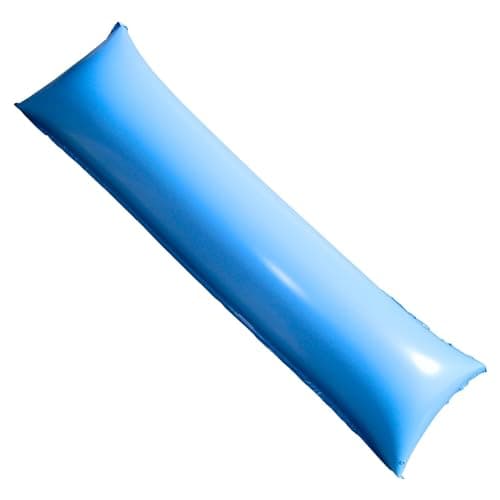
Then drain to the manufacturer’s stated level, disconnect and fully drain the pump, filter and every hose, and store them somewhere that does not freeze. Water left in a pump housing expands when it freezes and cracks the housing; that is the most common winter loss and it is entirely preventable in ten minutes. Finally cover it, and if you are in a freezing climate, float something compressible in the middle so expanding ice pushes against that rather than against the wall.
For a soft-side or small frame pool the calculus is different: empty it, dry it thoroughly, fold it and store it indoors. A pool left up all winter in a cold climate is a pool you are gambling with.
Covers do two different jobs — buy for the right one
The word “cover” hides two unrelated products.
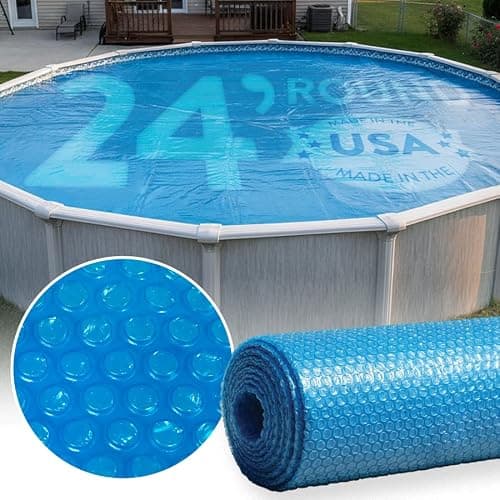
A solar cover is a summer item. It is a sheet of bubble material that floats on the surface, limits evaporation and returns some heat to the water overnight. It is probably the highest-return accessory in this entire site, because evaporation is simultaneously your water bill, your chemical bill and your heat loss, and a cover reduces all three at once. It is not a safety device and it will not hold weight.
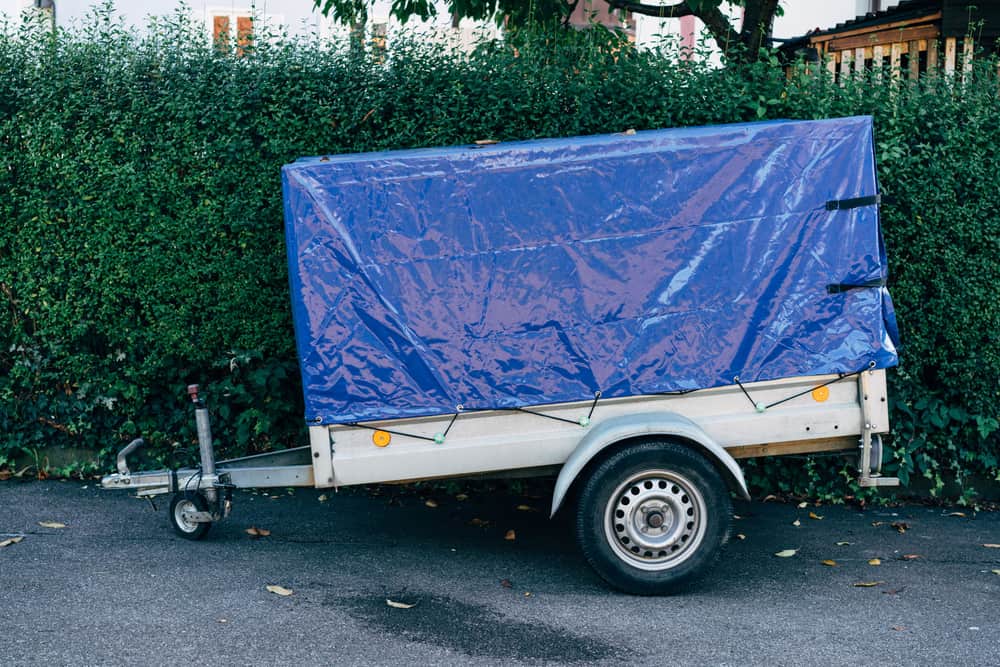
A winter cover is a structural item. Its job is to keep debris and sunlight out for five months while carrying rain, snow and ice. That means straps or a cable, genuine tear resistance, and enough slack to sit on the water rather than stretch across it. Buying a summer cover for a winter job is a common and expensive substitution.
Kits, and what they save you
A closing kit bundles the winterizing chemicals into one box at a slight premium over buying them separately. For a first close it is worth it, mostly because the failure mode of buying item-by-item is discovering on the day that you are missing one thing. By the second year you will know what your water actually needs and can buy it directly.
Opening is easier than the internet suggests
Spring is the reverse in a shorter afternoon: get the debris off the cover before you move it, top the water back up, reconnect and prime everything, run the filter continuously for a day or two, then shock and balance once the water is circulating. Nearly every green opening is a pool that was uncovered too early or reconnected too late, not a pool that needed more chemicals.
Two links worth having open while you do it: the what the color of your pool means is the index to all of it, and the cloudy water decision tree, because opening water is almost always cloudy for a few days and that is fine, and the annual cost guide, because closing and opening are line items in a pool year that most budgets leave out entirely.
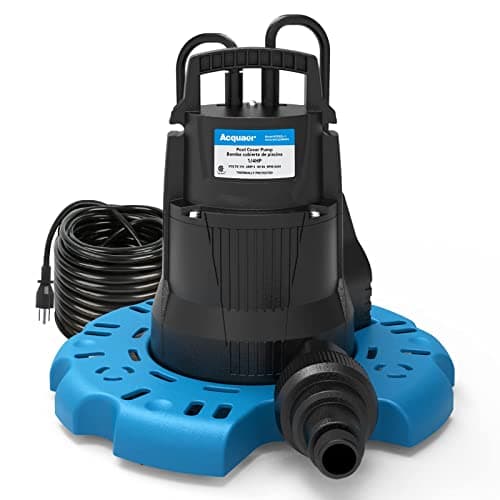
Three purchases carry most of this. A winterizing kit is the chemistry, and the thing to get right is sizing it to your actual gallons rather than your pool’s advertised width. A cover pump is what stops standing water — nearly a thousand pounds of it from a single inch of rain on a 15-foot cover — from pulling the whole close apart. And a solar cover reel is the one that pays for itself in summer, because it is what makes the cover something you actually use.
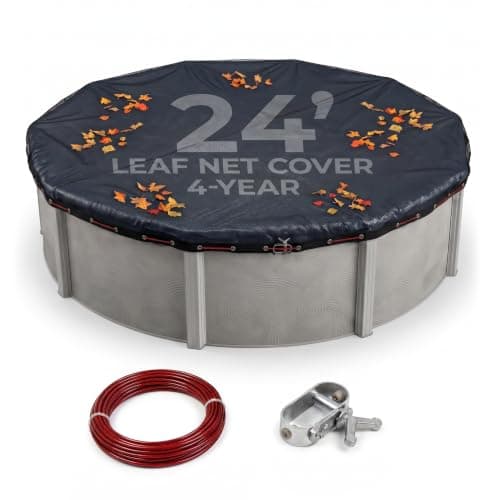
Two more cover questions are worth settling before autumn. If anything deciduous overhangs the pool, a leaf net lifts off with the whole fall on it and keeps the winter cover clean underneath — and if nothing does, it is a large item to store for no benefit, which makes it the cleanest yes-or-no purchase in the hub. And it is worth knowing that a winter cover is not a barrier: safety covers are tested to hold a published load, and a tarp over water is a completely different product.
Three small items do most of the protecting on a pool left standing over winter. A skimmer gizzmo is a hollow tube designed to crush so your skimmer does not, and a cracked skimmer is not a repairable part. Cover clips stop wind getting under the cover, which is what actually takes covers off — the cable only holds the edge. And pool antifreeze protects plumbing you could not fully drain, which on most above-ground setups means you do not need it at all.
Three more pages deal with the parts of a close that get skipped. An air pillow is the only structural item on the list — it gives expanding ice somewhere to go that is not your wall, and it should be inflated to about two-thirds rather than hard. Cover sizing explains why a cover sold for a 24-foot pool measures 28 feet, and why you order by pool size. And where the pump spends the winter collects what the manufacturers actually say about draining, plugs and storage temperatures — including the line about freezing voiding the warranty.
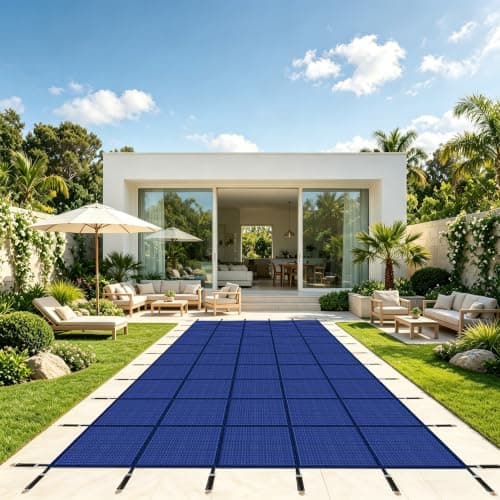
And if you are choosing between cover types, mesh against solid is really a question about standing water: a solid cover keeps everything out and collects rain on top, while a mesh safety cover drains and carries a published load rating — but needs anchor points most above-ground pools do not have.
And one page for the other end of the year. Pollen season is the spring mirror of leaf season with the mechanism reversed: leaves are chlorine demand, pollen is not alive and chlorine does nothing to it at all. It is a filtration problem, which makes it the one pool complaint where shock is the wrong answer and a ten-dollar box of skimmer socks is the right one.
One more job for the end of the season, and it is the one still sitting on the lawn when the cover goes on. Storing pool chemicals over winter covers what actually keeps — tablets and dry shock, yes; liquid chlorine, no — and the separation rule that makes this a safety question rather than a tidiness one: chlorine products and acid never share a space, because a lid that fails over six months is all it takes.