Seasonal Care
A tarp that keeps leaves out is not a barrier
The difference between a winter cover and a safety cover is a published load test, and most people buying covers have never been told the two are different products.
Heads up: we earn a commission if you buy through the links on this page, at no extra cost to you. It never decides the ranking — here is how we pick and here is the full disclosure. Prices are checked automatically; last verified October 8, 2026.
Quick picks
Segmented before it is ranked — the right answer depends on which of these you actually are. Tap any row for the full write-up.
The cover that is a barrier
Tensioned mesh, anchored rather than floated, built and tested to a published load standard. The fitting is the part to check before the price.
| # | Product | Best for | Score | Price |
|---|---|---|---|---|
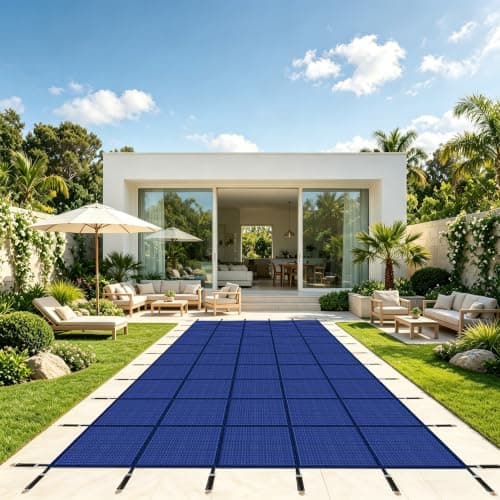
| 1 | Mesh Safety Cover (ASTM F1346) A tensioned mesh cover built and tested to hold weight, which is the one thing a winter tarp cannot do. If a cover is doing safety work on your pool, this is the only category that qualifies. | A cover that is actually a barrierSeveral seasons | 7.8out of 10 |
The cover that is not
A standard winter cover keeps debris and light out for a season. It is the right product for most above-ground pools, and it holds no weight at all.
| # | Product | Best for | Score | Price |
|---|---|---|---|---|
| 1 | No image Winter Cover for Above-Ground Pools A structural product, not a summer one. Its job is carrying snow and blocking light for a whole winter, and a solar cover pressed into that role will be in shreds by February. | Five months of weather, not one nightSeveral seasons | 8.3out of 10 |
The cover that is definitely not
A solar cover floats on the surface. A child on top of one ends up underneath it, which is the most dangerous misunderstanding in this hub.
| # | Product | Best for | Score | Price |
|---|---|---|---|---|
| 1 | 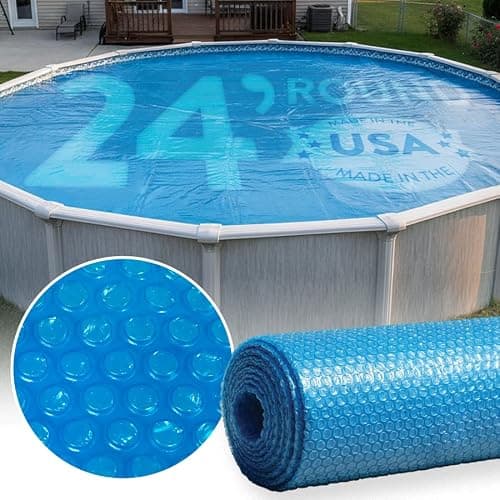 Bubble Solar Cover for Above-Ground Pools It cuts evaporation, and evaporation is simultaneously your water bill, your chemical bill and your heat loss. Nothing else on this site reduces three costs at once. | The single highest-return accessory hereSeveral seasons | 9.0out of 10 |
The short version
- ASTM F1346 is the specification, and a compliant cover must hold a minimum of 485 lb — taken as two adults and a child.
- It is also a drainage and gap test, not just a load test. No standing water, no opening a child can pass through.
- A winter cover holds nothing. It is a debris and light barrier, and that is a completely different product.
- Most listings are cut for inground pools. Above-ground fitment and anchoring are the hard part, not the price.
Three covers, three entirely different jobs
| Cover | Job | Holds weight? |
|---|---|---|
| Solar cover | Stops evaporation, holds heat overnight | No — it floats on the surface |
| Winter cover | Blocks debris and light for five months | No — it is a tarp over water |
| Safety cover (ASTM F1346) | A tensioned, load-rated barrier | Yes — minimum 485 lb by test |
| Leaf net | Catches debris above the winter cover | No — mesh netting only |
The row that causes harm is the first one. A solar cover looks like a surface you could stand on and is the opposite — it floats, it supports nothing, and it is large enough to cover a person who goes under it. Our solar cover roundup is explicit about that, and our solar versus winter cover comparison separates the first two.
What ASTM F1346 actually requires
The standard was written to reduce the risk of drowning of young children, and it tests three things rather than one.
Load. The cover must hold a minimum of 485 pounds — the figure is taken as two average adults and a child, so that a rescue can happen on the cover without it failing.
Drainage. Water must not accumulate dangerously on top. This is why mesh dominates the category: mesh passes rain straight through, which removes both the standing water hazard and the cover pump from the equation entirely.
Gaps. No opening large enough for a child to slip through, at any point around the perimeter. In practice this is why a safety cover is tensioned to anchors rather than weighted at the edges.
A cover that is not tested against all three is not a safety cover, regardless of what the product title says. The thing to look for on a listing is the standard named explicitly.
The above-ground problem
This is where the category gets difficult for this site’s readers, and the honest answer is that safety covers are an inground product that occasionally fits an above-ground pool.
Anchoring. A safety cover works by tension, and tension needs anchor points set into a deck or a surround. A free-standing above-ground pool on a lawn has none, and nothing about the top rail is designed to take that load — it is holding several thousand gallons of water already.
Sizing. Listings are cut for rectangular inground pools with a deck margin. Round above-ground fitments exist and are far less common, and a safety cover that does not fit correctly has lost the gap test before it is installed.
What that leaves. For most above-ground pools the realistic arrangement is a standard winter cover for the debris job, plus a barrier for the safety job. That is not a compromise — it is two products each doing what they are designed for, and our fence cost guide prices the second one.
The trade-offs if you do fit one
The water is dirtier in spring. Mesh passes rain, and it passes fine dust and light with it. A pool under mesh opens dirtier than a pool under a solid cover, which means a longer opening — our opening guide covers the sequence.
It costs substantially more. Several times a standard winter cover, and the anchors are an installation.
It removes real work. No cover pump, no standing water, no wind lift, no cover tear from ice loading. Across several winters that is a genuine offset, and it is the reason the price gap is smaller than it first looks.
What we are scoring
We have not tested these and do not claim to, and we do not certify anything. The scores are our reading of published specifications — whether a standard is named, material and stitching, fixing method and stated fitment — against an above-ground pool specifically. A cover is one layer of pool safety and never the whole of it. Our methodology page explains how our scoring works.
The picks, in full
Scores are our own reading of published specifications. They are not test results — we have not tested these products and we do not claim to.
Pick #1 · A cover that is actually a barrier
Mesh Safety Cover (ASTM F1346)
Various
A tensioned mesh cover built and tested to hold weight, which is the one thing a winter tarp cannot do. If a cover is doing safety work on your pool, this is the only category that qualifies.
#ad how this is funded · price as of October 8, 2026
Key specs
- Standard
- ASTM F1346 — the safety cover specification
- Load test
- Minimum 485 lb, taken as two adults and a child
- Drainage
- Mesh passes water through; no standing puddle
- Gaps
- Tested so a child cannot pass through an opening
- Fixing
- Tensioned to anchors, not floated on the water
- Material
- Triple-stitched heavy mesh polypropylene on most
How it scoresour reading of published specs, not a test result
- Retention
- 6.5
- Durability
- 9.0
- Handling
- 6.0
- Running cost
- 9.0
- Value
- 7.0
Overall 7.8 / 10
What works
- The only cover type with a published load figure behind it
- Mesh drains, so there is no standing water to pump and no weight to build up
- Tensioned fixing means it does not lift in wind the way a tarp does
- Removes the cover pump from the winter routine entirely
What doesn't
- Far more expensive than a standard winter cover, and the price gap is large
- Needs proper anchor points, which a free-standing above-ground pool may not have
- Mesh lets light and fine dust through, so spring water is dirtier than under a solid cover
- Most listings are cut for inground pools — above-ground fitment needs checking carefully
Skip it if: Keeping the water clean. It is a barrier that happens to be a cover, not a cover that happens to be safe.
What it costs to run: The saving is not in the season, it is in what it replaces: a winter cover, a cover pump and the annual cover-tear risk. Whether that closes the price gap depends entirely on whether you needed a barrier anyway.
Several seasons: Buy-once. Built and warranted to come back out of the box for a few years, if you store it properly.
Specs from: ASTM F1346 safety covers — current Amazon category listing
Pick #2 · Five months of weather, not one night
Winter Cover for Above-Ground Pools
Various
A structural product, not a summer one. Its job is carrying snow and blocking light for a whole winter, and a solar cover pressed into that role will be in shreds by February.
Key specs
- Construction
- Woven polyethylene, weight published in mil or scrim count
- Securing
- Cable and winch, or wraparound straps
- Overlap
- Needs genuine overlap past the wall — check the stated size against your pool
- Not the same as
- A solar cover or a safety cover
How it scoresour reading of published specs, not a test result
- Retention
- 8.5
- Durability
- 8.0
- Handling
- 6.5
- Running cost
- 9.0
- Value
- 8.5
Overall 8.3 / 10
What works
- Blocks light for the whole winter, which is what stops algae in a closed pool
- Cable-and-winch securing survives wind that lifts a strapped cover
- Buying the heavier scrim genuinely doubles the number of winters you get
What doesn't
- Needs a way to shed or pump off standing water, or the weight tears it
- Bulky to store in summer
- Not a safety cover — it will not support a person and must not be treated as if it will
Skip it if: A pool you take down each autumn. If the pool comes apart, the cover is money spent on nothing.
What it costs to run: This is insurance rather than a saving. A torn cover in January means an opening in April that costs a full shock treatment and a week of filtration to fix, which is more than the better cover cost.
Several seasons: Buy-once. Built and warranted to come back out of the box for a few years, if you store it properly.
Pick #3 · The single highest-return accessory here
Bubble Solar Cover for Above-Ground Pools
Various
It cuts evaporation, and evaporation is simultaneously your water bill, your chemical bill and your heat loss. Nothing else on this site reduces three costs at once.
#ad how this is funded · price as of October 8, 2026
Key specs
- Construction
- Bubble sheet, thickness published in mil
- Thickness
- Higher mil lasts longer — 12 mil and 16 mil are common
- Fit
- Cut to size; buy oversize and trim
- Orientation
- Bubbles face down, toward the water
How it scoresour reading of published specs, not a test result
- Retention
- 9.0
- Durability
- 7.0
- Handling
- 6.0
- Running cost
- 9.8
- Value
- 9.5
Overall 9.0 / 10
What works
- Reduces evaporation, which is the mechanism behind the water, chemical and heat savings all at once
- Cheap relative to everything it saves
- Can be cut to fit any pool shape, so sizing is forgiving
What doesn't
- Awkward to get on and off without a reel, and awkward is how covers end up unused
- Degrades in UV like every vinyl product
- Not a safety cover and will not support weight — this is important
Skip it if: Being a safety barrier. A solar cover looks solid and is not; a child or pet on it goes through and under.
What it costs to run: The one accessory with a clear payback. Every gallon that does not evaporate is a gallon you do not replace at the EPA WaterSense national average of $6.06 per 1,000 gallons, and it is chlorine you do not re-dose. If you buy one thing from this hub, buy this.
Several seasons: Buy-once. Built and warranted to come back out of the box for a few years, if you store it properly.
Specs from: EPA WaterSense — cost per 1,000 gallons
Questions people actually ask
What is the difference between a safety cover and a winter cover?
What does ASTM F1346 test?
Can you put a safety cover on an above-ground pool?
Is a solar cover safe to walk on?
Sources
Read next
- Closing, covering and opening againWinterizing, covers and spring opening - the four weeks of the year that decide whether you own a pool next summer.
- The best winter covers for an above-ground poolScrim weight, cable-and-winch versus straps, and the overlap you need - the three specs that decide whether a cover survives a winter.
- Solar cover or winter cover: they are not the same productWhat a solar cover does, what a winter cover does, why neither substitutes for the other, and which one to buy first.
- The best solar covers, and why this is the one thing to buyBubble covers compared on thickness and sizing, plus the arithmetic that makes this the highest-return purchase in the hub.
- A winter cover fails from water on top of it, not from coldWhy standing water is what destroys winter covers, the mid-winter checks that prevent it, and how to store one so it lasts.
- The cover pump exists because water is heavier than people thinkWhy standing water on a winter cover is a structural problem, what a cover pump costs to run, and automatic versus manual.
- The fence is the only thing here that prevents anythingRemovable mesh pool fencing compared on height, mesh, fixings and the certification worth paying for — plus the gate specification that matters most.
- The alarm removes the silence. That is its whole job.Subsurface, surface-wave and gate alarms compared for above-ground pools, and why the false-alarm rate is the specification that decides which one works.
- The cheapest thing on this site, and almost nobody owns itReach poles, ring buoys and where they have to be mounted to be any use — the layer of pool safety with the best price-to-benefit ratio there is.
- The fence is priced by your yard, not your poolHow pool fence cost is actually calculated, what drives it up, and where the other layers of protection sit on price.
- Mesh or solid: one keeps the water out, the other lets it throughSolid winter covers against mesh safety covers for above-ground pools: drainage, the ASTM load standard, what each needs to anchor, and where a leaf net fits in.