Seasonal Care
Pool antifreeze protects pipe, not water
It is the most misunderstood product in the closing kit. Two sentences of definition save people from both buying the wrong thing and pouring it in the wrong place.

Heads up: we earn a commission if you buy through the links on this page, at no extra cost to you. It never decides the ranking — here is how we pick and here is the full disclosure. Prices are checked automatically; last verified October 8, 2026.
The short version
- It goes in plumbing, never in the pool. It protects the lines you could not blow out completely.
- Propylene glycol, not ethylene glycol. The automotive kind is toxic and the bottles look similar.
- About one gallon per 10 feet of 1.5-inch pipe is the published dosing.
- A fully dismantled pool needs none of it, which is most pools this site covers.
What it is, in two sentences
Pool antifreeze is non-toxic propylene glycol, poured into pool plumbing at closing so that any water remaining in the lines does not expand into ice and split them. It is safe to release into the pool in spring, which is exactly how it leaves.
That is the whole product. Everything that goes wrong with it goes wrong because one of those two sentences was not understood.
What it does not do
It does not protect the pool water. Nothing does. A closed pool freezes at the surface and that is expected and normal — the ice expands upward and inward against the air pillow, which is the mechanism our winterizing guide describes. You do not, and cannot, antifreeze several thousand gallons.
It does not replace draining. The correct sequence is to clear the lines first — drain them, blow them out, or disconnect them entirely — and then use antifreeze on whatever you could not clear. Pouring it into a full line just dilutes it to uselessness.
It does not protect the pump. A pump is drained and, on most above-ground setups, brought indoors. Our pump lifespan guide is clear that a cracked housing from a forgotten pump is the single most common winter loss, and antifreeze is not the answer to it.
Who actually needs it
| Setup | Need it? | Why |
|---|---|---|
| Pool fully dismantled and stored | No | There is no plumbing left in the yard |
| Pool left up, hoses disconnected and drained | Rarely | Nothing holds water; a plug is the better spend |
| Pool left up, rigid plumbing in the ground | Yes | Buried runs cannot be fully cleared |
| Semi-inground or plumbed equipment pad | Yes | Fixed pipework with low points that hold water |
| Mild climate, no hard freeze | No | There is nothing to protect against |
The honest headline for this site: most above-ground pools do not need pool antifreeze, because most above-ground pools use flexible hose that is simply disconnected and drained at closing. Our hoses and fittings guide covers that setup, and disconnecting a hose is a more complete protection than antifreeze in it.
It matters on the setups that have moved past hoses — a permanent equipment pad, rigid plumbing, a semi-inground installation, or any run that cannot be got at.
How much, and where
Dosing by pipe run
- Published guidance
- ≈ 1 gal per 10 ft of 1.5 in pipe
- Burst protection
- Quoted to about -50°F on premium grades
- What you measure
- Your own runs, in feet, per line
Total feet of unclearable pipe ÷ 10 = gallons
One or two gallons covers a typical domestic run
Clear the line first
Drain it, blow it out, or disconnect it. Antifreeze is insurance on the water you could not remove, not a substitute for removing it.Plug the far end
A return or skimmer plug stops the antifreeze running straight out the other side and stops pool water running back in. Our winterizing plugs roundup covers those.Pour into the line, not the pool
Into the open pipe or through a fitting, until it runs to the level you want it. Any that reaches the pool in spring is harmless.Label what you did
Write down which lines you treated. In April you will not remember, and flushing an untreated line is different from flushing a treated one.Flush at opening
Circulate to the pool. It is swimmer-safe by design, which is why propylene glycol is the specified chemistry.
Where it sits against the rest of the closing kit
Ranked by how much damage each item prevents on an above-ground pool:
The air pillow and a properly fitted cover come first — they manage the ice in the pool itself, which is the largest volume of water in the yard.
Skimmer and return plugs come second. A cracked skimmer is not a repairable part on most above-ground pools, and a gizzmo costs a few dollars — our winterizing plugs roundup covers them.
Bringing the pump indoors costs nothing at all.
Antifreeze comes fourth, and only if you have plumbing that the first three do not already cover. Our closing kit guide puts the whole list in order and our winterizing kit roundup covers the chemistry side, which is a different job entirely.
What to buy
Scores are our own reading of published specifications. They are not test results — we have not tested these products and we do not claim to.
Plumbing you cannot fully drain
Pool Antifreeze (Propylene Glycol)
Various
Non-toxic propylene glycol poured into lines that will not blow out completely. It protects pipe, not water, and it is not the same chemical as the antifreeze in your car.
Key specs
- Active
- Propylene glycol — never ethylene glycol
- Protection
- Burst protection quoted to about -50°F
- Dose
- About 1 gal per 10 ft of 1.5 in pipe
- Spring
- Safe to release into the pool at opening
- Format
- Sold by the gallon, often in fours
- Not for
- The pool water itself — this goes in plumbing only
How it scoresour reading of published specs, not a test result
- Protection
- 8.5
- Ease
- 8.5
- Safety
- 9.0
- Cost per season
- 9.0
- Value
- 8.5
Overall 8.5 / 10
What works
- Non-toxic and swimmer-safe, so it can be flushed into the pool in spring
- Protects lines that cannot be blown out completely, which is most home setups
- Cheap against a cracked pump housing or a split return line
- Also protects against rust and corrosion in the line over winter
What doesn't
- Does nothing for the pool water and is not meant to go in it over winter
- Automotive antifreeze looks similar and is toxic — the labels matter
- On a fully dismantled seasonal pool there is nothing to protect
- Dosing by pipe length means measuring your own runs
Skip it if: Being a substitute for draining. Blow the lines out first; antifreeze is insurance on what you could not clear, not an alternative to clearing it.
What it costs to run: One or two gallons on a typical above-ground plumbing run, once a year. Against the replacement pump our replacement parts guide prices, it is not a close call.
One honest season: The cheapest setup that genuinely works for a season of real swimming. Nothing spare, nothing missing.
Specs from: CPDI Champion swimming pool antifreeze — Amazon listing, Pool antifreeze — current Amazon category listing
Stopping ice cracking the skimmer
Skimmer Gizzmo and Winter Plugs
Various
A hollow tube that screws into the skimmer and crushes instead of the skimmer when water freezes. It is a sacrificial part, and that is precisely the point.
Key specs
- Skimmer gizzmo
- 9 in for short skimmers; 16 in for deeper
- Thread
- 1.5 in and 2 in threaded skimmer fittings
- Function
- Absorbs the expansion of freezing water
- Return plugs
- Expansion plugs for unthreaded return openings
- Fits
- Above-ground and inground skimmers
- Life
- Replace any gizzmo that has crushed — it did its job
How it scoresour reading of published specs, not a test result
- Protection
- 9.0
- Fit
- 7.0
- Ease
- 9.5
- Build
- 7.5
- Value
- 9.5
Overall 8.8 / 10
What works
- Cheapest possible insurance against a cracked skimmer, which is not a repairable part
- Screws in by hand — no tools, no plumbing knowledge, two minutes
- Expansion plugs seal returns so water cannot re-enter and freeze in the line
- Reusable season after season unless it has actually crushed
What doesn't
- Thread sizes vary and a gizzmo that does not thread in does nothing
- Short and long versions exist and the wrong length leaves the skimmer exposed
- Easy to forget at opening, and a gizzmo left in blocks the skimmer
- Pointless on a pool that is fully dismantled and stored
Skip it if: Protecting anything other than the fitting it is in. Every opening needs its own plug, and the pump and hoses are a separate job.
What it costs to run: A few dollars against a skimmer body that is molded into the pool wall. On any pool left standing over winter, this is the highest-return item in the closing kit.
Several seasons: Buy-once. Built and warranted to come back out of the box for a few years, if you store it properly.
Specs from: Skimmer gizzmo for above-ground pools — Amazon listing
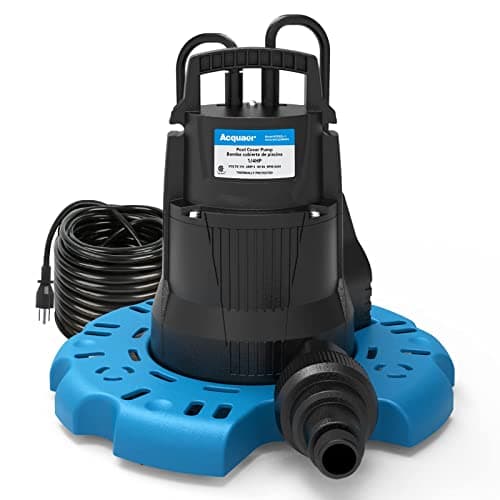
Getting standing water off a winter cover
Submersible Pool Cover Pump
Various
A small submersible pump that sits on the cover and clears the puddle. It exists because water weight is what destroys winter covers, and sweeping in January is nobody's idea of a Saturday.
#ad how this is funded · price as of October 8, 2026
Key specs
- Type
- Submersible, sits on top of the cover
- Operation
- Manual or automatic float switch, by model
- Discharge
- Garden hose thread on most models
- Requirement
- Outdoor-rated, GFCI-protected outlet
How it scoresour reading of published specs, not a test result
- Sizing fit
- 8.0
- Running cost
- 9.0
- Maintenance
- 7.0
- Build
- 7.0
- Value
- 8.5
Overall 7.9 / 10
What works
- Removes the single biggest cause of winter cover failure, which is accumulated water weight
- Automatic models handle rain you were not there for
- Cheap relative to a replacement cover
- Also useful for draining the last few inches of a pool at take-down
What doesn't
- It is an electrical appliance sitting in water outdoors, so the GFCI rules are not optional
- Automatic float switches are the part that fails, usually with debris under them
- Needs storing dry and drained or it freezes and cracks like any other pump
- Cheaper units struggle with the last half inch, which is where debris collects
Skip it if: Being left connected and forgotten all winter. It wants checking after storms, which is when you should be looking at the cover anyway.
What it costs to run: One purchase against the cost of a torn winter cover and the spring opening that follows it. On that comparison it is not a close call.
Several seasons: Buy-once. Built and warranted to come back out of the box for a few years, if you store it properly.
Specs from: Submersible pool cover pumps — current Amazon category listing
Questions people actually ask
Do you put antifreeze in an above-ground pool?
Can I use car antifreeze in a pool?
How much pool antifreeze do I need?
Does antifreeze stop the pool water freezing?
Sources
Read next
- Closing, covering and opening againWinterizing, covers and spring opening - the four weeks of the year that decide whether you own a pool next summer.
- How to winterize an above-ground poolThe correct closing sequence, the freeze damage that ends pools, and why a cracked pump housing is entirely preventable.
- The gizzmo is designed to be destroyedSkimmer gizzmos and return plugs explained — how they work, the sizing that catches people out, and why a cracked skimmer is not a repairable part.
- Pool closing kits: buy one the first year, then stopWhat is in a closing kit, whether the bundle premium is justified, and how to buy separately once you know your water.
- Winterizing kits: convenience, correctly sized, or a wasteWhat is inside a winterizing kit, how to size one to your gallons, and the items every kit leaves out.
- A freeze is forecast and the pool is still openWhat to protect first when a cold snap arrives before closing day, why the equipment is at risk before the pool is, and when to just close early.
- Taking the pool down without ruining itThe take-down sequence for a seasonal pool: draining responsibly, drying completely, folding warm, and storing where rodents are not.
- The bill a bad close sends you in AprilThe spring bill produced by a bad autumn close, priced line by line, and the three cheap items that prevent nearly all of it.
- Nothing in this category is standardized, and the hoses are where you find outHow to measure your own hose and fitting sizes, why suction-side air leaks matter so much, and what to check before ordering a replacement pump.