Seasonal Care
The air pillow is structural, not padding
Everything else on the closing list protects the water. The pillow protects the pool: it gives expanding ice somewhere to go that is not your wall.
Heads up: we earn a commission if you buy through the links on this page, at no extra cost to you. It never decides the ranking — here is how we pick and here is the full disclosure. Prices are checked automatically; last verified October 8, 2026.
Quick picks
Segmented before it is ranked — the right answer depends on which of these you actually are. Tap any row for the full write-up.
The standard size
A 4 by 8 pillow rated by the seller as a single-pillow answer up to a 28 foot round. The size most above-ground pools need.
| # | Product | Best for | Score | Price |
|---|---|---|---|---|
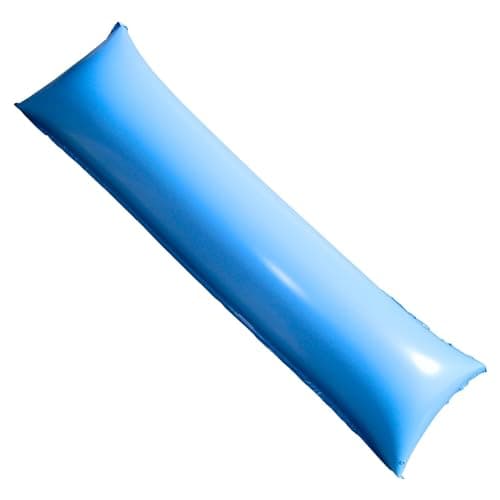
| 1 | Swimline 4 ft x 8 ft Winter Cover Air Pillow The standard 4 by 8 pillow, rated by the seller as a single-pillow solution up to a 28 foot round. Published gauge figures disagree between listings, which is worth knowing before you pay for 'heavy duty'. | Round pools up to 28 feetOne honest season | 8.2out of 10 |
Small pools, or a second pillow
A 16-gauge 4 by 4 for smaller pools, and the cheapest way to put two pillows on a big one so the load is shared.
| # | Product | Best for | Score | Price |
|---|---|---|---|---|
| 1 | 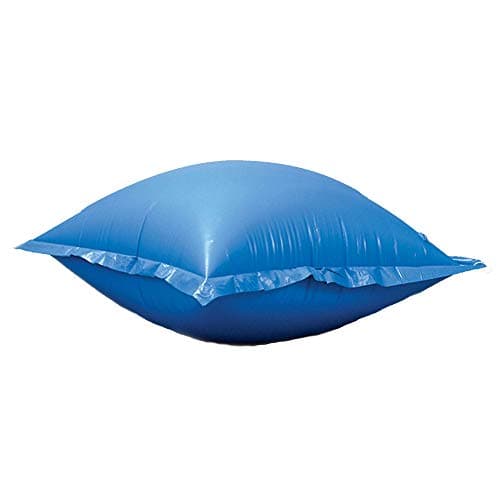 Blue Wave 4 ft x 4 ft Air Pillow A 16-gauge 4 by 4 pillow for smaller pools, and the cheapest way to add a second pillow to a large one so the ice load is shared rather than centered. | Small pools, or a second pillow on a big oneOne honest season | 8.1out of 10 |
The generic option
The unbranded 4 by 8 pillows that dominate listings. Fine for the job, with less published about them than the named brands.
| # | Product | Best for | Score | Price |
|---|---|---|---|---|
| 1 | 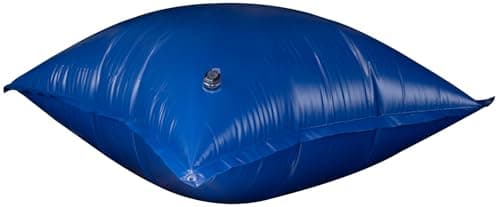 Winter Air Pillow for Above-Ground Pools A few dollars of inflatable that gives expanding ice something compressible to push against instead of your pool wall. In a freezing climate this is not optional. | Stopping ice from pushing on the wallOne honest season | 8.4out of 10 |
The short version
- The pillow is an ice compensator. Ice expands inward toward the compressible pillow instead of outward into the wall.
- Do not fully inflate it. Published guidance runs from half full to about 60%, and never more than three-quarters.
- One 4 by 8 pillow covers most pools — rated to a 28 foot round by its seller — but two smaller pillows spread the load better on a big pool.
- It also sheds water. A raised center stops rain and snow pooling in the middle of the cover.
What the pillow is actually for
Not comfort, and not to hold the cover up. The Pool Factory describes it precisely: the air pillow acts as an ice compensator absorbing the ice expansion, and that expansion is what damages a pool wall, cover or liner.
Water expands as it freezes. In a closed pool with nowhere to go, that expansion pushes outward against the wall all winter. Pool Geek states the mechanism from the other side: with a pillow in place, the ice expands inward toward the pillow instead of outward into the pool walls. PoolSupplies.com makes the consequence explicit, listing pool walls splitting from ice damage as the thing being prevented.
There is a secondary benefit that gets most of the attention: a pillow raises the center of the cover so rain and snow run to the edges instead of collecting in a heavy pond in the middle. That is real, and it is why our winter cover guide notes that covers fail from water on top of them rather than from cold.
How much to inflate it: the number everyone gets wrong
The instinct is to fill it hard. Every published source says otherwise. The Pool Factory says to inflate to about 60% of capacity to allow for compression. PoolSupplies.com says to fill the pillow between half and three-quarters full to allow for expansion pressure. Blue Wave’s own guidance is to inflate until firm but not overly taut, and notes it should not be over-inflated.
The reason is the entire point of the product. A pillow that is rock hard cannot compress, and a pillow that cannot compress is just a rigid object in the middle of the ice — it absorbs nothing. Under-inflating is the safe error; over-inflating defeats the purpose and usually bursts the seams in the first hard freeze.
| Pillow | Size | Published gauge | Pool rating | Notes |
|---|---|---|---|---|
| Swimline | 4 x 8 ft | 9-gauge on two listings; 16-gauge on a third | One pillow to 28 ft round and small ovals | Sold in 4x4, 4x8 and 4x15 |
| Blue Wave NW150 | 4 x 4 ft | 16-gauge | Small pools, or a second pillow on a large one | Pump, rope and repair kit sold separately |
| Generic 4 x 8 | 4 x 8 ft | Not consistently published | Not published | The commodity option |
Sizing, and why two pillows are often better than one
The Swimline 4 by 8 is rated by its retailer as a single-pillow solution for pools up to 28 feet round and small ovals, which covers essentially every above-ground pool this site writes about. On that basis one pillow is enough.
There is a practical argument for two on larger pools, and it is about geometry rather than volume. A single pillow in the middle of a 24 or 27 foot pool leaves a wide ring of water that freezes solid against the wall before the ice ever reaches the pillow. Two pillows, spaced, give the ice a compressible target from more directions. The Blue Wave listing makes the same point — larger pools may need multiple pillows to spread pressure across the cover.
On a small pool, a 4 by 4 is proportionate and easier to position. On anything from about 18 feet upward, a 4 by 8 is the default, and two 4 by 4s are a reasonable alternative.
Getting it in and keeping it there
Inflate on the ground, to about 60%
Blow it up before it goes near the water, to between half and three-quarters full. It should give easily under a hand.Tie it before you float it
Attach cord to the grommets while you can still reach them. The Pool Factory's method is to tie string through the grommets and to the top ledges, left deliberately slack.Center it, loosely
Tie it so it cannot drift to one side, but with slack. Tight strings tear grommets or snap in the first freeze, and then the pillow is under the cover doing nothing.Cover over the top
The winter cover goes over the pillow, not under it. Fit and secure the cover as normal - our cover sizing guide covers the overlap the cover needs.Check it after the first storm
A deflated pillow is the most common winter failure, and the whole protective effect goes with it. If it has gone down, a replacement mid-winter is worth the trip.
What it saves, against what it costs
A pillow is among the cheapest items in a pool close, and the only one doing structural work. The thing it is preventing — a split wall, a torn liner, a collapsed cover full of ice — is the bill itemized in our cost of a bad close guide, and it dwarfs the pillow by orders of magnitude.
It is also the item most often skipped, because the connection between a floating bag and a steel wall is not obvious until someone explains the ice. If you are closing a pool in a climate where the surface freezes at all, it belongs on the list alongside the cover, the plugs and the cover pump — all of which our winterizing guide sequences properly.
How we picked
We have not tested these pillows. Scores reflect published specifications and the honesty of what is published, and this category publishes very little: no manufacturer specification sheet, no warranty on any of the three, conflicting vinyl gauges for the same product, and valve types absent everywhere. What is consistent across every source is the inflation guidance, which is the part that decides whether the product works.
What happens on a pool without one
Ice forms from the surface down and expands as it goes. In a pool with a rigid wall and no compressible object in the middle, that expansion has one direction available to it, and the published consequence from the trade is pool walls splitting from ice damage.
The secondary failure is the cover. A flat frozen surface with no high point collects rain and snowmelt in the middle, and a winter cover holding several hundred pounds of standing water tears at its grommets or pulls its cable tight enough to deform the top rail. Our cover care guide is built around that failure, and a cover pump is the other half of the answer.
Neither failure is dramatic while it is happening. Both are discovered in April, which is why the bill lands in our cost of a bad close rather than in the autumn budget.
Tying it down so it is still there in March
A pillow that has drifted to the side of the pool is a pillow doing nothing, and it is the most common way this product fails. The published method is to use the grommets: tie string through them and to the pool’s top ledges or through the cover’s own grommets, deliberately leaving slack.
Slack is the part people get wrong. Strings pulled tight tear grommets out or snap when the ice shifts, and once either happens the pillow moves. The Pool Factory’s guidance is explicit that the ties should be a bit loose rather than taut.
A second failure worth planning for is a puncture. Pillows are cheap, and a spare on the shelf costs less than a mid-winter trip. If a pillow does deflate in January, it is worth replacing rather than writing off — there is usually a great deal of winter left, and the pillow is doing structural work for every week of it.
One pillow or two
Retailer ratings put a single 4 by 8 pillow at up to a 28 foot round pool, which covers everything this site writes about. The argument for two is geometry rather than capacity: on a 24 or 27 foot pool a single pillow in the middle leaves a wide ring of water that freezes solid against the wall long before the ice front reaches the pillow.
Two 4 by 4 pillows, spaced apart, give the ice a compressible target from more directions and cost about the same as one large one. One retailer listing makes the same point, noting that larger pools may need multiple pillows to spread pressure across the cover.
For a pool under about 18 feet, one pillow sized to the pool is plenty, and a 4 by 4 is easier to position and tie than a 4 by 8 in a small space.
Where it sits in the closing sequence
The pillow goes in after the water has been lowered and the chemistry balanced, and before the cover. That order matters: inflating and tying a pillow through a fitted cover is a job nobody enjoys, and lowering the water afterwards leaves the pillow hanging on its strings.
The rest of the sequence — cold water first, then chemistry, then plugs, then pillow, then cover — is in our winterizing guide, and the cover itself needs to be sized with the water drop in mind, which our cover sizing guide covers. Get the pillow in at the right point and the whole close takes an afternoon.
What people use instead, and why it is worse
The common substitutes are a partly inflated inner tube, a few lengths of pool noodle, or a sealed plastic drum. All of them are compressible, and all of them will do something.
What they do not have is the surface area. A 4 by 8 pillow presents a wide, low, compressible face across the middle of the pool, which is what lets an advancing ice sheet push inward over a broad front rather than concentrating against one small object. A single inner tube in a 24 foot pool is a small target in a large sheet of ice.
The second problem is the cover. A pillow also lifts the center so rain and snowmelt run to the edges; an object that sits low in the water does not, and the standing-water failure our cover care guide describes happens anyway. Given that a purpose-made pillow costs less than most winterizing chemicals, the substitution rarely makes sense.
The picks, in full
Scores are our own reading of published specifications. They are not test results — we have not tested these products and we do not claim to.
Pick #1 · Round pools up to 28 feet
Swimline 4 ft x 8 ft Winter Cover Air Pillow
Swimline
The standard 4 by 8 pillow, rated by the seller as a single-pillow solution up to a 28 foot round. Published gauge figures disagree between listings, which is worth knowing before you pay for 'heavy duty'.
Key specs
- Size
- 4 ft x 8 ft
- Material
- Listed as 9-gauge vinyl on two retailer pages; a third listing in the same line says 16-gauge
- Covers
- One pillow for 28 ft round and small oval pools, per the retailer
- Sizes in the line
- 4 x 4 ft, 4 x 8 ft, 4 x 15 ft
- Valve type
- Not published for this model
- Grommets
- Not published for this model number
How it scoresour reading of published specs, not a test result
- Retention
- 8.0
- Durability
- 7.0
- Handling
- 8.5
- Running cost
- 9.0
- Value
- 8.5
Overall 8.2 / 10
What works
- The size most above-ground pools actually need, and the easiest to find in stock
- A published pool-size rating, which many pillow listings skip entirely
- Sold in a range, so a bigger pool can step up rather than buy two
- Cheap enough to replace when it splits, which eventually it will
What doesn't
- Published vinyl gauge conflicts between listings of the same product
- Neither the valve type nor the grommet count is published for this model
- No warranty published
- A single pillow on a large pool spreads ice pressure less evenly than two
Skip it if: Surviving indefinitely. A pillow is a seasonal item that takes the ice load so the wall does not; plan on replacing it rather than nursing a patched one through a second winter.
What it costs to run: The cheapest structural part of a close. Set against the cost of a split wall or a torn cover — the bill our bad-close guide itemizes — a pillow is a few dollars a winter.
One honest season: The cheapest setup that genuinely works for a season of real swimming. Nothing spare, nothing missing.
Specs from: Leslie's — Swimline 4 x 8 air pillow, published size and pool rating, In The Swim — 4 x 8 air pillow for above-ground pool winter covers
Pick #2 · Small pools, or a second pillow on a big one
Blue Wave 4 ft x 4 ft Air Pillow
Blue Wave
A 16-gauge 4 by 4 pillow for smaller pools, and the cheapest way to add a second pillow to a large one so the ice load is shared rather than centered.
Key specs
- Size
- 4 ft x 4 ft
- Material
- 16-gauge vinyl, per the retailer listing
- Model
- NW150
- Valve
- Described only as an easy-to-use valve for quick inflation
- Inflation
- Inflate until firm but not taut; do not over-inflate
- Not included
- Pump, rope and repair kit are sold separately
- Grommets
- Not published
How it scoresour reading of published specs, not a test result
- Retention
- 7.5
- Durability
- 7.5
- Handling
- 9.0
- Running cost
- 9.0
- Value
- 8.5
Overall 8.1 / 10
What works
- The right size for the 10 to 15 foot pools most first-pool families own
- Published gauge, so it can be compared against the larger pillows on one number
- Two of these on a big pool spread the ice load better than one large pillow
- Cheapest entry into doing the close properly
What doesn't
- Too small to be the only pillow on a large round pool
- Rope and repair patches are extra, and both are needed in practice
- Grommet and valve details are not published
- No published warranty
Skip it if: Big water. On a 24 or 27 foot pool a single 4 by 4 pillow leaves most of the surface free to freeze solid against the wall.
What it costs to run: A few dollars per winter, and the only part of the close that is doing structural work. Everything else on the closing list protects the water; this protects the pool.
One honest season: The cheapest setup that genuinely works for a season of real swimming. Nothing spare, nothing missing.
Specs from: Clean Water Pools — Blue Wave 4 ft x 4 ft air pillow, published specifications, Pool Warehouse — Blue Wave 4 x 8 air pillow, published material and inflation note
Pick #3 · Stopping ice from pushing on the wall
Winter Air Pillow for Above-Ground Pools
Various
A few dollars of inflatable that gives expanding ice something compressible to push against instead of your pool wall. In a freezing climate this is not optional.
#ad how this is funded · price as of October 8, 2026
Key specs
- Function
- Absorbs ice expansion; centers the load away from the wall
- Inflation
- Inflate to roughly 60% — a fully inflated pillow bursts
- Placement
- Centered under the winter cover
How it scoresour reading of published specs, not a test result
- Retention
- 8.0
- Durability
- 6.5
- Handling
- 9.0
- Running cost
- 10.0
- Value
- 9.0
Overall 8.4 / 10
What works
- Extremely cheap relative to the wall or liner it protects
- Also stops rainwater and snowmelt pooling in the center of the cover
- Reusable for several winters if it survives one
What doesn't
- Cheap ones deflate mid-winter, which is when it matters
- Must be tethered or it drifts to the edge and does nothing
- Over-inflating is the most common mistake and it destroys the pillow
Skip it if: Climates that do not freeze. If your water never ices over, this is solving a problem you do not have.
What it costs to run: The cheapest insurance in this entire site against the most expensive winter failure. Inflate to about 60% and tether it.
One honest season: The cheapest setup that genuinely works for a season of real swimming. Nothing spare, nothing missing.
Questions people actually ask
How full should a pool air pillow be?
Do I really need an air pillow?
What size air pillow for a 24 foot pool?
Does the pillow go over or under the winter cover?
How long does an air pillow last?
Sources
Read next
- Closing, covering and opening againWinterizing, covers and spring opening - the four weeks of the year that decide whether you own a pool next summer.
- How to winterize an above-ground poolThe correct closing sequence, the freeze damage that ends pools, and why a cracked pump housing is entirely preventable.
- The best winter covers for an above-ground poolScrim weight, cable-and-winch versus straps, and the overlap you need - the three specs that decide whether a cover survives a winter.
- A winter cover fails from water on top of it, not from coldWhy standing water is what destroys winter covers, the mid-winter checks that prevent it, and how to store one so it lasts.
- What size cover you need, and the overlap that decides itWhy winter covers are ordered by pool size, how much overlap manufacturers build in, what the water drop is for, and how cable, clips and sealers work together.
- Wind takes the cover off. Clips are what stop it.Winter cover clips and wind guards for above-ground pools — how many per rail, what the plastic does in cold, and what they cannot fix.
- The bill a bad close sends you in AprilThe spring bill produced by a bad autumn close, priced line by line, and the three cheap items that prevent nearly all of it.
- Winterizing kits: convenience, correctly sized, or a wasteWhat is inside a winterizing kit, how to size one to your gallons, and the items every kit leaves out.