Floats & Fun · Best Pool Owner Gift
Gifts for pool owners, from someone who knows the pool is closed
Two things decide whether a pool gift gets used: whether it fits a pool you have not measured, and whether it can be used before May. Almost every list ignores both. The safe buys are consumables, test gear and the things that work while the cover is on.
Heads up: we earn a commission if you buy through the links on this page, at no extra cost to you. It never decides the ranking — here is how we pick and here is the full disclosure. Prices are checked automatically; last verified October 17, 2026.
Quick picks
Segmented before it is ranked — the right answer depends on which of these you actually are. Tap any row for the full write-up.
The best gift under $30, and it gets used in January
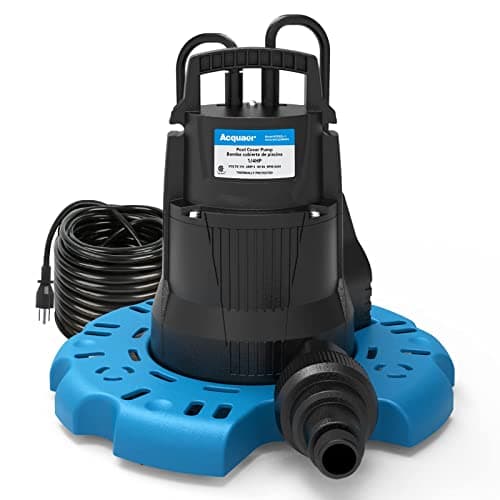
A cover pump is the one piece of equipment an above-ground pool owner uses in the middle of winter, and the thing most owners put off buying. Standing water is what tears winter covers.
| # | Product | Best for | Score | Price |
|---|---|---|---|---|
| 1 | Submersible Pool Cover Pump A small submersible pump that sits on the cover and clears the puddle. It exists because water weight is what destroys winter covers, and sweeping in January is nobody's idea of a Saturday. | Getting standing water off a winter coverSeveral seasons | 7.9out of 10 |
The serious gift for someone who fought their water all summer
The drop-test kit that reads what strips cannot. Fits any pool, needs no measurements, and answers the question that ruins first seasons.
| # | Product | Best for | Score | Price |
|---|---|---|---|---|
| 1 | 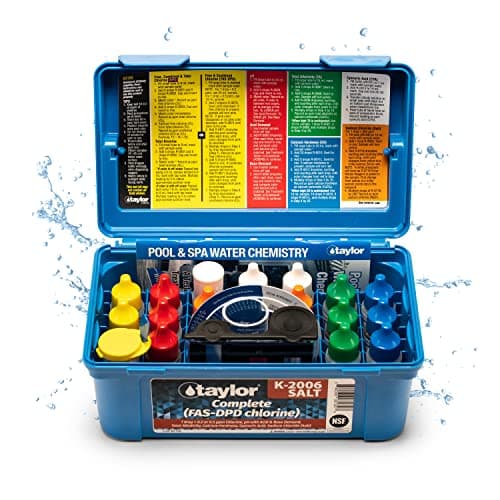 Taylor K-2006 Complete Test Kit (FAS-DPD) The reference kit. It uses a drop-count titration for free chlorine, which gives you an actual figure rather than a shade of pink. Overkill for a 1,500-gallon pool and indispensable when something has gone properly wrong. | When you need a number, not a color bandSeveral seasons | 8.3out of 10 |
Spring in a box, for about the price of a bottle of wine
An opening kit is used on exactly one day of the year and it is the day they will remember. No sizing required beyond gallons, and it keeps indefinitely.
| # | Product | Best for | Score | Price |
|---|---|---|---|---|
| 1 | 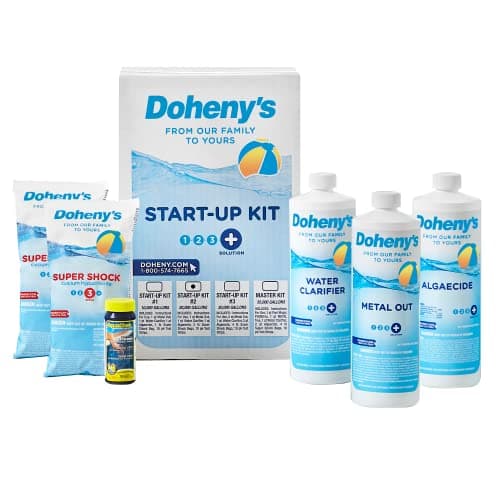 Doheny's Ultimate Pool Opening Start-Up Kit Four chemicals and test strips, rated across a 10,000 to 30,000 gallon band. The metal sequestrant is the reason to choose it, and it is the one chemical a well-filled pool cannot open without. | An opening on a pool filled from a wellOne honest season | 8.2out of 10 |
The big-ticket gift that fits any above-ground pool
Cordless, no hoses, nothing to plumb in. The one expensive pool gift that does not depend on the pool's wall height, diameter or filter type.
| # | Product | Best for | Score | Price |
|---|---|---|---|---|
| 1 | 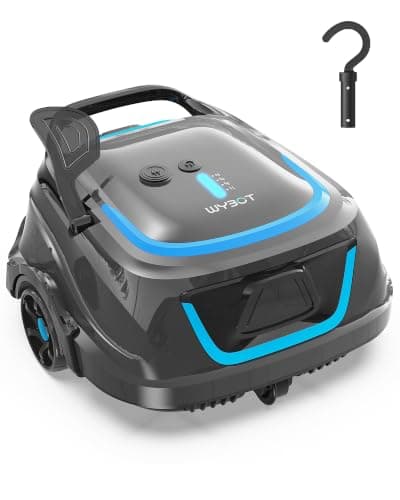 Cordless Robotic Pool Cleaner Genuinely good at the job and genuinely expensive relative to the pool. For a 1,700-gallon frame pool it costs a meaningful fraction of the pool itself, which is difficult to justify. | Large above-ground pools and people who will not vacuumMore than you need yet | 7.1out of 10 |
The cheap one that always gets used
A floating thermometer costs almost nothing, fits everything, and settles the argument about whether the water is warm enough.
| # | Product | Best for | Score | Price |
|---|---|---|---|---|
| 1 | 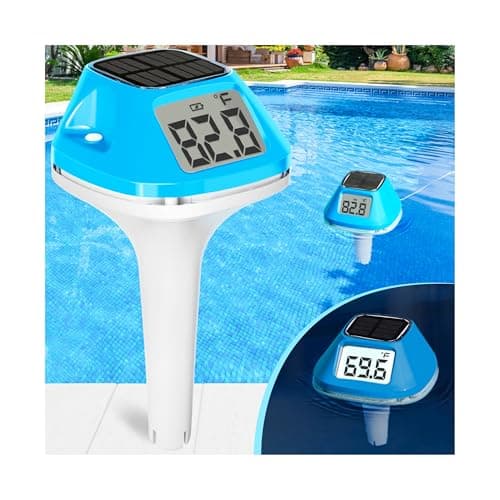 Floating Pool Thermometer The cheapest instrument on this site and the one that answers two expensive questions: is it warm enough to swim, and is it cold enough to close. | Knowing when to close, and when to stop heatingSeveral seasons | 8.4out of 10 |
If the gift is for a family rather than a pool
Foam, no valve, nothing to inflate, and it works in any pool over about 12 ft. The float that is still there in three summers.
| # | Product | Best for | Score | Price |
|---|---|---|---|---|
| 1 | 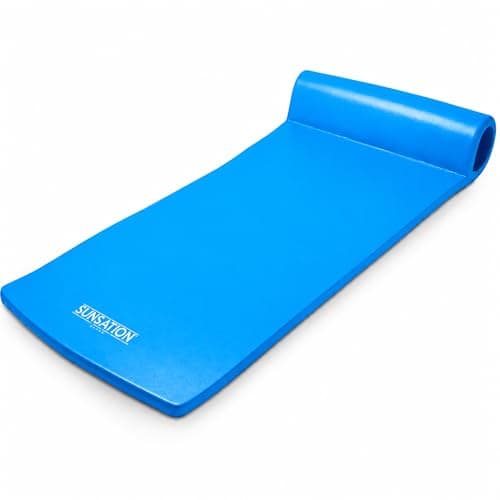 TRC Recreation Sunsation Pool Float, 1.75 in The float the foam category is priced around: 1.75 in of vinyl-coated closed-cell foam on the same 70 x 26 in footprint as the cheaper Splash, with a published 9 lb item weight against the Splash's 7.3 lb. The thickness ladder here is real and it is published. | The category benchmark, and the middle of a published thickness ladderSeveral seasons | 7.5out of 10 |
The short version
- Buy fit-independent. Covers, liners, cartridges, ladders and solar blankets are all sized to one pool. Test kits, chemicals, thermometers, cleaners and foam floats are not.
- In December the pool is closed. A gift for the winter half of pool ownership gets used this month; a float gets used in May.
- The best cheap gift is a cover pump. Standing water is what tears winter covers, and most owners do not own the tool that removes it.
- Do not gift-wrap a pool. Bestway publishes 180 days on most above-ground models, running from purchase or delivery - buy now and it lapses before the pool is filled.
The short answer: a cover pump if you want to spend under thirty dollars, a Taylor K-2006 test kit if you want to spend about a hundred, and a cordless robotic cleaner if you want to spend real money. All three fit any above-ground pool, all three need no measurements, and the first two get used before spring. Everything else on this page is sorted by those same two tests.
The two questions that decide a pool gift
Pool gift guides are usually a list of floats. That is a seasonal mistake and a sizing mistake at the same time.
Does it have to fit? More pool equipment is pool-specific than people realize. A winter cover is ordered by pool size with 3-4 ft of overlap. A liner is specific to diameter, wall height and whether the pool is round or oval. A filter cartridge is specific to the pump. A ladder is specific to the wall height, and an in-pool step to the depth. Buying any of these without the numbers produces a return, not a gift.
Can it be used now? In a northern climate the pool is under a cover from October until April. That is the entire gift season. A float is a lovely present in May and a box in the garage in December.
| Gift | Needs their measurements? | Usable before spring? |
|---|---|---|
| Cover pump | No | Yes - every rainstorm |
| Test kit or test strips | No | Yes, for a closed pool check |
| Opening kit | Gallons only | No, but it keeps |
| Cordless robotic cleaner | No | No |
| Floating thermometer | No | No |
| Foam float | Pool over ~12 ft | No |
| Poolside towels | No | Yes |
| Deck box or storage | No | Yes - winter storage |
| Winter cover | Yes - diameter and overlap | Yes, if it fits |
| Liner | Yes - size, height, shape | No |
| Filter cartridge | Yes - pump model | No |
| Ladder or steps | Yes - wall height | No |
| Solar cover | Yes - diameter | No |
| Salt chlorine generator | Yes - gallons and plumbing | No |
Under $30: the cover pump, and why it is the right answer
Our winter cover care guide makes one argument over and over: winter covers are destroyed by weight, and the weight is water. Rain and snowmelt collect in the middle, the cover stretches, the grommets pull out, and in a bad year the whole thing ends up in the pool. The fix is clearing the water before it accumulates, and the tool for that is a submersible cover pump.
It is the ideal gift for exactly the reasons that make it a poor purchase: it is dull, it costs thirty dollars, and it is the thing an owner puts off buying for three winters while sweeping the cover with a broom. It fits every pool because it sits on top of the cover. And a torn cover in January means a green pool in April, which is a much larger bill than the pump.
The same bracket also holds a box of 7-way test strips and a floating thermometer. Both fit anything. Neither is exciting. Both get used.
Around $100: the test kit that ends the arguments
If the person you are buying for spent any part of last summer with cloudy water, the gift is a proper drop test kit. Our test kit page and our strips-against-kits comparison both land in the same place: strips tell you roughly where you are, and a FAS-DPD drop test tells you what is actually in the water. The difference matters most in precisely the situation that makes a first-year owner miserable.
It fits any pool. It needs no measurements. It does not expire in a way that matters over a winter. And it is the gift that changes how someone owns their pool rather than adding an object to the yard.
Spring in a box
An opening kit is a slightly odd present and an extremely well-targeted one. It is used on one day - the day the cover comes off - and that day is the one an above-ground owner actively looks forward to. Our opening cost guide found that both of the kits we looked at are rated for 30,000 to 35,000 gallons against the 5,000 to 10,000 most above-ground pools hold, so the practical instruction with this gift is to divide the dose by three and keep the rest.
Which is also the honest caveat: the kit is oversized for the pool, and saying so is more useful than pretending it is not. It still works out cheaper than buying the same chemicals separately, and it arrives at the right moment in the year.
The big one: a cordless cleaner, not a cover
If the budget is a few hundred dollars, the instinct is a solar cover or a winter cover, and both are sized to the pool. The fit-independent alternative is a cordless robotic cleaner: it has no hoses, nothing to plumb into the filter, and no dependence on wall height or diameter.
Be straight about the trade, though. Our robot against manual comparison concluded that a robot is a lot of machine for a seasonal above-ground pool, and our roundup notes that the batteries are often not user-replaceable. As a gift that calculus changes - nobody weighs the payback period on a present - but it is still the most expensive thing on this page and the most likely to be sitting unused in three years.
The winter-half gifts nobody thinks of
A deck box, for the equipment that is currently in the garage
Closing a pool produces a pile of hoses, a pump and a ladder that has to live somewhere until April. A lockable box solves a problem that exists in December, which almost no pool gift does. Our equipment storage guide covers what should and should not be stored outside.Towels, because the ones they own are three years old
Not glamorous, universally used, and no measurements involved. Our towel page computes the fabric weight the category refuses to publish, which is the difference between a towel that dries a person and one that moves water around.A foam float, if the gift is really for the family
It will not be used until May, which breaks the second rule - but foam is the one float class that publishes a thickness and has no valve or seam to fail, so it is still there in three summers. The thickness ladder is here.The gift certificate nobody is embarrassed by
Chemicals. A pool owner buys chlorine, shock and pH adjuster every season regardless, and our chemical cost guide prices what that actually comes to for a small above-ground pool.
If they own a hot tub as well
Then buy for the tub, not the pool. An inflatable hot tub is in use right now, in the month the pool is closed, which makes it the better-targeted half of the same backyard. The catch is different and just as sharp - almost nothing durable fits a specific tub - and the hot tub gift page is built around that.
What we are not telling you
Which of these someone will like. We have no data on that, and a gift guide that claims otherwise is guessing. What this page can do is remove the two failure modes that are predictable: buying something that has to fit a pool you have not measured, and buying something that cannot be used for five months. Everything above either passes both tests or is flagged for failing one.
The picks, in full
Scores are our own reading of published specifications. They are not test results — we have not tested these products and we do not claim to.
Pick #1 · Getting standing water off a winter cover
Submersible Pool Cover Pump
Various
A small submersible pump that sits on the cover and clears the puddle. It exists because water weight is what destroys winter covers, and sweeping in January is nobody's idea of a Saturday.
#ad how this is funded · price as of October 17, 2026
Key specs
- Type
- Submersible, sits on top of the cover
- Operation
- Manual or automatic float switch, by model
- Discharge
- Garden hose thread on most models
- Requirement
- Outdoor-rated, GFCI-protected outlet
How it scoresour reading of published specs, not a test result
- Sizing fit
- 8.0
- Running cost
- 9.0
- Maintenance
- 7.0
- Build
- 7.0
- Value
- 8.5
Overall 7.9 / 10
What works
- Removes the single biggest cause of winter cover failure, which is accumulated water weight
- Automatic models handle rain you were not there for
- Cheap relative to a replacement cover
- Also useful for draining the last few inches of a pool at take-down
What doesn't
- It is an electrical appliance sitting in water outdoors, so the GFCI rules are not optional
- Automatic float switches are the part that fails, usually with debris under them
- Needs storing dry and drained or it freezes and cracks like any other pump
- Cheaper units struggle with the last half inch, which is where debris collects
Skip it if: Being left connected and forgotten all winter. It wants checking after storms, which is when you should be looking at the cover anyway.
What it costs to run: One purchase against the cost of a torn winter cover and the spring opening that follows it. On that comparison it is not a close call.
Several seasons: Buy-once. Built and warranted to come back out of the box for a few years, if you store it properly.
Specs from: Submersible pool cover pump — current Amazon listing and published specifications
Pick #2 · When you need a number, not a color band
Taylor K-2006 Complete Test Kit (FAS-DPD)
Taylor Technologies
The reference kit. It uses a drop-count titration for free chlorine, which gives you an actual figure rather than a shade of pink. Overkill for a 1,500-gallon pool and indispensable when something has gone properly wrong.
Key specs
- Method
- FAS-DPD drop-count titration
- Measures
- Free and combined chlorine, pH, alkalinity, calcium hardness, cyanuric acid
- Resolution
- Reads to 0.2 ppm free chlorine with the standard 10 mL sample
- Format
- Reagent bottles and graduated comparators
How it scoresour reading of published specs, not a test result
- Accuracy
- 9.8
- Ease
- 5.5
- Coverage
- 9.5
- Cost per use
- 7.0
- Value
- 8.0
Overall 8.3 / 10
What works
- Distinguishes free from combined chlorine, which is the single most useful thing a test can tell you when water smells of chlorine
- Gives a numeric result you can act on precisely rather than a color to interpret
- Reagents are individually replaceable, so the kit is a multi-season purchase
What doesn't
- Considerably more expensive than strips and more of a ritual to use
- Reagents have a shelf life and do expire
- Genuinely more kit than a small seasonal pool needs
Skip it if: Casual weekly checks. If it is a five-minute job you will skip it, and a test you skip is worse than a rough one you actually do.
What it costs to run: The reagents are the running cost, not the kit. For most seasonal above-ground owners this is a second purchase made in year two after a bad algae summer, not a first one.
Several seasons: Buy-once. Built and warranted to come back out of the box for a few years, if you store it properly.
Specs from: Taylor Technologies
Pick #3 · An opening on a pool filled from a well
Doheny's Ultimate Pool Opening Start-Up Kit
Doheny's
Four chemicals and test strips, rated across a 10,000 to 30,000 gallon band. The metal sequestrant is the reason to choose it, and it is the one chemical a well-filled pool cannot open without.
#ad how this is funded · price as of October 17, 2026
Key specs
- Rated for
- Published across the maker's 10,000 to 30,000 gallon kit range
- Metal control
- Metal Out, published as preventing stains, rust and scale
- Algae control
- Spring Control, published
- Clarity
- Water clarifier, published
- Shock
- Premium Super Shock Plus, published
- Also included
- 10-pack of test strips, published
How it scoresour reading of published specs, not a test result
- Effectiveness
- 8.0
- Ease
- 9.0
- Water impact
- 8.0
- Cost per season
- 8.0
- Value
- 8.0
Overall 8.2 / 10
What works
- Leads with a metal sequestrant, which is the correct first chemical in a pool topped up from a well
- Rated from 10,000 gallons, so the smallest size in the range is closer to a real above-ground pool
- Four chemicals rather than ten, which is a more honest list for a pool that was closed properly
- Includes test strips, so the sequence can be followed as published
What doesn't
- The exact bottle sizes are not published per gallon band, so cost per opening is harder to pin down than the In The Swim kit
- Still sized above most above-ground pools at the top of the band
- No oil or scum absorber, which the competing kit includes
- "Spring Control" is a product name rather than a published active ingredient
Skip it if: A pool that was closed badly. An opening kit assumes you are starting from clear, cold water; a pool that went under the cover green is a different and more expensive job.
What it costs to run: Our well-water page is the reason this kit exists: sequestrant before shock, every time, or the iron in the fill water oxidises and stains the liner. That stain is the expensive outcome the kit is insurance against.
One honest season: The cheapest setup that genuinely works for a season of real swimming. Nothing spare, nothing missing.
Pick #4 · Large above-ground pools and people who will not vacuum
Cordless Robotic Pool Cleaner
Various
Genuinely good at the job and genuinely expensive relative to the pool. For a 1,700-gallon frame pool it costs a meaningful fraction of the pool itself, which is difficult to justify.
#ad how this is funded · price as of October 17, 2026
Key specs
- Power
- Onboard rechargeable battery
- Coverage
- Floor only on most above-ground models
- Runtime
- Published per model
- Filtration
- Onboard basket, independent of the pool's filter
How it scoresour reading of published specs, not a test result
- Sizing fit
- 6.5
- Running cost
- 8.0
- Maintenance
- 7.0
- Build
- 7.5
- Value
- 6.0
Overall 7.1 / 10
What works
- Filters independently of the pool pump, so it adds turnover rather than replacing it
- Genuinely hands-off once it is in the water
- Onboard basket means it does not load your cartridge
What doesn't
- Expensive relative to the price of most above-ground pools
- Batteries degrade and are frequently not user-replaceable
- Most models handle the floor but not the walls of a soft-side pool
Skip it if: Small pools. If your pool cost less than three of these, the money is better spent on a cover and a timer.
What it costs to run: The honest comparison: a manual vacuum head plus a pump timer costs a fraction of this and delivers most of the benefit. A robot earns its place on a large pool owned by someone who genuinely will not vacuum otherwise.
More than you need yet: Real capability a first-pool family cannot use yet. Buy cheaper and put the difference toward chemicals and a cover.
Pick #5 · Knowing when to close, and when to stop heating
Floating Pool Thermometer
Various
The cheapest instrument on this site and the one that answers two expensive questions: is it warm enough to swim, and is it cold enough to close.
#ad how this is funded · price as of October 17, 2026
Key specs
- Types
- Floating analog, digital solar, or wireless with an indoor display
- Typical digital range
- About 15.8°F to 176°F on current models
- Typical stated accuracy
- About ±1.8°F on current digital models
- Water resistance
- IPX8 on current digital models
- Materials
- UV-stabilized and chlorine-resistant on better models
How it scoresour reading of published specs, not a test result
- Accuracy
- 7.5
- Ease
- 9.0
- Coverage
- 5.0
- Cost per use
- 9.8
- Value
- 9.2
Overall 8.4 / 10
What works
- Turns the closing decision from a guess into a reading, which is the most expensive judgment call of the pool year
- Tells you whether a solar cover is actually doing anything, rather than assuming
- Digital models are readable from the deck; analog ones need fishing out
- Cheap enough that having one is never the wrong call
What doesn't
- Analog floats get lost, get chewed, and end up under the ladder
- Solar and wireless models add batteries or a panel to a thing that could have had neither
- Tethering it is essential and almost nobody does it
- Accuracy claims are rarely independently verified — treat ±2°F as the working assumption
Skip it if: Telling you anything about water chemistry. It measures one thing, and every other decision needs a test kit.
What it costs to run: A few dollars, once. It pays for itself the first time it stops you closing a pool that was still warm, which is the mistake that produces a green opening in April.
Several seasons: Buy-once. Built and warranted to come back out of the box for a few years, if you store it properly.
Specs from: Digital floating pool thermometer — current Amazon listing and published specifications
Pick #6 · The category benchmark, and the middle of a published thickness ladder
TRC Recreation Sunsation Pool Float, 1.75 in
Texas Recreation
The float the foam category is priced around: 1.75 in of vinyl-coated closed-cell foam on the same 70 x 26 in footprint as the cheaper Splash, with a published 9 lb item weight against the Splash's 7.3 lb. The thickness ladder here is real and it is published.
#ad how this is funded · price as of October 17, 2026
Key specs
- Foam thickness
- 1.75 in, published in the listing title and features
- Size
- 70 in x 26 in, published
- Item weight
- 9 lb, published
- Material
- Vinyl-coated closed-cell foam, published
- Headrest
- Built-in roll pillow, published as adding buoyancy as well as support
- Model
- 8020026, published
- Weight capacity
- Not published
How it scoresour reading of published specs, not a test result
- Thickness
- 7.0
- Build
- 8.0
- Storage
- 5.0
- Comfort
- 8.0
- Value
- 7.5
Overall 7.5 / 10
What works
- The middle rung of the only published thickness ladder in the float category
- 9 lb of published material against 7.3 lb at the same length, so the extra half-inch is accounted for
- Closed-cell foam has no air chamber, so there is nothing to puncture and nothing to re-inflate
- Built-in roll pillow is structural rather than an inflatable add-on that can fail separately
What doesn't
- No weight capacity published, which the budget inflatables do publish
- Rigid and 70 in long, so storage is a real constraint rather than an afterthought
- Vinyl coating is the wear surface; once it splits, water gets into the foam
- Costs several times a vinyl lounger that does the same job for one summer
Skip it if: Traveling. This does not roll, fold or deflate, so a float you want in the trunk is the wrong use for it — a water saddle or an inflatable is.
What it costs to run: The arithmetic that justifies foam is replacement cycles, not comfort. At the live prices on this page it costs roughly four Intex King Kools; our float lifespan guide argues an inflatable is destroyed by storage rather than swimming, and foam removes the two parts that fail — the valve and the seams.
Several seasons: Buy-once. Built and warranted to come back out of the box for a few years, if you store it properly.
Specs from: TRC Recreation Sunsation 1.75 in — current Amazon listing, published thickness, dimensions and item weight
Pick #7 · The default first test kit
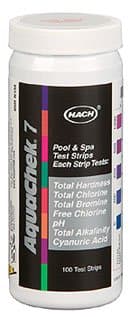
AquaChek Silver 7-Way Test Strips (100 count)
AquaChek
Seven readings in fifteen seconds, including the two that beginners never measure and then fight all summer: total alkalinity and cyanuric acid.
#ad how this is funded · price as of October 17, 2026
Key specs
- Tests
- Free chlorine, total chlorine, bromine, pH, total alkalinity, total hardness, cyanuric acid
- Free chlorine range
- 0-20 ppm
- pH range
- 6.2-8.4
- Total alkalinity range
- 0-240 ppm
- Cyanuric acid range
- 0-300 ppm
- Read time
- 15 seconds
- Count
- 100 strips
How it scoresour reading of published specs, not a test result
- Accuracy
- 7.0
- Ease
- 9.5
- Coverage
- 9.5
- Cost per use
- 9.0
- Value
- 9.2
Overall 8.9 / 10
What works
- Covers cyanuric acid, which most cheap strips omit and which is the reason chlorine stops working in a stabilized pool
- pH range spans 6.2-8.4, comfortably bracketing the CDC's recommended 7.0-7.8
- 15 seconds and a color chart printed on the bottle — no separate booklet to lose
- 100 strips is a full season of twice-weekly testing with room to spare
What doesn't
- Strips are a comparison against a printed color chart, so they are directional rather than precise
- Reading them in bright sun is harder than it should be
- The bottle must be kept sealed and dry or the strips degrade quietly
Skip it if: Fine adjustment. If you are chasing a stubborn problem and need a number rather than a color band, a liquid reagent kit is the tool.
What it costs to run: 100 strips at twice-weekly testing covers roughly two seasons for one pool. The real saving is upstream: knowing your alkalinity stops you buying pH adjuster you did not need.
One honest season: The cheapest setup that genuinely works for a season of real swimming. Nothing spare, nothing missing.
Specs from: CDC — home pool and hot tub water treatment and testing
Pick #8 · Everything, in one box, with a lid you can sit on
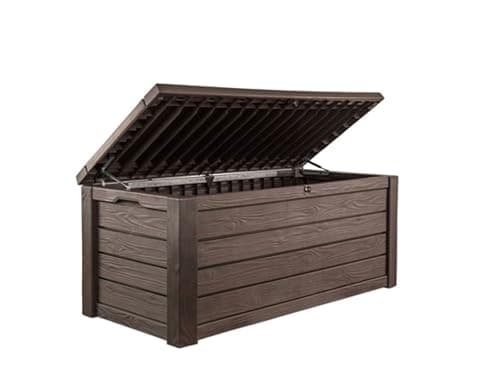
Keter Westwood 150 Gallon Deck Box
Keter
150 gallons of UV-resistant resin that takes 660 lb and locks. It ventilates rather than drains, which is the one thing to understand before you put soaking floats in it.
#ad how this is funded · price as of October 17, 2026
Key specs
- Capacity
- 150 gallons
- External size
- 61 x 28.5 x 25.35 in
- Internal size
- 56 x 24.6 x 22.8 in
- Material
- Steel-reinforced resin, UV- and weather-resistant
- Airflow
- Ventilated design; no drain holes published
- Load
- 660 lb capacity; the lid seats two adults
- Security
- Metal latch takes a padlock; lock not included
- Warranty
- 2 years limited
How it scoresour reading of published specs, not a test result
- Capacity
- 9.0
- Weatherproofing
- 8.5
- Drying
- 7.0
- Build
- 9.0
- Value
- 8.5
Overall 8.5 / 10
What works
- Large enough for loungers, noodles, toys and a cover in one place
- Ventilated, so damp vinyl is not sealed into a warm box
- Doubles as poolside seating rated to 660 lb
- Two-year warranty published on the product page, which the mesh alternatives do not match
What doesn't
- Ventilation is not drainage: wet floats still need drying before they go in
- Five feet long, which is a real piece of furniture on a small patio
- Padlock is extra
- Rigid box shape suits folded floats better than big inflated ones
Skip it if: Storing floats inflated. Large inflatables have to be deflated to fit, which is the correct way to store them anyway but means the pump comes out every time.
What it costs to run: A one-off purchase measured against replacing sun-perished floats every year or two. Our float lifespan guide covers what actually kills them, and most of it is sunlight and being left out wet.
Several seasons: Buy-once. Built and warranted to come back out of the box for a few years, if you store it properly.
Specs from: Keter — Westwood 150 gallon deck box, published specifications and warranty
Pick #9 · The heaviest fabric here, by the arithmetic
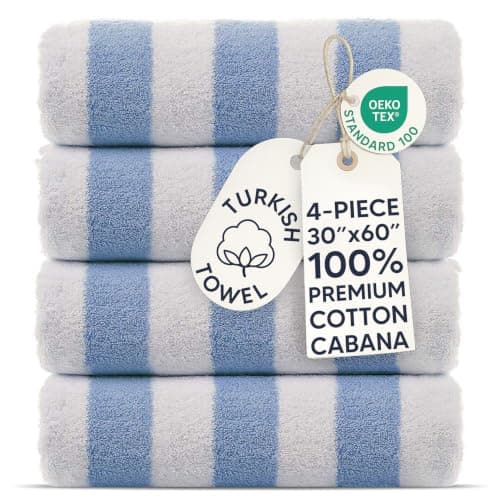
Chakir Turkish Linens Cabana Stripe Pool Towels, 4-Pack
Chakir Turkish Linens
The only 100 percent cotton towel in this group, and by a long way the densest: a published 5.04 lb across four 30 x 60 in towels works out at about 490 g/m2 computed. That is roughly 2.5 times the oversized chambray set, and it is why this is the one that dries a person rather than a surface.
Key specs
- Size
- 30 in x 60 in each, 4-pack, published
- Fiber
- 100 percent cotton, published
- Pack weight
- 5.04 lb for four towels, published — about 1.26 lb each
- Computed fabric weight
- About 490 g/m2, computed from the published weight and dimensions. Not a published GSM figure
- Hems
- "Professionally double stitched", published
- Care
- Published: wash cool, tumble dry low, "do not use fabric softener as the chemicals will only reduce the softness"
- GSM
- Not published — no towel in this comparison publishes one
How it scoresour reading of published specs, not a test result
- Fabric weight
- 9.5
- Dry time
- 4.0
- Size
- 5.0
- Build
- 8.5
- Value
- 7.5
Overall 7.5 / 10
What works
- Densest fabric in this comparison once weight is divided by area, and density is what absorbs
- All cotton, so there is no polyester content working against absorbency
- Double-stitched hems published, which is where a pool towel fails first
- Publishes the fabric-softener warning that explains why old towels stop absorbing
What doesn't
- Heaviest to dry, which is the direct cost of the density
- Smallest towel here at 30 x 60 in, so it does not cover a lounger
- Dearest per towel in this group
- Chlorine is hard on cotton over seasons, and no chlorine-resistance claim is published
Skip it if: Drying quickly, or lying on. This is a towel for getting dry and going inside. If it needs to be back in service the same afternoon, or to cover a sun lounger, buy the oversized set instead.
What it costs to run: Density is the thing being priced. About 490 g/m2 computed against about 200 for the oversized chambray set means roughly 2.5 times the cotton per square meter — at well under twice the price per towel on the live figures shown here.
Several seasons: Buy-once. Built and warranted to come back out of the box for a few years, if you store it properly.
Questions people actually ask
What do you get someone who owns a swimming pool?
Is it a bad idea to give pool gear in winter?
Should I buy someone a pool as a gift?
What is a good cheap gift for a pool owner?
What should you never buy a pool owner?
Sources
Read next
- Floats, loungers and the stuff that makes the pool worth havingFloats for adults, toddlers and dogs - ranked on seam and valve construction, which is what actually decides how long they last.
- Gifts for hot tub owners: the tub is in use, and almost nothing fits itSpa gifts chosen around two published facts - filter types do not interchange, and the dose instructions assume a tub twice the size of an inflatable one.
- A winter cover fails from water on top of it, not from coldWhy standing water is what destroys winter covers, the mid-winter checks that prevent it, and how to store one so it lasts.
- What to buy with the pool, and what can waitThe day-one list for a first above-ground pool - testing, sanitizer, a dispenser and the two manual tools - plus what to deliberately postpone until the pool is running.
- Pool test kits, and when you need a number rather than a colorReagent kits and digital testers compared against strips, with the specific situations where each one earns its place.
- What to buy before you open, not halfway throughThe six-item spring shopping list, in the order the opening sequence needs them, plus what to leave until you have a reading.
- Buying a pool in the off-season: the discount is real, the warranty is the catchWhat an off-season pool purchase costs you in warranty cover, which published models survive the wait, and how to buy in winter without spending the guarantee.
- The best foam pool floats, ranked by a number you can actually checkVinyl-coated foam floats compared on published thickness and published weight - the quantitative comparison the inflatable category cannot offer at any price.