Pool Equipment · Best Robot
Robotic pool cleaners: good, and hard to justify
They work. The question is whether they are worth a meaningful fraction of what the pool itself cost, and for most above-ground pools the answer is no.
Heads up: we earn a commission if you buy through the links on this page, at no extra cost to you. It never decides the ranking — here is how we pick and here is the full disclosure. Prices are checked automatically; last verified October 19, 2026.
Quick picks
Segmented before it is ranked — the right answer depends on which of these you actually are. Tap any row for the full write-up.
The cheaper setup that does most of it
A manual head plus a timer costs a fraction of a robot and delivers most of the benefit on a seasonal pool.
| # | Product | Best for | Score | Price |
|---|---|---|---|---|
| 1 | No image Manual Vacuum Head with Telescopic Pole and Hose Connects to the skimmer and uses the pump you already own. It is slower than a robot, cheaper than everything, and it is what most above-ground pools should have. | Actual debris, at the lowest costSeveral seasons | 8.8out of 10 | |
| 2 | 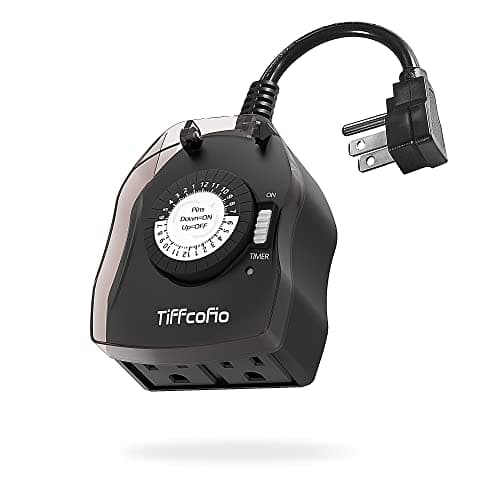 Outdoor Pool Pump Timer A weatherproof outdoor timer is the highest-return equipment purchase on this site. Most people run the pump too long because remembering to switch it off is a chore. | Cutting the electricity bill without cutting filtrationSeveral seasons | 9.0out of 10 | |
| 3 | 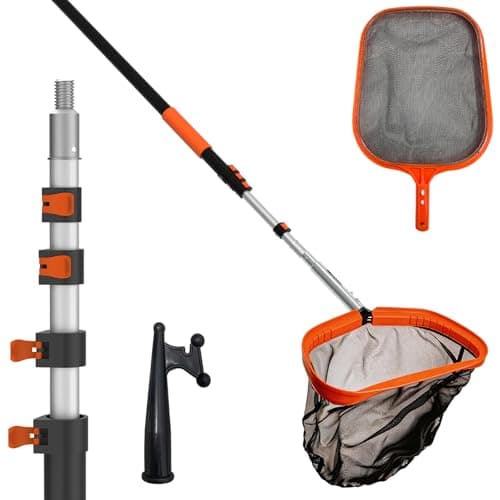 Skimmer Net with Telescopic Pole Catching leaves while they float is a two-minute job. Catching them after they sink is a vacuum session and a filter clean. Buy this first. | The five-dollar tool you use mostSeveral seasons | 8.8out of 10 |
If you still want one
Genuinely good, genuinely expensive relative to most above-ground pools.
| # | Product | Best for | Score | Price |
|---|---|---|---|---|
| 1 | 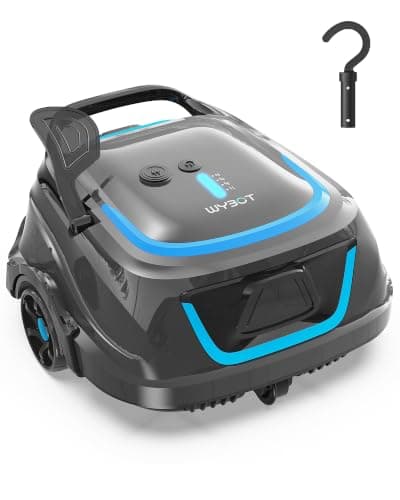 Cordless Robotic Pool Cleaner Genuinely good at the job and genuinely expensive relative to the pool. For a 1,700-gallon frame pool it costs a meaningful fraction of the pool itself, which is difficult to justify. | Large above-ground pools and people who will not vacuumMore than you need yet | 7.1out of 10 |
The short version
- They work. This is not a skepticism piece about whether the technology functions.
- The onboard basket is the real advantage — it filters independently and does not load your cartridge.
- Cost relative to the pool is the problem. On a $300 pool this is a strange allocation.
- Batteries degrade and are often not replaceable, which caps the useful life.
What they genuinely do well
Two things, and both are real.
They filter independently of your pool pump. A robot has its own motor and its own basket, so running it adds turnover on top of what the pool pump is already doing rather than replacing it. On a pool that is marginal on filtration — which, per our pump sizing table, many are at eight hours a day — that is genuinely useful.
They do not load your cartridge. Debris goes into the robot’s basket, not into your filter cartridge. Given that cartridges are the recurring cost people forget to budget for, that offsets some of the purchase price.
The honest problems
Cost relative to the pool. This is the decisive one. A robotic cleaner costs a meaningful fraction of what most above-ground pools cost. Spending that on a 1,700-gallon frame pool is a strange allocation, and the same money spent on a cover, a timer and a season of chemicals does considerably more for the pool.
Battery life. Cordless robots use rechargeable batteries that degrade with cycles, and on many models the battery is not user-replaceable. That puts a ceiling on the useful life that has nothing to do with how well the rest of it is built.
Walls. Most above-ground-rated models clean the floor. Wall climbing is largely a feature of inground models, and on a soft-side pool it is not really possible at all.
| Manual head + timer | Robotic cleaner | |
|---|---|---|
| Up-front cost | Low | Significant fraction of the pool |
| Effort per session | About 20 minutes | None |
| Loads your cartridge? | Yes, heavily | No — own basket |
| Adds filtration turnover? | No | Yes |
| Life-limiting part | Nothing much | The battery |
| Handles walls? | Yes, you do | Usually floor only |
When one is genuinely justified
A large above-ground pool. At 6,000-7,000 gallons the manual job is long enough that it stops getting done, and a job that does not get done is worse value than any purchase.
A household that will not vacuum. This is not a criticism — be honest about it. A robot that runs is worth more than a manual head that stays in the shed, and an unclean pool costs more in shock and chemistry than the robot did.
Heavy debris load. Trees over the pool, or a dog in it, means a constant floor load, and automating it changes the daily experience of ownership.
If you buy one
Check three published specs. Rated pool size, matched to your actual gallons. Runtime, matched to how long a full pass takes on your pool. And whether the battery is user-replaceable, because that single answer determines whether this is a three-year purchase or a longer one.
For the money side of the same decision, our robot versus manual cost comparison puts a figure on what a robot costs to run and states the honest size of the prize — it is automating a job that takes about ten minutes a week.
The picks, in full
Scores are our own reading of published specifications. They are not test results — we have not tested these products and we do not claim to.
Pick #1 · Actual debris, at the lowest cost
Manual Vacuum Head with Telescopic Pole and Hose
Various
Connects to the skimmer and uses the pump you already own. It is slower than a robot, cheaper than everything, and it is what most above-ground pools should have.
Key specs
- Power
- Uses the pool's existing pump suction
- Needs
- A telescopic pole and a vacuum hose of the right length
- Fitting
- Must match the skimmer on your pool
- Consumables
- None beyond the filter it already loads
How it scoresour reading of published specs, not a test result
- Sizing fit
- 8.5
- Running cost
- 9.8
- Maintenance
- 8.0
- Build
- 8.0
- Value
- 9.5
Overall 8.8 / 10
What works
- No batteries, no motor, nothing that can fail electrically
- Lifts real debris, not just silt
- Cheapest capable option, by a wide margin
What doesn't
- You have to prime the hose properly or the pump loses suction
- Loads the filter heavily, so plan to clean it right after
- It is genuinely manual work and takes twenty minutes
Skip it if: A pool without a skimmer connection, which rules out most soft-side inflatables.
What it costs to run: Free to run beyond the pump time you are already paying for. The one hidden cost is filter loading — expect to clean the cartridge immediately after vacuuming.
Several seasons: Buy-once. Built and warranted to come back out of the box for a few years, if you store it properly.
Pick #2 · Cutting the electricity bill without cutting filtration
Outdoor Pool Pump Timer
Various
A weatherproof outdoor timer is the highest-return equipment purchase on this site. Most people run the pump too long because remembering to switch it off is a chore.
Key specs
- Type
- Outdoor-rated mechanical or digital timer
- Required rating
- Must be rated for the pump's amperage and for outdoor use
- Must not defeat
- The pump's GFCI protection
How it scoresour reading of published specs, not a test result
- Sizing fit
- 8.5
- Running cost
- 9.8
- Maintenance
- 9.0
- Build
- 7.5
- Value
- 9.5
Overall 9.0 / 10
What works
- Turns your filtration from a guess into a schedule
- Pays for itself within a single season on most pools
- Lets you shift running hours to off-peak if your utility has time-of-use rates
What doesn't
- Must be genuinely outdoor-rated and correctly amperage-matched, which cheap indoor timers are not
- Never bypass or defeat the pump's GFCI to fit one
- Mechanical timers drift and need resetting after a power cut
Skip it if: Fixing an undersized pump. Running the wrong pump on a schedule just makes the schedule longer.
What it costs to run: The arithmetic that justifies it: at the EIA's June 2026 US residential average of 18.34 cents per kWh, trimming a 400 W pump from 12 hours to 8 hours a day across a 120-day season saves 192 kWh, or about $35. That is more than the timer costs.
Several seasons: Buy-once. Built and warranted to come back out of the box for a few years, if you store it properly.
Specs from: EIA Electric Power Monthly, Table 5.6.A
Pick #3 · The five-dollar tool you use most
Skimmer Net with Telescopic Pole
Various
Catching leaves while they float is a two-minute job. Catching them after they sink is a vacuum session and a filter clean. Buy this first.
Key specs
- Type
- Flat skimmer or deep leaf rake
- Pole
- Telescopic, sized to reach the middle of your pool
- Frame
- Plastic or aluminum
How it scoresour reading of published specs, not a test result
- Running cost
- 10.0
- Value
- 9.5
Overall 8.8 / 10
What works
- The single most-used tool in pool ownership and among the cheapest
- Removing debris before it sinks prevents most of the work that follows
- A deep leaf rake handles far more per pass than a flat skimmer
What doesn't
- Cheap plastic frames snap where the pole attaches, which is the standard failure
- Telescopic poles seize with hard water unless rinsed
- A too-short pole means you cannot reach the middle, which makes it useless
Skip it if: Anything on the floor. This is a surface tool and pretending otherwise is how debris ends up in the filter.
What it costs to run: Free to use and it directly reduces your chemical bill: organic debris consumes chlorine as it breaks down, so removing leaves is the cheapest sanitizer saving there is.
Several seasons: Buy-once. Built and warranted to come back out of the box for a few years, if you store it properly.
Pick #4 · Large above-ground pools and people who will not vacuum
Cordless Robotic Pool Cleaner
Various
Genuinely good at the job and genuinely expensive relative to the pool. For a 1,700-gallon frame pool it costs a meaningful fraction of the pool itself, which is difficult to justify.
#ad how this is funded · price as of October 19, 2026
Key specs
- Power
- Onboard rechargeable battery
- Coverage
- Floor only on most above-ground models
- Runtime
- Published per model
- Filtration
- Onboard basket, independent of the pool's filter
How it scoresour reading of published specs, not a test result
- Sizing fit
- 6.5
- Running cost
- 8.0
- Maintenance
- 7.0
- Build
- 7.5
- Value
- 6.0
Overall 7.1 / 10
What works
- Filters independently of the pool pump, so it adds turnover rather than replacing it
- Genuinely hands-off once it is in the water
- Onboard basket means it does not load your cartridge
What doesn't
- Expensive relative to the price of most above-ground pools
- Batteries degrade and are frequently not user-replaceable
- Most models handle the floor but not the walls of a soft-side pool
Skip it if: Small pools. If your pool cost less than three of these, the money is better spent on a cover and a timer.
What it costs to run: The honest comparison: a manual vacuum head plus a pump timer costs a fraction of this and delivers most of the benefit. A robot earns its place on a large pool owned by someone who genuinely will not vacuum otherwise.
More than you need yet: Real capability a first-pool family cannot use yet. Buy cheaper and put the difference toward chemicals and a cover.
Questions people actually ask
Do robotic pool cleaners really work?
Are robotic pool cleaners worth it for above-ground pools?
Do robotic pool cleaners climb the walls of above-ground pools?
Sources
Read next
- Equipment, sized to your pool and costed by the wattPumps, filters, vacuums, heaters and ladders - matched to your gallons and priced by what they draw.
- The best above-ground pool vacuumsBattery handhelds, manual suction heads and robotic cleaners - what each actually handles and which pool justifies which.
- Pool filters: the consumable nobody budgets forCartridge replacement intervals, what rinsing does and does not achieve, and when sand becomes the cheaper answer.
- What an above-ground pool actually costs to run for a yearElectricity, chemicals, water and consumables for a full season - every input sourced, every calculation shown, and every assumption named.
- Pool maintenance for beginners, in twenty minutes a weekThe complete weekly routine in order, what each step is actually for, and the things you can safely ignore.
- Robotic or suction: one adds filtration, the other borrows itCordless robots against suction-side cleaners for above-ground pools: power source, what each needs from your pump, coverage, and which one suits a seasonal pool.