Pool Equipment
What kills pool pumps, and none of it is running time
These units rarely wear out. They die from running dry, from water left in them over winter, and from being asked to pull through a filter that gave up in July.
Heads up: we earn a commission if you buy through the links on this page, at no extra cost to you. It never decides the ranking — here is how we pick and here is the full disclosure. Prices are checked automatically; last verified October 8, 2026.
The short version
- No manufacturer publishes a service life for these pumps, so we will not invent one. What is publishable is what ends them.
- Running dry is the fastest way to kill one. These pumps are cooled by the water passing through them.
- Water left in the housing over winter is the second. Ice expands, and a rigid plastic housing has nowhere to give.
- A strangled filter shortens a pump’s life quietly, by making it work against a restriction for months.
Why we will not print a years figure
We checked the manufacturer pages for the pumps we cover and none publishes an expected service life. That is consistent with the rest of this category — the same is true of pools and liners, as our lifespan guide sets out — and it is for the same reason: the owner decides most of it.
These are sealed consumer units running for a few months a year in a benign duty cycle. They are not generally worn out by use. They are killed by four specific events, and all four are avoidable.
| Cause | Mechanism | Preventable? |
|---|---|---|
| Running dry | No water to cool the motor or lubricate the seal | Entirely — keep the level right |
| Freezing with water inside | Ice expands; rigid housing cracks | Entirely — drain it |
| Working against a blocked filter | Continuous strain, heat, cavitation | Entirely — change the cartridge |
| Chemical exposure | Tablets in the skimmer with no flow | Entirely — use a dispenser |
| Grit through the impeller | Abrasion from a failed basket or vacuuming | Mostly — check the baskets |
| Age and UV on the housing | Plastic embrittlement, cracked lids | Partly — keep it shaded |
One: running dry, which happens in minutes
The single fastest way to destroy one of these. The motor is cooled by the water it moves and the shaft seal is lubricated by it; with no flow, both fail quickly.
It usually happens by accident rather than neglect. The water level drops below the middle of the skimmer opening, the pump starts drawing air, and if nobody notices it runs on. Or a pump loses prime and someone leaves it running while they go to look up what to do — which is exactly why our troubleshooting guide says to switch it off at the socket before working through the checks.
The prevention is the level. Evaporation and splash-out lower it continuously, and a solar cover reduces both. Our skimmer guide covers the operating window, which is narrower than people assume.
Two: winter, which is the other quick death
Water expands when it freezes, and a pump housing is rigid plastic holding a few gallons. There is nowhere for the expansion to go, so it cracks the housing — a failure that happens overnight and is not repairable.
At take-down or closing, drain the pump and filter completely and leave the drain plugs out. Store the unit somewhere that does not freeze rather than beside the pool, and keep the plugs and O-rings together where you will find them. Our storage guide covers the routine, and the unexpected freeze guide covers the version where the cold arrives before you planned to close.
Three: the slow death, which is a filter problem
A cartridge loaded past the point where rinsing helps raises the resistance the pump works against. The motor draws roughly the same power and delivers less, runs hotter, and can begin to cavitate — pulling air out of the water as it strains.
Run a pump like that for a season and you have aged it without any dramatic event. It is also costing you money the whole time, because you are paying for hours to compensate for a part that costs very little: Intex guidance for Type A cartridges is replacement roughly every two weeks in heavy use, with a rinse rather than a scrub in between. Our cartridge guide covers the interval.
The related error is sizing. A pump at the edge of its rated pool size has no margin when the cartridge loads, so it spends more of the season straining. Our pump sizing guide covers buying with headroom.
Four: chemicals where they should not be
Putting chlorine tablets in the skimmer is a common shortcut and a bad one on a pool whose pump switches off overnight. Concentrated dissolved trichlor sits in the skimmer and the pump housing with no flow to dilute it, and it is aggressive to both.
A floating dispenser is the cheapest item in this hub and it removes the problem entirely, while also metering the tablets properly — which prevents the mid-week chlorine trough our tablets versus liquid guide describes.
The habits that add seasons
Check the level whenever you are at the pool. Middle of the skimmer opening. Ten seconds.
Empty both baskets. Skimmer and pump strainer. A basket that fails and lets grit through to the impeller is a mechanical injury rather than a maintenance issue.
Change the cartridge on schedule. Cheap part, expensive consequence.
Shade the pump if you can. Plastic housings embrittle under ultraviolet exposure and lids crack at the clamp points. A simple shade, not an enclosure — it still needs airflow and access, which is also why boxing it into decking is a decision people regret, as our decks guide covers.
Use a timer. Fewer unnecessary hours is less wear as well as less electricity — at the national average rate, each hour a day on a 300 W pump is about $6.60 across a season, and our run-time guide works out how many you actually need.
Where the pump sits in the budget
It is a durable rather than a consumable, which means it belongs in the year-one column and not the annual one — our year two guide sorts every line that way, and the replacement parts guide covers what genuinely recurs. A pump that lasts several seasons is one of the reasons year two of pool ownership is so much cheaper than year one, and all four of the failure modes above are things you decide rather than things that happen to you.
What to buy
Scores are our own reading of published specifications. They are not test results — we have not tested these products and we do not claim to.
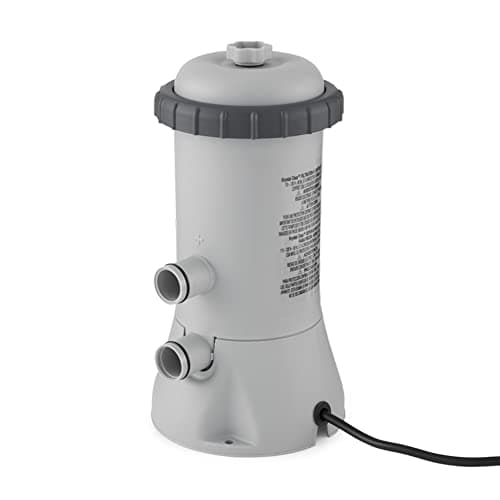
Small frame and inflatable pools
Intex Krystal Clear C530 Cartridge Filter Pump
Intex
530 GPH pump flow, 475 GPH through the system. The right pump for a 12-foot pool and badly undersized for anything much bigger.
#ad how this is funded · price as of October 8, 2026
Key specs
- Pump flow rate
- 530 GPH
- System flow rate
- 475 GPH
- Cartridge
- Type A
- Wattage
- Not published by Intex
How it scoresour reading of published specs, not a test result
- Sizing fit
- 8.0
- Running cost
- 9.0
- Maintenance
- 7.0
- Build
- 7.0
- Value
- 8.5
Overall 8.0 / 10
What works
- Correctly matched to the 12ft Prism Frame and Easy Set pools it ships with
- Smallest pump here that will still genuinely turn over a real pool
- Type A cartridges, which are everywhere
What doesn't
- Undersized the moment you upgrade the pool, and it will not carry over
- No wattage published
- Cartridge needs rinsing frequently in a busy small pool
Skip it if: Anything over about 2,000 gallons. Below that it is right; above it you are running it all day for one turnover.
What it costs to run: 475 GPH system flow turns over 1,718 gallons in about 3.6 hours, so a 7-hour daily run is two full turnovers. That is a genuinely short run time and it is where a small pool's low running cost actually comes from.
One honest season: The cheapest setup that genuinely works for a season of real swimming. Nothing spare, nothing missing.
Specs from: Intex — Krystal Clear cartridge filter pumps
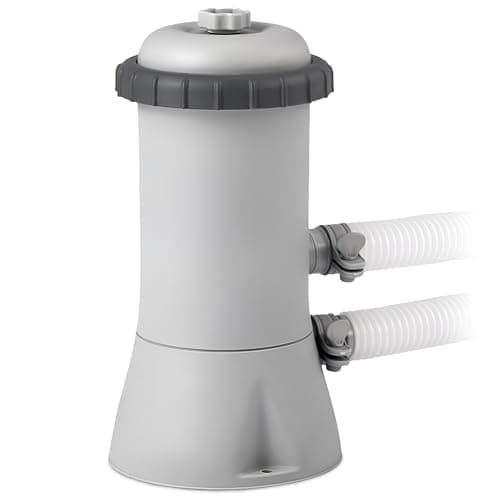
Pools up to about 6,000 gallons
Intex Krystal Clear C1000 Cartridge Filter Pump
Intex
The workhorse replacement pump for mid-size frame pools. 1,000 GPH pump flow, 750 GPH through the system once the cartridge is in the way — and that second number is the one your turnover math needs.
#ad how this is funded · price as of October 8, 2026
Key specs
- Pump flow rate
- 1,000 GPH
- System flow rate
- 750 GPH
- Rated pool size
- Up to 6,000 gallons
- Cartridge
- Type A
- Wattage
- Not published by Intex
How it scoresour reading of published specs, not a test result
- Sizing fit
- 9.0
- Running cost
- 7.0
- Maintenance
- 7.5
- Build
- 7.5
- Value
- 8.5
Overall 8.3 / 10
What works
- Intex publishes both pump flow and system flow, which is more honesty than most of this category offers
- Type A cartridges are the most widely stocked filter consumable in the US
- Sized correctly for the 12ft-15ft frame pools most families own
What doesn't
- Wattage is not published anywhere on the Intex site, so you cannot cost it before purchase
- Cartridge-only, so there is a consumable every few weeks in a busy pool
- GFCI cord length dictates where the pool can go more than people expect
Skip it if: Pools over about 6,000 gallons. Above that you are asking it to run all day to achieve one turnover, which is the expensive way to filter.
What it costs to run: Do the turnover math before you buy: 750 GPH system flow moves 4,000 gallons in 5.3 hours. Two turnovers a day is therefore about 11 hours of running. At the EIA's June 2026 US residential average of 18.34 cents per kWh, every 100 watts of pump draw running 11 hours a day for a 120-day season costs about $24. Find your wattage on the pump label and multiply.
Several seasons: Buy-once. Built and warranted to come back out of the box for a few years, if you store it properly.
Specs from: Intex — Krystal Clear cartridge filter pumps, EIA Electric Power Monthly, Table 5.6.A — US residential average price
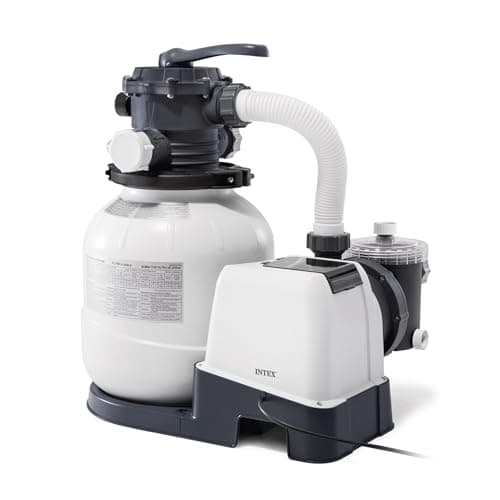
Getting off the cartridge treadmill
Intex Krystal Clear Sand Filter Pump
Intex
Sand filtration replaces a recurring cartridge purchase with a backwash valve and a bag of sand that lasts years. On a pool you intend to keep, the arithmetic favors it.
Key specs
- Media
- Filter sand (or glass media)
- Maintenance
- Backwash rather than rinse-and-replace
- Media life
- Several seasons before replacement
- Wattage
- Not published by Intex
How it scoresour reading of published specs, not a test result
- Sizing fit
- 8.5
- Running cost
- 8.0
- Maintenance
- 8.5
- Build
- 8.0
- Value
- 8.5
Overall 8.4 / 10
What works
- No cartridges to buy, which removes the single largest recurring equipment cost
- Backwashing takes about two minutes versus rinsing a cartridge in the yard
- Sand lasts years rather than weeks
What doesn't
- Backwashing sends water down the drain, and that water has chemicals in it you paid for
- Higher purchase price than a cartridge pump of the same flow
- Heavier and needs a stable, level base of its own
Skip it if: A small seasonal pool that comes down every autumn. The payback period is measured in seasons, so it only works if there will be seasons.
What it costs to run: The comparison to run: cartridge replacements per season versus one bag of sand every few years, plus the water each backwash discards at the EPA WaterSense average of $6.06 per 1,000 gallons. On a pool you will own for three or more years, sand usually wins.
Several seasons: Buy-once. Built and warranted to come back out of the box for a few years, if you store it properly.
Specs from: EPA WaterSense — cost per 1,000 gallons
Cutting the electricity bill without cutting filtration
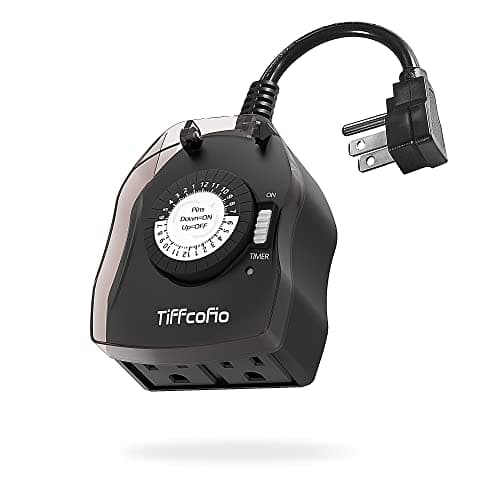
Outdoor Pool Pump Timer
Various
A weatherproof outdoor timer is the highest-return equipment purchase on this site. Most people run the pump too long because remembering to switch it off is a chore.
#ad how this is funded · price as of October 8, 2026
Key specs
- Type
- Outdoor-rated mechanical or digital timer
- Required rating
- Must be rated for the pump's amperage and for outdoor use
- Must not defeat
- The pump's GFCI protection
How it scoresour reading of published specs, not a test result
- Sizing fit
- 8.5
- Running cost
- 9.8
- Maintenance
- 9.0
- Build
- 7.5
- Value
- 9.5
Overall 9.0 / 10
What works
- Turns your filtration from a guess into a schedule
- Pays for itself within a single season on most pools
- Lets you shift running hours to off-peak if your utility has time-of-use rates
What doesn't
- Must be genuinely outdoor-rated and correctly amperage-matched, which cheap indoor timers are not
- Never bypass or defeat the pump's GFCI to fit one
- Mechanical timers drift and need resetting after a power cut
Skip it if: Fixing an undersized pump. Running the wrong pump on a schedule just makes the schedule longer.
What it costs to run: The arithmetic that justifies it: at the EIA's June 2026 US residential average of 18.34 cents per kWh, trimming a 400 W pump from 12 hours to 8 hours a day across a 120-day season saves 192 kWh, or about $35. That is more than the timer costs.
Several seasons: Buy-once. Built and warranted to come back out of the box for a few years, if you store it properly.
Specs from: EIA Electric Power Monthly, Table 5.6.A
The consumable you will actually buy repeatedly
Type A Replacement Filter Cartridges (multipack)
Various
Buy them in a multipack before you need them. A pool running on an exhausted cartridge is a cloudy pool, and the fix is a two-dollar part you did not have.
Key specs
- Type
- Type A — the most common Intex format
- Replacement interval
- Every 2 weeks in heavy use, per Intex guidance
- Between changes
- Rinse, do not scrub
How it scoresour reading of published specs, not a test result
- Sizing fit
- 9.0
- Running cost
- 7.0
- Maintenance
- 8.5
- Build
- 7.0
- Value
- 8.5
Overall 8.2 / 10
What works
- Type A is the most widely stocked cartridge format in the US
- Multipacks cost a fraction of buying singles
- Having a spare turns a cloudy week into a five-minute fix
What doesn't
- It is a genuine recurring cost that nobody includes in the purchase price
- Aftermarket quality varies noticeably
- Rinsing extends life but does not restore a cartridge that is done
Skip it if: Being restored. Once the pleats are permanently gray and stiff, rinsing is not saving it.
What it costs to run: The line item most people leave out of their pool budget. Count how many you use in your first season and you have your real annual filtration cost — this is exactly the number the cost-to-run guide asks you to record.
One honest season: The cheapest setup that genuinely works for a season of real swimming. Nothing spare, nothing missing.
Questions people actually ask
How long should an above-ground pool pump last?
What happens if a pool pump runs dry?
Do I need to drain my pool pump for winter?
Does a dirty filter damage the pump?
Sources
Read next
- Equipment, sized to your pool and costed by the wattPumps, filters, vacuums, heaters and ladders - matched to your gallons and priced by what they draw.
- Pool pump problems, diagnosed in the cheapest orderThe five-check diagnostic sequence for an above-ground pool pump, from free fixes to the point at which it is genuinely the motor.
- Sizing a pump: the number on the box is not the number you useTurnover time computed from published system flow rates for common pool volumes, and why an oversized pump costs you money every day.
- Above-ground pool pumps: how many gallons per hour you actually needPumps matched to pool volume by system flow rate, with the season running-cost table manufacturers do not publish.
- Filter cartridges: the consumable nobody budgets forThe replacement interval, the rinse-versus-scrub question, and how the cartridge treadmill compares with a sand filter across a season.
- A freeze is forecast and the pool is still openWhat to protect first when a cold snap arrives before closing day, why the equipment is at risk before the pool is, and when to just close early.
- What actually wears out, and when you will be buying itThe replacement schedule for an above-ground pool - cartridges, covers, liners and hardware - and which spares are worth keeping on the shelf.
- Where the pump spends the winterManufacturer instructions for draining and storing pumps and filters over winter, the plug conflict between makers, and how pool chemicals should be stored.