Pool Equipment
Sizing a pump: the number on the box is not the number you use
Every pump in this category advertises two flow rates and the bigger one is the one that does not matter. Sizing correctly is one division, done with the right figure.
Heads up: we earn a commission if you buy through the links on this page, at no extra cost to you. It never decides the ranking — here is how we pick and here is the full disclosure. Prices are checked automatically; last verified October 8, 2026.
The short version
- Use the system flow rate, not the pump flow rate. Intex publishes both, and the system figure is the one that accounts for the filter in the way.
- Turnover time = gallons ÷ system flow rate. That is the whole calculation, and it takes about ten seconds.
- Bigger is not safer. An oversized pump draws more electricity every day of the season for filtration a small pool cannot use.
- Manufacturers in this category publish flow rate but not wattage, so you can size a pump from the listing but you cannot cost it until you read the label.
The two flow rates, and which one lies
Every cartridge pump in this category advertises a flow rate in gallons per hour, and the larger, more prominent number is the pump flow — what the motor moves with nothing in its way. The number you actually need is the system flow rate, which is what comes out once the water has been pushed through the filter. Intex publishes both for the Krystal Clear range: the C530 is a 530 GPH pump with a 475 GPH system flow, and the C1000 is a 1,000 GPH pump with a 750 GPH system flow.
That gap is not a rounding error. On the C1000 it is a quarter of the advertised capability, and sizing off the headline figure means believing your water turns over faster than it does. When only one number is published, assume it is the optimistic one and treat the pump as smaller than advertised.
Turnover time, for any pump and any pool
- Pool volume
- your published gallons
- System flow rate [Intex]
- GPH, from the manufacturer
turnover hours = gallons ÷ system flow rate (GPH)
A 1,718-gallon pool on a 475 GPH system flow turns over in about 3.6 hours
| Pool volume | Pump | System flow | One turnover |
|---|---|---|---|
| 1,485 gal | Intex C530 | 475 GPH | ≈ 3.1 h |
| 1,718 gal | Intex C530 | 475 GPH | ≈ 3.6 h |
| 3,955 gal | Intex C1000 | 750 GPH | ≈ 5.3 h |
| 6,981 gal | Intex C1000 | 750 GPH | ≈ 9.3 h — undersized |
| 6,981 gal | Sand filter pump | Not published | Use the rated pool size |
Why oversizing is not free
The instinct when in doubt is to buy the bigger pump. It is the wrong instinct here for a reason that is purely financial: a pump runs for hours every day of the season, and the electricity is proportional to its draw. Buying more pump than the pool needs means paying for capability you cannot use, every day, for the life of the pump.
The numbers are in our pump electricity guide: at the EIA national average of 18.34 cents per kWh, every 100 W of pump run 8 hours a day for a 120-day season costs about $17.61. A pump that draws 200 W more than it needed to is roughly $35 a season of nothing.
Undersizing is worse in a different way — the water genuinely never turns over, the filter never gets a fair chance, and you spend the summer chasing cloudy water with chemicals. That is why the arithmetic matters in both directions rather than only one.
The specification nobody publishes
Here is the frustrating part. You can size a pump from published information, but you cannot cost one, because Intex and Bestway publish flow rates and do not publish wattage. Flow tells you about turnover; watts tell you about your bill. The label on the unit or the motor nameplate is the only reliable source, which means the running cost of a pump is effectively unknowable until it is in your hands.
Treat that absence as information when you shop. Our pump roundup flags which manufacturers publish what, and where a figure is missing we say so rather than filling the gap.
Filter type changes the sizing conversation
A sand filter and a cartridge filter of nominally similar capacity behave differently over a season. A cartridge loads up progressively and the effective system flow falls as it does, which is why a pump that seemed adequate in June struggles in August. A sand filter is backwashed rather than replaced, so its flow recovers each time.
That means sizing a cartridge system with no margin is optimistic: you are sizing for a clean cartridge you will not have for most of the season. Our sand versus cartridge comparison covers the trade-off, and our cartridge guide covers the replacement interval that keeps the flow honest.
Matching the fittings, not just the numbers
One practical trap. Above-ground pool inlets and outlets are not standardized across brands, and a correctly sized pump with the wrong hose fitting is a return. Check the hose diameter and the fitting type against your pool before ordering, particularly if you are replacing a pump on a pool from a different manufacturer.
And check the electrical side. Pool pumps must be on GFCI protection, and any timer you add has to be rated for the pump’s amperage and for outdoor use without defeating that protection. Our run-time guide covers fitting the timer safely.
What to buy
Scores are our own reading of published specifications. They are not test results — we have not tested these products and we do not claim to.
Small frame and inflatable pools
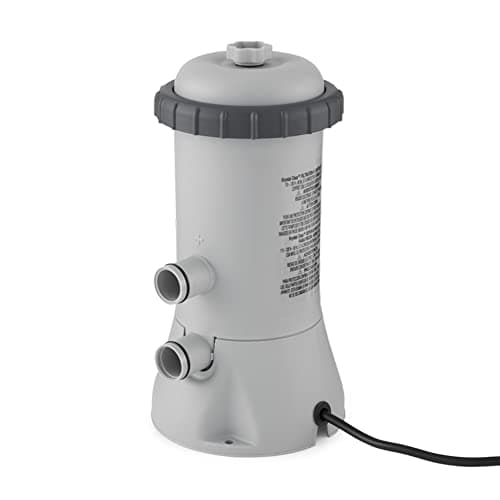
Intex Krystal Clear C530 Cartridge Filter Pump
Intex
530 GPH pump flow, 475 GPH through the system. The right pump for a 12-foot pool and badly undersized for anything much bigger.
#ad how this is funded · price as of October 8, 2026
Key specs
- Pump flow rate
- 530 GPH
- System flow rate
- 475 GPH
- Cartridge
- Type A
- Wattage
- Not published by Intex
How it scoresour reading of published specs, not a test result
- Sizing fit
- 8.0
- Running cost
- 9.0
- Maintenance
- 7.0
- Build
- 7.0
- Value
- 8.5
Overall 8.0 / 10
What works
- Correctly matched to the 12ft Prism Frame and Easy Set pools it ships with
- Smallest pump here that will still genuinely turn over a real pool
- Type A cartridges, which are everywhere
What doesn't
- Undersized the moment you upgrade the pool, and it will not carry over
- No wattage published
- Cartridge needs rinsing frequently in a busy small pool
Skip it if: Anything over about 2,000 gallons. Below that it is right; above it you are running it all day for one turnover.
What it costs to run: 475 GPH system flow turns over 1,718 gallons in about 3.6 hours, so a 7-hour daily run is two full turnovers. That is a genuinely short run time and it is where a small pool's low running cost actually comes from.
One honest season: The cheapest setup that genuinely works for a season of real swimming. Nothing spare, nothing missing.
Specs from: Intex — Krystal Clear cartridge filter pumps
Pools up to about 6,000 gallons
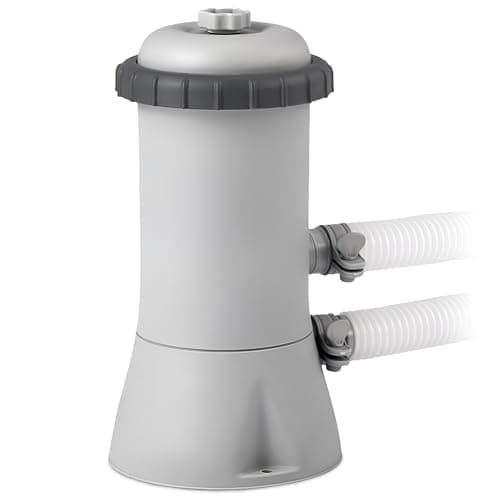
Intex Krystal Clear C1000 Cartridge Filter Pump
Intex
The workhorse replacement pump for mid-size frame pools. 1,000 GPH pump flow, 750 GPH through the system once the cartridge is in the way — and that second number is the one your turnover math needs.
#ad how this is funded · price as of October 8, 2026
Key specs
- Pump flow rate
- 1,000 GPH
- System flow rate
- 750 GPH
- Rated pool size
- Up to 6,000 gallons
- Cartridge
- Type A
- Wattage
- Not published by Intex
How it scoresour reading of published specs, not a test result
- Sizing fit
- 9.0
- Running cost
- 7.0
- Maintenance
- 7.5
- Build
- 7.5
- Value
- 8.5
Overall 8.3 / 10
What works
- Intex publishes both pump flow and system flow, which is more honesty than most of this category offers
- Type A cartridges are the most widely stocked filter consumable in the US
- Sized correctly for the 12ft-15ft frame pools most families own
What doesn't
- Wattage is not published anywhere on the Intex site, so you cannot cost it before purchase
- Cartridge-only, so there is a consumable every few weeks in a busy pool
- GFCI cord length dictates where the pool can go more than people expect
Skip it if: Pools over about 6,000 gallons. Above that you are asking it to run all day to achieve one turnover, which is the expensive way to filter.
What it costs to run: Do the turnover math before you buy: 750 GPH system flow moves 4,000 gallons in 5.3 hours. Two turnovers a day is therefore about 11 hours of running. At the EIA's June 2026 US residential average of 18.34 cents per kWh, every 100 watts of pump draw running 11 hours a day for a 120-day season costs about $24. Find your wattage on the pump label and multiply.
Several seasons: Buy-once. Built and warranted to come back out of the box for a few years, if you store it properly.
Specs from: Intex — Krystal Clear cartridge filter pumps, EIA Electric Power Monthly, Table 5.6.A — US residential average price
Getting off the cartridge treadmill
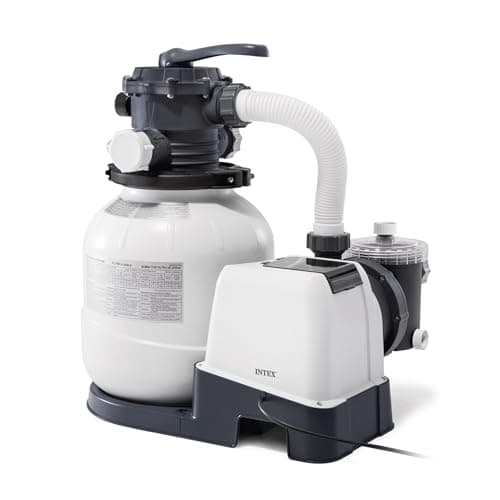
Intex Krystal Clear Sand Filter Pump
Intex
Sand filtration replaces a recurring cartridge purchase with a backwash valve and a bag of sand that lasts years. On a pool you intend to keep, the arithmetic favors it.
Key specs
- Media
- Filter sand (or glass media)
- Maintenance
- Backwash rather than rinse-and-replace
- Media life
- Several seasons before replacement
- Wattage
- Not published by Intex
How it scoresour reading of published specs, not a test result
- Sizing fit
- 8.5
- Running cost
- 8.0
- Maintenance
- 8.5
- Build
- 8.0
- Value
- 8.5
Overall 8.4 / 10
What works
- No cartridges to buy, which removes the single largest recurring equipment cost
- Backwashing takes about two minutes versus rinsing a cartridge in the yard
- Sand lasts years rather than weeks
What doesn't
- Backwashing sends water down the drain, and that water has chemicals in it you paid for
- Higher purchase price than a cartridge pump of the same flow
- Heavier and needs a stable, level base of its own
Skip it if: A small seasonal pool that comes down every autumn. The payback period is measured in seasons, so it only works if there will be seasons.
What it costs to run: The comparison to run: cartridge replacements per season versus one bag of sand every few years, plus the water each backwash discards at the EPA WaterSense average of $6.06 per 1,000 gallons. On a pool you will own for three or more years, sand usually wins.
Several seasons: Buy-once. Built and warranted to come back out of the box for a few years, if you store it properly.
Specs from: EPA WaterSense — cost per 1,000 gallons
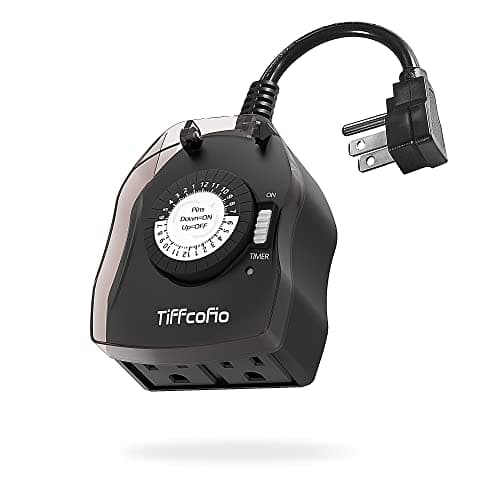
Cutting the electricity bill without cutting filtration
Outdoor Pool Pump Timer
Various
A weatherproof outdoor timer is the highest-return equipment purchase on this site. Most people run the pump too long because remembering to switch it off is a chore.
#ad how this is funded · price as of October 8, 2026
Key specs
- Type
- Outdoor-rated mechanical or digital timer
- Required rating
- Must be rated for the pump's amperage and for outdoor use
- Must not defeat
- The pump's GFCI protection
How it scoresour reading of published specs, not a test result
- Sizing fit
- 8.5
- Running cost
- 9.8
- Maintenance
- 9.0
- Build
- 7.5
- Value
- 9.5
Overall 9.0 / 10
What works
- Turns your filtration from a guess into a schedule
- Pays for itself within a single season on most pools
- Lets you shift running hours to off-peak if your utility has time-of-use rates
What doesn't
- Must be genuinely outdoor-rated and correctly amperage-matched, which cheap indoor timers are not
- Never bypass or defeat the pump's GFCI to fit one
- Mechanical timers drift and need resetting after a power cut
Skip it if: Fixing an undersized pump. Running the wrong pump on a schedule just makes the schedule longer.
What it costs to run: The arithmetic that justifies it: at the EIA's June 2026 US residential average of 18.34 cents per kWh, trimming a 400 W pump from 12 hours to 8 hours a day across a 120-day season saves 192 kWh, or about $35. That is more than the timer costs.
Several seasons: Buy-once. Built and warranted to come back out of the box for a few years, if you store it properly.
Specs from: EIA Electric Power Monthly, Table 5.6.A
Questions people actually ask
How do I know what size pump my above-ground pool needs?
What is the difference between pump flow rate and system flow rate?
Is a bigger pool pump better?
Can I put a bigger pump on an Intex pool?
Sources
Read next
- Equipment, sized to your pool and costed by the wattPumps, filters, vacuums, heaters and ladders - matched to your gallons and priced by what they draw.
- Above-ground pool pumps: how many gallons per hour you actually needPumps matched to pool volume by system flow rate, with the season running-cost table manufacturers do not publish.
- How long to run the pump, worked out rather than repeatedRun time derived from your own turnover time, when in the day to run it, and what each hour a day costs across a season.
- Sand vs cartridge: it is a maintenance choice, not a quality oneThe honest comparison: consumable cost, backwash water, weekly effort, and the season count where sand starts to win.
- What your pool pump costs to run, in watts and dollarsPool pump electricity computed from watts, hours and the EIA national average rate, with a table you can read your own pump off.
- What size pool your backyard can actually takeThe three-foot rule, the level-ground tolerance, and a table matching yard size to pool size with the running cost attached.