Pool Equipment · Best for Big Pools
Equipment for a big above-ground pool, where the small-pool answers stop working
Around six thousand gallons, several things that were fine become wrong at once: the pump runs out of rating, the cartridge treadmill gets expensive, and manual vacuuming stops being a five-minute job.
Heads up: we earn a commission if you buy through the links on this page, at no extra cost to you. It never decides the ranking — here is how we pick and here is the full disclosure. Prices are checked automatically; last verified October 8, 2026.
Quick picks
Segmented before it is ranked — the right answer depends on which of these you actually are. Tap any row for the full write-up.
Filtration, which is the decision that matters
Above about 6,000 gallons the cartridge answer runs out of both rating and patience. Sand is backwashed rather than replaced, so the consumable becomes water instead of parts.
| # | Product | Best for | Score | Price |
|---|---|---|---|---|
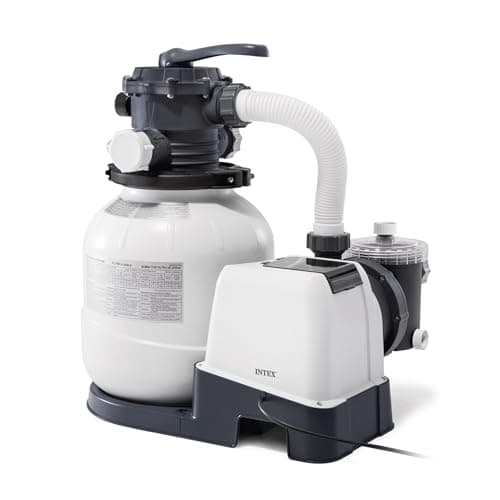
| 1 | Intex Krystal Clear Sand Filter Pump Sand filtration replaces a recurring cartridge purchase with a backwash valve and a bag of sand that lasts years. On a pool you intend to keep, the arithmetic favors it. | Getting off the cartridge treadmillSeveral seasons | 8.4out of 10 | |
| 2 | 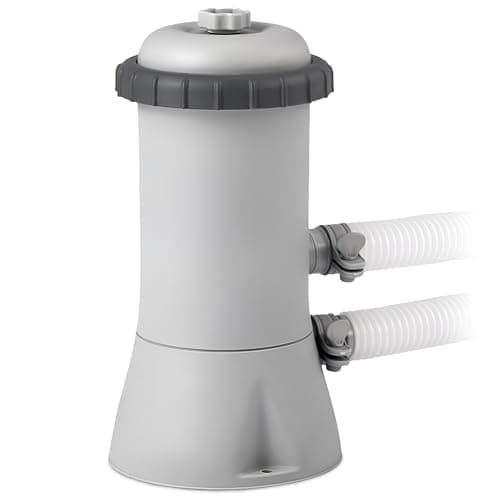 Intex Krystal Clear C1000 Cartridge Filter Pump The workhorse replacement pump for mid-size frame pools. 1,000 GPH pump flow, 750 GPH through the system once the cartridge is in the way — and that second number is the one your turnover math needs. | Pools up to about 6,000 gallonsSeveral seasons | 8.3out of 10 |
Controlling what it costs to run
A bigger pool means more hours, and hours are where the electricity is. This is the cheapest item in the hub and it saves the most on a large pool.
| # | Product | Best for | Score | Price |
|---|---|---|---|---|
| 1 | 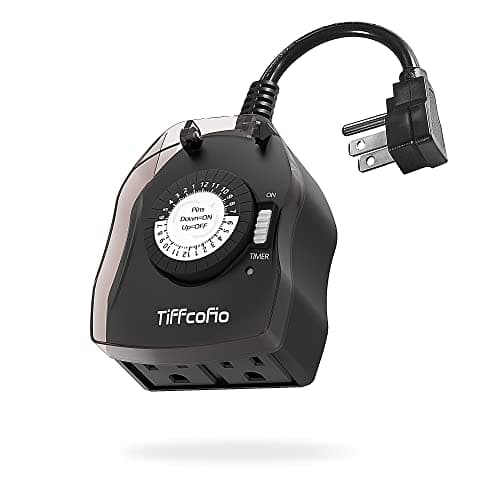 Outdoor Pool Pump Timer A weatherproof outdoor timer is the highest-return equipment purchase on this site. Most people run the pump too long because remembering to switch it off is a chore. | Cutting the electricity bill without cutting filtrationSeveral seasons | 9.0out of 10 |
Cleaning a floor that is no longer small
At 254 square feet of floor, manual vacuuming stops being a five-minute job. This is the one pool size where a powered cleaner is a straightforward argument.
| # | Product | Best for | Score | Price |
|---|---|---|---|---|
| 1 | 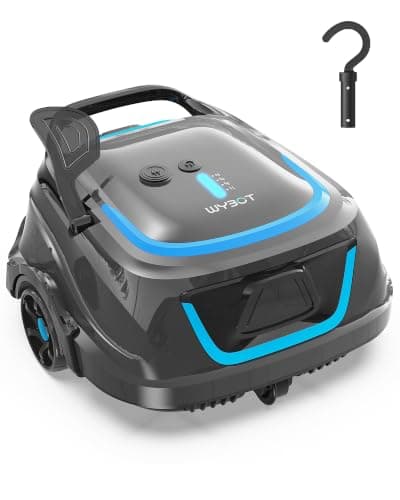 Cordless Robotic Pool Cleaner Genuinely good at the job and genuinely expensive relative to the pool. For a 1,700-gallon frame pool it costs a meaningful fraction of the pool itself, which is difficult to justify. | Large above-ground pools and people who will not vacuumMore than you need yet | 7.1out of 10 | |
| 2 | No image Manual Vacuum Head with Telescopic Pole and Hose Connects to the skimmer and uses the pump you already own. It is slower than a robot, cheaper than everything, and it is what most above-ground pools should have. | Actual debris, at the lowest costSeveral seasons | 8.8out of 10 |
Getting in and out of a 52-inch wall
A deeper wall needs a ladder matched to it exactly, and the published weight capacity matters more the higher the climb.
| # | Product | Best for | Score | Price |
|---|---|---|---|---|
| 1 | 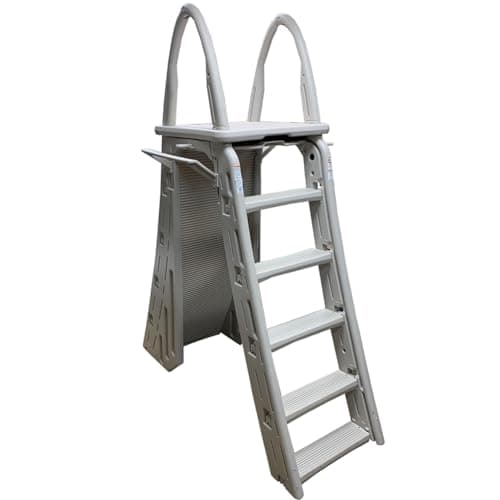 A-Frame Above-Ground Pool Ladder Read the published weight limit before anything else. It is frequently lower than buyers assume, and it is the one spec on a ladder that genuinely matters. | Getting in and out safelySeveral seasons | 8.4out of 10 |
The short version
- Around 6,000 gallons is a real threshold. Intex rates the C1000 cartridge pump for pools up to about that figure, and above it you are outside the published rating rather than close to it.
- The turnover arithmetic makes the case on its own. A 6,981-gallon pool on a 750 GPH system flow takes about 9.3 hours for one turnover.
- Cartridges get expensive at this size, which is why manufacturers bundle sand filtration with their largest pools rather than a cartridge pump.
- Every running cost scales with gallons — more hours of pump, more chemicals, more water. The equipment decisions here have permanent price tags.
The threshold, and why it is sharper than it looks
Most of this site is written for pools between 1,500 and 4,000 gallons, because that is where the category lives. The 18-foot, 52-inch class is a different proposition: Intex publishes 6,981 gallons for the Ultra XTR, and it ships with a 2,100 GPH sand filter rather than a cartridge pump. That is not a marketing upgrade, it is an engineering necessity, and the arithmetic shows why.
Why a cartridge pump runs out here
- Pool volume, Intex Ultra XTR 18ft [Intex]
- 6,981 gallons
- System flow rate, Intex C1000 [Intex]
- 750 GPH
- Published rated pool size, C1000
- up to about 6,000 gallons
6,981 ÷ 750 = 9.3 hours for one turnover
Over nine hours per turnover — and outside the pump's published rating
Filtration: sand becomes the answer
On a small pool a cartridge system usually wins on total cost, because the pool is small, the season is short, and a sand filter is a lot of hardware for 1,700 gallons. At this size the sums reverse, and for two reasons rather than one.
The first is capacity. The second is the consumable. Intex guidance for Type A cartridges is replacement roughly every two weeks in heavy use, and a 7,000-gallon pool with a family in it is heavy use by definition — that is eight or nine cartridges across a 17-week season, every season. A sand filter is backwashed instead, so its running cost becomes water and electricity rather than parts, and the media lasts several seasons.
The trade is that backwashing is a procedure with a step people skip. Our backwashing guide covers it, and sand versus cartridge covers the full comparison including where the crossover sits.
| 1,718 gal (12ft) | 6,981 gal (18ft) | |
|---|---|---|
| One turnover on the bundled pump | ≈ 3.6 h | Sand filter, 2,100 GPH |
| Sensible daily run time | 4-7 h | 8 h and up |
| Chlorine tablets per 17-week season | ≈ 6 | ≈ 24 |
| Cost of one fill at $6.06/kgal | $10.41 | $42.30 |
| Floor area to vacuum | ≈ 113 sq ft | ≈ 254 sq ft |
| Water depth | ≈ 24 in | ≈ 44 in |
The timer earns more here than anywhere else
Run time scales with volume, and electricity scales with run time, so the same timer that saves a small pool a few dollars saves a large one substantially more. At the EIA US residential average of 18.34 cents per kWh, every 100 W of pump run 8 hours a day for a 120-day season costs about $17.61 — and a 2,100 GPH sand filter pump is not a 100-watt device.
Two shorter runs rather than one long block also suits a big pool better, because you are circulating across the whole active part of the day rather than front-loading it. Our run-time guide derives the hours from turnover, and the electricity guide prices them. Any timer must be outdoor-rated, matched to the pump’s amperage and fitted downstream of the GFCI — see our electrical safety guide.
Cleaning, where the argument for a robot finally works
We are generally skeptical about robotic cleaners on above-ground pools, because the floor of a seasonal pool is small, flat and reachable from the side with a pole. At 254 square feet that stops being true: manual vacuuming becomes a genuine chore rather than a five-minute task, and a chore is something that gets skipped.
So this is the one pool size where a powered cleaner is a straightforward argument rather than a convenience purchase. Note the limitation on most above-ground models, which is floor-only coverage — walls and the water line still want a brush. Our robotic cleaner roundup covers the options, and a manual vacuum head on the pool’s own suction remains worth owning because it costs nothing to run and handles what the robot leaves.
The ladder, at 52 inches
A taller wall changes the ladder from an accessory into a piece of safety equipment that is being used at height. Two specifications matter and both are frequently skipped: the published weight capacity, which is often lower than buyers assume, and the height match — a ladder for a 48-inch wall is wrong on a 52-inch pool and the mismatch is a fall rather than an inconvenience.
Removable or lockable outer steps matter more at this size too, because the wall is a more effective barrier when the ladder is not part of it. Our ladder guide leads with both, and the permits and rules guide covers how that fits with local barrier requirements.
What we are scoring
We have not tested any of this equipment and do not claim to. The scores reflect published specification and the practical fit of each item to a large seasonal above-ground pool specifically — which is why a robotic cleaner scores better on this page than it does on our manual tools page, and why the C1000 scores lower here than it does in our general pump roundup. Context is doing the work, not a change of opinion. Our methodology page explains how our scoring works.
The picks, in full
Scores are our own reading of published specifications. They are not test results — we have not tested these products and we do not claim to.
Pick #1 · Getting off the cartridge treadmill
Intex Krystal Clear Sand Filter Pump
Intex
Sand filtration replaces a recurring cartridge purchase with a backwash valve and a bag of sand that lasts years. On a pool you intend to keep, the arithmetic favors it.
Key specs
- Media
- Filter sand (or glass media)
- Maintenance
- Backwash rather than rinse-and-replace
- Media life
- Several seasons before replacement
- Wattage
- Not published by Intex
How it scoresour reading of published specs, not a test result
- Sizing fit
- 8.5
- Running cost
- 8.0
- Maintenance
- 8.5
- Build
- 8.0
- Value
- 8.5
Overall 8.4 / 10
What works
- No cartridges to buy, which removes the single largest recurring equipment cost
- Backwashing takes about two minutes versus rinsing a cartridge in the yard
- Sand lasts years rather than weeks
What doesn't
- Backwashing sends water down the drain, and that water has chemicals in it you paid for
- Higher purchase price than a cartridge pump of the same flow
- Heavier and needs a stable, level base of its own
Skip it if: A small seasonal pool that comes down every autumn. The payback period is measured in seasons, so it only works if there will be seasons.
What it costs to run: The comparison to run: cartridge replacements per season versus one bag of sand every few years, plus the water each backwash discards at the EPA WaterSense average of $6.06 per 1,000 gallons. On a pool you will own for three or more years, sand usually wins.
Several seasons: Buy-once. Built and warranted to come back out of the box for a few years, if you store it properly.
Specs from: EPA WaterSense — cost per 1,000 gallons
Pick #2 · Pools up to about 6,000 gallons
Intex Krystal Clear C1000 Cartridge Filter Pump
Intex
The workhorse replacement pump for mid-size frame pools. 1,000 GPH pump flow, 750 GPH through the system once the cartridge is in the way — and that second number is the one your turnover math needs.
#ad how this is funded · price as of October 8, 2026
Key specs
- Pump flow rate
- 1,000 GPH
- System flow rate
- 750 GPH
- Rated pool size
- Up to 6,000 gallons
- Cartridge
- Type A
- Wattage
- Not published by Intex
How it scoresour reading of published specs, not a test result
- Sizing fit
- 9.0
- Running cost
- 7.0
- Maintenance
- 7.5
- Build
- 7.5
- Value
- 8.5
Overall 8.3 / 10
What works
- Intex publishes both pump flow and system flow, which is more honesty than most of this category offers
- Type A cartridges are the most widely stocked filter consumable in the US
- Sized correctly for the 12ft-15ft frame pools most families own
What doesn't
- Wattage is not published anywhere on the Intex site, so you cannot cost it before purchase
- Cartridge-only, so there is a consumable every few weeks in a busy pool
- GFCI cord length dictates where the pool can go more than people expect
Skip it if: Pools over about 6,000 gallons. Above that you are asking it to run all day to achieve one turnover, which is the expensive way to filter.
What it costs to run: Do the turnover math before you buy: 750 GPH system flow moves 4,000 gallons in 5.3 hours. Two turnovers a day is therefore about 11 hours of running. At the EIA's June 2026 US residential average of 18.34 cents per kWh, every 100 watts of pump draw running 11 hours a day for a 120-day season costs about $24. Find your wattage on the pump label and multiply.
Several seasons: Buy-once. Built and warranted to come back out of the box for a few years, if you store it properly.
Specs from: Intex — Krystal Clear cartridge filter pumps, EIA Electric Power Monthly, Table 5.6.A — US residential average price
Pick #3 · Cutting the electricity bill without cutting filtration
Outdoor Pool Pump Timer
Various
A weatherproof outdoor timer is the highest-return equipment purchase on this site. Most people run the pump too long because remembering to switch it off is a chore.
#ad how this is funded · price as of October 8, 2026
Key specs
- Type
- Outdoor-rated mechanical or digital timer
- Required rating
- Must be rated for the pump's amperage and for outdoor use
- Must not defeat
- The pump's GFCI protection
How it scoresour reading of published specs, not a test result
- Sizing fit
- 8.5
- Running cost
- 9.8
- Maintenance
- 9.0
- Build
- 7.5
- Value
- 9.5
Overall 9.0 / 10
What works
- Turns your filtration from a guess into a schedule
- Pays for itself within a single season on most pools
- Lets you shift running hours to off-peak if your utility has time-of-use rates
What doesn't
- Must be genuinely outdoor-rated and correctly amperage-matched, which cheap indoor timers are not
- Never bypass or defeat the pump's GFCI to fit one
- Mechanical timers drift and need resetting after a power cut
Skip it if: Fixing an undersized pump. Running the wrong pump on a schedule just makes the schedule longer.
What it costs to run: The arithmetic that justifies it: at the EIA's June 2026 US residential average of 18.34 cents per kWh, trimming a 400 W pump from 12 hours to 8 hours a day across a 120-day season saves 192 kWh, or about $35. That is more than the timer costs.
Several seasons: Buy-once. Built and warranted to come back out of the box for a few years, if you store it properly.
Specs from: EIA Electric Power Monthly, Table 5.6.A
Pick #4 · Large above-ground pools and people who will not vacuum
Cordless Robotic Pool Cleaner
Various
Genuinely good at the job and genuinely expensive relative to the pool. For a 1,700-gallon frame pool it costs a meaningful fraction of the pool itself, which is difficult to justify.
#ad how this is funded · price as of October 8, 2026
Key specs
- Power
- Onboard rechargeable battery
- Coverage
- Floor only on most above-ground models
- Runtime
- Published per model
- Filtration
- Onboard basket, independent of the pool's filter
How it scoresour reading of published specs, not a test result
- Sizing fit
- 6.5
- Running cost
- 8.0
- Maintenance
- 7.0
- Build
- 7.5
- Value
- 6.0
Overall 7.1 / 10
What works
- Filters independently of the pool pump, so it adds turnover rather than replacing it
- Genuinely hands-off once it is in the water
- Onboard basket means it does not load your cartridge
What doesn't
- Expensive relative to the price of most above-ground pools
- Batteries degrade and are frequently not user-replaceable
- Most models handle the floor but not the walls of a soft-side pool
Skip it if: Small pools. If your pool cost less than three of these, the money is better spent on a cover and a timer.
What it costs to run: The honest comparison: a manual vacuum head plus a pump timer costs a fraction of this and delivers most of the benefit. A robot earns its place on a large pool owned by someone who genuinely will not vacuum otherwise.
More than you need yet: Real capability a first-pool family cannot use yet. Buy cheaper and put the difference toward chemicals and a cover.
Pick #5 · Actual debris, at the lowest cost
Manual Vacuum Head with Telescopic Pole and Hose
Various
Connects to the skimmer and uses the pump you already own. It is slower than a robot, cheaper than everything, and it is what most above-ground pools should have.
Key specs
- Power
- Uses the pool's existing pump suction
- Needs
- A telescopic pole and a vacuum hose of the right length
- Fitting
- Must match the skimmer on your pool
- Consumables
- None beyond the filter it already loads
How it scoresour reading of published specs, not a test result
- Sizing fit
- 8.5
- Running cost
- 9.8
- Maintenance
- 8.0
- Build
- 8.0
- Value
- 9.5
Overall 8.8 / 10
What works
- No batteries, no motor, nothing that can fail electrically
- Lifts real debris, not just silt
- Cheapest capable option, by a wide margin
What doesn't
- You have to prime the hose properly or the pump loses suction
- Loads the filter heavily, so plan to clean it right after
- It is genuinely manual work and takes twenty minutes
Skip it if: A pool without a skimmer connection, which rules out most soft-side inflatables.
What it costs to run: Free to run beyond the pump time you are already paying for. The one hidden cost is filter loading — expect to clean the cartridge immediately after vacuuming.
Several seasons: Buy-once. Built and warranted to come back out of the box for a few years, if you store it properly.
Pick #6 · Getting in and out safely
A-Frame Above-Ground Pool Ladder
Various
Read the published weight limit before anything else. It is frequently lower than buyers assume, and it is the one spec on a ladder that genuinely matters.
#ad how this is funded · price as of October 8, 2026
Key specs
- Critical spec
- Published weight capacity — check it against every adult who will use it
- Height match
- Must match your wall height, not approximate it
- Safety feature
- Removable or lockable outer steps on better models
How it scoresour reading of published specs, not a test result
- Sizing fit
- 8.5
- Running cost
- 10.0
- Maintenance
- 8.5
- Build
- 7.5
- Value
- 8.5
Overall 8.4 / 10
What works
- Removable outer steps genuinely prevent unsupervised access, which is a real safety layer
- Resin frames do not corrode the way early steel ladders did
- Correctly matched height is far more stable than a too-tall ladder
What doesn't
- Weight limits are often lower than people expect and are easy to overlook in a listing
- A ladder sized for a 42-inch wall is wrong on a 52-inch wall and vice versa
- Cheap models flex enough to feel alarming
Skip it if: Being a barrier on its own. The CPSC's guidance treats barriers, supervision and alarms as layers; a removable step is one layer, not the answer.
What it costs to run: Buy it with the pool. Kits that include a ladder are frequently cheaper than the pool-plus-ladder bought separately, and this is one of the accessories that makes a cheap-looking kit expensive.
Several seasons: Buy-once. Built and warranted to come back out of the box for a few years, if you store it properly.
Specs from: CPSC — Pool Safely
Questions people actually ask
What size pump does a 6,000 gallon above-ground pool need?
Is a sand filter better than a cartridge for a big pool?
Is a robotic pool cleaner worth it on a large above-ground pool?
How long should I run the pump on a large above-ground pool?
Sources
Read next
- Equipment, sized to your pool and costed by the wattPumps, filters, vacuums, heaters and ladders - matched to your gallons and priced by what they draw.
- Sizing a pump: the number on the box is not the number you useTurnover time computed from published system flow rates for common pool volumes, and why an oversized pump costs you money every day.
- Sand vs cartridge: it is a maintenance choice, not a quality oneThe honest comparison: consumable cost, backwash water, weekly effort, and the season count where sand starts to win.
- Above-ground pool pumps: how many gallons per hour you actually needPumps matched to pool volume by system flow rate, with the season running-cost table manufacturers do not publish.
- Backwashing, and the rinse step everyone skipsThe full backwash and rinse cycle, how to know when it is due, and why every gallon discharged is water you pay for and re-balance.
- Robotic pool cleaners: good, and hard to justifyThe honest case for and against a robot on an above-ground pool, and the manual setup that does most of the job for a fraction of the price.
- Above-ground pools for adults who want to swim, not sitThe published gallons converted into actual inches of water, so you can see which pools an adult can swim in before you buy one.
- What your pool pump costs to run, in watts and dollarsPool pump electricity computed from watts, hours and the EIA national average rate, with a table you can read your own pump off.
- Equipment for a small pool, where most advice is written for a big oneThe equipment a small above-ground pool actually needs, what to skip, and why turnover arithmetic makes the supplied pump adequate more often than people expect.