Above-Ground Pools
Cold plunge against inflatable hot tub: which backyard tub to buy this winter
Both are winter purchases, both cost about the same to buy, and only one of them has a running cost you can calculate. The hot tub's bill is computable and real; the cold tub's is uncomputable and probably smaller.
Heads up: we earn a commission if you buy through the links on this page, at no extra cost to you. It never decides the ranking — here is how we pick and here is the full disclosure. Prices are checked automatically; last verified October 17, 2026.
Quick picks
Segmented before it is ranked — the right answer depends on which of these you actually are. Tap any row for the full write-up.
If more than one person will use it
A four-person inflatable spa is a shared thing and a cold plunge is not. This is the decision for most households and it is not close.
| # | Product | Best for | Score | Price |
|---|---|---|---|---|
| 1 | 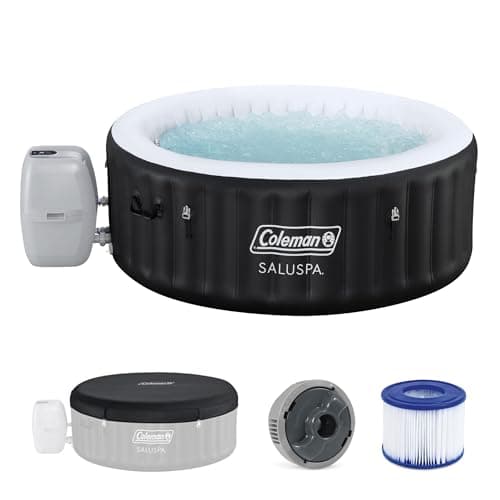 Coleman SaluSpa Inflatable Hot Tub The one most people end up with, and reasonably so. Insulated cover and wall are the specs worth paying for, because everything expensive about owning one of these is heat you paid for and then lost. | The default inflatable hot tubSeveral seasons | 7.6out of 10 |
If one person will use it, daily, and winter is the point
Seventy-seven published gallons, insulated barrel and lid, and no heater to run. In January the ambient air does part of the job for nothing.
| # | Product | Best for | Score | Price |
|---|---|---|---|---|
| 1 | 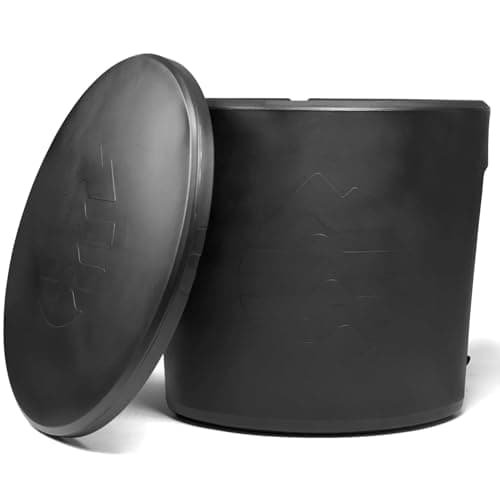 Ice Barrel 300 Insulated Cold Plunge Tub Seventy-seven gallons, rigid recycled LLDPE, polyurethane foam insulation through the barrel and the lid, and 3/4 in NPT chiller ports. The small capacity is the feature: it is the only tub here that sits inside the published rating of an affordable chiller. | The least water to cool, which is the whole point of a barrelSeveral seasons | 7.7out of 10 |
The cheapest honest version of each
An Intex PureSpa against a 105-gallon insulated inflatable plunge tub. One costs more to run in a month than the other costs to buy.
| # | Product | Best for | Score | Price |
|---|---|---|---|---|
| 1 | 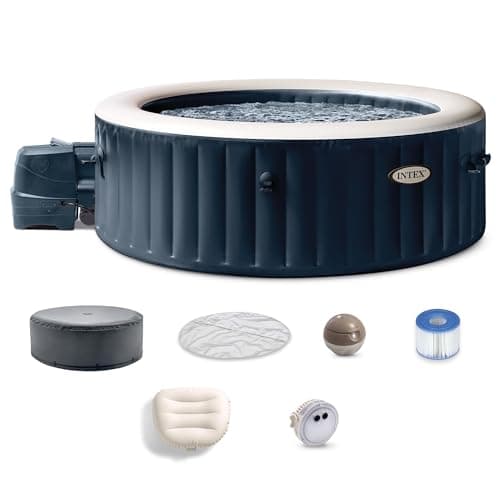 Intex PureSpa Inflatable Hot Tub The direct alternative, and the built-in hard water treatment is a genuine point of difference rather than a marketing one if your fill water is hard. | Hard water, and people who already own IntexSeveral seasons | 7.5out of 10 | |
| 2 | 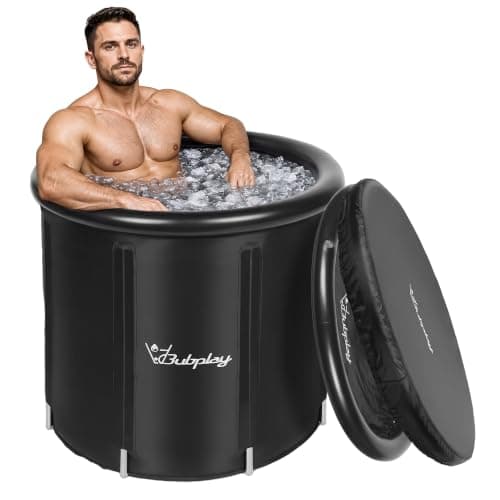 Bubplay Ice Bath Cold Plunge Tub, 105 gal A hundred and five published gallons, a fitted insulated cover and eight stainless support rods for about the price of a pool cover clip set. Buy it to discover whether cold water is a habit or a January idea, and expect to replace it if it becomes a habit. | Finding out whether you will actually do thisOne honest season | 6.3out of 10 |
The short version
- More than one user means hot tub. A four-person spa is shared; a cold plunge is a single-person appliance. For most households that settles it.
- Only the hot tub’s bill can be calculated. Heater wattages are published; chiller input wattages are not published by anyone in the category.
- Winter favors the cold tub. The air that makes a hot tub expensive in January makes a plunge tub cheaper in January.
- Only the hot tub has a published sanitizer target. The CDC gives at least 3 ppm chlorine for spas. The plunge category publishes no ppm figure at all.
Buy the inflatable hot tub if more than one person is going to use it, and the cold plunge if exactly one person is going to use it every day. That is the whole decision, and everything below is the evidence for why cost, season and chemistry do not change it as much as you would expect.
These two products arrive in the same month, at roughly the same price, aimed at the same empty corner of a backyard where the pool used to be. They are not alternatives in any other sense.
The comparison, on published figures only
| Inflatable hot tub | Cold plunge tub | |
|---|---|---|
| Typical capacity | 4-6 people, 71-77 in round x 28 in | One person, 77-216 published gallons |
| Water volume | Not published by Intex for any PureSpa model | Published in gallons by every maker here |
| Target temperature | About 102 degreesF, maker-set maximum 104 degreesF | Below 60 degreesF published; 40-50 degreesF for experienced users |
| Session length | No published limit | 3-5 minutes published; 30-60 seconds for beginners |
| Energy figure published | Heater wattage, so cost is computable | None - no chiller publishes input watts |
| Water change interval | Gallons / bathers / 3, about 16 days on a 200 gal tub | Every four weeks, published |
| Sanitizer target | CDC: at least 3 ppm chlorine or 4-8 ppm bromine | No ppm figure published anywhere |
| Catastrophic failure | Cracked heater after a freeze with no power | None published; ice expansion in a rigid tub |
| Winter effect on running cost | Worse - larger gap to ambient | Better - ambient does part of the cooling |
The one that can be costed
An inflatable hot tub is the rare backyard appliance whose running cost can be worked out from published numbers, because the heater has a wattage on it. Our hot tub running cost guide does exactly that: holding cost by heater wattage at the EIA US residential average, plus the roughly 25 kWh floor to reheat 200 gallons from cold.
The cold plunge has no equivalent page, and not for want of trying. Every chiller in the category publishes horsepower - 1/3 HP, 1 HP - and horsepower is a compressor rating, not a draw. One unit publishes 10,000 BTU of cooling capacity. None publishes input watts, and without watts the kWh does not exist.
So the honest comparison is not “X dollars against Y dollars”. It is: one of these has a bill you can predict before you buy, and the other has a bill you will discover. Our cold plunge cost guide prices everything that can be priced - water, ice quantity against published chiller ratings, time to temperature - and states that gap plainly rather than filling it.
The chemistry gap, which runs the other way
Everything above favors the cold tub. This does not.
A hot tub has a published standard to hit. The CDC publishes at least 3 ppm free chlorine for hot tubs, or 4-8 ppm bromine, and our hot tub chemistry guide and hot tub rash guide are both built around hitting it. You can buy strips, read a number, and know whether the water is sanitized.
A cold plunge has no such standard. The makers’ own answer is a proprietary stabilizer that “cleans, balances and deodorizes without chlorine” - a sentence with no measurable claim in it - alongside a published four-week water change interval. Cold water slows microbial growth considerably. Four weeks of a person sitting in 77 gallons is still four weeks, and nobody in the category publishes what the water should test at or whether it should be tested at all.
If you are the kind of owner who found pool chemistry reassuring because it came with numbers, you will find this category’s silence on it unsettling. That is a reasonable reaction.
The household question nobody frames properly
A hot tub seats four. A cold plunge seats one, for three to five minutes, and the next person waits. The published fit figures make this concrete: the plunge tubs state a maximum user height - 6 ft 7 in, 6 ft 9 in, “up to 6 ft” for the small barrel - because one body has to fit in a specific volume of water.
That makes the hot tub a piece of household furniture and the cold plunge a piece of personal equipment, closer to a treadmill than to a spa. Nothing about the physics decides this. It decides itself at the point where a second person wants to use it.
What we are not saying
That either one is good for you. The health claims around cold water immersion - recovery, inflammation, mood, sleep - are all over the listings for every tub in that category, and nothing we can cite settles any of them. The same goes for hot water. This page compares two appliances on their published specifications, their published maintenance intervals and their computability, and stops there.
We also have no data on which one people keep using after the first winter, and that is probably the most important number of all. If the honest answer is that it will be used twice in February, buy the cheap version of whichever appeals - our cold plunge roundup and inflatable hot tub roundup both start with that pick for exactly this reason.
What to buy
Scores are our own reading of published specifications. They are not test results — we have not tested these products and we do not claim to.
The default inflatable hot tub
Coleman SaluSpa Inflatable Hot Tub
Coleman (Bestway)
The one most people end up with, and reasonably so. Insulated cover and wall are the specs worth paying for, because everything expensive about owning one of these is heat you paid for and then lost.
#ad how this is funded · price as of October 17, 2026
Key specs
- Capacity
- 4 to 6 people, depending on SKU
- Size
- 71in or 77in round x 28in, per model
- Jets
- 140 AirJets on current models
- Cover
- EnergySense insulated cover included
- Cold weather
- Freeze Shield on current models
- Running cost
- Not published — depends on your rate and ambient temperature
How it scoresour reading of published specs, not a test result
- Build
- 7.5
- Setup
- 9.0
- Upkeep
- 6.5
- Running cost
- 5.5
- Value
- 8.0
Overall 7.6 / 10
What works
- Insulated cover and wall are the features that actually govern the running cost
- No installation, no permit conversation, no groundwork beyond a level base
- Packs away, which matters if the yard has one usable corner
- Widely stocked, so replacement filters and parts are easy to find
What doesn't
- Air jets, not water jets — this is bubbles rather than massage, and people expect the latter
- Heating is slow by design; you plan around it rather than deciding on the day
- Filter cartridges are a frequent consumable at spa bather loads
- Vinyl in constant hot water ages faster than the same vinyl in a pool
Skip it if: Anyone expecting hydrotherapy jets. It is a warm bubbling tub, and that is a different product from a hard-shell spa.
What it costs to run: The purchase is the small number. A hot tub is heated 24/7 rather than seasonally, so the electricity is the real commitment and it is entirely a function of your rate, your cover discipline and your climate. Nobody publishes a national figure and we will not invent one.
Several seasons: Buy-once. Built and warranted to come back out of the box for a few years, if you store it properly.
Specs from: Coleman SaluSpa — current Amazon listing and published specifications
The least water to cool, which is the whole point of a barrel
Ice Barrel 300 Insulated Cold Plunge Tub
Ice Barrel
Seventy-seven gallons, rigid recycled LLDPE, polyurethane foam insulation through the barrel and the lid, and 3/4 in NPT chiller ports. The small capacity is the feature: it is the only tub here that sits inside the published rating of an affordable chiller.
#ad how this is funded · price as of October 17, 2026
Key specs
- Water capacity
- "Holds 292 liters (77 gallons)", published by Ice Barrel
- Dimensions
- W 35.5 in x H 30.5 in, published
- Weight
- "61 lbs. when empty (700 lbs. when full)", published
- Material
- Recycled LLDPE, "Made in the USA from recycled materials", published
- Insulation
- "Thick polyurethane foam insulation throughout the barrel and lid"; no thickness published for the 300
- Chiller ports
- "Chiller ports are 3/4in NPT with 14 TPI", published; bulkheads, seals and a pre-filter included
- Fits users up to
- "comfortably fits most body sizes up to 6'", published
How it scoresour reading of published specs, not a test result
- Capacity
- 5.5
- Insulation
- 9.0
- Chiller fit
- 9.5
- Build
- 9.0
- Value
- 5.5
Overall 7.7 / 10
What works
- 77 published gallons is inside the 79-gallon rating of the cheap 1/3 HP chiller — the only tub here that is
- Insulated barrel and lid, so a chilled tub holds temperature between sessions instead of being re-cooled
- Rigid construction with no fabric, no seams and nothing to puncture
- Publishes its empty and full weights, which tells you where it can stand
What doesn't
- You sit upright with knees bent; the published fit is up to 6 ft and no taller
- The warranty page contradicts itself — it offers a "limited lifetime warranty" and then states "The limited lifetime warranty is limited to 3 years"
- Ice Barrel publishes that the LLDPE "will fade over time if left in direct sunlight", and fading is not warranted
- No insulation thickness or R-value published for the 300, so "thick" is the whole claim
Skip it if: Lying down, and anyone over 6 ft. The maker's own published fit is up to 6 ft; above that the barrel format stops working and the long inflatable ovals are the honest answer.
What it costs to run: At the published four-week change interval, 77 gallons is about 1,001 gallons a year — roughly $6 of water at the EPA WaterSense average of $6.06 per 1,000 gallons. Every ice session also cools 64 percent less water than the 216-gallon inflatable, which is where the real running-cost difference sits.
Several seasons: Buy-once. Built and warranted to come back out of the box for a few years, if you store it properly.
Specs from: Ice Barrel 300 — published capacity, dimensions, weights, material, insulation and chiller port spec, Ice Barrel warranty page — "limited lifetime warranty" and "limited to 3 years", plus the sunlight fading exclusion
Hard water, and people who already own Intex
Intex PureSpa Inflatable Hot Tub
Intex
The direct alternative, and the built-in hard water treatment is a genuine point of difference rather than a marketing one if your fill water is hard.
#ad how this is funded · price as of October 17, 2026
Key specs
- Capacity
- 4 people (28429EP)
- Size
- 77in round x 28in
- Water treatment
- Built-in hard water treatment system
- Included
- Energy-efficient spa cover, 2 headrests, LED light
- Jets
- Bubble massage — air, not water jets
- Running cost
- Not published
How it scoresour reading of published specs, not a test result
- Build
- 7.5
- Setup
- 9.0
- Upkeep
- 6.5
- Running cost
- 5.5
- Value
- 7.8
Overall 7.5 / 10
What works
- Built-in hard water treatment is a real advantage on hard fill water
- Insulated cover included rather than sold separately
- Shares the Intex accessory ecosystem if you already own an Intex pool
- Headrests and light included, which are usually add-ons elsewhere
What doesn't
- Air bubbles rather than water jets, same as the category
- Four people is a genuine four, not an optimistic one
- Cartridges need changing often at spa temperatures and bather loads
- Wattage is not published, so the running cost cannot be computed before purchase
Skip it if: Cold-climate winter use without serious attention to the cover and the ground under it. These are insulated, not immune.
What it costs to run: Same shape as the rest of the category: the electricity dwarfs the purchase over a year. The one lever you control is whether the cover goes back on every single time.
Several seasons: Buy-once. Built and warranted to come back out of the box for a few years, if you store it properly.
Specs from: Intex PureSpa 28429EP — current Amazon listing and published specifications
Finding out whether you will actually do this
Bubplay Ice Bath Cold Plunge Tub, 105 gal
Bubplay
A hundred and five published gallons, a fitted insulated cover and eight stainless support rods for about the price of a pool cover clip set. Buy it to discover whether cold water is a habit or a January idea, and expect to replace it if it becomes a habit.
Key specs
- Water capacity
- 105 gallons, published
- Fits users up to
- 6 ft 7 in, published
- Outer fabric
- 210D, published
- Cover
- Included, published as a 6-layer insulated construction
- Structure
- Inflatable top ring plus 8 stainless steel support rods, published
- Drain
- Bottom drain valve with hose included, published
- Freezing weather
- Maker's own guidance: "use indoors when temperatures drop below freezing"
How it scoresour reading of published specs, not a test result
- Capacity
- 7.0
- Insulation
- 5.5
- Chiller fit
- 2.0
- Build
- 5.0
- Value
- 9.0
Overall 6.3 / 10
What works
- Publishes a gallon figure, a height fit and a fabric denier, which is more than the price suggests
- Cover is in the box, and the cover is what keeps the cold in between sessions
- Support rods mean it stands up on its own rather than relying on water pressure
- Folds flat, so an abandoned experiment does not become a yard ornament
What doesn't
- No chiller ports, so this is an ice-only tub unless you drop a submersible pump in it
- The maker itself tells you to move it indoors below freezing, which is most of the plunge season in a cold climate
- 210D fabric is luggage-grade, not the drop-stitch construction the dearer inflatables use
- 105 gallons is a lot of water to cool with bagged ice
Skip it if: Living outdoors through a northern winter. The published guidance is explicit about moving it inside below freezing, which makes it a garage tub rather than a backyard one.
What it costs to run: Running cost here is ice, and ice scales with gallons. At 105 published gallons this needs about a third more ice per session than the 77-gallon Ice Barrel 300 and about half what the 216-gallon inflatable needs — the arithmetic is on our cold plunge running-cost guide.
One honest season: The cheapest setup that genuinely works for a season of real swimming. Nothing spare, nothing missing.
The best-specified cheap tub, and the one that can take a chiller later
The Pod Company Ice Pod Pro, 110 gal
The Pod Company
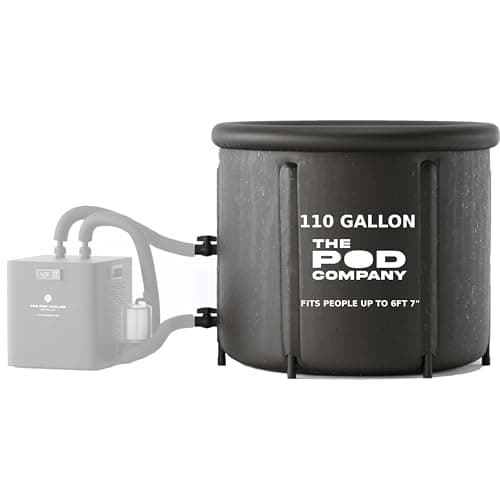
A hundred and ten published gallons with double-layer insulation, a reinforced thermal lid, a UV-resistant nylon shell and chiller compatibility stated on the listing. If you are starting with ice and might add a chiller, this is the tub that does not have to be replaced to do it.
#ad how this is funded · price as of October 17, 2026
Key specs
- Water capacity
- 110 gallons (420 L), published
- Fits users up to
- 6 ft 7 in, published
- Insulation
- "Double-layer insulation and a reinforced thermal lid", published
- Shell
- UV-resistant nylon with a leak-proof PVC liner, published
- Chiller
- Published as compatible with The Pod Company's own water chiller
- Drain
- Dual drain hoses, published
- Session guidance
- Maker's own: "Use daily or post-workout for 2-10 minutes"
How it scoresour reading of published specs, not a test result
- Capacity
- 7.5
- Insulation
- 7.0
- Chiller fit
- 7.5
- Build
- 6.5
- Value
- 9.0
Overall 7.5 / 10
What works
- Publishes both a gallon figure and a liter figure, and they agree (110 gal / 420 L)
- Chiller compatibility is stated, so the ice-to-chiller upgrade does not mean a second tub
- UV resistance is named for the shell fabric, which is what fails first on a tub left outside
- Insulated lid included, which is the single thing that decides how long a filled tub stays cold
What doesn't
- No insulation thickness or R-value published, so "double-layer" cannot be compared to anything
- 110 gallons is more water to chill than the 79-gallon rating of the common 1/3 HP chiller
- Inflatable construction, so it is a puncture risk in a way a rigid barrel is not
- Published session guidance of 2-10 minutes is broad enough to be no guidance at all
Skip it if: Being matched to a budget chiller. At 110 published gallons it sits above the 79-gallon rating the cheap 1/3 HP units publish, so a chiller that fits it is a bigger purchase than the tub.
What it costs to run: Four weeks between water changes is the published interval across this category, so 110 gallons is about 1,430 gallons a year. At the EPA WaterSense national average of $6.06 per 1,000 gallons that is about $8.70 of water a year — the water is never the expensive part.
One honest season: The cheapest setup that genuinely works for a season of real swimming. Nothing spare, nothing missing.
Reading bromine and chlorine on the same strip
AquaChek Spa 6-in-1 Test Strips
AquaChek
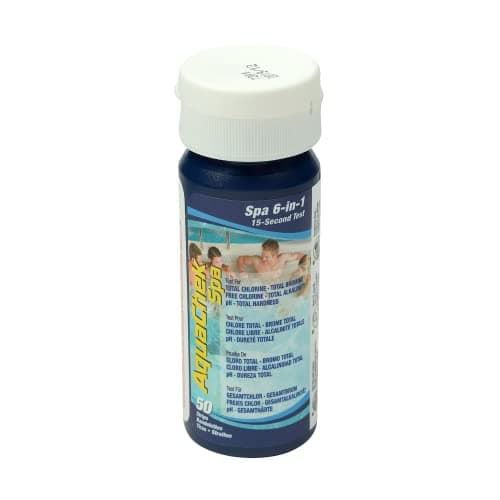
The one strip that covers both spa sanitizers. If you cannot see whether you are at the CDC's published hot tub numbers, nothing else on this page helps.
Key specs
- Reads
- Total bromine, total chlorine, free chlorine, pH, total alkalinity and total hardness, published
- Why 6-in-1
- Covers both spa sanitizers, so it works whichever you run
- Format
- Dip-and-read strips
- Bromine-only alternative
- AquaChek Red 4-Way reads bromine, pH, alkalinity and hardness at a lower price
- Accuracy
- Strips read a band, not a figure — see the limitation note on this page
How it scoresour reading of published specs, not a test result
- Accuracy
- 6.5
- Ease
- 9.5
- Coverage
- 9.0
- Cost per use
- 9.5
- Value
- 9.0
Overall 8.7 / 10
What works
- Reads both bromine and chlorine, so one tub of strips covers a sanitizer switch
- Includes free chlorine separately from total, which most cheap spa strips do not
- From the brand this site already uses for pool strips, so the color chart will look familiar
- Cheap enough that testing before every soak is realistic
What doesn't
- A strip reads a color band, not a number, and the CDC hot tub targets are tighter than the pool ones
- Strips degrade fast in humidity, and a hot tub lid is the most humid place in the yard
- No cyanuric acid reading, which matters if you ever put stabilized chlorine in a spa
- Six pads on one strip means six things to read before the colors develop differently
Skip it if: Settling an argument. If your tub keeps causing problems and the strips say fine, you need a drop-count reading rather than a better strip.
What it costs to run: Pennies per test and the cheapest item on this page. The only thing it costs you is the habit; strips in a damp cabinet read wrong rather than failing, which is worse than not testing.
A few weekends: Fine for a heatwave and a toddler. Treat it as consumable, not as a pool — it will not survive a winter in the yard.
Specs from: CDC — preventing hot tub rash, published chlorine, bromine and pH ranges for hot tubs
Questions people actually ask
Which is cheaper to run, a hot tub or a cold plunge?
Can you have both a cold plunge and a hot tub?
How often do you change the water in each?
Does a cold plunge need chemicals?
Which one actually gets used in winter?
Sources
Read next
- Above-ground pools for ordinary backyardsSoft-side, metal-frame and steel-wall pools compared by what they cost across a whole season, not at the till.
- The best cold plunge tubs, judged by how much water you have to coolCold plunge tubs ranked on published capacity, insulation and chiller fit - because gallons, not sticker price, decide what a plunge habit costs.
- Inflatable hot tubs, judged on the bill rather than the bubblesThe two inflatable hot tubs worth shortlisting, compared on insulation and cover rather than jet count, plus the running cost nobody publishes.
- An inflatable hot tub in winter: never let it freeze, cover everything elseWhat changes when an inflatable hot tub runs through the cold months - the loss-side purchases that pay for themselves, and the freeze failure that ends the tub.
- Inflatable hot tub running cost: the bill is a winter billThe electricity arithmetic for an inflatable hot tub held at temperature through winter, built from published heater wattage and current published rates.
- What a cold plunge actually costs to runWater, ice and chiller costs for a backyard cold plunge - what is computable from published figures, what is not, and why the cheap tub is the expensive one.
- The pool is seasonal. The hot tub is a standing charge.Why an inflatable hot tub and an above-ground pool have opposite running-cost profiles, and which one suits which household.
- Hot tub water change: the arithmetic says two weeksWhy an inflatable hot tub needs its water changed in weeks rather than months, the arithmetic behind it, and what to do at each change.