Above-Ground Pools
Inflatable hot tubs, judged on the bill rather than the bubbles
Every listing sells you jet count. The specs that decide whether you enjoy owning one are the cover, the insulation and how often you are willing to put the lid back on.
Heads up: we earn a commission if you buy through the links on this page, at no extra cost to you. It never decides the ranking — here is how we pick and here is the full disclosure. Prices are checked automatically; last verified October 8, 2026.
Quick picks
Segmented before it is ranked — the right answer depends on which of these you actually are. Tap any row for the full write-up.
The default, and a reasonable one
Insulated cover and wall are the two specs that govern what this costs to run. Both are on the current models.
| # | Product | Best for | Score | Price |
|---|---|---|---|---|
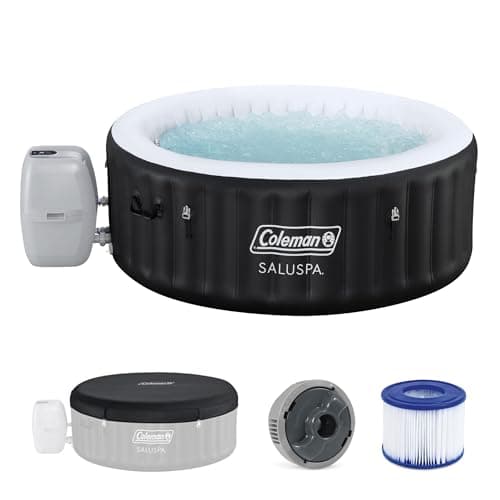
| 1 | Coleman SaluSpa Inflatable Hot Tub The one most people end up with, and reasonably so. Insulated cover and wall are the specs worth paying for, because everything expensive about owning one of these is heat you paid for and then lost. | The default inflatable hot tubSeveral seasons | 7.6out of 10 |
If your fill water is hard
The built-in hard water treatment is a genuine point of difference rather than a marketing one, and hard water is what ruins spa heaters.
| # | Product | Best for | Score | Price |
|---|---|---|---|---|
| 1 | 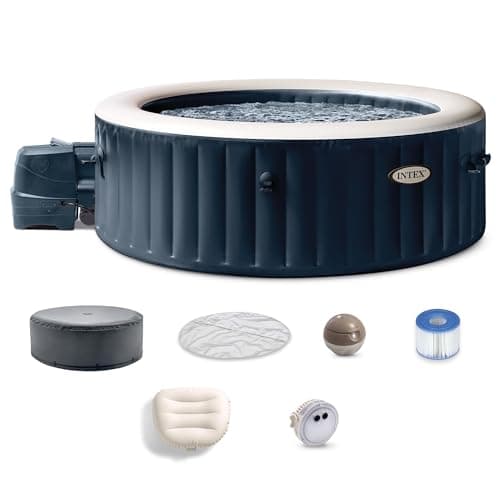 Intex PureSpa Inflatable Hot Tub The direct alternative, and the built-in hard water treatment is a genuine point of difference rather than a marketing one if your fill water is hard. | Hard water, and people who already own IntexSeveral seasons | 7.5out of 10 |
What you will need on day one
A spa is a small volume with a heavy bather load and no seasonal drain. Testing matters more here than it does in a pool, not less.
| # | Product | Best for | Score | Price |
|---|---|---|---|---|
| 1 | 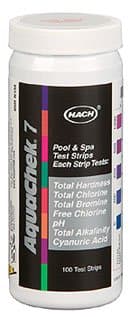 AquaChek Silver 7-Way Test Strips (100 count) Seven readings in fifteen seconds, including the two that beginners never measure and then fight all summer: total alkalinity and cyanuric acid. | The default first test kitOne honest season | 8.9out of 10 | |
| 2 | 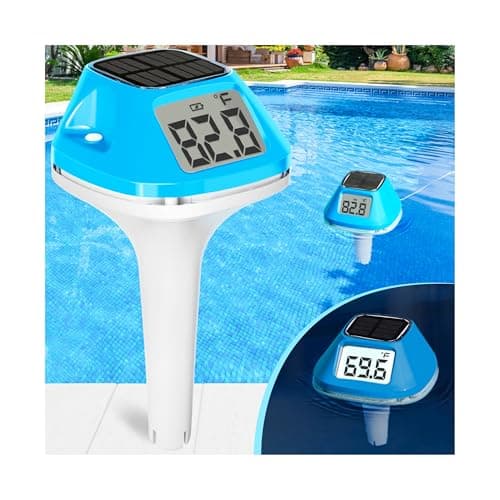 Floating Pool Thermometer The cheapest instrument on this site and the one that answers two expensive questions: is it warm enough to swim, and is it cold enough to close. | Knowing when to close, and when to stop heatingSeveral seasons | 8.4out of 10 |
The short version
- Jet count is the least useful number in the listing. These are air jets, not water jets — bubbles rather than massage — and 140 of them is the category standard rather than a differentiator.
- The cover is the product. A hot tub is heated continuously, so almost everything you pay after the purchase is heat you either kept or lost.
- Nobody publishes a running cost, and we will not invent one. It depends entirely on your electricity rate, your climate and your cover discipline.
- It is a small volume with a heavy bather load. Four adults in a spa is a chemistry event that four adults in a pool is not.
Why this sits on a pool site
Because it is the same decision, made in the same corner of the same yard, by the same person. An inflatable hot tub is a soft-sided vessel you site on level ground, fill from a hose, treat with chemicals, cover when unused and drain periodically. Everything this site says about ground preparation, water chemistry and running costs applies, and most of the buying advice you will find elsewhere ignores all three in favor of jet counts.
It is also the honest alternative for a yard that cannot take a pool. Our small-yard guide ends with people concluding they have nowhere for a 12-foot circle; a 77-inch round tub is a genuinely different footprint.
The specs that matter, in order
| Spec | Why it matters | What to look for |
|---|---|---|
| Insulated cover | The single largest heat loss is the surface, continuously | An insulated cover included, not sold separately |
| Wall insulation | Current models publish insulated walls; older ones did not | Manufacturer's own efficiency claim, stated as a percentage |
| Cold-weather rating | Freeze protection decides whether it runs past September | A named freeze-protection feature on the spec sheet |
| Capacity | Four people is a genuine four, not an optimistic one | Take the lower number in any '4 to 6' claim |
| Jets | Air jets across the whole category | Do not pay a premium for a bigger number here |
| Hard water handling | Scale is what kills spa heaters | Built-in treatment, if your fill water is hard |
The running cost, and why we are not printing a number
This is where most reviews quietly invent a figure. We will not, because the inputs are not published: manufacturers in this class publish jet counts and dimensions but not heater wattage, and the actual consumption depends on your electricity rate, your ambient temperature, how often the lid comes off and whether the tub is on a cold slab or an insulated base.
What we can tell you is the shape of it. Unlike a seasonal pool, a hot tub is heated all the time, so the electricity is continuous rather than seasonal — it is the dominant cost of ownership by a wide margin, and it dwarfs the purchase over a couple of years. The arithmetic is the same as our pump electricity guide: find the appliance’s kilowatts, multiply by hours and by your own rate. If the wattage is not on the listing, it will be on the unit, and it is worth asking before you buy.
Three levers genuinely move that number, and they are all free or nearly so. Put the cover back on every single time. Put something insulating underneath, because a tub sitting directly on a cold slab loses heat downward all night. And site it out of the prevailing wind, for the same reason a windbreak helps a pool — our season extension guide covers that mechanism.
Siting it: the same rules, tighter
A hot tub holds less water than a pool but concentrates it into a much smaller footprint, so the load per square foot is comparable and the level tolerance is no more forgiving. The ground has to be flat, firm and free of anything sharp, and it has to stay that way — our leveling guide and surface guide both apply directly, and the surface guide’s warning about decks applies with more force here, not less.
The electrical side is the part to settle before you buy. These units plug into a standard outlet, but it must be a properly protected outdoor outlet, and an extension cord is not an acceptable substitute for one — the reasoning in our electrical safety guide is the same, and the consequence of getting it wrong is worse because the appliance runs continuously.
Chemistry: a small volume that never gets drained seasonally
This is the biggest practical difference from a pool and the thing most new spa owners underestimate. A few hundred gallons at body temperature with four adults in it is a far heavier bather load per gallon than any pool on this site — the arithmetic in our swimmer load guide is the same principle with a much smaller denominator.
Heat also works against chlorine, which is precisely why bromine is the conventional choice for spas. Our bromine versus chlorine comparison explains why the answer flips between an open pool and a covered tub: bromine tolerates heat and higher pH better, and the sunlight problem that rules it out outdoors barely applies under a lid.
Practically: test more often than you would a pool, expect to change cartridges frequently, and plan on draining and refilling on a schedule rather than waiting for a reason.
Who should buy one, and who should not
Buy one if the yard is too small or too uneven for a pool, if you want something usable outside July and August, or if the appeal is sitting in warm water rather than swimming in cool water. On all three counts it beats a pool comfortably.
Do not buy one if you want hydrotherapy jets, if the electricity bill is the thing you are trying to keep down, or if nobody in the household will reliably put the cover back on. That last one is not a joke — it is the difference between a reasonable running cost and an unreasonable one, and it is entirely behavioral.
If the real question is which of the two to buy at all, the honest comparison is seasonality: a pool is four months of a lot of use, a hot tub is twelve months of a little. Our cost per swim guide is the framework, and it works just as well with “soak” substituted throughout.
What we are scoring
We have not tested these and do not claim to. The scores are our reading of published manufacturer specifications — capacity, dimensions, cover, insulation and cold-weather features — weighted toward the things that decide the running cost rather than the things that decide the listing photo. Where a manufacturer publishes nothing, as with heater wattage, we say so. Our methodology page sets out how that works across the site.
Choosing between one of these and a pool is a question about cost shape rather than price, and the two are opposites. Our hot tub versus pool comparison sets it out: a pool stops costing anything in October and a hot tub never does.
The chemistry is the part people underestimate, because a spa is not a small pool. Our hot tub chemicals guide covers bromine against chlorine at 102 degrees, what is actually in a starter kit, and why the testing cadence is every few days rather than weekly.
The picks, in full
Scores are our own reading of published specifications. They are not test results — we have not tested these products and we do not claim to.
Pick #1 · The default inflatable hot tub
Coleman SaluSpa Inflatable Hot Tub
Coleman (Bestway)
The one most people end up with, and reasonably so. Insulated cover and wall are the specs worth paying for, because everything expensive about owning one of these is heat you paid for and then lost.
Key specs
- Capacity
- 4 to 6 people, depending on SKU
- Size
- 71in or 77in round x 28in, per model
- Jets
- 140 AirJets on current models
- Cover
- EnergySense insulated cover included
- Cold weather
- Freeze Shield on current models
- Running cost
- Not published — depends on your rate and ambient temperature
How it scoresour reading of published specs, not a test result
- Build
- 7.5
- Setup
- 9.0
- Upkeep
- 6.5
- Running cost
- 5.5
- Value
- 8.0
Overall 7.6 / 10
What works
- Insulated cover and wall are the features that actually govern the running cost
- No installation, no permit conversation, no groundwork beyond a level base
- Packs away, which matters if the yard has one usable corner
- Widely stocked, so replacement filters and parts are easy to find
What doesn't
- Air jets, not water jets — this is bubbles rather than massage, and people expect the latter
- Heating is slow by design; you plan around it rather than deciding on the day
- Filter cartridges are a frequent consumable at spa bather loads
- Vinyl in constant hot water ages faster than the same vinyl in a pool
Skip it if: Anyone expecting hydrotherapy jets. It is a warm bubbling tub, and that is a different product from a hard-shell spa.
What it costs to run: The purchase is the small number. A hot tub is heated 24/7 rather than seasonally, so the electricity is the real commitment and it is entirely a function of your rate, your cover discipline and your climate. Nobody publishes a national figure and we will not invent one.
Several seasons: Buy-once. Built and warranted to come back out of the box for a few years, if you store it properly.
Specs from: Coleman SaluSpa — current Amazon listing and published specifications
Pick #2 · Hard water, and people who already own Intex
Intex PureSpa Inflatable Hot Tub
Intex
The direct alternative, and the built-in hard water treatment is a genuine point of difference rather than a marketing one if your fill water is hard.
#ad how this is funded · price as of October 8, 2026
Key specs
- Capacity
- 4 people (28429EP)
- Size
- 77in round x 28in
- Water treatment
- Built-in hard water treatment system
- Included
- Energy-efficient spa cover, 2 headrests, LED light
- Jets
- Bubble massage — air, not water jets
- Running cost
- Not published
How it scoresour reading of published specs, not a test result
- Build
- 7.5
- Setup
- 9.0
- Upkeep
- 6.5
- Running cost
- 5.5
- Value
- 7.8
Overall 7.5 / 10
What works
- Built-in hard water treatment is a real advantage on hard fill water
- Insulated cover included rather than sold separately
- Shares the Intex accessory ecosystem if you already own an Intex pool
- Headrests and light included, which are usually add-ons elsewhere
What doesn't
- Air bubbles rather than water jets, same as the category
- Four people is a genuine four, not an optimistic one
- Cartridges need changing often at spa temperatures and bather loads
- Wattage is not published, so the running cost cannot be computed before purchase
Skip it if: Cold-climate winter use without serious attention to the cover and the ground under it. These are insulated, not immune.
What it costs to run: Same shape as the rest of the category: the electricity dwarfs the purchase over a year. The one lever you control is whether the cover goes back on every single time.
Several seasons: Buy-once. Built and warranted to come back out of the box for a few years, if you store it properly.
Specs from: Intex PureSpa 28429EP — current Amazon listing and published specifications
Pick #3 · The default first test kit
AquaChek Silver 7-Way Test Strips (100 count)
AquaChek
Seven readings in fifteen seconds, including the two that beginners never measure and then fight all summer: total alkalinity and cyanuric acid.
#ad how this is funded · price as of October 8, 2026
Key specs
- Tests
- Free chlorine, total chlorine, bromine, pH, total alkalinity, total hardness, cyanuric acid
- Free chlorine range
- 0-20 ppm
- pH range
- 6.2-8.4
- Total alkalinity range
- 0-240 ppm
- Cyanuric acid range
- 0-300 ppm
- Read time
- 15 seconds
- Count
- 100 strips
How it scoresour reading of published specs, not a test result
- Accuracy
- 7.0
- Ease
- 9.5
- Coverage
- 9.5
- Cost per use
- 9.0
- Value
- 9.2
Overall 8.9 / 10
What works
- Covers cyanuric acid, which most cheap strips omit and which is the reason chlorine stops working in a stabilized pool
- pH range spans 6.2-8.4, comfortably bracketing the CDC's recommended 7.0-7.8
- 15 seconds and a color chart printed on the bottle — no separate booklet to lose
- 100 strips is a full season of twice-weekly testing with room to spare
What doesn't
- Strips are a comparison against a printed color chart, so they are directional rather than precise
- Reading them in bright sun is harder than it should be
- The bottle must be kept sealed and dry or the strips degrade quietly
Skip it if: Fine adjustment. If you are chasing a stubborn problem and need a number rather than a color band, a liquid reagent kit is the tool.
What it costs to run: 100 strips at twice-weekly testing covers roughly two seasons for one pool. The real saving is upstream: knowing your alkalinity stops you buying pH adjuster you did not need.
One honest season: The cheapest setup that genuinely works for a season of real swimming. Nothing spare, nothing missing.
Specs from: CDC — home pool and hot tub water treatment and testing
Pick #4 · Knowing when to close, and when to stop heating
Floating Pool Thermometer
Various
The cheapest instrument on this site and the one that answers two expensive questions: is it warm enough to swim, and is it cold enough to close.
#ad how this is funded · price as of October 8, 2026
Key specs
- Types
- Floating analog, digital solar, or wireless with an indoor display
- Typical digital range
- About 15.8°F to 176°F on current models
- Typical stated accuracy
- About ±1.8°F on current digital models
- Water resistance
- IPX8 on current digital models
- Materials
- UV-stabilized and chlorine-resistant on better models
How it scoresour reading of published specs, not a test result
- Accuracy
- 7.5
- Ease
- 9.0
- Coverage
- 5.0
- Cost per use
- 9.8
- Value
- 9.2
Overall 8.4 / 10
What works
- Turns the closing decision from a guess into a reading, which is the most expensive judgment call of the pool year
- Tells you whether a solar cover is actually doing anything, rather than assuming
- Digital models are readable from the deck; analog ones need fishing out
- Cheap enough that having one is never the wrong call
What doesn't
- Analog floats get lost, get chewed, and end up under the ladder
- Solar and wireless models add batteries or a panel to a thing that could have had neither
- Tethering it is essential and almost nobody does it
- Accuracy claims are rarely independently verified — treat ±2°F as the working assumption
Skip it if: Telling you anything about water chemistry. It measures one thing, and every other decision needs a test kit.
What it costs to run: A few dollars, once. It pays for itself the first time it stops you closing a pool that was still warm, which is the mistake that produces a green opening in April.
Several seasons: Buy-once. Built and warranted to come back out of the box for a few years, if you store it properly.
Specs from: Digital floating pool thermometer — current Amazon listing and published specifications
Questions people actually ask
Are inflatable hot tubs expensive to run?
Do inflatable hot tubs have real jets?
Chlorine or bromine in an inflatable hot tub?
Can an inflatable hot tub go on a deck?
Sources
Read next
- Above-ground pools for ordinary backyardsSoft-side, metal-frame and steel-wall pools compared by what they cost across a whole season, not at the till.
- What an above-ground pool can and cannot sit onEvery common surface assessed, with the load per square foot each pool size actually applies - the number that rules a deck in or out.
- Leveling the ground, and the weight that makes it matterThe tolerance manufacturers publish, the weight of water that enforces it, and the method for getting a circle genuinely flat with hand tools.
- What your pool pump costs to run, in watts and dollarsPool pump electricity computed from watts, hours and the EIA national average rate, with a table you can read your own pump off.
- Bromine or chlorine: sunlight settles itWhy bromine works in a covered hot tub and struggles in an open pool, what it costs, and when it is still the right answer.
- The electrical side, which is the one part of a pool you should not improviseGFCI protection, extension cords, timers and heater circuits - what is a homeowner job around a pool and what is not.
- Bather load: the variable that explains your worst weeksWhy gallons per swimmer is the number that matters, what a busy afternoon costs you in chlorine, and the routine that absorbs it.