Pool Care & Chemistry
Hot tub rash: your pool chlorine number is too low for a spa
The CDC publishes at least 3 ppm chlorine or 4-8 ppm bromine for a hot tub. The pool range this site quotes everywhere else is 1-4 ppm, so the top of the pool range is the bottom of the spa range - and that gap is where hot tub rash comes from.
Heads up: we earn a commission if you buy through the links on this page, at no extra cost to you. It never decides the ranking — here is how we pick and here is the full disclosure. Prices are checked automatically; last verified October 12, 2026.
The short version
- A hot tub needs more sanitizer than a pool, and the CDC publishes both numbers. At least 3 ppm chlorine or 4-8 ppm bromine in a spa, against 1-4 ppm free chlorine in a pool.
- The cause is named. Pseudomonas aeruginosa, per the CDC — not a chlorine allergy and not the heat.
- Non-chlorine shock does not prevent it. PHTA publishes that MPS “is not a sanitizer or algaecide”.
- If it keeps happening, look at the pipes. Biofilm shelters bacteria from the water you are testing.
The number almost every spa owner is using is a pool number
Our hot tub chemicals guide opens with the line that a hot tub is not a small pool. This is the most consequential version of that, and it is a straight comparison of two figures the same agency publishes.
| Reading | Pool | Hot tub | What changes |
|---|---|---|---|
| Free chlorine | 1-4 ppm | At least 3 ppm (raise concerns above 10) | The top of the pool range is the bottom of the spa range |
| Bromine | Not the usual pool sanitizer | 4-8 ppm | Bromine is the spa default because it holds at heat |
| pH | 7.2-7.8 | 7.0-7.8 | Slightly wider at the low end |
Read the chlorine row carefully, because it is the one that catches people. A reading of 2 ppm is comfortably inside the published pool range and comfortably below the published hot tub minimum. An owner who carries pool habits into a spa — and most do, because they bought the pool first — will test at 2 ppm, see a number they have been told is fine for years, and be under-sanitized.
Why heat is the reason the number is higher
Two things happen to a sanitizer at 102 degrees, and they both push in the same direction.
Chlorine gasses off faster from hot water, so a residual that would hold all day in a pool is gone from a spa in hours. And the bather load per gallon is enormous: four people in 200 gallons is roughly the concentration of ninety people in a 15-foot above-ground pool, which our swimmer load page works through for the pool case. More demand, less staying power, smaller volume.
That is also why bromine dominates this category. It survives spa temperatures far better than chlorine does, which is the practical reason the CDC publishes a separate bromine range for hot tubs at all and the reason most spa starter kits are bromine-based.
Where the organism actually lives
This is the part that explains the frustrating case: the tub tests fine, and the rash keeps coming back.
Pseudomonas aeruginosa forms biofilm — a protective layer on surfaces — and in a hot tub those surfaces are the inside of the plumbing, the heater and the jets. Sanitizer in the water column reaches the water column. It does not meaningfully penetrate an established film on a pipe wall, and every time the pump runs, that film sheds back into water you have just balanced.
| If... | The likely cause | What addresses it |
|---|---|---|
| Sanitizer reads below the CDC figure | Simple under-dosing | Bromine tablets in a floater or feeder, tested before each soak |
| Sanitizer drops to zero within a day | Heavy bather load or a dead filter | Shock, a fresh cartridge, and a shorter water-change interval |
| Water tests fine but the rash recurs | Biofilm in the plumbing | A line purge with the OLD water in, then a full water change |
| Water is cloudy and smells despite dosing | Organic load the sanitizer is being spent on | Non-chlorine shock to oxidize, which is what it is for |
| Everything above is right and it still happens | Beyond this site | The CDC's advice: see a healthcare provider if it recurs |
The third row is the one worth internalizing, because the product that addresses it is not in any starter kit and the timing is counterintuitive: a purge has to circulate while the old water is still in the tub, so that what it lifts leaves with the drain. Done after refilling, you have just dissolved the biofilm into clean water. Our water change guide puts it in the right order.
The product most people reach for, which does not do this
MPS is still worth owning — it genuinely reduces sanitizer demand, and it does so without spiking chlorine, which means a short wait before getting back in. It belongs on this page in its real lane rather than the one the word “shock” implies. Our when can you swim page covers why the wait after any treatment is a reading rather than a clock.
Clear water is not safe water, and a spa proves it
Our clear versus safe page makes this argument for pools. A hot tub is the sharpest example of it: 200 gallons can be visually perfect, smell faintly of bromine and carry no sanitizer residual at all, because the residual was consumed overnight by four people's worth of organics.
Clarity tells you the filter is working. The sanitizer reading tells you whether anything is being killed. On a pool those two can drift apart over days; on a spa they can drift apart between Friday and Saturday.
Is it the water, or is it something else?
Worth separating, because two different things get called a reaction to a hot tub and only one of them is a maintenance problem you can fix with this page.
Hot tub rash, as the CDC describes it, is an infection — an organism that survived because the sanitizer was too low. A sensitivity reaction to bromine or chlorine is a different thing entirely, and it tends to behave differently: it shows up on first contact rather than a day or so later, it affects the person who reacts and not everyone who got in, and it does not improve when you raise the sanitizer level. If anything, raising it makes that one worse.
| Pattern | Points toward | What to do first |
|---|---|---|
| Everyone who used the tub is affected | The water | Test the sanitizer and check the CDC figures above |
| Worst where the swimsuit sat tight | The water | Shower with soap and wash the suit, per CDC |
| Appears a day or more after the soak | The water | Review the sanitizer residual, not just clarity |
| One person only, every time | Something about that person | A provider question, not a chemistry one |
| Immediate, during or right after the soak | Possibly a sensitivity | Raising sanitizer will not help; ask a provider |
| Gets worse or keeps recurring | Either - stop guessing | CDC: check with your healthcare provider |
We are deliberately not going further than that. This site is good at water chemistry and has no business diagnosing skin conditions, and the two columns above are useful precisely because they tell you which of two very different problems to spend money on.
A public or rented tub is a different problem
Most of this page assumes the tub is yours. A hotel tub, a rental or a gym spa is the case the CDC's guidance is actually written for, and it gives you something concrete to do rather than just a warning.
The published advice is to test the water yourself with strips before getting in, and that “if chlorine level, bromine level, or pH is not within the correct range, tell the operator or owner immediately”. The same page flags a reading above 10 ppm as worth raising too — over-dosed is also out of range.
That is why a pot of spa strips is a reasonable thing to own even if you do not own a tub. They cost less than a round of drinks, they take fifteen seconds, and a public tub is the one you have the least information about. The strip on this page reads both bromine and chlorine, which matters when you have no idea which sanitizer a given facility runs.
What fixing it actually costs
Modest, and that is worth saying plainly, because the alternative people reach for is replacing the tub.
| What | How often | Addresses |
|---|---|---|
| Spa test strips | A pot lasts a season of frequent testing | Knowing the number at all - the prerequisite |
| Bromine tablets | Continuous, in a floater | Holding the CDC range between soaks |
| Line purge | One per water change | The biofilm reservoir in the plumbing |
| Fresh cartridge | Every few weeks on a used tub | The organic load competing for sanitizer |
| Water change | Every 2-4 weeks on the arithmetic | Everything that cannot be filtered or dosed away |
Nothing on that list is expensive, and three of the five are things a reasonably run tub needs anyway. The cost that is not on the list is the one worth avoiding: a hot tub nobody in the household trusts, sitting at 102 degrees and costing money every day to not be used. Our running cost page prices what that actually is per month, and it is more than the whole table above.
What to actually do, in order
Test before you get in, not on a schedule
On a pool, twice a week is a reasonable routine — our weekly schedule is built around it. On a tub, test before each use, because the interval that matters is hours rather than days. A strip takes fifteen seconds while the cover is already off.Hit the hot tub number, not the pool number
At least 3 ppm chlorine or 4-8 ppm bromine, with pH 7.0-7.8. If you have been running a spa at pool levels, this is the single change that matters most.Keep a clean cartridge in the housing
A loaded filter stops removing the oils the sanitizer is competing with. Spa cartridges load in weeks rather than seasons, and the Type S1 versus Type VI distinction in our spa cartridge roundup catches people out regularly.Change the water on the arithmetic, not on how it looks
Gallons divided by daily bathers divided by three gives you days, which on a 200-gallon tub with four users is about two weeks. Our water change guide has the full working.Purge the lines at every change, with the old water in
This is the step that addresses the reservoir rather than the symptom, and the one almost nobody does. Circulate the purge, then drain.Shower with soap afterward and wash the swimsuit
The CDC publishes both instructions. A wet swimsuit held against skin is what turns a brief exposure into a rash, which is why the swimsuit line sits next to the shower line.
The part that is not ours
Everything above is water chemistry, which is what this site is for. The rash itself is not, and we are going to stop at what the CDC publishes: “Mild rashes usually clear up in a few days without medical treatment”, and check with a healthcare provider if a rash gets worse or happens more than once.
That recurrence clause is worth reading as a pointer back at the tub. One rash after one soak somewhere else is bad luck. A second one from your own hot tub is a maintenance finding, and the table above is where to start looking.
What to buy
Scores are our own reading of published specifications. They are not test results — we have not tested these products and we do not claim to.
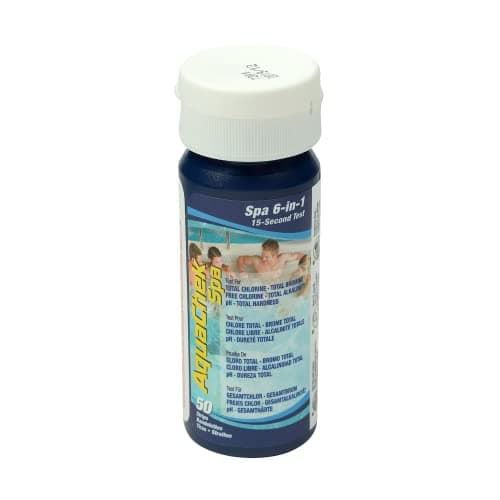
Reading bromine and chlorine on the same strip
AquaChek Spa 6-in-1 Test Strips
AquaChek
The one strip that covers both spa sanitizers. If you cannot see whether you are at the CDC's published hot tub numbers, nothing else on this page helps.
Key specs
- Reads
- Total bromine, total chlorine, free chlorine, pH, total alkalinity and total hardness, published
- Why 6-in-1
- Covers both spa sanitizers, so it works whichever you run
- Format
- Dip-and-read strips
- Bromine-only alternative
- AquaChek Red 4-Way reads bromine, pH, alkalinity and hardness at a lower price
- Accuracy
- Strips read a band, not a figure — see the limitation note on this page
How it scoresour reading of published specs, not a test result
- Ease
- 9.5
- Value
- 9.0
Overall 8.7 / 10
What works
- Reads both bromine and chlorine, so one tub of strips covers a sanitizer switch
- Includes free chlorine separately from total, which most cheap spa strips do not
- From the brand this site already uses for pool strips, so the color chart will look familiar
- Cheap enough that testing before every soak is realistic
What doesn't
- A strip reads a color band, not a number, and the CDC hot tub targets are tighter than the pool ones
- Strips degrade fast in humidity, and a hot tub lid is the most humid place in the yard
- No cyanuric acid reading, which matters if you ever put stabilized chlorine in a spa
- Six pads on one strip means six things to read before the colors develop differently
Skip it if: Settling an argument. If your tub keeps causing problems and the strips say fine, you need a drop-count reading rather than a better strip.
What it costs to run: Pennies per test and the cheapest item on this page. The only thing it costs you is the habit; strips in a damp cabinet read wrong rather than failing, which is worse than not testing.
A few weekends: Fine for a heatwave and a toddler. Treat it as consumable, not as a pool — it will not survive a winter in the yard.
Specs from: CDC — preventing hot tub rash, published chlorine, bromine and pH ranges for hot tubs
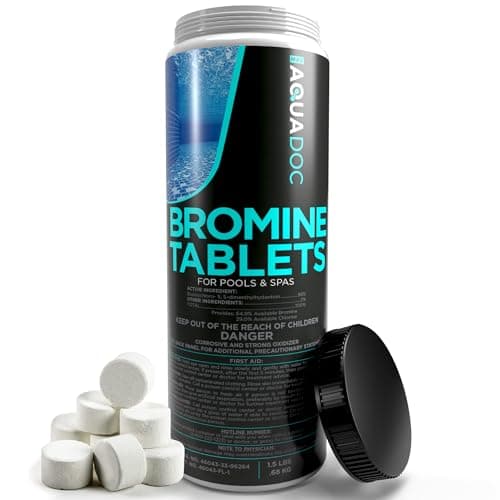
Holding a residual at 102 degrees, which chlorine struggles to do
AquaDoc Bromine Tablets for Spas and Hot Tubs, 1 in
AquaDoc
Bromine is the better sanitizer for a hot tub because it survives heat where chlorine gasses off. These are the standard 1-inch spa tabs in the smallest sensible quantity.
#ad how this is funded · price as of October 12, 2026
Key specs
- Size
- 1 inch tablets, published — the spa size, not the 3 in pool size
- Weight
- 1.5 lb, published
- Sanitizer
- Bromine; the CDC's published hot tub range is 4-8 ppm
- Delivery
- Floating dispenser or in-line feeder; never loose in the tub
- Why not pool tabs
- 3 in trichlor tabs are chlorine, stabilized, and far too large for a spa feeder
How it scoresour reading of published specs, not a test result
- Effectiveness
- 9.0
- Ease
- 8.5
- Water impact
- 7.5
- Cost per season
- 7.5
- Value
- 8.0
Overall 8.3 / 10
What works
- Bromine holds a residual at spa temperature far better than chlorine, which is the whole reason it dominates this category
- One-inch tablets are the correct size for a spa floater — the 3 in pool tablets this site covers elsewhere do not fit
- Lower odor than chlorine at the same effectiveness, which matters in an enclosed cover
- 1.5 lb is a realistic quantity for one inflatable tub rather than a commercial drum
What doesn't
- Bromine cannot be stabilized against UV, so an uncovered tub in direct sun burns through it
- Harder to shock back into range than chlorine once the water is badly fouled
- Bromine and chlorine should not be mixed in the same tub without a full water change between them
- Tablets dissolve continuously, so a floater left in an unused tub overdoses it
Skip it if: Rescuing water that has already gone wrong. Tablets maintain a level; they do not restore one. A tub that has dropped to zero needs a shock and probably a water change.
What it costs to run: Per soak this is small money, and the alternative is the one thing on this page with a real cost: a tub nobody wants to get into. Our hot tub chemicals guide prices the full starter set.
One honest season: The cheapest setup that genuinely works for a season of real swimming. Nothing spare, nothing missing.
Specs from: CDC — preventing hot tub rash, published bromine range of 4-8 ppm for hot tubs
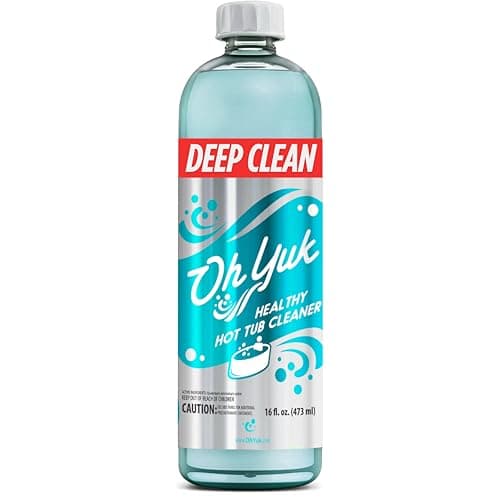
The biofilm in the pipes, which is where the problem actually lives
Oh Yuk Healthy Hot Tub Cleaner (Plumbing and Jet Purge)
Oh Yuk
The only product on this page that reaches the plumbing. Pseudomonas survives in biofilm on pipe walls, not in the water you test, which is why a tub can read perfect and still cause a rash.
#ad how this is funded · price as of October 12, 2026
Key specs
- Type
- Circulating purge for hot tub and spa plumbing and jets, published
- Where it works
- Inside the lines, the heater and the jets — not the water column
- When to use it
- With the old water still in, immediately before a drain
- Use with
- Indoor and outdoor hot tubs and spas, published
- Also sold as
- A 2-pack for larger or badly fouled systems
How it scoresour reading of published specs, not a test result
- Effectiveness
- 8.5
- Ease
- 8.0
- Water impact
- 8.0
- Cost per season
- 8.0
- Value
- 8.5
Overall 8.3 / 10
What works
- Addresses the reservoir rather than the symptom, which nothing else in a spa chemical kit does
- Circulated before draining, so what it lifts leaves with the water instead of landing in a fresh fill
- A recognized brand in a category otherwise full of unlabeled generics
- One purge per water change is a realistic habit rather than an extra chore
What doesn't
- What comes out is genuinely unpleasant to look at, which surprises first-time users
- Does nothing if used after refilling, which is the common mistake
- No contact time or dose published prominently on the listing
- Will not fix a tub whose sanitizer has been wrong for months; it is a reset, not a routine
Skip it if: Replacing sanitizer control. A purge clears what has built up; only a maintained residual stops it coming back, and the CDC's published hot tub figures are the target to maintain.
What it costs to run: One bottle per water change on a well-used tub. Against the alternative — a recurring rash and a tub nobody trusts — it is the cheapest line in spa ownership.
A few weekends: Fine for a heatwave and a toddler. Treat it as consumable, not as a pool — it will not survive a winter in the yard.
Clearing organics so the sanitizer can do its job — not for killing anything
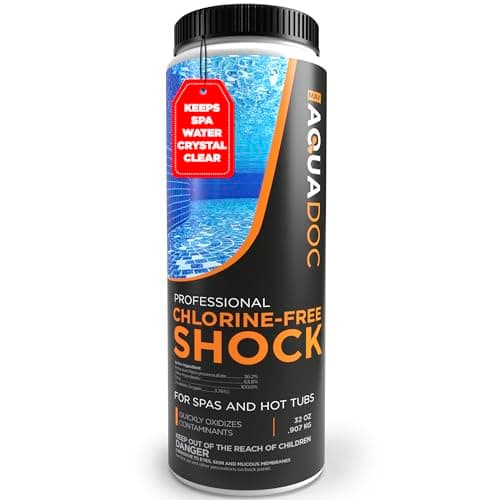
AquaDoc Non-Chlorine Hot Tub Shock (MPS Oxidizer), 32 oz
AquaDoc
Useful and routinely misunderstood. The industry's own technical note is blunt: potassium monopersulfate is not a sanitizer and must be used alongside an EPA-registered one. This does not kill Pseudomonas.
#ad how this is funded · price as of October 12, 2026
Key specs
- Active
- Potassium monopersulfate (MPS), the standard non-chlorine shock chemistry
- What it does
- Oxidation — breaks down organic contamination to restore clarity
- What it does NOT do
- Sanitize. PHTA publishes that MPS "is not a sanitizer or algaecide"
- Must be used with
- An EPA-registered sanitizer, published
- Size
- 32 oz, published; also sold as a 5 lb tub
- Advantage
- Oxidizes without adding chlorine, so swim-ready time is short
How it scoresour reading of published specs, not a test result
- Effectiveness
- 7.0
- Ease
- 9.0
- Water impact
- 6.5
- Cost per season
- 8.5
- Value
- 7.5
Overall 7.7 / 10
What works
- Reduces the organic load so your bromine or chlorine is spent on germs rather than on body oils
- No chlorine added, so it does not spike the sanitizer or drive a long wait before getting in
- Compatible with all sanitizer systems, per the published guidance
- The right tool after a heavy-use weekend, which is when hot tub water most often turns
What doesn't
- It is not a disinfectant, and buying it as one is the most common mistake in spa chemistry
- Does nothing about biofilm in the plumbing, which is where the organism behind hot tub rash actually lives
- Adds sulfate to water you are not changing often, which accumulates
- No contact time or dose-by-gallons published prominently on the listing
Skip it if: Anything to do with hygiene on its own. If the reason you are reaching for shock is a rash or a smell, the sanitizer residual and the filter are the problem, and this does not address either.
What it costs to run: Cheap per treatment and genuinely useful in its lane. The expensive version of this product is buying it instead of a sanitizer, which is how a tub ends up clear and unsafe at the same time.
A few weekends: Fine for a heatwave and a toddler. Treat it as consumable, not as a pool — it will not survive a winter in the yard.
A spa, which is not a small pool
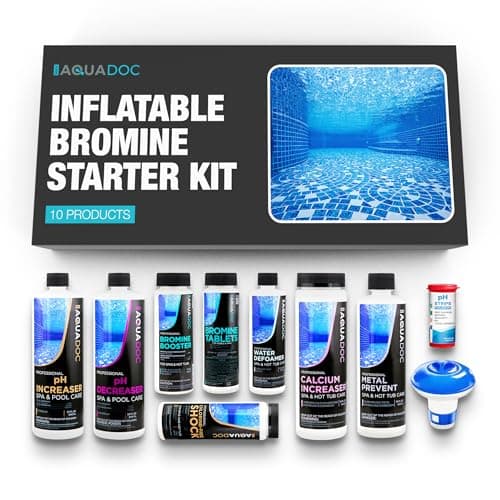
Inflatable Hot Tub Chemical Kit
Various
A bromine or chlorine kit packaged for the 200-to-300 gallon world. The reason it exists is that hot tub chemistry moves far faster than pool chemistry and the pool products are dosed wrong for it.
#ad how this is funded · price as of October 12, 2026
Key specs
- Sanitizer
- Bromine tablets or chlorine granules — pick one
- Typically includes
- Sanitizer, booster, pH up and down, calcium increaser
- Also includes
- Chlorine-free shock, defoamer, metal prevent, test strips
- Delivery
- A floater is usually in the box for bromine kits
- Volume
- Dosed for a few hundred gallons, not a few thousand
- Testing
- Strips included; test far more often than a pool
How it scoresour reading of published specs, not a test result
- Effectiveness
- 8.5
- Ease
- 9.0
- Water impact
- 7.5
- Cost per season
- 7.0
- Value
- 8.0
Overall 8.0 / 10
What works
- Dosed for spa volumes, so you are not measuring fractions of a pool scoop
- Bromine is more stable than chlorine at hot tub temperatures
- Chlorine-free shock means the tub is usable again quickly after treatment
- Defoamer is in the box, which every new spa owner needs within two weeks
What doesn't
- Small volume means chemistry swings fast and needs testing every few days
- Bromine and chlorine kits are not interchangeable mid-season without a drain
- A starter kit is a season at most on a well-used tub
- Metal prevent and calcium increaser are only needed on some water supplies
Skip it if: Being used on a pool. The dosing is wrong by an order of magnitude and you will spend far more than buying pool chemistry.
What it costs to run: Cheaper per unit than buying the eight components separately, and the components you do not need are the waste. On a tub you refill every few weeks, this is a recurring line, not a one-off.
One honest season: The cheapest setup that genuinely works for a season of real swimming. Nothing spare, nothing missing.
Specs from: AquaDoc inflatable hot tub chemical kit with bromine — Amazon listing
Anything that is not an Intex — the other half of the market
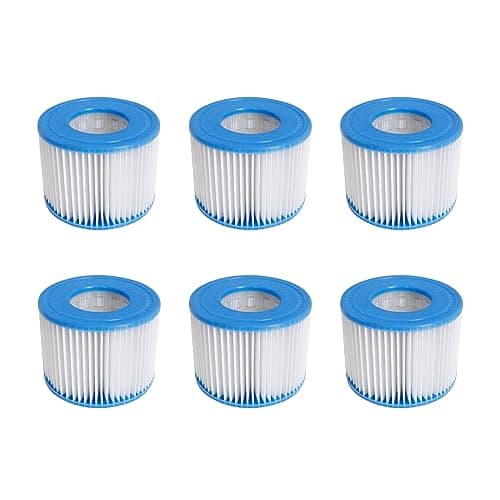
Type VI Spa Filter Cartridge for Bestway, Lay-Z-Spa and Coleman SaluSpa
Generic
Type VI is the Bestway family's cartridge and it is not interchangeable with Type S1. Getting this wrong is the most common spa parts mistake there is, and the two look similar enough to make it easy.
#ad how this is funded · price as of October 12, 2026
Key specs
- Type
- Type VI, published
- Fits
- Published for Bestway, Lay-Z-Spa and Coleman SaluSpa inflatable hot tubs
- Does NOT fit
- Intex PureSpa, which uses Type S1 — different housing, different cartridge
- Quantity
- Sold from 2-packs up to 12-packs across listings
- Media
- Pleated paper
- Micron rating
- Not published
How it scoresour reading of published specs, not a test result
- Value
- 8.5
Overall 8.0 / 10
What works
- Covers the entire Bestway/Coleman/Lay-Z-Spa family with one part number
- Widely stocked in several pack sizes, so cost per cartridge can be optimized
- Cheap enough that replacing rather than rinsing is a realistic habit
- The listing names the three brand families explicitly rather than claiming universal fit
What doesn't
- No micron rating published, same as every cartridge in this category
- Easily confused with Type S1 — they are not interchangeable and the tub will not tell you
- Third-party only in most pack sizes; Bestway's own part is harder to find in quantity
- Paper media with the usual short rinse ceiling
Skip it if: Fitting an Intex tub. If your hot tub is a PureSpa this is the wrong cartridge, and no amount of pushing will make it seal. Check the tub brand before the pack size.
What it costs to run: Same arithmetic as the Intex side: divide by count. Pack sizes here run from 2 to 12 at headline prices that look similar, so cost per cartridge varies by more than three times across the listings.
A few weekends: Fine for a heatwave and a toddler. Treat it as consumable, not as a pool — it will not survive a winter in the yard.
Questions people actually ask
What causes hot tub rash?
What chlorine level prevents hot tub rash?
How long does hot tub rash last?
Does non-chlorine shock prevent hot tub rash?
Why does my hot tub keep causing a rash when the water tests fine?
Should I shower after using a hot tub?
Sources
- CDC — preventing hot tub rash (causative organism, published chlorine, bromine and pH ranges, swimsuit and shower guidance)
- ICC Building Safety Journal / PHTA Recreational Water Quality Committee — potassium monopersulfate is not a sanitizer
- CDC — home pool and hot tub water treatment and testing
- CDC — guidelines for keeping your pool safe and healthy
Read next
- Pool care, from someone who assumes you have never done thisThe weekly routine, the four numbers that matter, and the fix for the week the water turns.
- A hot tub is not a small poolBromine against chlorine for an inflatable hot tub, what a starter kit actually contains, and why the testing cadence is the thing that changes.
- Hot tub water change: the arithmetic says two weeksWhy an inflatable hot tub needs its water changed in weeks rather than months, the arithmetic behind it, and what to do at each change.
- An inflatable hot tub in winter: never let it freeze, cover everything elseWhat changes when an inflatable hot tub runs through the cold months - the loss-side purchases that pay for themselves, and the freeze failure that ends the tub.
- Spa filter cartridges: check the type before the priceType S1 against Type VI, which tub takes which, and the cost-per-cartridge arithmetic that pack prices hide.
- Inflatable hot tubs, judged on the bill rather than the bubblesThe two inflatable hot tubs worth shortlisting, compared on insulation and cover rather than jet count, plus the running cost nobody publishes.
- Small children and pool water, without the scare storiesThe hygiene practices that actually change the risk with toddlers in a backyard pool, and the ones that do not.
- Clear water and safe water are two different thingsWhy a pool can look perfect and be unsanitized, why haze is often harmless, and the four readings that answer the question clarity cannot.
- Bather load: the variable that explains your worst weeksWhy gallons per swimmer is the number that matters, what a busy afternoon costs you in chlorine, and the routine that absorbs it.