Above-Ground Pools
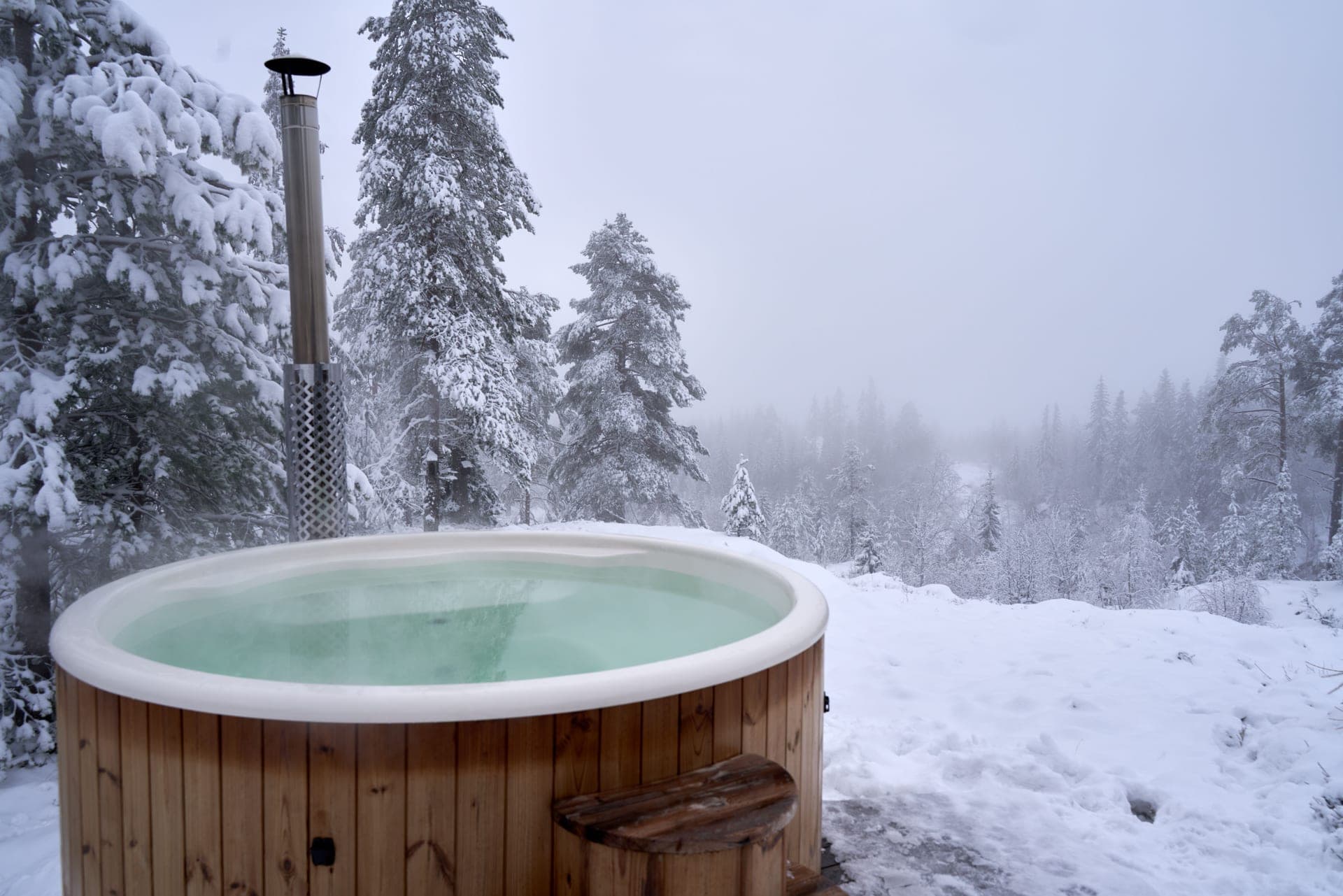
An inflatable hot tub in winter: never let it freeze, cover everything else
Yes, you can run one through winter - most makers rate them to do it. Buy an insulated cover and a ground mat before the first frost, and understand the one rule that matters: a tub that loses power in freezing weather is a tub with a cracked heater.
Heads up: we earn a commission if you buy through the links on this page, at no extra cost to you. It never decides the ranking — here is how we pick and here is the full disclosure. Prices are checked automatically; last verified October 11, 2026.
The short version
- The failure to plan for is power loss, not cold. A running, covered tub is fine below freezing; an unheated full one is not.
- Spend on the loss side. Cover, floating blanket, ground mat. The heater is fixed; what you can change is how fast the heat leaves.
- The supplied lid is the weak point. It is an inflated bladder, not an insulated panel, and it is where most of the heat goes.
- Half-measures are the dangerous state. Run it or drain it fully. Full and unheated through a freeze is what cracks heaters.
Why the tub is the October purchase and the pool is not
Everything else on this site is winding down right now. The pool is closed or closing, the floats are in a box and the next thing happening to the yard is a cover going on. An inflatable hot tub runs in the opposite direction: it is least appealing in August and most appealing on a cold clear night in January.
Our inflatable hot tub roundup is the buying page, and it already argues that the cover and the insulation decide whether you enjoy owning one. This page is what changes once the air drops below the water by fifty degrees instead of twenty.
The one rule
The practical consequence is that winter tub ownership is a binary. Either it runs, covered and powered, all season — or it is drained completely, dried and put away. Our unexpected freeze page covers the same logic for pool equipment, and the reasoning transfers exactly.
If you are running it, two cheap insurance measures are worth taking now: check that the tub is on its own circuit rather than sharing one that something else can trip, and make a habit of looking at the control panel every morning. A tub that failed at 11pm is recoverable at 7am; one that failed on Friday and is noticed on Sunday is not.
Spend on the loss side, because the gain side is fixed
The heater in an inflatable tub is what it is — you cannot make it bigger. What you can change is how fast the heat you have paid for escapes, and in winter that is where every useful dollar goes.
| Loss path | Why it matters more in winter | What addresses it | Published spec? |
|---|---|---|---|
| Surface evaporation | Biggest single loss on any uncovered hot water | Floating thermal blanket under the lid | 16 mil thickness published |
| The lid itself | Supplied lids are inflated bladders, not insulated panels | An energy-efficient replacement cover | No R-value published |
| The ground underneath | Cold slab or frozen soil draws heat continuously | 1/2 in EVA foam ground mat | 1/2 in thickness published |
| The walls | Inflated walls have some insulating air, but thin | Little you can do; some owners add a skirt | Nothing published |
Note which rows publish a number. Thickness in mil and thickness in inches are comparable figures; “energy-efficient” on a cover is not. That is worth keeping in mind when the cover is also the most expensive item on the list — it is bought on fit and brand match rather than on a measured advantage, and we are not going to pretend otherwise.
The floating blanket is the one that surprises people. It costs the least, goes directly on the water under the existing lid, and attacks evaporation, which is the dominant loss from any hot water surface. If you buy one thing off this page before the first hard frost, that is the one.
What the ground mat is actually doing in October
In summer a foam mat under an inflatable tub is a comfort and puncture item. From October it becomes insulation, and the reason is that the ground is the only surface touching the tub that is both cold and in permanent contact.
Air moves and takes some heat with it; a slab just sits there conducting. Half an inch of closed-cell EVA between 200 gallons of hot water and a frozen patio is a published thickness doing a measurable job, and unlike the cover it does not need taking off and putting back every time someone uses the tub.
What gets harder in the cold
| Job | What changes | What to do about it |
|---|---|---|
| Water changes | Same interval, far less pleasant, and a freeze risk while empty | Do it in the warmest part of the day and refill immediately |
| Filter cartridges | Usage often rises, so they load faster, not slower | Keep a multipack; do not stretch a gray cartridge |
| Chemistry checks | Sanitizer demand stays high; nobody wants to stand outside testing | Test before you get in, while you are already out there |
| Topping up | Evaporation continues; a low tub can expose the heater | Check level weekly - this is the one that causes damage |
The water level row is the one to take seriously. An inflatable tub losing water to evaporation all winter will eventually drop below the level the heater and pump need, and running either dry is the second most common way these units die. It takes thirty seconds a week to check.
Everything else about the chemistry is unchanged from summer, including the targets. The CDC's published guidance for home pools and hot tubs does not have a winter exemption, and our hot tub chemistry page is the page to work from. Cold air does not reduce what four people at 102 degrees do to 200 gallons.
If you decide not to run it
Entirely reasonable, and much cheaper. The requirement is that you do it properly rather than halfway: drain completely, including the heater block and lines, run the blower briefly to clear residual water if your model allows it, dry the shell fully before folding, and store it somewhere that does not freeze.
A folded tub with water still in the lines stored in an unheated garage is the same failure as leaving it outside, just slower to discover. And a damp folded liner grows mold over six months, which is a smell that never fully leaves.
Our equipment storage page covers the same discipline for pool pumps and filters, which are coming indoors at the same time of year and for the same reason.
What to buy
Scores are our own reading of published specifications. They are not test results — we have not tested these products and we do not claim to.
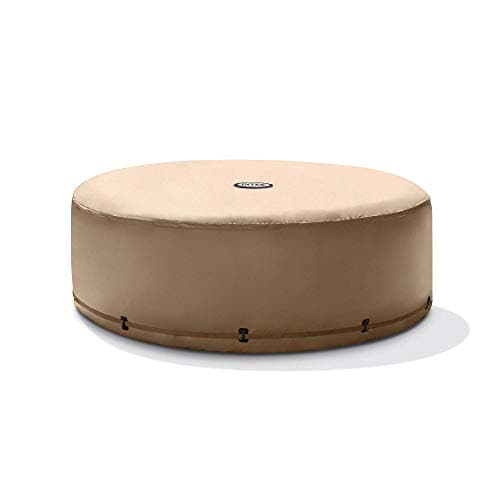
The single biggest lever on a winter hot tub bill
Intex PureSpa Energy-Efficient Spa Cover
Intex
The cover is where an inflatable hot tub loses heat, and the supplied one is the cheapest part of the tub. In winter this is the first upgrade, not the last.
#ad how this is funded · price as of October 11, 2026
Key specs
- Type
- Energy-efficient spa cover, published for Intex PureSpa inflatable hot tubs
- Fit
- Check your own tub diameter against the listing before ordering — Intex sells several sizes
- R-value
- Not published
- Insulation thickness
- Not published
- What it replaces
- The inflatable lid supplied in the box, which is a bladder rather than an insulated panel
How it scoresour reading of published specs, not a test result
- Retention
- 9.0
- Durability
- 7.5
- Handling
- 7.0
- Running cost
- 10.0
- Value
- 6.5
Overall 8.0 / 10
What works
- Addresses the loss side rather than the heat side, which is where the arithmetic on a 200-gallon tub actually sits
- Made for the tub rather than trimmed from a generic cover, so the seal at the rim is right
- No running cost, no power, nothing to fail
- Bought once and used for the life of the tub
What doesn't
- No R-value or insulation thickness published, so you cannot compare it with a generic thermal cover on anything but price
- The most expensive item in this category by a wide margin
- Sized per model, and an almost-right diameter is worse than useless on a cover
- Does nothing about heat lost through the floor, which is what the ground mat is for
Skip it if: Being compared on specification. Intex publishes a fit and a claim, not a number, so the honest case for it is the fit and the brand match rather than a measured advantage.
What it costs to run: On a tub running through winter the cover is the only purchase here that pays back in electricity. Our hot tub running cost page does that arithmetic against published heater wattage rather than guessing at it.
Several seasons: Buy-once. Built and warranted to come back out of the box for a few years, if you store it properly.
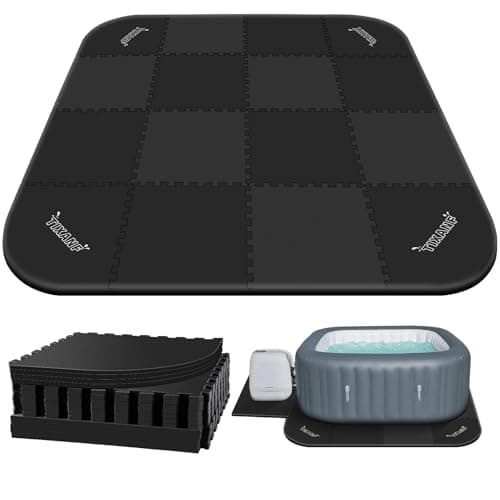
The heat going down into cold ground
Extra-Thick Hot Tub Ground Mat, 85 in, 1/2 in EVA Foam
Generic
Half an inch of EVA foam between the tub and the slab. In summer it is a comfort and puncture item; from October it is insulation, because the ground under a hot tub is the coldest thing touching it.
#ad how this is funded · price as of October 11, 2026
Key specs
- Size
- 85 in, published; sized for common inflatable tub footprints
- Thickness
- 1/2 in, published
- Material
- EVA foam, published
- Form
- Interlocking tiles on some versions, single pad on others
- R-value
- Not published
How it scoresour reading of published specs, not a test result
- Retention
- 7.0
- Durability
- 7.5
- Handling
- 7.5
- Running cost
- 10.0
- Value
- 7.5
Overall 7.7 / 10
What works
- Half an inch is a published figure you can compare, unlike most of this category
- Does two jobs — puncture protection in summer, floor insulation in winter
- Interlocking versions store flat in a garage over the off-season
- EVA does not absorb water, so it does not freeze into a sheet under the tub
What doesn't
- No R-value published, so the insulation benefit is directional rather than a number
- 85 in sizing needs checking against your own tub, and foam that stops short of the rim is a cold bridge at the edge
- Foam under a filled tub compresses, and a compressed mat insulates less than a new one
- Nothing stops water tracking between interlocking tiles and sitting there
Skip it if: Leveling. A foam mat is not a base — it goes on top of ground that is already flat and firm, and a tub on a soft or sloping base is a different and more serious problem.
What it costs to run: Mid-priced and bought once. In winter it belongs on the same line as the cover: both are loss-side purchases, which is where the money is on a 200-gallon tub.
Several seasons: Buy-once. Built and warranted to come back out of the box for a few years, if you store it properly.
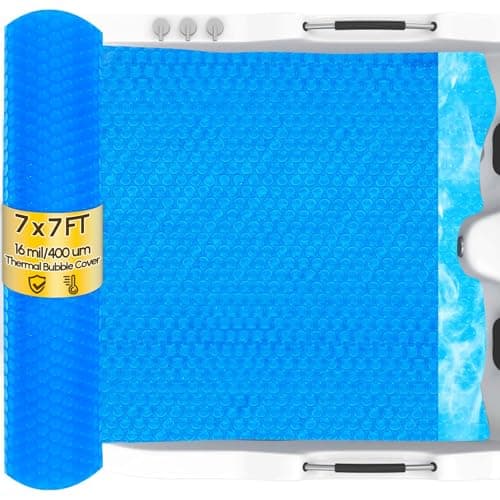
Floating under the lid, where the heat actually leaves
Angooni 7 ft x 7 ft Hot Tub Thermal Blanket, 16 Mil
Angooni
A 16 mil solar bubble sheet that floats directly on the water under the cover. It publishes a thickness, which is more than most of this category manages, and it is the cheapest real improvement you can make.
#ad how this is funded · price as of October 11, 2026
Key specs
- Size
- 7 ft x 7 ft square, published; trims to fit
- Thickness
- 16 mil, published
- Type
- Solar bubble cover, published
- Where it goes
- Directly on the water surface, under the main cover
- Also sold as
- A 6 ft x 6 ft version at the same published 16 mil
How it scoresour reading of published specs, not a test result
- Retention
- 7.5
- Durability
- 5.5
- Handling
- 7.0
- Running cost
- 10.0
- Value
- 9.0
Overall 7.8 / 10
What works
- Publishes a mil thickness, which is the one comparable spec in floating covers
- Goes under the existing lid, so it adds insulation without replacing anything
- Square and trimmable, so one size fits round and square tubs
- Cheapest item on the winter hot tub list by some distance
What doesn't
- 16 mil is mid-range for a solar cover; thicker exists and lasts longer
- A floating sheet in a tub people get into is one more thing to peel off and put somewhere wet
- Bubble covers degrade in UV and chemical exposure, so treat it as a seasonal item
- No published temperature or heat-loss figure, so the benefit is directional rather than quantified
Skip it if: Being the only cover. A floating blanket under a poor lid is still a poor lid; this is an addition to a proper cover, not a replacement for one.
What it costs to run: The cheapest line on the winter hot tub budget and the one most likely to be replaced annually. Our solar cover payback page does the same arithmetic for a pool, and the ratio is better on a hot tub because the water is hotter.
One honest season: The cheapest setup that genuinely works for a season of real swimming. Nothing spare, nothing missing.
Hard water, and people who already own Intex
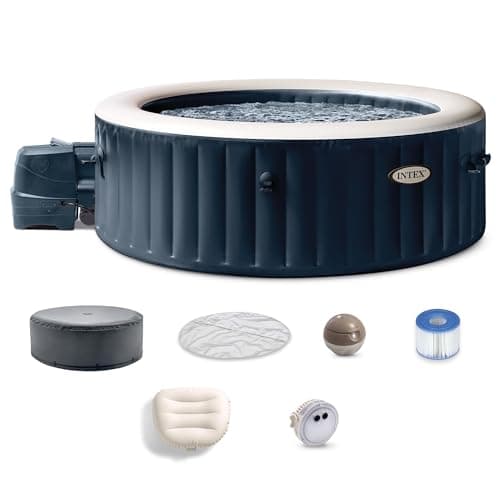
Intex PureSpa Inflatable Hot Tub
Intex
The direct alternative, and the built-in hard water treatment is a genuine point of difference rather than a marketing one if your fill water is hard.
#ad how this is funded · price as of October 11, 2026
Key specs
- Capacity
- 4 people (28429EP)
- Size
- 77in round x 28in
- Water treatment
- Built-in hard water treatment system
- Included
- Energy-efficient spa cover, 2 headrests, LED light
- Jets
- Bubble massage — air, not water jets
- Running cost
- Not published
How it scoresour reading of published specs, not a test result
- Build
- 7.5
- Setup
- 9.0
- Upkeep
- 6.5
- Running cost
- 5.5
- Value
- 7.8
Overall 7.5 / 10
What works
- Built-in hard water treatment is a real advantage on hard fill water
- Insulated cover included rather than sold separately
- Shares the Intex accessory ecosystem if you already own an Intex pool
- Headrests and light included, which are usually add-ons elsewhere
What doesn't
- Air bubbles rather than water jets, same as the category
- Four people is a genuine four, not an optimistic one
- Cartridges need changing often at spa temperatures and bather loads
- Wattage is not published, so the running cost cannot be computed before purchase
Skip it if: Cold-climate winter use without serious attention to the cover and the ground under it. These are insulated, not immune.
What it costs to run: Same shape as the rest of the category: the electricity dwarfs the purchase over a year. The one lever you control is whether the cover goes back on every single time.
Several seasons: Buy-once. Built and warranted to come back out of the box for a few years, if you store it properly.
Specs from: Intex PureSpa 28429EP — current Amazon listing and published specifications
The default inflatable hot tub
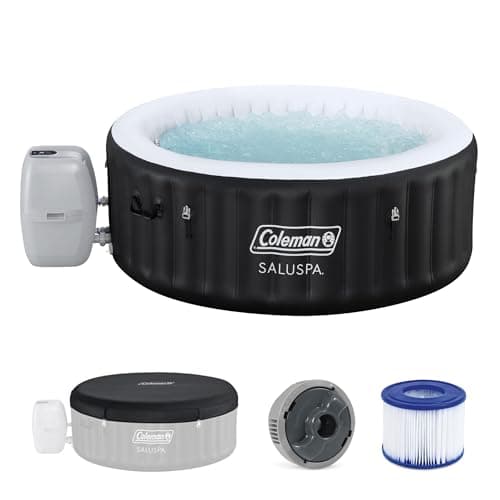
Coleman SaluSpa Inflatable Hot Tub
Coleman (Bestway)
The one most people end up with, and reasonably so. Insulated cover and wall are the specs worth paying for, because everything expensive about owning one of these is heat you paid for and then lost.
#ad how this is funded · price as of October 11, 2026
Key specs
- Capacity
- 4 to 6 people, depending on SKU
- Size
- 71in or 77in round x 28in, per model
- Jets
- 140 AirJets on current models
- Cover
- EnergySense insulated cover included
- Cold weather
- Freeze Shield on current models
- Running cost
- Not published — depends on your rate and ambient temperature
How it scoresour reading of published specs, not a test result
- Build
- 7.5
- Setup
- 9.0
- Upkeep
- 6.5
- Running cost
- 5.5
- Value
- 8.0
Overall 7.6 / 10
What works
- Insulated cover and wall are the features that actually govern the running cost
- No installation, no permit conversation, no groundwork beyond a level base
- Packs away, which matters if the yard has one usable corner
- Widely stocked, so replacement filters and parts are easy to find
What doesn't
- Air jets, not water jets — this is bubbles rather than massage, and people expect the latter
- Heating is slow by design; you plan around it rather than deciding on the day
- Filter cartridges are a frequent consumable at spa bather loads
- Vinyl in constant hot water ages faster than the same vinyl in a pool
Skip it if: Anyone expecting hydrotherapy jets. It is a warm bubbling tub, and that is a different product from a hard-shell spa.
What it costs to run: The purchase is the small number. A hot tub is heated 24/7 rather than seasonally, so the electricity is the real commitment and it is entirely a function of your rate, your cover discipline and your climate. Nobody publishes a national figure and we will not invent one.
Several seasons: Buy-once. Built and warranted to come back out of the box for a few years, if you store it properly.
Specs from: Coleman SaluSpa — current Amazon listing and published specifications
Knowing when to close, and when to stop heating
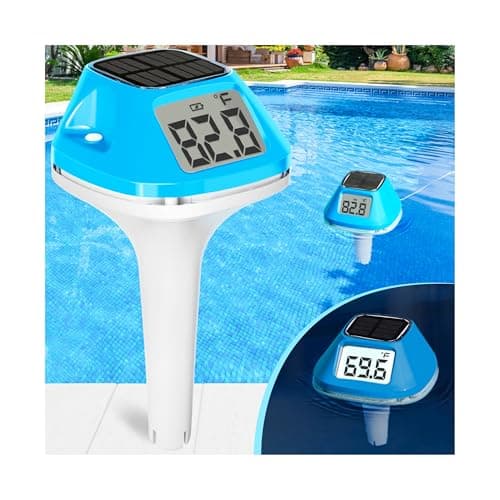
Floating Pool Thermometer
Various
The cheapest instrument on this site and the one that answers two expensive questions: is it warm enough to swim, and is it cold enough to close.
#ad how this is funded · price as of October 11, 2026
Key specs
- Types
- Floating analog, digital solar, or wireless with an indoor display
- Typical digital range
- About 15.8°F to 176°F on current models
- Typical stated accuracy
- About ±1.8°F on current digital models
- Water resistance
- IPX8 on current digital models
- Materials
- UV-stabilized and chlorine-resistant on better models
How it scoresour reading of published specs, not a test result
- Accuracy
- 7.5
- Ease
- 9.0
- Coverage
- 5.0
- Cost per use
- 9.8
- Value
- 9.2
Overall 8.4 / 10
What works
- Turns the closing decision from a guess into a reading, which is the most expensive judgment call of the pool year
- Tells you whether a solar cover is actually doing anything, rather than assuming
- Digital models are readable from the deck; analog ones need fishing out
- Cheap enough that having one is never the wrong call
What doesn't
- Analog floats get lost, get chewed, and end up under the ladder
- Solar and wireless models add batteries or a panel to a thing that could have had neither
- Tethering it is essential and almost nobody does it
- Accuracy claims are rarely independently verified — treat ±2°F as the working assumption
Skip it if: Telling you anything about water chemistry. It measures one thing, and every other decision needs a test kit.
What it costs to run: A few dollars, once. It pays for itself the first time it stops you closing a pool that was still warm, which is the mistake that produces a green opening in April.
Several seasons: Buy-once. Built and warranted to come back out of the box for a few years, if you store it properly.
Specs from: Digital floating pool thermometer — current Amazon listing and published specifications
Questions people actually ask
Can you use an inflatable hot tub in winter?
What temperature is too cold for an inflatable hot tub?
Should you drain an inflatable hot tub for winter?
Does an inflatable hot tub cost much more to run in winter?
Do you still change the water as often in winter?
Sources
Read next
- Above-ground pools for ordinary backyardsSoft-side, metal-frame and steel-wall pools compared by what they cost across a whole season, not at the till.
- Inflatable hot tubs, judged on the bill rather than the bubblesThe two inflatable hot tubs worth shortlisting, compared on insulation and cover rather than jet count, plus the running cost nobody publishes.
- A hot tub is not a small poolBromine against chlorine for an inflatable hot tub, what a starter kit actually contains, and why the testing cadence is the thing that changes.
- Hot tub water change: the arithmetic says two weeksWhy an inflatable hot tub needs its water changed in weeks rather than months, the arithmetic behind it, and what to do at each change.
- Inflatable hot tub running cost: the bill is a winter billThe electricity arithmetic for an inflatable hot tub held at temperature through winter, built from published heater wattage and current published rates.
- Spa filter cartridges: check the type before the priceType S1 against Type VI, which tub takes which, and the cost-per-cartridge arithmetic that pack prices hide.
- Hot tub steps: the handrail is the part that mattersRigid against folding spa steps plus the rotating handrail, compared on published adjustment, storage and what each one actually prevents.
- A freeze is forecast and the pool is still openWhat to protect first when a cold snap arrives before closing day, why the equipment is at risk before the pool is, and when to just close early.
- A cold climate does not stop you owning a pool. It picks which one.How a freezing winter changes the buying decision: which pools manufacturers allow to stay up, which must be drained and stored, and the closing kit that protects either.