Pool Costs
Inflatable hot tub running cost: the bill is a winter bill
A tub that costs little in July costs real money in January, because heat loss scales with the gap between the water and the air. Here is the arithmetic from published wattage, and why the cover is the only purchase that reliably pays it back.
Heads up: we earn a commission if you buy through the links on this page, at no extra cost to you. It never decides the ranking — here is how we pick and here is the full disclosure. Prices are checked automatically; last verified October 11, 2026.
The short version
- The gap drives the bill. 102F water on a 30F night is a 72-degree difference against 32 in summer, and the heater runs accordingly.
- Do the arithmetic with your own wattage. Heater ratings differ by model; the number is on the unit and on the manual.
- Leaving it on beats reheating. And in freezing weather it is also the only safe option.
- Cover first, always. It is the one purchase with a mechanism rather than a marketing claim behind it.
Why we will not just give you a number
Every page that answers this question with a single monthly figure is quietly assuming a tub size, a climate, a cover and an electricity rate, and changing any one of those moves the answer by more than half. Our annual cost page takes the same position on pools: the useful thing is the arithmetic with your own inputs, not somebody else's total.
So here is the method, and then the worked example.
Hot tub electricity, for any inflatable tub
- Heater wattage
- on the unit and in the manual
- Hours the heater actually runs per day
- the unknown - see below
- Days in the month
- 30
- US residential average rate, June 2026 [EIA]
- 18.34 ¢/kWh
kWh = watts × hours/day × days ÷ 1,000 cost = kWh × your rate
A 1,300 W heater running 6 h/day for 30 days is 234 kWh, about $43 at the US average rate
Two things that arithmetic makes visible. First, the heater wattage is a fixed input you can look up in thirty seconds, so there is no reason to guess at it. Second, the variable that actually swings the bill is hours per day, and that is the one you have some control over.
What moves hours per day
| Factor | Direction | Can you change it? |
|---|---|---|
| Air temperature | Colder air, far more heater time | No |
| Cover quality | A poor lid is the single biggest controllable loss | Yes - the main lever |
| Surface left open | Any uncovered water evaporates continuously | Yes - floating blanket |
| Ground underneath | Cold slab conducts heat away all day | Yes - foam mat |
| Set temperature | Every degree is more gap to maintain | Yes - 100F instead of 104F is real money |
| How often the lid is off | Each session dumps heat and restarts the catch-up | Partly |
| Wind exposure | Moving air strips heat from the cover and surface | Partly - a screen or fence helps |
The set-temperature row deserves more attention than it gets. The difference between 104 and 100 degrees is four degrees of gap you are paying to maintain every hour of every day, and most people cannot tell the two apart once they are in. It is the only free saving on this page.
What the three loss-side purchases are worth
We can be precise about what these products publish and honest about what that does not let us calculate.
| Purchase | Published spec | Mechanism | Can we compute payback? |
|---|---|---|---|
| Floating thermal blanket | 16 mil thickness | Stops surface evaporation | No - no heat-loss figure published |
| Insulated replacement cover | Fit only; no R-value | Replaces an inflated bladder lid | No - no R-value published |
| EVA ground mat | 1/2 in thickness | Reduces conduction into cold ground | No - no R-value published |
Three products, three mechanisms that are physically sound, and not one published figure that would let us produce a payback period. We could invent one. Our solar cover payback page does produce real numbers for a pool, and the reason is that solar cover makers publish evaporation reduction percentages. The hot tub accessory market does not.
What we will say is the ordering, because the mechanisms differ in size. Surface evaporation is the largest loss, so the blanket and the cover come first. Ground conduction is real but smaller, so the mat is third — worth buying, and worth buying after the other two.
On versus off, which is not really a cost question in winter
In summer this is a straightforward comparison: holding temperature costs a trickle, reheating from cold costs a lump, and for anything more than occasional use holding wins.
What reheating 200 gallons from cold actually involves
- Tub volume
- about 200 gal
- Weight of water
- about 8.34 lb per gal
- Raising it from 50F to 102F
- a 52-degree lift
- BTU per lb per degree F
- 1
200 gal × 8.34 lb × 52 °F ≈ 86,700 BTU ≈ 25.4 kWh of delivered heat
About 25 kWh of heat into the water for one reheat, before any losses - roughly $4.70 at the US average rate
In winter the comparison stops being purely financial. A full tub switched off in freezing weather is the failure mode our winter guide is built around — water in the heater block and lines can freeze and split them, and on most inflatable tubs that is the end of the unit. The cost question has an answer, and then the freeze question overrides it.
The costs that are not electricity
| Line | Frequency | Rough scale | Where it is priced |
|---|---|---|---|
| Filter cartridges | Every few weeks on a used tub | Low, but recurring | Our spa cartridge roundup |
| Chemicals | Continuous; demand does not drop in winter | Low to moderate | Our hot tub chemicals guide |
| Water | 200 gal every 2-4 weeks | Single-digit dollars per change | EPA WaterSense average, $6.06/1,000 gal |
| Reheat after each change | Same cadence as the change | About 25 kWh minimum each | Computed above |
The last row is the one people miss when planning water changes. The water itself costs almost nothing; bringing 200 fresh gallons from tap temperature back to 102 degrees is the expensive part, and it happens every time. Our water change guide explains why the interval cannot be stretched much by chemistry, which means that reheat is a fixed feature of owning one rather than something you can optimize away.
Put together, that is the honest shape of an inflatable hot tub in winter: a moderate but genuinely variable electricity bill, a small recurring consumables bill, and a reheat every few weeks. Against a pool, which costs nothing at all right now, it is a standing charge — which is exactly the framing our hot tub versus pool page opens with.
What to buy
Scores are our own reading of published specifications. They are not test results — we have not tested these products and we do not claim to.
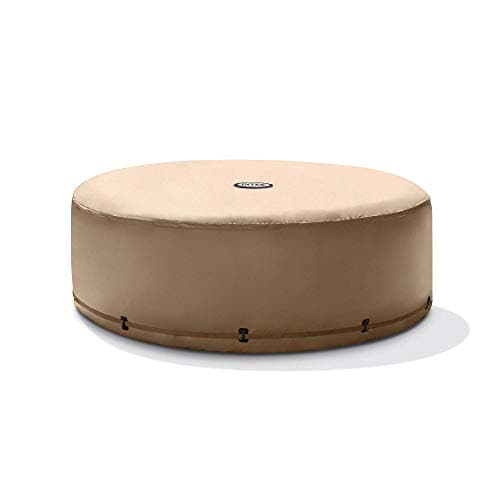
The single biggest lever on a winter hot tub bill
Intex PureSpa Energy-Efficient Spa Cover
Intex
The cover is where an inflatable hot tub loses heat, and the supplied one is the cheapest part of the tub. In winter this is the first upgrade, not the last.
#ad how this is funded · price as of October 11, 2026
Key specs
- Type
- Energy-efficient spa cover, published for Intex PureSpa inflatable hot tubs
- Fit
- Check your own tub diameter against the listing before ordering — Intex sells several sizes
- R-value
- Not published
- Insulation thickness
- Not published
- What it replaces
- The inflatable lid supplied in the box, which is a bladder rather than an insulated panel
How it scoresour reading of published specs, not a test result
- Retention
- 9.0
- Durability
- 7.5
- Handling
- 7.0
- Running cost
- 10.0
- Value
- 6.5
Overall 8.0 / 10
What works
- Addresses the loss side rather than the heat side, which is where the arithmetic on a 200-gallon tub actually sits
- Made for the tub rather than trimmed from a generic cover, so the seal at the rim is right
- No running cost, no power, nothing to fail
- Bought once and used for the life of the tub
What doesn't
- No R-value or insulation thickness published, so you cannot compare it with a generic thermal cover on anything but price
- The most expensive item in this category by a wide margin
- Sized per model, and an almost-right diameter is worse than useless on a cover
- Does nothing about heat lost through the floor, which is what the ground mat is for
Skip it if: Being compared on specification. Intex publishes a fit and a claim, not a number, so the honest case for it is the fit and the brand match rather than a measured advantage.
What it costs to run: On a tub running through winter the cover is the only purchase here that pays back in electricity. Our hot tub running cost page does that arithmetic against published heater wattage rather than guessing at it.
Several seasons: Buy-once. Built and warranted to come back out of the box for a few years, if you store it properly.
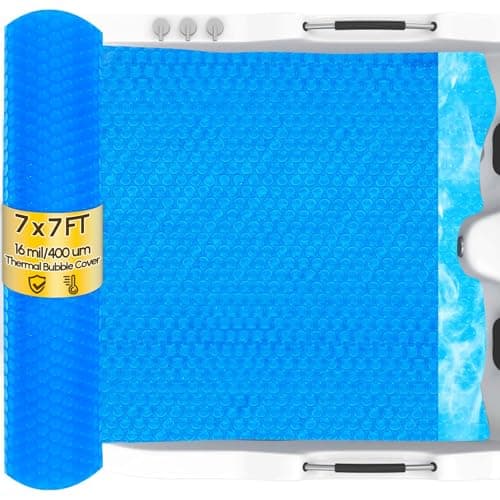
Floating under the lid, where the heat actually leaves
Angooni 7 ft x 7 ft Hot Tub Thermal Blanket, 16 Mil
Angooni
A 16 mil solar bubble sheet that floats directly on the water under the cover. It publishes a thickness, which is more than most of this category manages, and it is the cheapest real improvement you can make.
#ad how this is funded · price as of October 11, 2026
Key specs
- Size
- 7 ft x 7 ft square, published; trims to fit
- Thickness
- 16 mil, published
- Type
- Solar bubble cover, published
- Where it goes
- Directly on the water surface, under the main cover
- Also sold as
- A 6 ft x 6 ft version at the same published 16 mil
How it scoresour reading of published specs, not a test result
- Retention
- 7.5
- Durability
- 5.5
- Handling
- 7.0
- Running cost
- 10.0
- Value
- 9.0
Overall 7.8 / 10
What works
- Publishes a mil thickness, which is the one comparable spec in floating covers
- Goes under the existing lid, so it adds insulation without replacing anything
- Square and trimmable, so one size fits round and square tubs
- Cheapest item on the winter hot tub list by some distance
What doesn't
- 16 mil is mid-range for a solar cover; thicker exists and lasts longer
- A floating sheet in a tub people get into is one more thing to peel off and put somewhere wet
- Bubble covers degrade in UV and chemical exposure, so treat it as a seasonal item
- No published temperature or heat-loss figure, so the benefit is directional rather than quantified
Skip it if: Being the only cover. A floating blanket under a poor lid is still a poor lid; this is an addition to a proper cover, not a replacement for one.
What it costs to run: The cheapest line on the winter hot tub budget and the one most likely to be replaced annually. Our solar cover payback page does the same arithmetic for a pool, and the ratio is better on a hot tub because the water is hotter.
One honest season: The cheapest setup that genuinely works for a season of real swimming. Nothing spare, nothing missing.
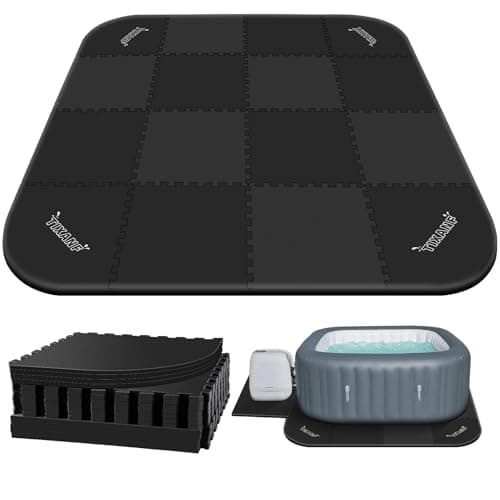
The heat going down into cold ground
Extra-Thick Hot Tub Ground Mat, 85 in, 1/2 in EVA Foam
Generic
Half an inch of EVA foam between the tub and the slab. In summer it is a comfort and puncture item; from October it is insulation, because the ground under a hot tub is the coldest thing touching it.
#ad how this is funded · price as of October 11, 2026
Key specs
- Size
- 85 in, published; sized for common inflatable tub footprints
- Thickness
- 1/2 in, published
- Material
- EVA foam, published
- Form
- Interlocking tiles on some versions, single pad on others
- R-value
- Not published
How it scoresour reading of published specs, not a test result
- Retention
- 7.0
- Durability
- 7.5
- Handling
- 7.5
- Running cost
- 10.0
- Value
- 7.5
Overall 7.7 / 10
What works
- Half an inch is a published figure you can compare, unlike most of this category
- Does two jobs — puncture protection in summer, floor insulation in winter
- Interlocking versions store flat in a garage over the off-season
- EVA does not absorb water, so it does not freeze into a sheet under the tub
What doesn't
- No R-value published, so the insulation benefit is directional rather than a number
- 85 in sizing needs checking against your own tub, and foam that stops short of the rim is a cold bridge at the edge
- Foam under a filled tub compresses, and a compressed mat insulates less than a new one
- Nothing stops water tracking between interlocking tiles and sitting there
Skip it if: Leveling. A foam mat is not a base — it goes on top of ground that is already flat and firm, and a tub on a soft or sloping base is a different and more serious problem.
What it costs to run: Mid-priced and bought once. In winter it belongs on the same line as the cover: both are loss-side purchases, which is where the money is on a 200-gallon tub.
Several seasons: Buy-once. Built and warranted to come back out of the box for a few years, if you store it properly.
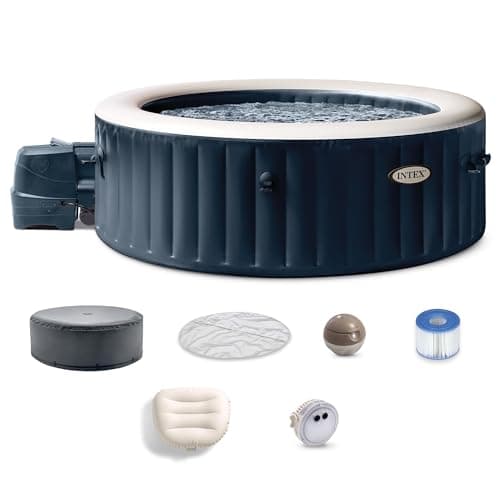
Hard water, and people who already own Intex
Intex PureSpa Inflatable Hot Tub
Intex
The direct alternative, and the built-in hard water treatment is a genuine point of difference rather than a marketing one if your fill water is hard.
#ad how this is funded · price as of October 11, 2026
Key specs
- Capacity
- 4 people (28429EP)
- Size
- 77in round x 28in
- Water treatment
- Built-in hard water treatment system
- Included
- Energy-efficient spa cover, 2 headrests, LED light
- Jets
- Bubble massage — air, not water jets
- Running cost
- Not published
How it scoresour reading of published specs, not a test result
- Build
- 7.5
- Setup
- 9.0
- Upkeep
- 6.5
- Running cost
- 5.5
- Value
- 7.8
Overall 7.5 / 10
What works
- Built-in hard water treatment is a real advantage on hard fill water
- Insulated cover included rather than sold separately
- Shares the Intex accessory ecosystem if you already own an Intex pool
- Headrests and light included, which are usually add-ons elsewhere
What doesn't
- Air bubbles rather than water jets, same as the category
- Four people is a genuine four, not an optimistic one
- Cartridges need changing often at spa temperatures and bather loads
- Wattage is not published, so the running cost cannot be computed before purchase
Skip it if: Cold-climate winter use without serious attention to the cover and the ground under it. These are insulated, not immune.
What it costs to run: Same shape as the rest of the category: the electricity dwarfs the purchase over a year. The one lever you control is whether the cover goes back on every single time.
Several seasons: Buy-once. Built and warranted to come back out of the box for a few years, if you store it properly.
Specs from: Intex PureSpa 28429EP — current Amazon listing and published specifications
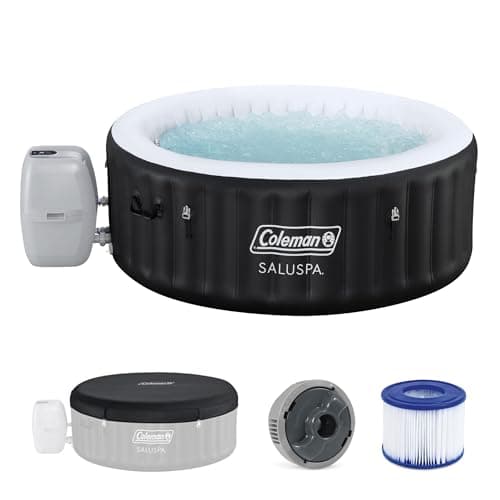
The default inflatable hot tub
Coleman SaluSpa Inflatable Hot Tub
Coleman (Bestway)
The one most people end up with, and reasonably so. Insulated cover and wall are the specs worth paying for, because everything expensive about owning one of these is heat you paid for and then lost.
#ad how this is funded · price as of October 11, 2026
Key specs
- Capacity
- 4 to 6 people, depending on SKU
- Size
- 71in or 77in round x 28in, per model
- Jets
- 140 AirJets on current models
- Cover
- EnergySense insulated cover included
- Cold weather
- Freeze Shield on current models
- Running cost
- Not published — depends on your rate and ambient temperature
How it scoresour reading of published specs, not a test result
- Build
- 7.5
- Setup
- 9.0
- Upkeep
- 6.5
- Running cost
- 5.5
- Value
- 8.0
Overall 7.6 / 10
What works
- Insulated cover and wall are the features that actually govern the running cost
- No installation, no permit conversation, no groundwork beyond a level base
- Packs away, which matters if the yard has one usable corner
- Widely stocked, so replacement filters and parts are easy to find
What doesn't
- Air jets, not water jets — this is bubbles rather than massage, and people expect the latter
- Heating is slow by design; you plan around it rather than deciding on the day
- Filter cartridges are a frequent consumable at spa bather loads
- Vinyl in constant hot water ages faster than the same vinyl in a pool
Skip it if: Anyone expecting hydrotherapy jets. It is a warm bubbling tub, and that is a different product from a hard-shell spa.
What it costs to run: The purchase is the small number. A hot tub is heated 24/7 rather than seasonally, so the electricity is the real commitment and it is entirely a function of your rate, your cover discipline and your climate. Nobody publishes a national figure and we will not invent one.
Several seasons: Buy-once. Built and warranted to come back out of the box for a few years, if you store it properly.
Specs from: Coleman SaluSpa — current Amazon listing and published specifications
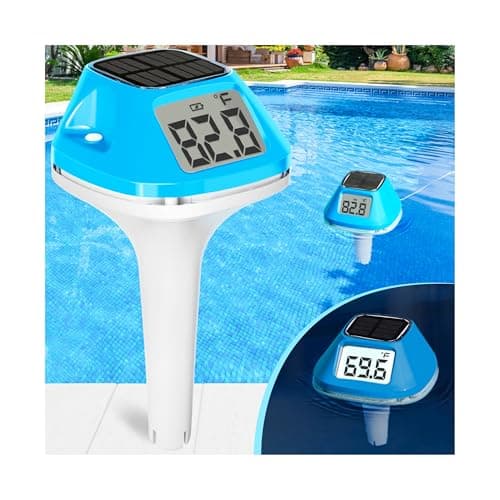
Knowing when to close, and when to stop heating
Floating Pool Thermometer
Various
The cheapest instrument on this site and the one that answers two expensive questions: is it warm enough to swim, and is it cold enough to close.
#ad how this is funded · price as of October 11, 2026
Key specs
- Types
- Floating analog, digital solar, or wireless with an indoor display
- Typical digital range
- About 15.8°F to 176°F on current models
- Typical stated accuracy
- About ±1.8°F on current digital models
- Water resistance
- IPX8 on current digital models
- Materials
- UV-stabilized and chlorine-resistant on better models
How it scoresour reading of published specs, not a test result
- Accuracy
- 7.5
- Ease
- 9.0
- Coverage
- 5.0
- Cost per use
- 9.8
- Value
- 9.2
Overall 8.4 / 10
What works
- Turns the closing decision from a guess into a reading, which is the most expensive judgment call of the pool year
- Tells you whether a solar cover is actually doing anything, rather than assuming
- Digital models are readable from the deck; analog ones need fishing out
- Cheap enough that having one is never the wrong call
What doesn't
- Analog floats get lost, get chewed, and end up under the ladder
- Solar and wireless models add batteries or a panel to a thing that could have had neither
- Tethering it is essential and almost nobody does it
- Accuracy claims are rarely independently verified — treat ±2°F as the working assumption
Skip it if: Telling you anything about water chemistry. It measures one thing, and every other decision needs a test kit.
What it costs to run: A few dollars, once. It pays for itself the first time it stops you closing a pool that was still warm, which is the mistake that produces a green opening in April.
Several seasons: Buy-once. Built and warranted to come back out of the box for a few years, if you store it properly.
Specs from: Digital floating pool thermometer — current Amazon listing and published specifications
Questions people actually ask
How much does an inflatable hot tub cost to run per month?
Why does a hot tub cost more to run in winter?
Is it cheaper to leave a hot tub on or turn it off?
Does a better cover actually save money?
Is a hot tub cheaper than a pool?
Sources
Read next
- What a pool actually costs, with the arithmetic shownPurchase, electricity, chemicals, water and replacement parts - added up, sourced, and shown as arithmetic you can redo.
- The pool is seasonal. The hot tub is a standing charge.Why an inflatable hot tub and an above-ground pool have opposite running-cost profiles, and which one suits which household.
- An inflatable hot tub in winter: never let it freeze, cover everything elseWhat changes when an inflatable hot tub runs through the cold months - the loss-side purchases that pay for themselves, and the freeze failure that ends the tub.
- Inflatable hot tubs, judged on the bill rather than the bubblesThe two inflatable hot tubs worth shortlisting, compared on insulation and cover rather than jet count, plus the running cost nobody publishes.
- Hot tub water change: the arithmetic says two weeksWhy an inflatable hot tub needs its water changed in weeks rather than months, the arithmetic behind it, and what to do at each change.
- What your pool pump costs to run, in watts and dollarsPool pump electricity computed from watts, hours and the EIA national average rate, with a table you can read your own pump off.
- Heating a pool, priced properlyThe physics of heating a pool turned into dollars, why a cover changes the answer more than the heater does, and when heating is worth it.
- Seven ways to cut a pool's running cost, ranked by what they actually saveEvery saving measure priced with the same arithmetic and ranked, so you spend effort where the money actually is.
- Spa filter cartridges: check the type before the priceType S1 against Type VI, which tub takes which, and the cost-per-cartridge arithmetic that pack prices hide.