Pool Equipment
The cleaner that borrows your pump instead of bringing its own
Between a vacuum head on a pole and a robot with its own motor sits a category most above-ground owners never look at, and on the right setup it is the best answer of the three.
Heads up: we earn a commission if you buy through the links on this page, at no extra cost to you. It never decides the ranking — here is how we pick and here is the full disclosure. Prices are checked automatically; last verified October 8, 2026.
Quick picks
Segmented before it is ranked — the right answer depends on which of these you actually are. Tap any row for the full write-up.
The suction-side cleaner
Above-ground models run one moving part and handle the dished floor these pools actually have. No motor, no charging, no electronics in the water.
| # | Product | Best for | Score | Price |
|---|---|---|---|---|
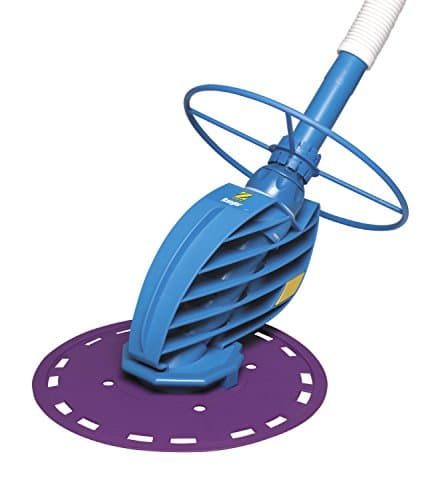
| 1 | Suction-Side Pool Cleaner A cleaner that runs off the suction your pump already produces, with one moving part and no electricity of its own. It is the middle option between a manual head and a robot, and it is the one almost nobody considers. | Automatic cleaning with no second motorSeveral seasons | 8.2out of 10 |
The category above
A robot brings its own motor and its own filter, which is why it costs several times as much and does not load yours.
| # | Product | Best for | Score | Price |
|---|---|---|---|---|
| 1 | 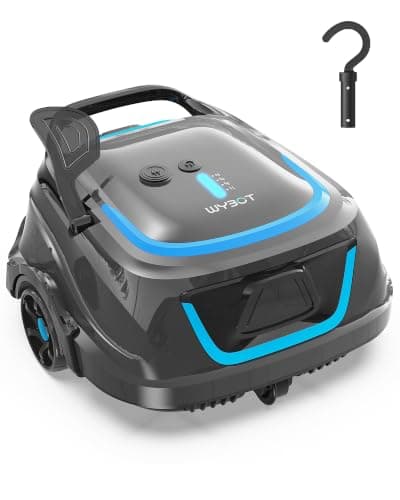 Cordless Robotic Pool Cleaner Genuinely good at the job and genuinely expensive relative to the pool. For a 1,700-gallon frame pool it costs a meaningful fraction of the pool itself, which is difficult to justify. | Large above-ground pools and people who will not vacuumMore than you need yet | 7.1out of 10 |
The category below
A vacuum head on a pole costs almost nothing and does the same job in ten minutes of your time.
| # | Product | Best for | Score | Price |
|---|---|---|---|---|
| 1 | No image Manual Vacuum Head with Telescopic Pole and Hose Connects to the skimmer and uses the pump you already own. It is slower than a robot, cheaper than everything, and it is what most above-ground pools should have. | Actual debris, at the lowest costSeveral seasons | 8.8out of 10 |
The short version
- It has no motor. Your pump is the power source, so there is nothing extra to run, charge or fail electronically.
- One moving part on the above-ground units, which is a genuinely different reliability story to a robot.
- It uses the skimmer, so the skimmer stops skimming while it runs.
- Debris goes into your filter, not into the cleaner. That is the real running cost.
The three-category picture
Our vacuum roundup covers manual and battery handheld units. Our robotic cleaner roundup covers self-powered robots. Suction-side sits between them and it works on a completely different principle to either.
| Manual head | Suction-side | Robot | |
|---|---|---|---|
| Power source | Your pump + you | Your pump | Its own motor |
| Your time per week | 5-10 min | Under 2 min to deploy | Under 2 min to deploy |
| Moving parts | None | One, on AG models | Motor, drive, pump |
| Where debris goes | Your filter | Your filter | Its own filter bag |
| Skimmer available while running | No | No | Yes |
| Cost | Lowest | Middle | Highest |
Reading across that table, the suction-side case is straightforward: robot automation at a fraction of robot cost and complexity, paid for by loading your own filter and giving up the skimmer while it works.
Why it suits an above-ground pool specifically
Two reasons, and the second is the one that matters.
Floor shape. Frame and soft-side pools do not have flat floors — the liner dishes down in the middle under the weight of the water. Robots designed for rigid inground floors can struggle with that; above-ground suction models are specified for it, and the common unit handles dished bottoms to around 72 inches.
No electricity in or near the water. A robot is a mains-powered device with a cord running into the pool. A suction cleaner has no electrical component at all. On a pool in the middle of a lawn with no GFCI-protected outlet nearby — the situation our electrical safety guide describes — that is not a small advantage.
What it costs you, honestly
Skimming. It connects into the skimmer, so while it runs the skimmer is not collecting floating debris. Our skimmer guide makes the case that surface collection is the highest-value thing your circulation does, and this pauses it. Run the cleaner in a block rather than continuously, and skim by hand at the same time.
Filter loading. Everything the cleaner picks up goes through the pump basket and into your filter. That is a faster cartridge cycle than the eight or nine a season our cartridge roundup budgets for, and it is the real recurring cost of the category. A robot avoids this entirely by filtering into its own bag.
Nothing on the electricity bill. It runs on pump hours you were already paying for — the hours our run-time guide derives. That is genuinely zero marginal energy cost, which no robot can claim.
What it does not do
Walls and waterline. Above-ground suction cleaners are floor cleaners. The waterline band still needs a brush, and brushing is a chemistry job rather than a cleaning one — the argument our brush roundup makes.
Large debris. Leaves and twigs go into the pump basket and clog it. On a treed yard, skim first and run the cleaner second, or you are just moving the blockage.
Anything at all with the pump off. Obvious, and worth saying: it needs the pump running, so it can only work during the hours you have already scheduled.
What we are scoring
We have not tested these and do not claim to. The scores reflect published specifications — moving-part count, hose length, stated floor-shape capability and connection method — read against a vinyl-lined above-ground pool with a cartridge or sand system. Our methodology page explains how our scoring works.
The picks, in full
Scores are our own reading of published specifications. They are not test results — we have not tested these products and we do not claim to.
Pick #1 · Automatic cleaning with no second motor
Suction-Side Pool Cleaner
Zodiac
A cleaner that runs off the suction your pump already produces, with one moving part and no electricity of its own. It is the middle option between a manual head and a robot, and it is the one almost nobody considers.
#ad how this is funded · price as of October 8, 2026
Key specs
- Power
- Your existing pump — no separate motor
- Moving parts
- One, on the above-ground models
- Hose
- 32 ft of feed hose on the above-ground Ranger
- Floor shape
- Handles dished-out bottoms to about 72 in
- Connection
- Into the skimmer
- Assembly
- Pre-assembled on the above-ground units
How it scoresour reading of published specs, not a test result
- Sizing fit
- 7.5
- Running cost
- 9.0
- Maintenance
- 8.0
- Build
- 8.0
- Value
- 8.5
Overall 8.2 / 10
What works
- No second motor, no charging, no electronics in the water
- One moving part is a genuinely different reliability proposition to a robot
- Handles the dished floor that soft-side and frame pools actually have
- Costs a fraction of a robotic cleaner and runs while the pump is on anyway
What doesn't
- It uses your skimmer, so the skimmer is not skimming while it runs
- Debris goes through the pump basket and into your filter, loading it faster
- Needs adequate flow — a tired pump or a loaded cartridge stops it working
- Cleans the floor, not the walls or the waterline
Skip it if: Working alongside a weak pump. Its whole energy source is your existing suction, so it inherits every flow problem the system already has.
What it costs to run: No electricity of its own — it adds nothing to the pump hours you are already running. The recurring cost is faster filter loading, which our cartridge roundup prices.
Several seasons: Buy-once. Built and warranted to come back out of the box for a few years, if you store it properly.
Specs from: Zodiac Ranger suction-side above-ground cleaner — Amazon listing
Pick #2 · Large above-ground pools and people who will not vacuum
Cordless Robotic Pool Cleaner
Various
Genuinely good at the job and genuinely expensive relative to the pool. For a 1,700-gallon frame pool it costs a meaningful fraction of the pool itself, which is difficult to justify.
#ad how this is funded · price as of October 8, 2026
Key specs
- Power
- Onboard rechargeable battery
- Coverage
- Floor only on most above-ground models
- Runtime
- Published per model
- Filtration
- Onboard basket, independent of the pool's filter
How it scoresour reading of published specs, not a test result
- Sizing fit
- 6.5
- Running cost
- 8.0
- Maintenance
- 7.0
- Build
- 7.5
- Value
- 6.0
Overall 7.1 / 10
What works
- Filters independently of the pool pump, so it adds turnover rather than replacing it
- Genuinely hands-off once it is in the water
- Onboard basket means it does not load your cartridge
What doesn't
- Expensive relative to the price of most above-ground pools
- Batteries degrade and are frequently not user-replaceable
- Most models handle the floor but not the walls of a soft-side pool
Skip it if: Small pools. If your pool cost less than three of these, the money is better spent on a cover and a timer.
What it costs to run: The honest comparison: a manual vacuum head plus a pump timer costs a fraction of this and delivers most of the benefit. A robot earns its place on a large pool owned by someone who genuinely will not vacuum otherwise.
More than you need yet: Real capability a first-pool family cannot use yet. Buy cheaper and put the difference toward chemicals and a cover.
Pick #3 · Actual debris, at the lowest cost
Manual Vacuum Head with Telescopic Pole and Hose
Various
Connects to the skimmer and uses the pump you already own. It is slower than a robot, cheaper than everything, and it is what most above-ground pools should have.
Key specs
- Power
- Uses the pool's existing pump suction
- Needs
- A telescopic pole and a vacuum hose of the right length
- Fitting
- Must match the skimmer on your pool
- Consumables
- None beyond the filter it already loads
How it scoresour reading of published specs, not a test result
- Sizing fit
- 8.5
- Running cost
- 9.8
- Maintenance
- 8.0
- Build
- 8.0
- Value
- 9.5
Overall 8.8 / 10
What works
- No batteries, no motor, nothing that can fail electrically
- Lifts real debris, not just silt
- Cheapest capable option, by a wide margin
What doesn't
- You have to prime the hose properly or the pump loses suction
- Loads the filter heavily, so plan to clean it right after
- It is genuinely manual work and takes twenty minutes
Skip it if: A pool without a skimmer connection, which rules out most soft-side inflatables.
What it costs to run: Free to run beyond the pump time you are already paying for. The one hidden cost is filter loading — expect to clean the cartridge immediately after vacuuming.
Several seasons: Buy-once. Built and warranted to come back out of the box for a few years, if you store it properly.
Questions people actually ask
How does a suction-side pool cleaner work?
Do suction cleaners work in above-ground pools?
Does a suction cleaner clog the filter?
Why has my suction cleaner stopped moving?
Sources
Read next
- Equipment, sized to your pool and costed by the wattPumps, filters, vacuums, heaters and ladders - matched to your gallons and priced by what they draw.
- The best above-ground pool vacuumsBattery handhelds, manual suction heads and robotic cleaners - what each actually handles and which pool justifies which.
- Robotic pool cleaners: good, and hard to justifyThe honest case for and against a robot on an above-ground pool, and the manual setup that does most of the job for a fraction of the price.
- The manual pool tools that do most of the real workNets, poles and vacuum heads compared against powered cleaners for a seasonal above-ground pool, on running cost as well as capability.
- The skimmer is the cheapest part of the system and the one that stops itHow a skimmer actually works, the water level it needs, and the three silent faults that get blamed on the pump.
- How long to run the pump, worked out rather than repeatedRun time derived from your own turnover time, when in the day to run it, and what each hour a day costs across a season.
- Filter cartridges: the consumable that decides whether your water is clearGetting the right cartridge for your pump, how many a season takes, and why buying singly is where this line gets expensive.
- The robot buys back ten minutes a weekRobotic pool cleaners against manual vacuuming on cost, running cost and the time actually saved on a small above-ground pool.
- The weekly pool routine, and how little time it really takesThe daily, weekly and monthly jobs written as a schedule, with the kit each one needs and roughly how long it takes.
- Robotic or suction: one adds filtration, the other borrows itCordless robots against suction-side cleaners for above-ground pools: power source, what each needs from your pump, coverage, and which one suits a seasonal pool.