Pool Equipment
Robotic or suction: one adds filtration, the other borrows it
Both clean the floor without you. The difference is where the power comes from, and on a small pool that single fact decides which one can work at all.

Heads up: we earn a commission if you buy through the links on this page, at no extra cost to you. It never decides the ranking — here is how we pick and here is the full disclosure. Prices are checked automatically; last verified October 8, 2026.
Quick picks
Segmented before it is ranked — the right answer depends on which of these you actually are. Tap any row for the full write-up.
If your pump is small, or you want extra filtration
A cordless robot brings its own motor and its own basket, so it adds turnover instead of taking it. It does not care what your pump can do.
| # | Product | Best for | Score | Price |
|---|---|---|---|---|
| 1 | 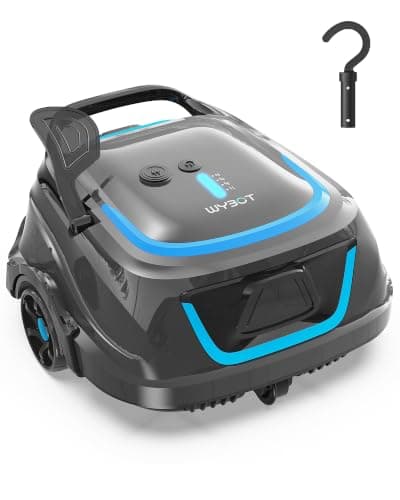 Cordless Robotic Pool Cleaner Genuinely good at the job and genuinely expensive relative to the pool. For a 1,700-gallon frame pool it costs a meaningful fraction of the pool itself, which is difficult to justify. | Large above-ground pools and people who will not vacuumMore than you need yet | 7.1out of 10 |
If you have real pump flow and want no batteries
A suction cleaner runs off the pump you already own - one moving part, nothing to charge, and nothing extra to store.
| # | Product | Best for | Score | Price |
|---|---|---|---|---|
| 1 | 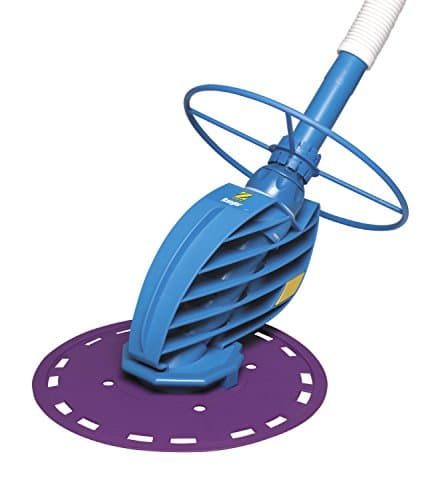 Suction-Side Pool Cleaner A cleaner that runs off the suction your pump already produces, with one moving part and no electricity of its own. It is the middle option between a manual head and a robot, and it is the one almost nobody considers. | Automatic cleaning with no second motorSeveral seasons | 8.2out of 10 |
The short version
- A suction cleaner is a pump accessory. If your pump cannot spare the flow, it will not crawl.
- A robot is a second filter. Its basket works independently of your cartridge, so it adds cleaning capacity.
- Neither does walls on most above-ground pools. Floor coverage is what you are buying.
- Both are optional. On a small pool a manual head and a pole does the same job for a fraction of the money.
How each one actually works
A suction-side cleaner connects into the skimmer and is driven by the suction your filter pump already generates. The above-ground models are deliberately simple — the one here publishes a single moving part, 32 feet of feed hose, arrives pre-assembled, and handles dished-out pool bottoms to about 72 inches.
A cordless robot carries its own motor, battery and filter basket. It is dropped in, it runs a cycle, and it is lifted out. Nothing connects to the pool’s plumbing at all, which is why it suits pools whose filtration is a small cartridge pump.
| Suction-side cleaner | Cordless robot | |
|---|---|---|
| Power | Your existing pump - no second motor | Onboard rechargeable battery |
| Where the debris goes | Into your filter, loading it | Onboard basket, independent of the filter |
| Connection | Into the skimmer | None |
| Coverage | Floor; dished bottoms to about 72 in | Floor only on most above-ground models |
| Running cost | Longer pump hours | Charging, and eventually a battery |
| Things to store | Hose, cleaner | Cleaner, charger |
Where the suction cleaner genuinely wins
No batteries to degrade, no charger, and a mechanism simple enough to outlive several robots. If you already run a sand filter with genuine flow, it is the lower-maintenance answer, and there is nothing to replace in five years except a hose.
It also cleans while the pump is running anyway, which is the honest efficiency argument: you are already paying for those pump hours for turnover, as our run-time guide explains.
Where the robot genuinely wins
On the pools this site is about. Most above-ground pools run a cartridge pump, and a suction cleaner has to share that flow with turnover — on a small pump it crawls slowly or stalls. A robot ignores the problem entirely.
The second advantage is filtration. Debris goes into the robot’s basket rather than your cartridge, so the cartridge stays cleaner for longer. On a pool whose filter is already the bottleneck, that is worth more than the cleaning itself — our cartridge roundup covers what loading one actually costs.
Where neither wins
Walls and waterline. Most above-ground models clean the floor and leave the wall to you and a brush, which is why our brush roundup calls the brush a chemistry tool rather than a cleaning one.
Price is the other honest limit. Either one can cost a meaningful fraction of a frame pool. Our robot versus manual comparison makes the case that on a small pool a vacuum head and a pole delivers most of the benefit for a fraction of the cost.
Who should buy which
Suction if you have a sand filter or a strong cartridge pump, want no batteries, and are content to clean the filter more often.
Robot if your pump is a typical frame-pool cartridge unit, if you want the debris kept out of your filter, or if the pool is far from the equipment pad.
Neither yet if your pool is under about 3,000 gallons. Vacuum it manually for a season and see how often you actually do it before spending on automation.
What each one costs to keep
A suction cleaner has almost nothing to consume. The above-ground models here publish a single moving part, and the wear items are the feed hose and the flapper or diaphragm inside. Both are cheap and both are available for years, which is the quiet argument for the format.
A robot has a battery, and batteries are frequently not user-replaceable on the cordless models sold for above-ground pools. That turns the cleaner into a consumable with a life measured in seasons rather than decades — a real cost that does not appear on the price tag.
It also has a filter basket to rinse after every cycle. That is thirty seconds of work, and it is thirty seconds your cartridge is not doing, which our cartridge roundup shows is worth having.
Pool shape, and what defeats each one
Dished floors are the classic above-ground problem: the liner settles into a shallow bowl and a cleaner spends its cycle in the middle. The suction unit here publishes that it handles dished bottoms to about 72 inches, which is a specific and useful claim.
Robots struggle differently — they tend to climb a little way up a soft wall and slide back, which is why most publish floor-only coverage on above-ground pools. Neither format does the waterline, and neither replaces a brush.
What to check before buying either
Check your pump can spare the flow
For a suction cleaner this is the whole question. If turnover already takes most of the day, the cleaner will not get what it needs.Check the hose length against the pool
The suction unit here publishes 32 ft of feed hose. Too short and it cannot reach the far side; too long and it tangles.Check the skimmer fitting
Above-ground skimmers vary. A cleaner that does not fit your skimmer is a return, not a project.For a robot, check the runtime against the floor area
A cycle that ends halfway across a 24-foot pool is a cleaner you will be moving by hand.Ask whether the battery is replaceable
If it is not, you are buying the whole machine again when the cell ages. That is the number that decides value over five years.
On most of the pools this site covers — a frame pool with a cartridge pump — the robot is the answer that works, and the manual route in our manual tools roundup is the one that costs least. The suction cleaner is genuinely excellent on a permanent pool with a sand filter behind it.
What neither one replaces
An automatic cleaner handles the floor. It does not handle the three jobs that actually decide whether your water is clear, and buying one does not retire any of them.
Brushing. Walls, the waterline and the areas around fittings stay manual on almost every above-ground pool. Brushing also lifts settled material into suspension where the filter can catch it, which is why our brush roundup treats it as a chemistry tool.
Skimming. Anything floating gets skimmed or it sinks and becomes the cleaner’s problem tomorrow. A net on a pole is thirty seconds and prevents work.
Chemistry. A spotless floor in unbalanced water is still unbalanced water. If the pool is cloudy, our cloudy water guide works through causes in order, and a cleaner is not on the list.
That is the honest framing for both products on this page: they buy back time on one job among several, and on a small pool they may not buy back enough of it to justify the price.
The honest recommendation
For most readers of this site — a frame pool, a cartridge pump, a season that runs May to September — neither is necessary, and a vacuum head on a pole does the job for a fraction of the price. That is the recommendation our robot versus manual comparison reaches too.
If you are buying anyway, buy the robot: it works regardless of your pump, keeps debris out of your cartridge, and does not need a skimmer fitting to match. The suction cleaner is the better long-term machine, and it belongs on a permanent pool with a sand filter behind it.
What to buy
Scores are our own reading of published specifications. They are not test results — we have not tested these products and we do not claim to.
Large above-ground pools and people who will not vacuum
Cordless Robotic Pool Cleaner
Various
Genuinely good at the job and genuinely expensive relative to the pool. For a 1,700-gallon frame pool it costs a meaningful fraction of the pool itself, which is difficult to justify.
#ad how this is funded · price as of October 8, 2026
Key specs
- Power
- Onboard rechargeable battery
- Coverage
- Floor only on most above-ground models
- Runtime
- Published per model
- Filtration
- Onboard basket, independent of the pool's filter
How it scoresour reading of published specs, not a test result
- Sizing fit
- 6.5
- Running cost
- 8.0
- Maintenance
- 7.0
- Build
- 7.5
- Value
- 6.0
Overall 7.1 / 10
What works
- Filters independently of the pool pump, so it adds turnover rather than replacing it
- Genuinely hands-off once it is in the water
- Onboard basket means it does not load your cartridge
What doesn't
- Expensive relative to the price of most above-ground pools
- Batteries degrade and are frequently not user-replaceable
- Most models handle the floor but not the walls of a soft-side pool
Skip it if: Small pools. If your pool cost less than three of these, the money is better spent on a cover and a timer.
What it costs to run: The honest comparison: a manual vacuum head plus a pump timer costs a fraction of this and delivers most of the benefit. A robot earns its place on a large pool owned by someone who genuinely will not vacuum otherwise.
More than you need yet: Real capability a first-pool family cannot use yet. Buy cheaper and put the difference toward chemicals and a cover.
Automatic cleaning with no second motor
Suction-Side Pool Cleaner
Zodiac
A cleaner that runs off the suction your pump already produces, with one moving part and no electricity of its own. It is the middle option between a manual head and a robot, and it is the one almost nobody considers.
#ad how this is funded · price as of October 8, 2026
Key specs
- Power
- Your existing pump — no separate motor
- Moving parts
- One, on the above-ground models
- Hose
- 32 ft of feed hose on the above-ground Ranger
- Floor shape
- Handles dished-out bottoms to about 72 in
- Connection
- Into the skimmer
- Assembly
- Pre-assembled on the above-ground units
How it scoresour reading of published specs, not a test result
- Sizing fit
- 7.5
- Running cost
- 9.0
- Maintenance
- 8.0
- Build
- 8.0
- Value
- 8.5
Overall 8.2 / 10
What works
- No second motor, no charging, no electronics in the water
- One moving part is a genuinely different reliability proposition to a robot
- Handles the dished floor that soft-side and frame pools actually have
- Costs a fraction of a robotic cleaner and runs while the pump is on anyway
What doesn't
- It uses your skimmer, so the skimmer is not skimming while it runs
- Debris goes through the pump basket and into your filter, loading it faster
- Needs adequate flow — a tired pump or a loaded cartridge stops it working
- Cleans the floor, not the walls or the waterline
Skip it if: Working alongside a weak pump. Its whole energy source is your existing suction, so it inherits every flow problem the system already has.
What it costs to run: No electricity of its own — it adds nothing to the pump hours you are already running. The recurring cost is faster filter loading, which our cartridge roundup prices.
Several seasons: Buy-once. Built and warranted to come back out of the box for a few years, if you store it properly.
Specs from: Zodiac Ranger suction-side above-ground cleaner — Amazon listing
Questions people actually ask
Will a suction cleaner work on a frame pool?
Does a robot replace my filter?
Do either of them clean the walls?
Which is cheaper to run?
Read next
- Equipment, sized to your pool and costed by the wattPumps, filters, vacuums, heaters and ladders - matched to your gallons and priced by what they draw.
- Robotic pool cleaners: good, and hard to justifyThe honest case for and against a robot on an above-ground pool, and the manual setup that does most of the job for a fraction of the price.
- The cleaner that borrows your pump instead of bringing its ownSuction-side cleaners explained for above-ground pools — how they run off existing suction, what they cost the filter, and when they beat a robot.
- The robot buys back ten minutes a weekRobotic pool cleaners against manual vacuuming on cost, running cost and the time actually saved on a small above-ground pool.
- The best above-ground pool vacuumsBattery handhelds, manual suction heads and robotic cleaners - what each actually handles and which pool justifies which.
- The manual pool tools that do most of the real workNets, poles and vacuum heads compared against powered cleaners for a seasonal above-ground pool, on running cost as well as capability.
- Sizing a pump: the number on the box is not the number you useTurnover time computed from published system flow rates for common pool volumes, and why an oversized pump costs you money every day.