Pool Equipment
Draining a pool: buy on how low it goes, not how fast
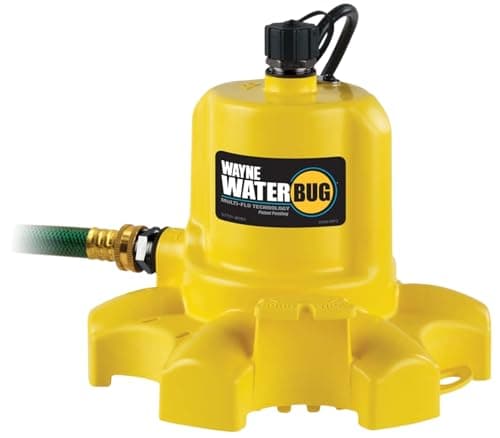
Buy the WaterBUG if you need the liner dry, the Superior 91250 if you just need thousands of gallons gone, and the Westinghouse if draining is an occasional job. Flow decides how long it takes; drain-down decides whether you finish with a shop vac.
Heads up: we earn a commission if you buy through the links on this page, at no extra cost to you. It never decides the ranking — here is how we pick and here is the full disclosure. Prices are checked automatically; last verified October 11, 2026.
Quick picks
Segmented before it is ranked — the right answer depends on which of these you actually are. Tap any row for the full write-up.
If you need the liner actually dry
Published to 1/16 inch with a choice of top or side discharge. The side outlet is what stops the hose kinking in a shallow pool.
| # | Product | Best for | Score | Price |
|---|---|---|---|---|
| 1 | WAYNE WaterBUG Submersible Water Removal Pump Published as removing water down to 1/16 inch with a choice of top or side discharge. On a vinyl above-ground pool the last inch is the part that matters, and this is the pump that publishes a figure for it. | Getting the last inch out, which is the whole job at closingSeveral seasons | 8.3out of 10 |
If the job is volume, not the last inch
Highest published flow here at 1,800 GPH, with published solids handling so leaf grit does not stop it.
| # | Product | Best for | Score | Price |
|---|---|---|---|---|
| 1 | 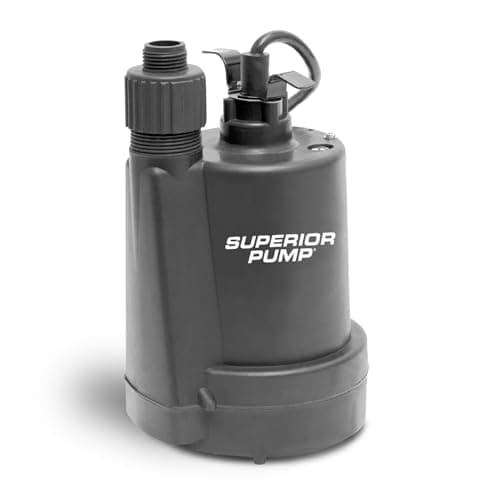 Superior Pump 91250 Thermoplastic Submersible Utility Pump, 1/4 HP The highest published flow here at 1,800 GPH, and the right pick when the job is emptying thousands of gallons rather than chasing the last inch across the liner. | Moving the most water per hourSeveral seasons | 8.2out of 10 |
If you drain once a year and want it over with
A quarter horsepower at a published 25 GPM for less than half the WaterBUG. The budget entry, with a thinner spec sheet to match.
| # | Product | Best for | Score | Price |
|---|---|---|---|---|
| 1 | 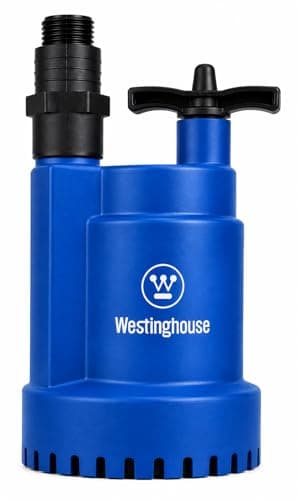 Westinghouse Submersible Utility Pump, 1/4 HP, 25 GPM A quarter horsepower at a published 25 gallons per minute, from a brand you have heard of, for less than half the WaterBUG. The budget entry, with the budget caveats. | The cheapest way to stop siphoning with a hoseOne honest season | 7.8out of 10 |
The short version
- Drain-down depth is the buying spec. Published figures here run from 1/16 inch to 1/8 inch to not published at all.
- Use flow at lift, not the headline. The WaterBUG publishes 1,350 GPH maximum and 1,010 GPH at 10 ft. Only one of those is your real number.
- Never your filter pump. It cannot empty a pool and running it dry destroys the seal.
- Nothing here switches itself off. No float switch on any of the three. Stay with it.
Why this page exists
Our draining guide covers when to drain, the discharge legality and the risk of pulling a liner on an empty pool. What it has never had is the thing you actually need in your hand, which is a pump — and the category is full of listings that publish a horsepower and a headline flow and nothing that helps you choose.
There are exactly two numbers that matter for this job, and one of them is almost never in the bullet points.
| Pump | Motor | Published flow | Drains down to | Discharge |
|---|---|---|---|---|
| WAYNE WaterBUG | 1/6 HP | 1,350 GPH max; 1,010 GPH at 10 ft | 1/16 in (3/16 in to start) | Top or side (Multi-Flo) |
| Superior Pump 91250 | 1/4 HP | 1,800 GPH | 1/8 in, per one listing | Top only |
| Westinghouse 1/4 HP | 1/4 HP | 25 GPM (about 1,500 GPH) | Not published | Top only |
Drain-down: the difference between finished and nearly finished
A sixteenth of an inch and an eighth of an inch sound like the same thing. On a 15 ft pool they are about 23 gallons apart, which is not the point — the point is what you do with the remainder.
If you are dropping the water below the skimmer for winter, neither figure matters; both pumps stop long before you need them to. If you are emptying the pool to move it, replace the liner or rebuild the base, the last half inch across a 15 ft circle is a genuinely miserable job with a shop vac, and a pump that publishes 1/16 inch removes most of it. Our moving a pool guide is where that scenario lives.
The side-discharge option on the WaterBUG is the underrated feature. In six inches of water, a hose leaving the top of a pump has to turn through ninety degrees immediately, and a garden hose in cold weather kinks exactly there. A side outlet lets the hose lie flat on the liner.
Flow, and the arithmetic to do before you buy
How long your pool actually takes
- A 15 ft x 48 in pool holds
- about 4,400 gal
- WaterBUG published flow at 10 ft lift
- 1,010 GPH
- Superior 91250 published maximum
- 1,800 GPH
- US average water cost, for the refill [EPA WaterSense]
- $6.06 per 1,000 gal
4,400 gal ÷ 1,010 GPH ≈ 4.4 hours 4,400 gal ÷ 1,800 GPH ≈ 2.4 hours
Two to four and a half hours on a 15 ft pool, depending which pump and what lift
Note the refill line in that arithmetic. Draining a pool is cheap; filling it again is not free, and our cost to fill page prices it. That is a real argument for draining only as far as the job requires, which for a normal winter close is below the skimmer and no further.
Who should skip all three
If what you actually need is to clear rainwater off a winter cover, this is the wrong page. That is a cover pump — a different product with a float switch, designed to sit on fabric and run unattended all winter, which is exactly what none of these should do. Our cover pump roundup covers those.
And if the reason you are draining is that the water level keeps dropping on its own, stop and read our evaporation or a leak page first. The bucket test costs nothing and it is the wrong week to find out you have a hole after you have put 4,400 gallons down the yard.
The picks, in full
Scores are our own reading of published specifications. They are not test results — we have not tested these products and we do not claim to.
Pick #1 · Getting the last inch out, which is the whole job at closing
WAYNE WaterBUG Submersible Water Removal Pump
WAYNE
Published as removing water down to 1/16 inch with a choice of top or side discharge. On a vinyl above-ground pool the last inch is the part that matters, and this is the pump that publishes a figure for it.
#ad how this is funded · price as of October 11, 2026
Key specs
- Motor
- 1/6 HP, published
- Flow
- 1,350 GPH maximum, published; 1,010 GPH at 10 ft of lift
- Published elsewhere as
- 1,300 and 1,257 GPH — retailer listings disagree on the headline figure
- Drains down to
- 1/16 in, published
- Needs to start
- 3/16 in, published on one listing
- Discharge
- Multi-Flo — top or side, published
- Max head
- 30 ft, published
- Cord
- 10 ft, 120V, published
- Outlet material
- Listings conflict — some publish brass, others thermoplastic
How it scoresour reading of published specs, not a test result
- Sizing fit
- 9.0
- Running cost
- 9.0
- Maintenance
- 8.0
- Build
- 8.5
- Value
- 7.0
Overall 8.3 / 10
What works
- A published drain-down figure of 1/16 in, which is the spec that decides whether you finish the job with a shop vac or not
- Side discharge is the genuinely useful feature in a shallow pool where a top-discharge hose kinks
- Fits a standard garden hose, so there is nothing else to buy
- Published flow at a stated lift, not just a headline maximum
What doesn't
- Retailer listings publish three different maximum flow figures, which is not confidence-inspiring on a spec sheet
- Outlet material is published inconsistently across listings — brass on some, thermoplastic on others
- Manual only; no float switch, so it must not be left running unattended
- The most expensive of the three here by a wide margin
Skip it if: Being left alone. Run dry, a submersible utility pump damages its seal, and none of these has an automatic cutoff. This is a pump you stand next to.
What it costs to run: Bought once, used twice a year. Against a pool service draining for you it pays back on the first closing, and our DIY-versus-paying page is where that comparison belongs.
Several seasons: Buy-once. Built and warranted to come back out of the box for a few years, if you store it properly.
Pick #2 · Moving the most water per hour
Superior Pump 91250 Thermoplastic Submersible Utility Pump, 1/4 HP
Superior Pump
The highest published flow here at 1,800 GPH, and the right pick when the job is emptying thousands of gallons rather than chasing the last inch across the liner.
#ad how this is funded · price as of October 11, 2026
Key specs
- Motor
- 1/4 HP, published
- Flow
- 1,800 GPH, published
- Lift
- 25 ft maximum, published
- Solids handling
- Up to 1/8 in particles, published
- Drains down to
- Published as 1/8 in on one retailer listing
- Cord
- 10 ft, published
- Screen
- Removable suction screen, published
- Float switch
- None — manual operation
How it scoresour reading of published specs, not a test result
- Sizing fit
- 8.0
- Running cost
- 9.0
- Maintenance
- 8.0
- Build
- 7.5
- Value
- 8.5
Overall 8.2 / 10
What works
- Highest published flow of the three, which is what decides how long a drain-down takes
- Published solids handling means leaf grit at the bottom of a closing pool does not stop it
- Removable suction screen, so it can be cleared without tools mid-job
- Thermoplastic body, which does not corrode in chlorinated water the way a cast-iron utility pump would
What doesn't
- Published to 1/8 in rather than the 1/16 in of the WaterBUG, so the final sweep is a little wetter
- No float switch and, per one source, no thermal protection — running it dry is on you
- Top discharge only, with no side option
- Flow at lift is not consistently published, so the 1,800 GPH is a best case rather than a working figure
Skip it if: Unattended work. Same caution as the rest of this page: manual pumps with no float must be watched, and a pool drains faster than people expect once it gets going.
What it costs to run: The value pick on flow per dollar. If you are draining a 15 ft pool rather than a cover, the extra 450 GPH over the WaterBUG is hours saved across a season.
Several seasons: Buy-once. Built and warranted to come back out of the box for a few years, if you store it properly.
Pick #3 · The cheapest way to stop siphoning with a hose
Westinghouse Submersible Utility Pump, 1/4 HP, 25 GPM
Westinghouse
A quarter horsepower at a published 25 gallons per minute, from a brand you have heard of, for less than half the WaterBUG. The budget entry, with the budget caveats.
Key specs
- Motor
- 1/4 HP, published
- Flow
- 25 GPM, published — equivalent to 1,500 GPH
- Body
- Thermoplastic, published
- Type
- Portable submersible sump and utility pump, published
- Drains down to
- Not published
- Max head
- Not published on the listing
How it scoresour reading of published specs, not a test result
- Sizing fit
- 7.0
- Running cost
- 9.0
- Maintenance
- 7.5
- Build
- 7.0
- Value
- 8.5
Overall 7.8 / 10
What works
- Flow published in GPM, which converts to about 1,500 GPH — between the other two here
- Cheapest of the three by a clear margin
- Thermoplastic rather than cast iron, which is correct for pool water
- A recognizable brand at a generic price
What doesn't
- No drain-down figure published, which is the single most useful spec for closing a pool
- No maximum head published, so you cannot work out flow at any real lift
- Specification sheet is the thinnest of the three on this page
- Manual operation, same as the others — nothing here switches itself off
Skip it if: The final inch. With no published drain-down figure, assume you will finish with a shop vac or a sponge. That is fine for a seasonal close; it is not fine if you are trying to pull a liner.
What it costs to run: Buy this one if draining is an occasional job. If you are emptying the pool annually and chasing the liner dry, the published 1/16 in on the WaterBUG is what you are actually paying extra for.
One honest season: The cheapest setup that genuinely works for a season of real swimming. Nothing spare, nothing missing.
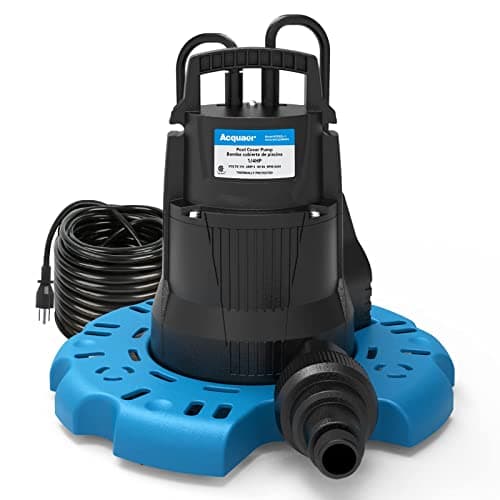
Pick #4 · Getting standing water off a winter cover
Submersible Pool Cover Pump
Various
A small submersible pump that sits on the cover and clears the puddle. It exists because water weight is what destroys winter covers, and sweeping in January is nobody's idea of a Saturday.
#ad how this is funded · price as of October 11, 2026
Key specs
- Type
- Submersible, sits on top of the cover
- Operation
- Manual or automatic float switch, by model
- Discharge
- Garden hose thread on most models
- Requirement
- Outdoor-rated, GFCI-protected outlet
How it scoresour reading of published specs, not a test result
- Sizing fit
- 8.0
- Running cost
- 9.0
- Maintenance
- 7.0
- Build
- 7.0
- Value
- 8.5
Overall 7.9 / 10
What works
- Removes the single biggest cause of winter cover failure, which is accumulated water weight
- Automatic models handle rain you were not there for
- Cheap relative to a replacement cover
- Also useful for draining the last few inches of a pool at take-down
What doesn't
- It is an electrical appliance sitting in water outdoors, so the GFCI rules are not optional
- Automatic float switches are the part that fails, usually with debris under them
- Needs storing dry and drained or it freezes and cracks like any other pump
- Cheaper units struggle with the last half inch, which is where debris collects
Skip it if: Being left connected and forgotten all winter. It wants checking after storms, which is when you should be looking at the cover anyway.
What it costs to run: One purchase against the cost of a torn winter cover and the spring opening that follows it. On that comparison it is not a close call.
Several seasons: Buy-once. Built and warranted to come back out of the box for a few years, if you store it properly.
Specs from: Submersible pool cover pumps — current Amazon category listing
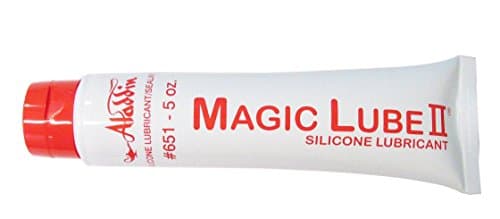
Pick #5 · The o-rings you are about to pull apart for winter
Magic Lube II Silicone Lubricant, 5 oz
Aladdin
The silicone version of the pool industry's default lubricant, in the 5 oz tube that lasts years. Petroleum grease destroys rubber o-rings; this is what belongs in the closing box instead.
#ad how this is funded · price as of October 11, 2026
Key specs
- Volume
- 5 oz tube, published
- Base
- Silicone, published
- Use
- Published for pool valves, gaskets and o-rings
- Also sold as
- A 1 oz tube from the same maker at a lower published price
- Related product
- The original Magic Lube is Teflon-based — a different formulation sold alongside it
How it scoresour reading of published specs, not a test result
- Sizing fit
- 8.5
- Running cost
- 10.0
- Maintenance
- 9.0
- Build
- 8.0
- Value
- 7.5
Overall 8.5 / 10
What works
- Silicone rather than petroleum, which is the entire point — petroleum products swell and perish rubber o-rings
- Published explicitly for pool valves, gaskets and o-rings rather than as a generic grease
- A 5 oz tube is several seasons of closings and openings
- From the brand whose Magic Lube is the default in the trade, so compatibility is well established
What doesn't
- Silicone and Teflon versions are sold under nearly the same name, and the listings do not make the difference obvious
- Five ounces is more than a single pool owner will ever use, so the 1 oz tube is the honest size for most buyers
- Nothing published about temperature range or chlorine compatibility figures
- Silicone grease on your hands transfers to everything you touch next
Skip it if: Sealing a leak. Lubricant keeps an o-ring supple and seating properly; it does not fix a cracked one. If a union still drips with a greased o-ring, the o-ring is the problem.
What it costs to run: Pennies per closing and it protects the o-rings on the pump, filter and unions — all of which are more expensive than the tube. Our hoses and fittings guide covers what actually fails and why.
Several seasons: Buy-once. Built and warranted to come back out of the box for a few years, if you store it properly.
Questions people actually ask
What pump do you use to drain an above-ground pool?
How low will a utility pump drain a pool?
How long does it take to drain an above-ground pool?
Can you leave a drain pump running unattended?
Where should the water go?
Sources
Read next
- Equipment, sized to your pool and costed by the wattPumps, filters, vacuums, heaters and ladders - matched to your gallons and priced by what they draw.
- Draining an above-ground pool, and the two ways it goes wrongWhen a partial drain is the only fix, why liner makers say never to empty a vinyl pool, and the discharge rules that decide where the water may legally go.
- The cover pump exists because water is heavier than people thinkWhy standing water on a winter cover is a structural problem, what a cover pump costs to run, and automatic versus manual.
- How to winterize an above-ground poolThe correct closing sequence, the freeze damage that ends pools, and why a cracked pump housing is entirely preventable.
- What closing an above-ground pool costsPublished closing-service prices compared against the DIY list, with the part of the bill that recurs separated from the part that amortizes.
- Pool losing water: the bucket test answers this for freeHow to tell evaporation from a leak using a bucket and published evaporation rates, then how to find the hole if it is a leak.
- Moving a pool, and the two things that decide whether it survivesThe sequence for relocating an above-ground pool across the garden or to a new house, and an honest read on when it is not worth it.
- What it costs to fill a pool, and to keep it fullOne fill priced for four common pool volumes at the national average water rate, plus why every gallon you add has to be re-balanced.
- Pool lubricant: silicone only, and you need less than you thinkSilicone pool lubricants compared on size and cost per ounce - the only two things this category publishes - plus why petroleum grease ruins o-rings.