Pool Equipment
Pool lubricant: silicone only, and you need less than you think
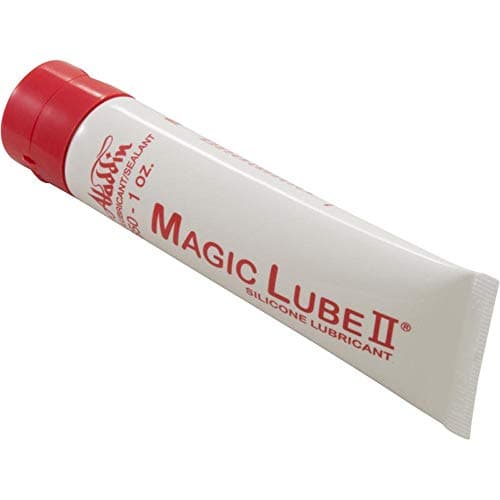
Buy the 1 oz Aladdin tube. It is the same silicone as the 5 oz, it will outlast the pool, and the one thing that genuinely matters here is that you never put petroleum grease anywhere near a rubber o-ring.
Heads up: we earn a commission if you buy through the links on this page, at no extra cost to you. It never decides the ranking — here is how we pick and here is the full disclosure. Prices are checked automatically; last verified October 11, 2026.
Quick picks
Segmented before it is ranked — the right answer depends on which of these you actually are. Tap any row for the full write-up.
One pool, realistically
A fingertip per closing means 1 oz outlasts the pool. Same silicone base as the big tube, a fraction of the price.
| # | Product | Best for | Score | Price |
|---|---|---|---|---|
| 1 | Aladdin Magic Lube II Silicone Lubricant, 1 oz The same silicone formulation in the size a single above-ground pool actually gets through. Buying 5 oz for one pool is buying four ounces you will throw away in five years. | One pool, realisticallySeveral seasons | 9.0out of 10 |
A pool, a hot tub and a spare pump
The trade-standard 5 oz tube from the brand whose Magic Lube is the default in the industry.
| # | Product | Best for | Score | Price |
|---|---|---|---|---|
| 1 | 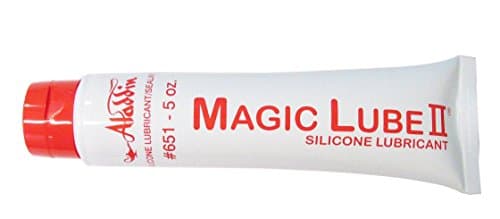 Magic Lube II Silicone Lubricant, 5 oz The silicone version of the pool industry's default lubricant, in the 5 oz tube that lasts years. Petroleum grease destroys rubber o-rings; this is what belongs in the closing box instead. | The o-rings you are about to pull apart for winterSeveral seasons | 8.5out of 10 |
The same job at the lowest price per ounce
Five ounces of pool-labeled silicone for roughly half the branded tube. On a category with no published performance spec, price per ounce is the only honest comparison.
| # | Product | Best for | Score | Price |
|---|---|---|---|---|
| 1 | 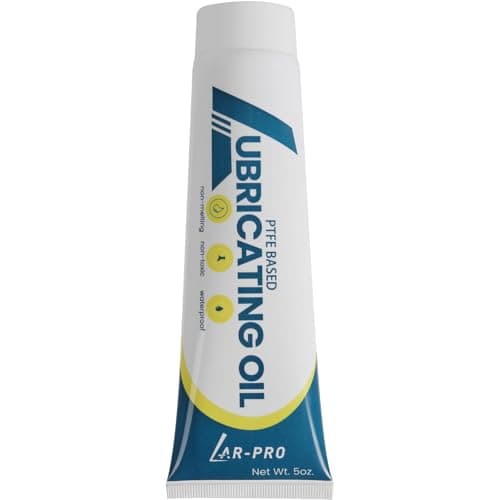 AR-PRO General-Purpose Pool O-Ring Lubricant, 5 oz Five ounces of silicone pool lubricant at roughly half the price of the branded tube. On a product with no published performance specification anywhere in the category, price per ounce is the only comparison available. | The same job at the lowest price per ounceSeveral seasons | 8.6out of 10 |
The short version
- Silicone, never petroleum. Petroleum grease swells and perishes rubber o-rings. This is the only thing in the category that is not a matter of preference.
- Buy the 1 oz tube. A closing uses a fingertip. Most single-pool households will never finish 5 oz.
- Nobody publishes a performance spec. No temperature range, no chlorine compatibility figure, no shelf life — from any brand here.
- Grease at closing and at opening. A dry seal compressed all winter is the classic spring leak.
The one rule, and why it is worth a page
Pool lubricant is a two-dollar-a-year product that protects the most expensive serviceable parts on the system, and it is the single easiest thing to get wrong, because the wrong product is the one already in your garage.
Petroleum-based greases — petroleum jelly, lithium grease, the general-purpose tub of automotive grease — attack rubber. The o-ring absorbs it, swells, loses its elasticity and then flattens permanently under compression. The pool does not leak immediately. It leaks next spring, and by then nobody connects the two events.
| Product | Use on pool o-rings? | Why |
|---|---|---|
| Silicone grease (pool-labeled) | Yes | Does not react with rubber or EPDM; the category default |
| Teflon/PTFE pool lube | Yes | Also sold for the job; Aladdin's 630 is the Teflon Magic Lube |
| Petroleum jelly | No | Swells and perishes rubber; damage shows up a season later |
| Lithium or automotive grease | No | Same problem, plus it is not food-safe or chlorine-rated |
| Cooking oil or WD-40 | No | Neither is a lubricant for a static seal; both degrade rubber |
The naming trap
Beyond that distinction there is remarkably little to choose between the products in this category, and we are going to be straightforward about why.
What nobody publishes
We went looking for a temperature range, a chlorine compatibility statement, a shelf life or any kind of performance figure on all three of these products and on their competitors. There is nothing. The entire category sells on brand familiarity and tube size.
That has a useful consequence: it means any ranking by quality would be invented, so the honest comparison is the one below.
| Pick | Base | Size | Buying on |
|---|---|---|---|
| Aladdin 650 Magic Lube II | Silicone | 1 oz | Right size for one pool |
| Magic Lube II (TacParts) | Silicone | 5 oz | Trade-standard brand, multi-pool household |
| AR-PRO general-purpose | Silicone | 5 oz | Lowest price per ounce |
The 1 oz tube leads this page on the strength of that table alone. A closing on an above-ground pool uses a fingertip across maybe four o-rings; five ounces is a commercial quantity and the extra four ounces will be hard and cracked in the shed long before you reach them.
Where it actually goes at closing
Four places on a typical above-ground setup, all of which you are opening anyway when you winterize.
The pump lid seal
The big o-ring under the clear pump lid. It spends the season compressed and hot, and it is the one most likely to be stuck down when you open in spring.The filter housing seal
Whether that is a cartridge housing or a sand filter head. Our backwashing guide covers the multiport gasket, which is a different and more expensive part to get wrong.Hose union o-rings
The flat seals inside every union between pool, pump and filter. These are the cheapest parts on the system and the ones our fittings guide identifies as the most common slow leak.Drain plug and skimmer seals
Everything you pull out to winterize. A greased plug seal comes out cleanly next spring instead of tearing.
A thin film is the whole technique. Grease is there to let the o-ring slide into its groove and stay supple, not to seal a gap — packing a groove with grease displaces the seal and makes the joint worse. If you can see a bead of it after assembly, you used far too much.
The picks, in full
Scores are our own reading of published specifications. They are not test results — we have not tested these products and we do not claim to.
Pick #1 · One pool, realistically
Aladdin Magic Lube II Silicone Lubricant, 1 oz
Aladdin
The same silicone formulation in the size a single above-ground pool actually gets through. Buying 5 oz for one pool is buying four ounces you will throw away in five years.
#ad how this is funded · price as of October 11, 2026
Key specs
- Volume
- 1 oz tube, published
- Base
- Silicone, published
- Use
- Published as lubricant and sealant for pool applications
- Part
- Aladdin 650, published
- Related part
- Aladdin 630 Magic Lube is the Teflon version at a similar size and price
How it scoresour reading of published specs, not a test result
- Sizing fit
- 9.0
- Running cost
- 10.0
- Maintenance
- 9.0
- Build
- 8.0
- Value
- 9.0
Overall 9.0 / 10
What works
- Right-sized for one pool — a closing uses a fingertip, not a handful
- Same silicone base as the big tube, so nothing is compromised by buying small
- Published part number, which makes it easy to confirm you have the silicone and not the Teflon
- Cheap enough to keep a spare in the closing box
What doesn't
- Cost per ounce is far higher than the 5 oz tube
- A 1 oz tube is easy to lose in a shed between October and April
- Same naming confusion between the 630 Teflon and 650 silicone parts
- No published temperature or compatibility figures, same as the rest of the category
Skip it if: A household with a pool and a hot tub and a spare pump. If you have several sets of o-rings to look after, the 5 oz tube is the cheaper purchase per use.
What it costs to run: Cheapest entry on the page and the one most people should buy. Cost per closing is effectively zero; the reason to own it is what it prevents, not what it costs.
Several seasons: Buy-once. Built and warranted to come back out of the box for a few years, if you store it properly.
Pick #2 · The o-rings you are about to pull apart for winter
Magic Lube II Silicone Lubricant, 5 oz
Aladdin
The silicone version of the pool industry's default lubricant, in the 5 oz tube that lasts years. Petroleum grease destroys rubber o-rings; this is what belongs in the closing box instead.
#ad how this is funded · price as of October 11, 2026
Key specs
- Volume
- 5 oz tube, published
- Base
- Silicone, published
- Use
- Published for pool valves, gaskets and o-rings
- Also sold as
- A 1 oz tube from the same maker at a lower published price
- Related product
- The original Magic Lube is Teflon-based — a different formulation sold alongside it
How it scoresour reading of published specs, not a test result
- Sizing fit
- 8.5
- Running cost
- 10.0
- Maintenance
- 9.0
- Build
- 8.0
- Value
- 7.5
Overall 8.5 / 10
What works
- Silicone rather than petroleum, which is the entire point — petroleum products swell and perish rubber o-rings
- Published explicitly for pool valves, gaskets and o-rings rather than as a generic grease
- A 5 oz tube is several seasons of closings and openings
- From the brand whose Magic Lube is the default in the trade, so compatibility is well established
What doesn't
- Silicone and Teflon versions are sold under nearly the same name, and the listings do not make the difference obvious
- Five ounces is more than a single pool owner will ever use, so the 1 oz tube is the honest size for most buyers
- Nothing published about temperature range or chlorine compatibility figures
- Silicone grease on your hands transfers to everything you touch next
Skip it if: Sealing a leak. Lubricant keeps an o-ring supple and seating properly; it does not fix a cracked one. If a union still drips with a greased o-ring, the o-ring is the problem.
What it costs to run: Pennies per closing and it protects the o-rings on the pump, filter and unions — all of which are more expensive than the tube. Our hoses and fittings guide covers what actually fails and why.
Several seasons: Buy-once. Built and warranted to come back out of the box for a few years, if you store it properly.
Pick #3 · The same job at the lowest price per ounce
AR-PRO General-Purpose Pool O-Ring Lubricant, 5 oz
AR-PRO
Five ounces of silicone pool lubricant at roughly half the price of the branded tube. On a product with no published performance specification anywhere in the category, price per ounce is the only comparison available.
#ad how this is funded · price as of October 11, 2026
Key specs
- Volume
- 5 oz, published
- Base
- Silicone, published
- Use
- Published for swimming pool o-rings and gaskets
- Also sold as
- A 2-pack of 5 oz tubes, and a 5-pack of 1 oz tubes
- Performance spec
- Not published — nor is one published by any competitor here
How it scoresour reading of published specs, not a test result
- Sizing fit
- 8.0
- Running cost
- 10.0
- Maintenance
- 9.0
- Build
- 7.0
- Value
- 9.0
Overall 8.6 / 10
What works
- Lowest published price per ounce of the three
- Sold in several pack configurations, including small multipacks for multiple sheds
- Silicone base, published, which is the only chemistry question that matters here
- Explicitly marketed for pool o-rings rather than repurposed plumber's grease
What doesn't
- No brand history in the trade the way Aladdin has, and nothing published to compare on but price
- Five ounces is still more than one pool needs
- No published temperature range, chlorine compatibility or shelf life
- "General-purpose" in the name invites use on things silicone grease should not go near
Skip it if: Settling a quality argument. Nobody in this category publishes a performance figure, so claims of superiority — including ours — would be invented. Buy on size and price and be honest that is the whole basis.
What it costs to run: If you are buying 5 oz, this is the cheaper 5 oz. If you only have one pool, the 1 oz tube on this page is cheaper outright and will still outlast the pool.
Several seasons: Buy-once. Built and warranted to come back out of the box for a few years, if you store it properly.
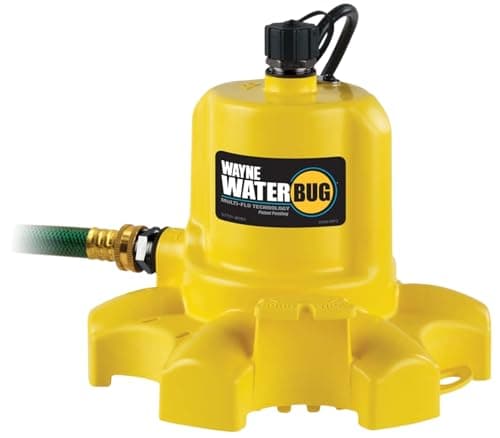
Pick #4 · Getting the last inch out, which is the whole job at closing
WAYNE WaterBUG Submersible Water Removal Pump
WAYNE
Published as removing water down to 1/16 inch with a choice of top or side discharge. On a vinyl above-ground pool the last inch is the part that matters, and this is the pump that publishes a figure for it.
#ad how this is funded · price as of October 11, 2026
Key specs
- Motor
- 1/6 HP, published
- Flow
- 1,350 GPH maximum, published; 1,010 GPH at 10 ft of lift
- Published elsewhere as
- 1,300 and 1,257 GPH — retailer listings disagree on the headline figure
- Drains down to
- 1/16 in, published
- Needs to start
- 3/16 in, published on one listing
- Discharge
- Multi-Flo — top or side, published
- Max head
- 30 ft, published
- Cord
- 10 ft, 120V, published
- Outlet material
- Listings conflict — some publish brass, others thermoplastic
How it scoresour reading of published specs, not a test result
- Sizing fit
- 9.0
- Running cost
- 9.0
- Maintenance
- 8.0
- Build
- 8.5
- Value
- 7.0
Overall 8.3 / 10
What works
- A published drain-down figure of 1/16 in, which is the spec that decides whether you finish the job with a shop vac or not
- Side discharge is the genuinely useful feature in a shallow pool where a top-discharge hose kinks
- Fits a standard garden hose, so there is nothing else to buy
- Published flow at a stated lift, not just a headline maximum
What doesn't
- Retailer listings publish three different maximum flow figures, which is not confidence-inspiring on a spec sheet
- Outlet material is published inconsistently across listings — brass on some, thermoplastic on others
- Manual only; no float switch, so it must not be left running unattended
- The most expensive of the three here by a wide margin
Skip it if: Being left alone. Run dry, a submersible utility pump damages its seal, and none of these has an automatic cutoff. This is a pump you stand next to.
What it costs to run: Bought once, used twice a year. Against a pool service draining for you it pays back on the first closing, and our DIY-versus-paying page is where that comparison belongs.
Several seasons: Buy-once. Built and warranted to come back out of the box for a few years, if you store it properly.
Questions people actually ask
What lubricant should you use on pool o-rings?
Is Teflon or silicone pool lube better?
How much pool lubricant do you actually need?
Will lubricant fix a leaking o-ring?
When should you grease pool o-rings?
Read next
- Equipment, sized to your pool and costed by the wattPumps, filters, vacuums, heaters and ladders - matched to your gallons and priced by what they draw.
- Nothing in this category is standardized, and the hoses are where you find outHow to measure your own hose and fitting sizes, why suction-side air leaks matter so much, and what to check before ordering a replacement pump.
- Pool pump problems, diagnosed in the cheapest orderThe five-check diagnostic sequence for an above-ground pool pump, from free fixes to the point at which it is genuinely the motor.
- How to winterize an above-ground poolThe correct closing sequence, the freeze damage that ends pools, and why a cracked pump housing is entirely preventable.
- Backwashing, and the rinse step everyone skipsThe full backwash and rinse cycle, how to know when it is due, and why every gallon discharged is water you pay for and re-balance.
- Draining a pool: buy on how low it goes, not how fastSubmersible utility pumps ranked on published drain-down depth and flow at lift - the two specs that decide a pool drain, and the ones listings bury.
- Where the pump spends the winterManufacturer instructions for draining and storing pumps and filters over winter, the plug conflict between makers, and how pool chemicals should be stored.
- Filter cartridges: the consumable nobody budgets forThe replacement interval, the rinse-versus-scrub question, and how the cartridge treadmill compares with a sand filter across a season.
- What actually wears out, and when you will be buying itThe replacement schedule for an above-ground pool - cartridges, covers, liners and hardware - and which spares are worth keeping on the shelf.