Pool Equipment
The pump does not die of old age. It dies of low water.
A water level that drops below the skimmer mouth starves the pump, and a starved pump overheats. A float valve on a hose prevents the most common equipment failure on a seasonal pool.
Heads up: we earn a commission if you buy through the links on this page, at no extra cost to you. It never decides the ranking — here is how we pick and here is the full disclosure. Prices are checked automatically; last verified October 8, 2026.
Quick picks
Segmented before it is ranked — the right answer depends on which of these you actually are. Tap any row for the full write-up.
The filler
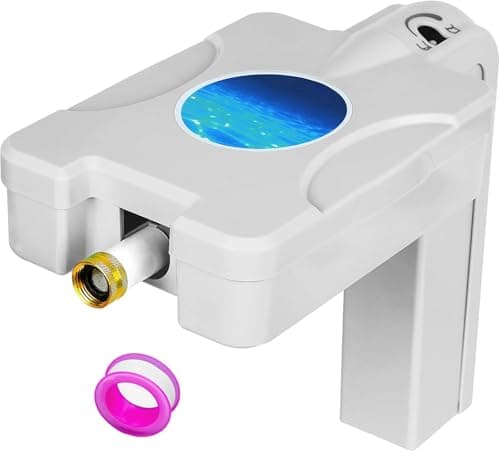
A mechanical float valve on a garden hose with an adjustable set point. No power, no electronics, nothing to fail electrically.
| # | Product | Best for | Score | Price |
|---|---|---|---|---|
| 1 | Automatic Pool Filler / Water Leveler A float valve on a hose that tops the pool up to a set level. It exists because a pool that drops below the skimmer mouth starves the pump, and that is how pumps die. | A pool that keeps dropping below the skimmerSeveral seasons | 7.5out of 10 |
What it is protecting
The pump. Every failure mode this product prevents ends at the same component.
| # | Product | Best for | Score | Price |
|---|---|---|---|---|
| 1 | 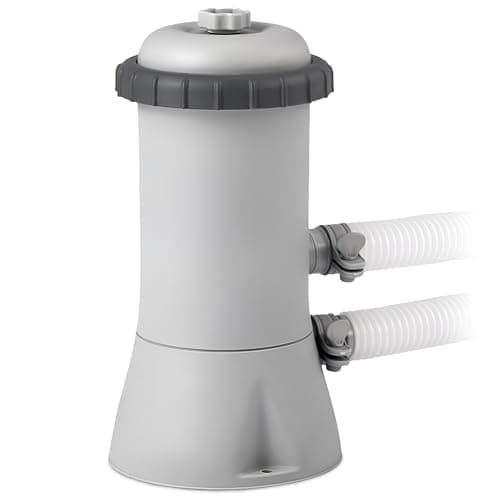 Intex Krystal Clear C1000 Cartridge Filter Pump The workhorse replacement pump for mid-size frame pools. 1,000 GPH pump flow, 750 GPH through the system once the cartridge is in the way — and that second number is the one your turnover math needs. | Pools up to about 6,000 gallonsSeveral seasons | 8.3out of 10 | |
| 2 | 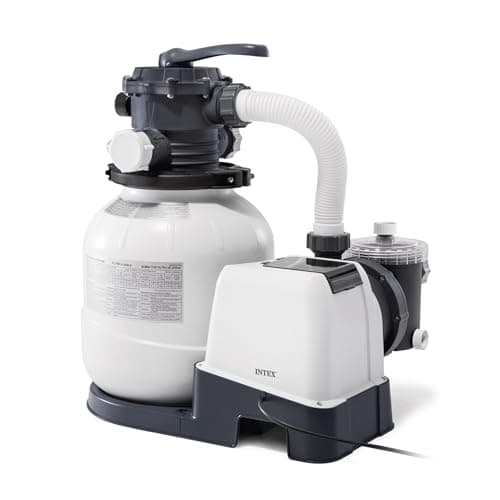 Intex Krystal Clear Sand Filter Pump Sand filtration replaces a recurring cartridge purchase with a backwash valve and a bag of sand that lasts years. On a pool you intend to keep, the arithmetic favors it. | Getting off the cartridge treadmillSeveral seasons | 8.4out of 10 |
The short version
- Below the skimmer mouth, the pump draws air. That is the failure this prevents, and it is the most common one on a seasonal pool.
- It is a mechanical float valve. No power, no sensor, nothing to fail electronically.
- It hides leaks. A pool that stops dropping is a pool you stop checking.
- A cover does the same job upstream by removing most of the evaporation in the first place.
The failure it prevents
A pool skimmer collects water from the surface, and it only works while the water line sits across its mouth. Drop below that and the skimmer starts drawing air, the pump loses prime, and a pump running without water is a pump running its seals and impeller dry.
That is the fastest way to destroy a pool pump, and it is depressingly easy to arrange: a hot week, a pool used hard, nobody topping it up, and a pump on a timer that runs regardless. Our pump troubleshooting guide covers the symptoms and our pump lifespan guide is blunt that this, rather than wear, is what ends most of them.
What the product is
Mechanically, a toilet cistern valve for a pool. A float rides on the water surface; when it drops, it opens a valve fed from a garden hose; when the level comes back up, it closes. There is no power, no sensor and no controller.
That simplicity is the main argument for it. Everything else in our automation guide has electronics; this does not, and it will still be working in five years.
| Check | Why |
|---|---|
| Above-ground mounting | Most designs assume an inground deck to fix to |
| Set point adjustment | You want the level at the skimmer mouth, not the rim |
| Hose connection | It needs a hose left connected and live, permanently |
| Backflow protection | Check your local plumbing rules on hose connections |
| Winter removal | It comes off at closing like everything else |
The mounting row is the one that catches above-ground owners. The category is dominated by inground products that bolt to a deck. Above-ground-specific versions exist and hang on the wall or the top rail — check that explicitly rather than assuming.
The real risk, stated plainly
An automatic filler makes a leak invisible.
Without one, a pool losing water gets your attention, because you are the one topping it up and you notice you are doing it more often. With one, the pool simply stays full. The water bill goes up quietly, the ground beside the pool stays wet, and a liner leak that would have been a fifteen-minute patch becomes a season of undermining the base — which is how the leveling failures in our leveling guide start.
The fix is a habit rather than a product. Once a month, shut the hose off for 24 hours and mark the water line. Evaporation loses a fraction of an inch a day; a leak loses more, and it stops at the level of the hole. Our liner guide covers what to do next.
The cheaper thing to do first
Put a cover on. Evaporation is the dominant loss on an uncovered pool, and a solar cover removes most of it — which means the level stops dropping fast enough to matter, the water bill our cost to fill guide prices comes down, and the pool holds heat as a bonus.
An automatic filler is the right purchase when the cover is already on and the level still drops — heavy use, a hot climate, or a household that travels. Our heatwave guide covers the week when this stops being theoretical.
What we are scoring
We have not tested these and do not claim to. The scores reflect published specifications — valve type, mounting options, set-point adjustment and construction — against an above-ground pool. Our methodology page explains how our scoring works.
The picks, in full
Scores are our own reading of published specifications. They are not test results — we have not tested these products and we do not claim to.
Pick #1 · A pool that keeps dropping below the skimmer
Automatic Pool Filler / Water Leveler
Various
A float valve on a hose that tops the pool up to a set level. It exists because a pool that drops below the skimmer mouth starves the pump, and that is how pumps die.
#ad how this is funded · price as of October 8, 2026
Key specs
- Operation
- Float valve — no power, no electronics
- Supply
- Standard garden hose connection
- Level
- Adjustable set point
- Fitting
- Above-ground versions hang on the wall or rail
- Also suits
- Spas, ponds and inflatable pools
- Requirement
- A hose left connected, which is the real trade
How it scoresour reading of published specs, not a test result
- Sizing fit
- 7.0
- Running cost
- 8.0
- Maintenance
- 8.0
- Build
- 7.0
- Value
- 7.5
Overall 7.5 / 10
What works
- Removes the single most common cause of pump damage on a seasonal pool
- Purely mechanical — nothing to power, nothing to fail electronically
- Adjustable set point, so it holds the level the skimmer actually needs
- Useful during a heatwave when evaporation outruns your attention
What doesn't
- It needs a hose permanently connected and live, which not every yard allows
- A stuck float means an overflowing pool and a very large water bill
- It hides a leak — the pool stops dropping, so you stop noticing
- Above-ground mounting options are limited compared with inground
Skip it if: Telling you why the water is going. Evaporation and a liner leak look identical to a float valve, and only one of them is normal.
What it costs to run: The water is the cost, and it is the same water you would have added by hand. Check the pool against the mark occasionally anyway — a filler that has quietly replaced 2,000 gallons is reporting a leak, not doing its job.
Several seasons: Buy-once. Built and warranted to come back out of the box for a few years, if you store it properly.
Specs from: Automatic pool fillers and water levelers — current Amazon category listing
Pick #2 · Pools up to about 6,000 gallons
Intex Krystal Clear C1000 Cartridge Filter Pump
Intex
The workhorse replacement pump for mid-size frame pools. 1,000 GPH pump flow, 750 GPH through the system once the cartridge is in the way — and that second number is the one your turnover math needs.
#ad how this is funded · price as of October 8, 2026
Key specs
- Pump flow rate
- 1,000 GPH
- System flow rate
- 750 GPH
- Rated pool size
- Up to 6,000 gallons
- Cartridge
- Type A
- Wattage
- Not published by Intex
How it scoresour reading of published specs, not a test result
- Sizing fit
- 9.0
- Running cost
- 7.0
- Maintenance
- 7.5
- Build
- 7.5
- Value
- 8.5
Overall 8.3 / 10
What works
- Intex publishes both pump flow and system flow, which is more honesty than most of this category offers
- Type A cartridges are the most widely stocked filter consumable in the US
- Sized correctly for the 12ft-15ft frame pools most families own
What doesn't
- Wattage is not published anywhere on the Intex site, so you cannot cost it before purchase
- Cartridge-only, so there is a consumable every few weeks in a busy pool
- GFCI cord length dictates where the pool can go more than people expect
Skip it if: Pools over about 6,000 gallons. Above that you are asking it to run all day to achieve one turnover, which is the expensive way to filter.
What it costs to run: Do the turnover math before you buy: 750 GPH system flow moves 4,000 gallons in 5.3 hours. Two turnovers a day is therefore about 11 hours of running. At the EIA's June 2026 US residential average of 18.34 cents per kWh, every 100 watts of pump draw running 11 hours a day for a 120-day season costs about $24. Find your wattage on the pump label and multiply.
Several seasons: Buy-once. Built and warranted to come back out of the box for a few years, if you store it properly.
Specs from: Intex — Krystal Clear cartridge filter pumps, EIA Electric Power Monthly, Table 5.6.A — US residential average price
Pick #3 · Getting off the cartridge treadmill
Intex Krystal Clear Sand Filter Pump
Intex
Sand filtration replaces a recurring cartridge purchase with a backwash valve and a bag of sand that lasts years. On a pool you intend to keep, the arithmetic favors it.
Key specs
- Media
- Filter sand (or glass media)
- Maintenance
- Backwash rather than rinse-and-replace
- Media life
- Several seasons before replacement
- Wattage
- Not published by Intex
How it scoresour reading of published specs, not a test result
- Sizing fit
- 8.5
- Running cost
- 8.0
- Maintenance
- 8.5
- Build
- 8.0
- Value
- 8.5
Overall 8.4 / 10
What works
- No cartridges to buy, which removes the single largest recurring equipment cost
- Backwashing takes about two minutes versus rinsing a cartridge in the yard
- Sand lasts years rather than weeks
What doesn't
- Backwashing sends water down the drain, and that water has chemicals in it you paid for
- Higher purchase price than a cartridge pump of the same flow
- Heavier and needs a stable, level base of its own
Skip it if: A small seasonal pool that comes down every autumn. The payback period is measured in seasons, so it only works if there will be seasons.
What it costs to run: The comparison to run: cartridge replacements per season versus one bag of sand every few years, plus the water each backwash discards at the EPA WaterSense average of $6.06 per 1,000 gallons. On a pool you will own for three or more years, sand usually wins.
Several seasons: Buy-once. Built and warranted to come back out of the box for a few years, if you store it properly.
Specs from: EPA WaterSense — cost per 1,000 gallons
Questions people actually ask
Do I need an automatic pool filler?
What happens if the pool water goes below the skimmer?
Can an automatic filler hide a leak?
Will an inground pool filler work on an above-ground pool?
Sources
Read next
- Equipment, sized to your pool and costed by the wattPumps, filters, vacuums, heaters and ladders - matched to your gallons and priced by what they draw.
- The skimmer is the cheapest part of the system and the one that stops itHow a skimmer actually works, the water level it needs, and the three silent faults that get blamed on the pump.
- Pool pump problems, diagnosed in the cheapest orderThe five-check diagnostic sequence for an above-ground pool pump, from free fixes to the point at which it is genuinely the motor.
- What kills pool pumps, and none of it is running timeThe four things that end small pool pumps, why none of them is age, and the maintenance habits that genuinely extend one.
- Automating a small pool: one thing is obvious, the rest is notWhich pool automation genuinely pays on a seasonal above-ground pool, ranked, and which items are solving inground problems.
- The liner is the most expensive thing you can wreck in an afternoonBeaded, overlap and unibead liners explained, what gauge in mil buys, and the patch kit that turns a leak into a fifteen-minute job.
- What it costs to fill a pool, and to keep it fullOne fill priced for four common pool volumes at the national average water rate, plus why every gallon you add has to be re-balanced.
- A heatwave attacks a small pool from three directions at onceWhy hot weather breaks a routine that works the rest of the season, and the adjustments that keep a small pool ahead of it.
- The solar cover pays for itself, and it is not closeWhat a solar cover saves on water and on heat, why the payback is measured in weeks rather than seasons, and the behavior problem that decides it.
- Leaving the pool for a week without coming home to a swampHow to set a pool up for a week or two away: sanitizer that lasts the distance, keeping the level up, timing the pump, and the short list for whoever checks in.