Pool Equipment
Automating a small pool: one thing is obvious, the rest is not
A timer pays for itself in one season. Almost everything else marketed as pool automation was designed for a pool ten times this size and a budget to match.
Heads up: we earn a commission if you buy through the links on this page, at no extra cost to you. It never decides the ranking — here is how we pick and here is the full disclosure. Prices are checked automatically; last verified October 8, 2026.
The short version
- The timer is the only obvious one. It saves money on the pump you already own and it costs a fraction of anything else here.
- Automation does not remove the routine. Testing, brushing and dealing with the filter are still yours, and they are most of the half hour a week.
- A salt system automates dosing, not maintenance, and it is still a chlorine pool with a cell to look after.
- Anything automated must not defeat the GFCI. That constraint rules out a fair amount of improvised smart-plug thinking.
What a small pool actually asks of you
Before automating anything it is worth being clear about where the time goes, because the marketing assumes a different pool. On a seasonal above-ground pool the weekly routine is roughly half an hour: testing and correcting, brushing and vacuuming, dealing with the cartridge, and topping up the level. Our weekly schedule is the breakdown.
Notice how little of that is automatable at any price. Nothing tests and corrects your water for you at this scale. Nothing brushes the walls. Nothing rinses a cartridge. What automation can do is run the pump on a schedule, generate chlorine continuously, and vacuum the floor — three jobs, of which one is nearly free and two are not.
| Item | What it automates | Verdict here |
|---|---|---|
| Outdoor pump timer | Run time, split into blocks | Buy one — pays back in a season |
| Floating chlorine dispenser | Steady tablet dosing | Not electronic, but the best automation here |
| Salt chlorine generator | Chlorine production | Only on larger pools, and read the caveats |
| Robotic cleaner | Floor vacuuming | Large pools, or if you will not vacuum |
| Smart plug on the pump | Scheduling by phone | Only if properly outdoor-rated and GFCI-safe |
| Automated dosing systems | Chemical injection | Inground scale; not sold for this class |
| Water level sensors and top-up | Level maintenance | Overkill; a cover solves the same problem |
The timer, which is the whole recommendation
Pump electricity is the largest running cost of owning a pool, and run time is the variable you control. At the EIA US residential average of 18.34 cents per kWh, every hour a day removed from a 300 W pump saves about $6.60 across a 120-day season — and on a larger sand filter pump roughly double that.
A timer converts a decision you have to remember into one you make once. It also lets you split the run into two blocks across the active part of the day, which circulates better for the same total hours. Our run-time guide derives the hours from your own turnover figure rather than from folklore, and the energy saving guide ranks it against every other measure.
The best automation here is not electronic
A floating chlorine dispenser meters tablets continuously instead of you dosing in a weekly burst. That is genuine automation of the single most consequential variable in pool care, and it costs less than almost anything else in the hub.
It matters because a sawtoothing chlorine level is where cloudy water and algae start — the pool spends part of every week under-sanitized. Published trichlor dosing is two three-inch tablets a week per 10,000 gallons, and a dispenser is what turns that into a steady level rather than a Saturday spike. Our tablets versus liquid guide covers the mechanism.
Salt systems: automating dosing, not ownership
A salt chlorine generator electrolyses dissolved salt into chlorine, continuously, while the pump runs. That genuinely removes the handling of chemicals, which is a real benefit for people who dislike it.
Three honest caveats. It is still a chlorine pool — the sanitizer is identical, so all the same testing applies. The cell is a consumable with a published life in hours and it needs cleaning. And it produces chlorine at a set rate rather than on demand, so it copes poorly with a sudden spike in bather load, which on a small pool is common — our swimmer load guide covers why.
On a seasonal pool that gets drained each autumn, the payback question is also different, because the salt goes out with the water. Our salt systems guide works that through and salt versus chlorine covers the comparison.
Robotic cleaners: a behavior purchase, honestly
The floor of a 12-foot pool is about 113 square feet, flat, and reachable from the side with a pole. A manual vacuum head on the pool’s own suction costs nothing to run and does it in a few minutes.
So a robot on a small above-ground pool is not solving a capability problem, it is solving a motivation problem — and that is a legitimate purchase, as long as it is made with eyes open. Where the argument becomes straightforwardly good is at the large end: an 18-foot pool has about 254 square feet of floor, at which point manual vacuuming stops being a five-minute task. Our large pool equipment guide and robotic cleaner roundup cover it, and note that most above-ground models are floor-only, so a brush is still required.
What is not worth automating here
Water level top-up. Systems exist and they are inground thinking. On a seasonal pool the cheaper answer to a dropping level is a solar cover, which cuts the evaporation causing it and saves heat and chemicals at the same time.
Chemical dosing systems. Automated acid and chlorine injection is a different scale of pool and a different scale of budget, and it is not sold for this class.
Monitoring for its own sake. A sensor that reports your chemistry to a phone is only useful if you then act, and a seven-way strip takes fifteen seconds. If the testing is not happening, the obstacle is usually the routine rather than the measurement — and our testing mistakes guide covers getting a reliable reading, which no sensor removes the need for.
The simplest automation in this hub is not a controller at all. Our pool light roundup covers magnetic underwater LEDs that need no drilling and run for under a dollar a season — the one upgrade that changes when the pool gets used rather than how well it runs.
What to buy
Scores are our own reading of published specifications. They are not test results — we have not tested these products and we do not claim to.
Cutting the electricity bill without cutting filtration
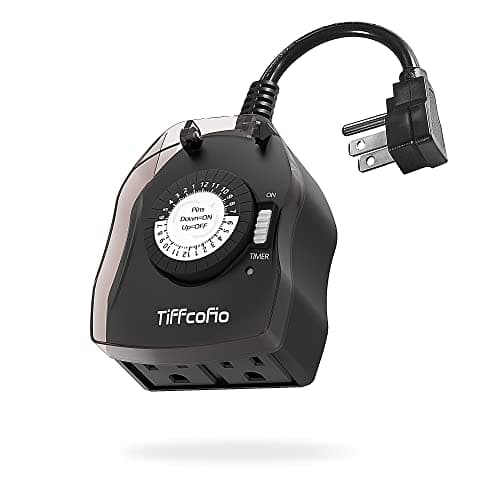
Outdoor Pool Pump Timer
Various
A weatherproof outdoor timer is the highest-return equipment purchase on this site. Most people run the pump too long because remembering to switch it off is a chore.
#ad how this is funded · price as of October 8, 2026
Key specs
- Type
- Outdoor-rated mechanical or digital timer
- Required rating
- Must be rated for the pump's amperage and for outdoor use
- Must not defeat
- The pump's GFCI protection
How it scoresour reading of published specs, not a test result
- Sizing fit
- 8.5
- Running cost
- 9.8
- Maintenance
- 9.0
- Build
- 7.5
- Value
- 9.5
Overall 9.0 / 10
What works
- Turns your filtration from a guess into a schedule
- Pays for itself within a single season on most pools
- Lets you shift running hours to off-peak if your utility has time-of-use rates
What doesn't
- Must be genuinely outdoor-rated and correctly amperage-matched, which cheap indoor timers are not
- Never bypass or defeat the pump's GFCI to fit one
- Mechanical timers drift and need resetting after a power cut
Skip it if: Fixing an undersized pump. Running the wrong pump on a schedule just makes the schedule longer.
What it costs to run: The arithmetic that justifies it: at the EIA's June 2026 US residential average of 18.34 cents per kWh, trimming a 400 W pump from 12 hours to 8 hours a day across a 120-day season saves 192 kWh, or about $35. That is more than the timer costs.
Several seasons: Buy-once. Built and warranted to come back out of the box for a few years, if you store it properly.
Specs from: EIA Electric Power Monthly, Table 5.6.A
Large above-ground pools and people who will not vacuum
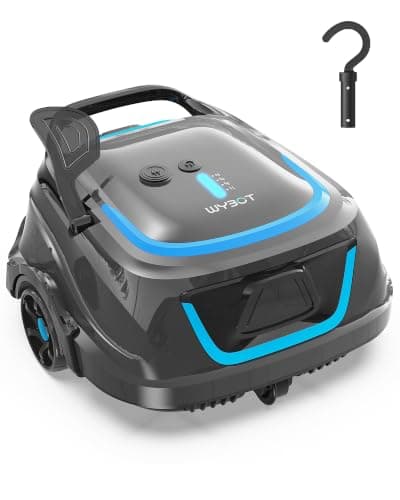
Cordless Robotic Pool Cleaner
Various
Genuinely good at the job and genuinely expensive relative to the pool. For a 1,700-gallon frame pool it costs a meaningful fraction of the pool itself, which is difficult to justify.
#ad how this is funded · price as of October 8, 2026
Key specs
- Power
- Onboard rechargeable battery
- Coverage
- Floor only on most above-ground models
- Runtime
- Published per model
- Filtration
- Onboard basket, independent of the pool's filter
How it scoresour reading of published specs, not a test result
- Sizing fit
- 6.5
- Running cost
- 8.0
- Maintenance
- 7.0
- Build
- 7.5
- Value
- 6.0
Overall 7.1 / 10
What works
- Filters independently of the pool pump, so it adds turnover rather than replacing it
- Genuinely hands-off once it is in the water
- Onboard basket means it does not load your cartridge
What doesn't
- Expensive relative to the price of most above-ground pools
- Batteries degrade and are frequently not user-replaceable
- Most models handle the floor but not the walls of a soft-side pool
Skip it if: Small pools. If your pool cost less than three of these, the money is better spent on a cover and a timer.
What it costs to run: The honest comparison: a manual vacuum head plus a pump timer costs a fraction of this and delivers most of the benefit. A robot earns its place on a large pool owned by someone who genuinely will not vacuum otherwise.
More than you need yet: Real capability a first-pool family cannot use yet. Buy cheaper and put the difference toward chemicals and a cover.
Owners who dislike handling chemicals
Above-Ground Saltwater Chlorine Generator
Various
It makes chlorine from salt rather than replacing chlorine. Whether the hardware pays for itself over a seasonal pool's life is genuinely arguable, and it usually depends on how many seasons you will own it.
Key specs
- What it does
- Electrolyzes dissolved salt into chlorine
- Still a chlorine pool
- Yes — the sanitizer is identical
- Cell life
- Published in hours; the cell is a replaceable consumable
- Salt required
- Published per model, added once per season
How it scoresour reading of published specs, not a test result
- Sizing fit
- 7.0
- Running cost
- 6.0
- Maintenance
- 8.0
- Build
- 7.0
- Value
- 6.5
Overall 6.9 / 10
What works
- No weekly handling or storage of chlorine tablets
- Water feels noticeably softer to most people, which is the real reason people like them
- Salt is added once and stays until the water is changed
What doesn't
- The cell is a consumable and replacing it is a significant cost
- Adds another powered device to a pool whose running cost is already dominated by power
- Salt is corrosive to some metal frames and fittings if not managed
Skip it if: A pool that gets drained every autumn. You lose the salt with the water each year, and the payback period never arrives.
What it costs to run: The honest comparison is cell replacement cost plus salt plus power, against a season of tablets. On a pool kept up for several years it can work out; on a pool drained every October it generally does not.
More than you need yet: Real capability a first-pool family cannot use yet. Buy cheaper and put the difference toward chemicals and a cover.
Pools up to about 6,000 gallons
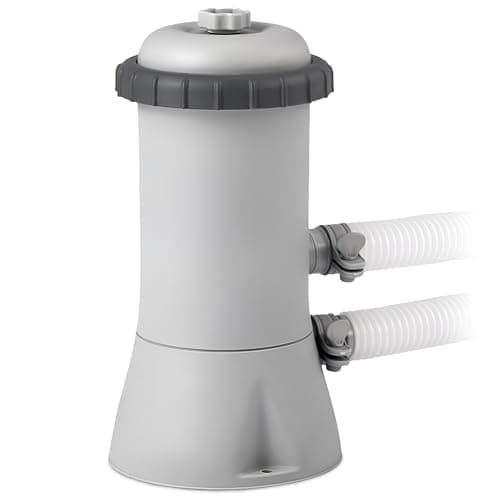
Intex Krystal Clear C1000 Cartridge Filter Pump
Intex
The workhorse replacement pump for mid-size frame pools. 1,000 GPH pump flow, 750 GPH through the system once the cartridge is in the way — and that second number is the one your turnover math needs.
#ad how this is funded · price as of October 8, 2026
Key specs
- Pump flow rate
- 1,000 GPH
- System flow rate
- 750 GPH
- Rated pool size
- Up to 6,000 gallons
- Cartridge
- Type A
- Wattage
- Not published by Intex
How it scoresour reading of published specs, not a test result
- Sizing fit
- 9.0
- Running cost
- 7.0
- Maintenance
- 7.5
- Build
- 7.5
- Value
- 8.5
Overall 8.3 / 10
What works
- Intex publishes both pump flow and system flow, which is more honesty than most of this category offers
- Type A cartridges are the most widely stocked filter consumable in the US
- Sized correctly for the 12ft-15ft frame pools most families own
What doesn't
- Wattage is not published anywhere on the Intex site, so you cannot cost it before purchase
- Cartridge-only, so there is a consumable every few weeks in a busy pool
- GFCI cord length dictates where the pool can go more than people expect
Skip it if: Pools over about 6,000 gallons. Above that you are asking it to run all day to achieve one turnover, which is the expensive way to filter.
What it costs to run: Do the turnover math before you buy: 750 GPH system flow moves 4,000 gallons in 5.3 hours. Two turnovers a day is therefore about 11 hours of running. At the EIA's June 2026 US residential average of 18.34 cents per kWh, every 100 watts of pump draw running 11 hours a day for a 120-day season costs about $24. Find your wattage on the pump label and multiply.
Several seasons: Buy-once. Built and warranted to come back out of the box for a few years, if you store it properly.
Specs from: Intex — Krystal Clear cartridge filter pumps, EIA Electric Power Monthly, Table 5.6.A — US residential average price
Questions people actually ask
Is pool automation worth it on an above-ground pool?
Can I use a smart plug for a pool pump?
Does a salt system mean I do not have to test the water?
What is the cheapest useful pool automation?
Sources
Read next
- Equipment, sized to your pool and costed by the wattPumps, filters, vacuums, heaters and ladders - matched to your gallons and priced by what they draw.
- How long to run the pump, worked out rather than repeatedRun time derived from your own turnover time, when in the day to run it, and what each hour a day costs across a season.
- Robotic pool cleaners: good, and hard to justifyThe honest case for and against a robot on an above-ground pool, and the manual setup that does most of the job for a fraction of the price.
- Salt systems for an above-ground poolHow a chlorine generator works, what the cell costs over time, and why draining the pool each autumn changes the answer entirely.
- The electrical side, which is the one part of a pool you should not improviseGFCI protection, extension cords, timers and heater circuits - what is a homeowner job around a pool and what is not.
- Seven ways to cut a pool's running cost, ranked by what they actually saveEvery saving measure priced with the same arithmetic and ranked, so you spend effort where the money actually is.
- The weekly pool routine, and how little time it really takesThe daily, weekly and monthly jobs written as a schedule, with the kit each one needs and roughly how long it takes.