Pool Costs
Seven ways to cut a pool's running cost, ranked by what they actually save
Most pool energy advice is written for inground pools with large pumps. On a seasonal above-ground pool the ranking is different, and two of the popular measures are nearly pointless.
Heads up: we earn a commission if you buy through the links on this page, at no extra cost to you. It never decides the ranking — here is how we pick and here is the full disclosure. Prices are checked automatically; last verified October 8, 2026.
The short version
- Run time is the biggest lever you control. Watts are fixed once the pump is bought; hours are yours every day.
- A cover saves water, chemicals and heat at once, which is why it outranks measures that only address one line.
- Two popular tips barely move the needle here — efficient-pump upgrades and off-peak scheduling, on a pool this size.
- All of it is small next to a heater. If you run one, that is the conversation; everything else is rounding.
The arithmetic everything below uses
One formula, applied consistently, so the measures can actually be compared. Watts times hours times days, divided by a thousand, times your rate. We use the EIA US residential average of 18.34 cents per kWh throughout and a 120-day season; substitute your own numbers from your bill.
The unit everything is measured in
- Pump draw
- 300 W (our example)
- Season
- 120 days
- US residential average rate, June 2026 [EIA]
- 18.34 ¢/kWh
300 W × 1 h × 120 days ÷ 1,000 = 36 kWh × $0.1834 = $6.60
One hour a day, for a season, on a 300 W pump = $6.60
The ranking
| Measure | What it saves a season | Effort |
|---|---|---|
| 1. Cut run time to what turnover needs | $13-26 | One timer, once |
| 2. Fit a solar cover, and use it | Water, chemicals and heat together | Cover plus a reel |
| 3. Keep the filter media fresh | Restores flow; shortens needed hours | Part of the routine |
| 4. Split the run into two blocks | Better circulation for the same hours | Free, on any timer |
| 5. Size the pump to the pool | $17.61 per 100 W avoided | Only at replacement time |
| 6. Off-peak scheduling | Tariff-dependent; often nil | Free if your tariff has it |
| 7. Upgrade to a certified pump | ≈ $20/year, per ENERGY STAR | A whole new pump |
One: cut the run time to what turnover actually needs
The default advice of eight hours a day comes from inground pools of tens of thousands of gallons. On a 1,718-gallon pool with a 475 GPH system flow, one complete turnover takes about 3.6 hours — so eight hours is more than two turnovers, which is filtration you are paying for and not using.
Work out your own figure: gallons divided by the pump’s published system flow rate, then one to two turnovers a day. Our run-time guide does it properly and the sizing guide explains why the system flow rate is the right number rather than the headline one.
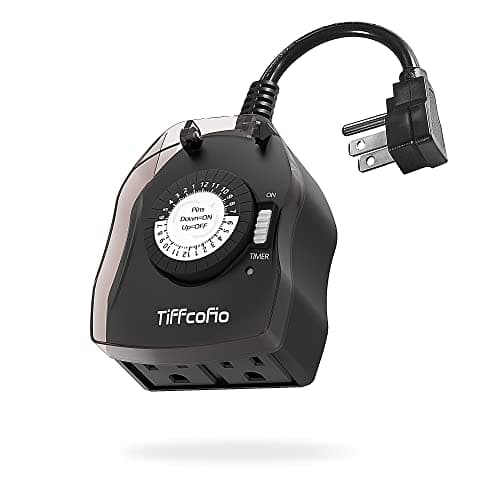
A timer is what makes this stick, and it must be outdoor-rated, matched to the pump’s amperage and fitted downstream of the GFCI — see our electrical safety guide.
Two: the cover, which saves three things at once
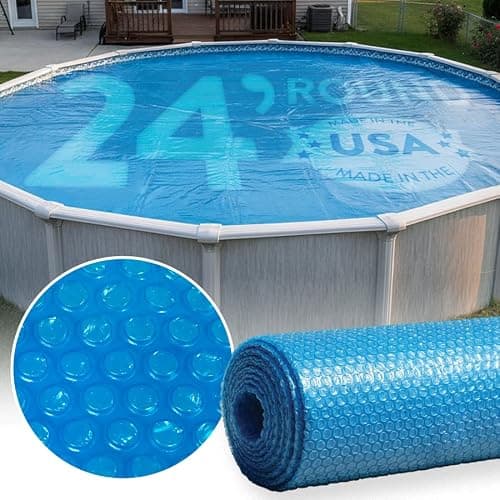
A bubble solar cover is the only item on this list that reduces more than one line. It cuts evaporation, which is water you do not buy and re-balance. It retains heat, which is heating you do not pay for. And it keeps debris out, which is chlorine demand that never happens and a cartridge that lasts longer.
Two conditions, both frequently got wrong. Bubbles face down, toward the water. And buy a reel with it, because a wet cover wrestled off by hand twice a day stops being used within a month, at which point it saves nothing at all. Our solar cover roundup covers thickness and fit.
Three: fresh filter media
A loaded cartridge quietly raises the resistance the pump works against and lowers the effective system flow rate. The pump draws roughly the same power and delivers less, so your real turnover time stretches and you compensate by running it longer — paying for hours to make up for a part that costs very little.
Intex guidance for Type A cartridges is replacement roughly every two weeks in heavy use, with rinsing rather than scrubbing in between. Our cartridge guide covers stretching the interval honestly, and skimming daily is the cheapest way to do it.
Four: split the run, do not extend it
Two shorter blocks — late morning and evening — circulate across the whole active part of the day for the same total hours as one long block. It costs nothing on any timer and it means chemicals distribute when they are added and the water moves when demand is highest.
Five: sizing, which only pays at replacement time
An oversized pump costs about $17.61 a season for every extra 100 W it draws, running 8 hours a day. That is a real number and it is worth getting right — but only when you are buying a pump anyway. Replacing a working pump to save it rarely pays back.
Six and seven: the two that disappoint here
Off-peak scheduling works only if your tariff genuinely differentiates, and it fights the reason to run the pump in the first place: chlorine demand is highest in heat and while people are swimming. On a pool whose whole season of pump electricity is around fifty dollars, shifting hours to save a few percent is not where the effort belongs.
Upgrading to a certified pump is genuinely worthwhile on the right pool, but the published figure is modest: ENERGY STAR states that a certified above-ground pool pump saves about $20 a year, being about 11 percent more efficient. Against the price of a new pump, that is a long payback — and the same $20 is available for free by cutting three hours a day off the schedule.
The order to actually do them in
Fit the timer and set the run time from your own turnover figure. Buy the cover and the reel. Keep the cartridge fresh and skim daily. Split the run into two blocks. Then stop — the remaining measures are either replacement-time decisions or rounding.
Put the effort you would have spent on the last three into the season length instead. A cover that adds usable weeks in May and September improves the cost per swim more than any saving here improves the cost per season, which is the framing our cost per swim guide uses.
What to buy
Scores are our own reading of published specifications. They are not test results — we have not tested these products and we do not claim to.
Cutting the electricity bill without cutting filtration
Outdoor Pool Pump Timer
Various
A weatherproof outdoor timer is the highest-return equipment purchase on this site. Most people run the pump too long because remembering to switch it off is a chore.
#ad how this is funded · price as of October 8, 2026
Key specs
- Type
- Outdoor-rated mechanical or digital timer
- Required rating
- Must be rated for the pump's amperage and for outdoor use
- Must not defeat
- The pump's GFCI protection
How it scoresour reading of published specs, not a test result
- Sizing fit
- 8.5
- Running cost
- 9.8
- Maintenance
- 9.0
- Build
- 7.5
- Value
- 9.5
Overall 9.0 / 10
What works
- Turns your filtration from a guess into a schedule
- Pays for itself within a single season on most pools
- Lets you shift running hours to off-peak if your utility has time-of-use rates
What doesn't
- Must be genuinely outdoor-rated and correctly amperage-matched, which cheap indoor timers are not
- Never bypass or defeat the pump's GFCI to fit one
- Mechanical timers drift and need resetting after a power cut
Skip it if: Fixing an undersized pump. Running the wrong pump on a schedule just makes the schedule longer.
What it costs to run: The arithmetic that justifies it: at the EIA's June 2026 US residential average of 18.34 cents per kWh, trimming a 400 W pump from 12 hours to 8 hours a day across a 120-day season saves 192 kWh, or about $35. That is more than the timer costs.
Several seasons: Buy-once. Built and warranted to come back out of the box for a few years, if you store it properly.
Specs from: EIA Electric Power Monthly, Table 5.6.A
The single highest-return accessory here
Bubble Solar Cover for Above-Ground Pools
Various
It cuts evaporation, and evaporation is simultaneously your water bill, your chemical bill and your heat loss. Nothing else on this site reduces three costs at once.
#ad how this is funded · price as of October 8, 2026
Key specs
- Construction
- Bubble sheet, thickness published in mil
- Thickness
- Higher mil lasts longer — 12 mil and 16 mil are common
- Fit
- Cut to size; buy oversize and trim
- Orientation
- Bubbles face down, toward the water
How it scoresour reading of published specs, not a test result
- Retention
- 9.0
- Durability
- 7.0
- Handling
- 6.0
- Running cost
- 9.8
- Value
- 9.5
Overall 9.0 / 10
What works
- Reduces evaporation, which is the mechanism behind the water, chemical and heat savings all at once
- Cheap relative to everything it saves
- Can be cut to fit any pool shape, so sizing is forgiving
What doesn't
- Awkward to get on and off without a reel, and awkward is how covers end up unused
- Degrades in UV like every vinyl product
- Not a safety cover and will not support weight — this is important
Skip it if: Being a safety barrier. A solar cover looks solid and is not; a child or pet on it goes through and under.
What it costs to run: The one accessory with a clear payback. Every gallon that does not evaporate is a gallon you do not replace at the EPA WaterSense national average of $6.06 per 1,000 gallons, and it is chlorine you do not re-dose. If you buy one thing from this hub, buy this.
Several seasons: Buy-once. Built and warranted to come back out of the box for a few years, if you store it properly.
Specs from: EPA WaterSense — cost per 1,000 gallons
Making sure the cover actually gets used
Solar Cover Reel for Above-Ground Pools
Various
A cover that takes two people and ten minutes to move gets left off. A reel makes it a one-person, one-minute job, which is the difference between owning a cover and using one.
Key specs
- Function
- Rolls the solar cover on and off
- Fit
- Must match pool diameter and wall type
- Mounting
- Freestanding or wall-mounted depending on model
How it scoresour reading of published specs, not a test result
- Retention
- 7.0
- Durability
- 7.5
- Handling
- 9.5
- Running cost
- 8.5
- Value
- 7.0
Overall 7.7 / 10
What works
- Turns cover use from a chore into a habit, which is where all the savings actually are
- Keeps the cover off the ground, which is what shortens its life
- One-person operation
What doesn't
- Frequently costs more than the cover it handles
- Takes up permanent space beside the pool
- Sizing must match the pool exactly, and returns are awkward
Skip it if: A small pool. Under about 12 feet the cover is light enough to handle by hand and the reel is a solution to a problem you do not have.
What it costs to run: Only justified on larger pools. The value is not the reel, it is the cover getting used every night instead of most nights — quantify it by how often you would actually bother otherwise.
Several seasons: Buy-once. Built and warranted to come back out of the box for a few years, if you store it properly.
Small frame and inflatable pools
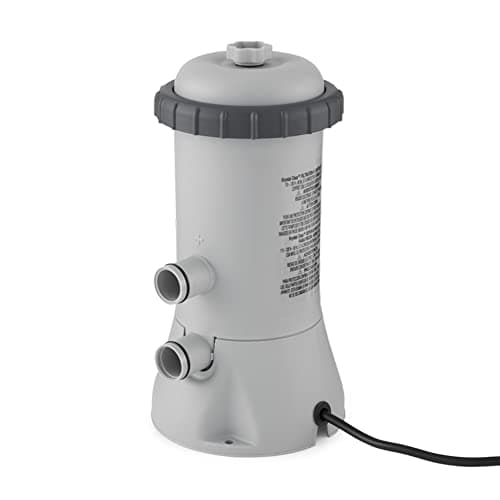
Intex Krystal Clear C530 Cartridge Filter Pump
Intex
530 GPH pump flow, 475 GPH through the system. The right pump for a 12-foot pool and badly undersized for anything much bigger.
#ad how this is funded · price as of October 8, 2026
Key specs
- Pump flow rate
- 530 GPH
- System flow rate
- 475 GPH
- Cartridge
- Type A
- Wattage
- Not published by Intex
How it scoresour reading of published specs, not a test result
- Sizing fit
- 8.0
- Running cost
- 9.0
- Maintenance
- 7.0
- Build
- 7.0
- Value
- 8.5
Overall 8.0 / 10
What works
- Correctly matched to the 12ft Prism Frame and Easy Set pools it ships with
- Smallest pump here that will still genuinely turn over a real pool
- Type A cartridges, which are everywhere
What doesn't
- Undersized the moment you upgrade the pool, and it will not carry over
- No wattage published
- Cartridge needs rinsing frequently in a busy small pool
Skip it if: Anything over about 2,000 gallons. Below that it is right; above it you are running it all day for one turnover.
What it costs to run: 475 GPH system flow turns over 1,718 gallons in about 3.6 hours, so a 7-hour daily run is two full turnovers. That is a genuinely short run time and it is where a small pool's low running cost actually comes from.
One honest season: The cheapest setup that genuinely works for a season of real swimming. Nothing spare, nothing missing.
Specs from: Intex — Krystal Clear cartridge filter pumps
The consumable you will actually buy repeatedly
Type A Replacement Filter Cartridges (multipack)
Various
Buy them in a multipack before you need them. A pool running on an exhausted cartridge is a cloudy pool, and the fix is a two-dollar part you did not have.
Key specs
- Type
- Type A — the most common Intex format
- Replacement interval
- Every 2 weeks in heavy use, per Intex guidance
- Between changes
- Rinse, do not scrub
How it scoresour reading of published specs, not a test result
- Sizing fit
- 9.0
- Running cost
- 7.0
- Maintenance
- 8.5
- Build
- 7.0
- Value
- 8.5
Overall 8.2 / 10
What works
- Type A is the most widely stocked cartridge format in the US
- Multipacks cost a fraction of buying singles
- Having a spare turns a cloudy week into a five-minute fix
What doesn't
- It is a genuine recurring cost that nobody includes in the purchase price
- Aftermarket quality varies noticeably
- Rinsing extends life but does not restore a cartridge that is done
Skip it if: Being restored. Once the pleats are permanently gray and stiff, rinsing is not saving it.
What it costs to run: The line item most people leave out of their pool budget. Count how many you use in your first season and you have your real annual filtration cost — this is exactly the number the cost-to-run guide asks you to record.
One honest season: The cheapest setup that genuinely works for a season of real swimming. Nothing spare, nothing missing.
Questions people actually ask
What is the biggest way to cut pool running costs?
Does a pool cover save money?
Is an energy-efficient pool pump worth buying?
Should I run my pool pump at night to save money?
Sources
Read next
- What a pool actually costs, with the arithmetic shownPurchase, electricity, chemicals, water and replacement parts - added up, sourced, and shown as arithmetic you can redo.
- What your pool pump costs to run, in watts and dollarsPool pump electricity computed from watts, hours and the EIA national average rate, with a table you can read your own pump off.
- Heating a pool, priced properlyThe physics of heating a pool turned into dollars, why a cover changes the answer more than the heater does, and when heating is worth it.
- What an above-ground pool actually costs to run for a yearElectricity, chemicals, water and consumables for a full season - every input sourced, every calculation shown, and every assumption named.
- How long to run the pump, worked out rather than repeatedRun time derived from your own turnover time, when in the day to run it, and what each hour a day costs across a season.
- Sizing a pump: the number on the box is not the number you useTurnover time computed from published system flow rates for common pool volumes, and why an oversized pump costs you money every day.
- Adding weeks to the season, starting with the cheapest thing firstCover, placement and timing before hardware, plus the kilowatt arithmetic that shows what running an electric heater actually costs.