Floats & Fun
Pool exercise gear: your wall height decides what works
Buy the Speedo barbells if you can stand chest-deep, the gloves if you have nowhere to store anything, and skip the flotation belt entirely unless your feet genuinely do not touch the floor. Almost all water aerobics equipment is designed for a pool deeper than yours.
Heads up: we earn a commission if you buy through the links on this page, at no extra cost to you. It never decides the ranking — here is how we pick and here is the full disclosure. Prices are checked automatically; last verified October 8, 2026.
Quick picks
Segmented before it is ranked — the right answer depends on which of these you actually are. Tap any row for the full write-up.
If you can stand chest-deep — the 48 and 52 inch walls
Buoyancy resistance, worked by pushing down rather than lifting up. The only pick here whose maker publishes a resistance figure.
| # | Product | Best for | Score | Price |
|---|---|---|---|---|
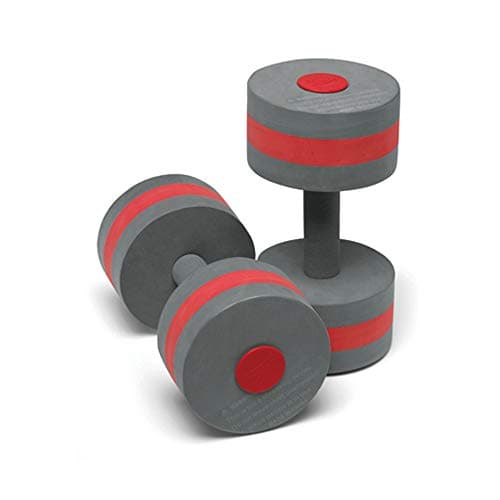
| 1 | Speedo Aqua Fitness Barbell The only pick here from a brand that publishes a resistance figure. Chlorine-resistant EVA with padded grips, and the format that works at the depth an above-ground pool actually gives you. | Standing in chest-deep water, which is most above-ground poolsSeveral seasons | 7.8out of 10 |
If you have nowhere to store anything
Webbing between the fingers turns your own hands into the resistance. Works at any depth, hangs on a hook, costs the least.
| # | Product | Best for | Score | Price |
|---|---|---|---|---|
| 1 | 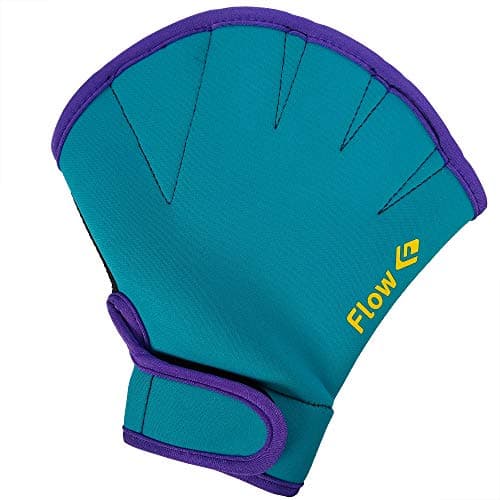 Flow Swimming Resistance Gloves Webbing between the fingers, which turns your own hands into the resistance. Nothing to store, nothing to lose at the bottom of the pool, and the only format here that works at any depth. | A pool with nowhere to store anythingOne honest season | 8.1out of 10 |
If you want legs and core, and somewhere to progress to
The only product on this page sold in graded resistance levels. Buoyant rather than weighted, which is the thing buyers most often get backwards.
| # | Product | Best for | Score | Price |
|---|---|---|---|---|
| 1 | 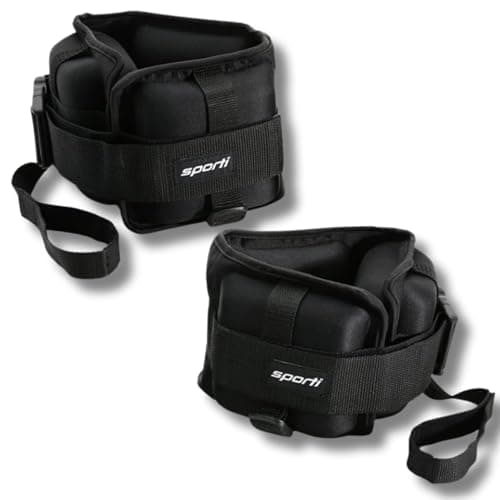 Sporti Heavy Resistance Buoyancy Aqua Cuffs The only product here sold in graded resistance levels, so there is somewhere to go when medium stops being hard. Buoyant rather than weighted, which is the thing most buyers get backwards. | Legs and core, and for buying a harder version laterSeveral seasons | 7.6out of 10 |
Only if your feet genuinely do not touch the floor
Well made, correctly sized, and the wrong format for almost every pool on this site. Here because you should know why to skip it.
| # | Product | Best for | Score | Price |
|---|---|---|---|---|
| 1 | 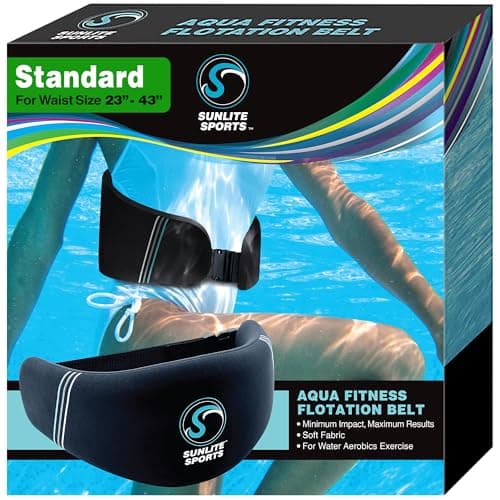 Sunlite Sports AquaFitness Deluxe Flotation Belt A well-made belt for an exercise format most readers of this site cannot do. Listed as suiting shallow or deep water; the deep half is the real one, and above-ground walls do not get there. | A deep pool — which almost no above-ground pool isSeveral seasons | 6.6out of 10 |
The short version
- Depth decides the category, not the product. Shallow-water work needs chest-deep water with your feet down; deep-water work needs your feet off the floor entirely. Only the first is possible in an above-ground pool.
- A 52-inch wall is close to ideal. Roughly 46 inches of water is chest-deep on an average adult — the depth shallow-water aerobics is built for.
- None of this is weight. Foam barbells and cuffs resist going DOWN. Sporti publishes its cuffs as “buoyant rather than weighted”.
- Skip the flotation belt. Good product, wrong pool — it unweights you in water where your feet should be on the floor.
The criterion nobody applies before buying
Water aerobics equipment is sold as if every pool were the same pool. It is not, and the difference is not size or shape — it is depth. The entire category splits into two halves along one line, and which half you can use was decided when you chose a wall height.
The split is published rather than our invention. Shallow-water exercise is “typically conducted in chest-deep water with your feet on the pool floor”, while deep-water exercise is defined by the opposite condition: water deep enough that “you can’t touch the pool bottom”. Those are not two intensities of the same thing. They are different exercise formats with different equipment, and most of what a search for “water aerobics equipment” returns is built for the second one.
An above-ground pool cannot do the second one. Not a 52-inch pool, not a 24-footer, not any of them. So the first job of this page is to work out which half of the category you are shopping in, and the second is to pick within it.
Your wall height, as water depth
Above-ground pools are sold by wall height and filled to somewhere below it — typically to the bottom of the skimmer, which is a few inches down. Here is what each common wall actually gives you to stand in.
| Wall height | Water depth, filled | On a 5 ft 8 in adult | Shallow-water aerobics? |
|---|---|---|---|
| 52 in | about 46 in | Mid-chest | Yes - this is the target depth |
| 48 in | about 42 in | Lower chest | Yes |
| 42 in | about 36 in | Waist to lower rib | Workable, with less impact protection |
| 30 in | about 26 in | Upper thigh to hip | Too shallow - this is a wading depth |
Read that table against your own body rather than ours. Chest depth on a 6 ft 2 in adult is several inches higher than on a 5 ft 2 in one, and in a 42-inch pool that is the difference between the format working and not. The arithmetic is yours to redo: fill depth, measured against where it hits you standing.
If you are at 30 inches, nothing on this page will fix that, and we are not going to pretend otherwise. A 30-inch pool is a cooling-off pool, which our 10-foot roundup is honest about. The upgrade path is a deeper wall, not an accessory.
How each format actually creates resistance
Three mechanisms, and they behave completely differently. Knowing which one you are buying explains both what it is good at and why it stops working.
| Mechanism | How it works | Scales with effort? | Depth needed |
|---|---|---|---|
| Buoyancy (foam barbells, cuffs) | Foam wants to float; you work pushing it down | No - fixed by foam volume | Chest-deep, standing |
| Drag (webbed gloves, paddles) | More surface area pushed through water | Yes - push harder, resist harder | Any |
| Flotation (belts) | Holds you upright so you can move without touching the floor | No - it removes load | Feet off the floor |
The column that should change your shortlist is the third. Buoyancy products have a ceiling: the foam is the size it is, so when 45 pounds of barbell stops being hard there is nowhere to go except buying the next product. Drag products do not have that problem, because the resistance is a function of how fast you move — a stronger person working harder simply meets more water.
That is why the gloves punch above their price here, and why the graded cuffs matter: they are the only buoyancy product on this page with a published harder version to move up to.
What each pick publishes
This is a category where published specifications are rare, so a maker that prints a number is doing something the rest are not. We have marked the gaps rather than filled them.
| Pick | Resistance published | Material published | Sizing published | Grades offered |
|---|---|---|---|---|
| Speedo Aqua Fitness Barbell | 45 pounds | Chlorine-resistant EVA foam | Not published consistently | One |
| Flow Resistance Gloves | Not published | Not published | By glove size on the variant | One |
| Sporti Aqua Cuffs | Not published as a figure | Not published | Adjustable foot strap | Medium and heavy |
| Sunlite Flotation Belt | Not published in pounds | Soft foam, fabric cover | 23-43 in; XL 30-65 in | Two sizes |
Speedo is the only one here publishing a resistance figure at all — 45 pounds of resistance, in lightweight chlorine-resistant EVA foam with soft padded grips. Treat that as a ceiling rather than a constant: 45 pounds is what fully submerged foam wants to do, not what you feel through every inch of a movement that starts at the surface.
Chlorine resistance is the spec we would most like from the other three and do not have. Anything living in treated water is in a hostile environment, and our float lifespan guide covers what actually destroys vinyl and foam in a pool. Where a maker will not state it, plan for a season or two and price accordingly.
Why the flotation belt is on a page that tells you to skip it
Because it is the top result for half the searches that lead here, and someone should explain the mismatch rather than sell it to you anyway.
The Sunlite belt is a genuinely well-sorted product. Its published waist ranges — 23 to 43 inches standard, 30 to 65 on the XL — cover more body sizes than most aquatic gear bothers with, and it is fabric-covered foam rather than bare foam against skin. The listing claims it suits “shallow or deep water”. We think the second half of that claim is the real one.
Here is the problem in one sentence: a flotation belt works by taking your weight off the floor, and shallow-water exercise works by having your feet on the floor. Wearing one in 46 inches of water does not make the workout harder or easier — it removes the mechanism. You end up bobbing rather than working, in a pool where you could simply stand up.
| Pick | Buy it if | Skip it if |
|---|---|---|
| Speedo barbells | You have a 48 or 52 in wall and want upper body work today | You have nowhere dry to store two foam barbells |
| Flow gloves | Storage is the constraint, or your pool is on the shallow side | You wanted leg and core work - these do nothing below the waist |
| Sporti cuffs | You want lower body work and a harder version to grow into | Your pool is under about 36 in, or you expected ankle weights |
| Sunlite belt | You are taking it to a pool with a deep end | Your feet touch the floor - which in an above-ground pool, they do |
The other constraint: you are exercising in a circle
Depth decides which equipment works. Diameter decides what you can do with it, and this is the part gym-pool advice never has to think about.
Water walking is the most commonly recommended starting point in aquatic fitness, and it assumes a lane. In a round above-ground pool there is no lane — there is a circle, and you walk around the inside of it. That is not a failure, and it has one genuine advantage most people discover by accident: keep walking the same direction for a few minutes and the water starts moving with you, which is the classic backyard whirlpool. Turn around and walk against it and you have just added resistance for free.
| Pool | Walking circle | Steps per lap | Laps for 10 minutes of steady walking |
|---|---|---|---|
| 12 ft round | about 28 ft | about 13 | roughly 55 |
| 15 ft round | about 38 ft | about 17 | roughly 42 |
| 18 ft round | about 47 ft | about 21 | roughly 34 |
| 24 ft round | about 66 ft | about 29 | roughly 24 |
Those are our own figures, computed from the diameters, not a published standard — redo them against your own stride if you want to be precise. The point they make is that a 12-foot pool asks you to turn fifty-five times in ten minutes, which is a different experience from a 24-footer. Our 15-foot roundup is the size where this starts feeling like exercise rather than pacing.
It also explains why the equipment on this page earns its place. In a small circle you cannot get intensity from distance, so you have to get it from resistance — which is exactly what barbells, gloves and cuffs provide while you stay more or less on the spot. A reader with a 24-foot pool can walk for intensity. A reader with a 12-foot pool needs the gear more, not less.
Temperature, which an above-ground pool is unusually good at
One genuine advantage of a shallow pool with a large surface area: it warms up. UW Orthopaedic Surgery publishes that “water temperatures between 83 to 88 degrees are usually comfortable for people who are exercising”, and a backyard above-ground pool in July frequently sits in exactly that band with no heater at all.
That is worth knowing because the same shallowness that limits the deep-water half of this category is what makes the shallow-water half comfortable. A 13,500-gallon above-ground pool in full sun heats in a way a 60,000-gallon inground one does not. Our extend the season guide covers holding that temperature into September, and the thermometer roundup covers knowing what it actually is rather than guessing.
Too warm is also a thing. Water above that band stops carrying heat away from you while you work, and sustained exercise in a pool sitting at 92 degrees in a heatwave is a different and less pleasant proposition.
What we are not going to claim
That any of this burns a particular number of calories, builds a particular amount of muscle, or is better than land exercise. No independent testing of consumer aqua fitness gear exists that we could find, every number in the category is a manufacturer figure, and we have not put any of it on a person.
What is defensible is the mechanism, and it is published: “water provides greater resistance than air, helping you build muscle strength”, and the same source notes that every step on land puts three to seven times your body weight through your joints. Water changes that arithmetic. The equipment on this page adds to the resistance side; the depth of your pool is what determines the impact side.
Where this sits next to the rest of the site
Three adjacent pages, because this one deliberately does not cover everything.
Swim tethers are not here. A tether holds you in place so you can swim against it, which is a lap-swimming solution rather than a water-aerobics one, and our lap swimming page already owns that question including whether an above-ground pool can support it at all. If what you actually want is to swim rather than to exercise standing up, start there.
Entry and exit matter more than any of this gear if balance is a concern. Getting in and out of a 52-inch pool is the hardest physical thing about owning one, and our pools for older swimmers guide treats the entry system as the decision that picks the pool. Buying barbells for a pool you dread climbing into solves the wrong problem.
And a pool used for daily exercise is a pool with a real bather load on it. Sunscreen, body oils and sustained use all consume chlorine, which our swimmer load page quantifies. Exercising in your own pool five mornings a week is a chemistry change as much as a fitness one, and the week you notice is the week nobody tested.
The picks, in full
Scores are our own reading of published specifications. They are not test results — we have not tested these products and we do not claim to.
Pick #1 · Standing in chest-deep water, which is most above-ground pools
Speedo Aqua Fitness Barbell
Speedo
The only pick here from a brand that publishes a resistance figure. Chlorine-resistant EVA with padded grips, and the format that works at the depth an above-ground pool actually gives you.
Key specs
- Published resistance
- 45 pounds of resistance, published
- Material
- Lightweight chlorine-resistant EVA foam, published
- Grips
- Soft padded grips, published as suiting extended workouts
- Supplied
- A pair — the listing says to use both barbells for maximum resistance
- How it resists
- Buoyancy — the work is pushing DOWN, not lifting up
- Depth needed
- Chest-deep water with your feet on the floor
- Weight in air
- Not published consistently across retailers
How it scoresour reading of published specs, not a test result
- Resistance
- 8.5
- Adjustability
- 5.0
- Build
- 8.0
- Storage
- 5.5
- Value
- 8.0
Overall 7.8 / 10
What works
- Publishes a resistance figure at all, which almost nothing in this category does
- Chlorine-resistant EVA is the correct material for something living in treated water
- Padded grips are the difference between ten minutes and thirty
- Works at the depth a 48 or 52 inch above-ground wall gives you, which the flotation belt does not
What doesn't
- 45 lb is the maximum at full submersion, not what you feel at every point of the movement
- Resistance is fixed — when it becomes easy there is no way to add more
- Foam barbells are bulky to store relative to anything else on this page
- No published dimensions or weight that agree across retailers, so size is a surprise on arrival
Skip it if: Progressive overload. The resistance is set by the volume of the foam and you cannot change it, so this is a starting point rather than something you grow into over years.
What it costs to run: Nothing to run and nothing consumable. The real cost is storage: a pair of foam barbells is the bulkiest thing on this page and it has to live somewhere dry.
Several seasons: Buy-once. Built and warranted to come back out of the box for a few years, if you store it properly.
Specs from: Xtreme Swim — Speedo Aqua Fitness Barbells, published resistance, material and grip claims
Pick #2 · A pool with nowhere to store anything
Flow Swimming Resistance Gloves
Flow
Webbing between the fingers, which turns your own hands into the resistance. Nothing to store, nothing to lose at the bottom of the pool, and the only format here that works at any depth.
#ad how this is funded · price as of October 8, 2026
Key specs
- Type
- Webbed gloves, published for water aerobics, aquatic fitness and swim training
- How it resists
- Drag — more hand surface area pushed through water
- Depth needed
- None in particular; works standing, kneeling or swimming
- Sizing
- Sold by size; the listing publishes a size on the variant rather than a chart
- Material
- Not published on the listing — the category is typically neoprene
- Chlorine resistance
- Not published
- Storage
- Pocket-sized; hangs on a hook to dry
How it scoresour reading of published specs, not a test result
- Resistance
- 7.0
- Adjustability
- 8.5
- Build
- 6.0
- Storage
- 10.0
- Value
- 9.0
Overall 8.1 / 10
What works
- Scales with your own effort — push harder and the resistance rises, which no foam product does
- Works at any water depth, including the 30 to 42 inch walls where barbells become awkward
- Takes up no storage at all, which is the real constraint on a seasonal above-ground pool
- Cheapest route into resistance work in the water by a wide margin
What doesn't
- Material and chlorine resistance are not published, so durability in treated water is unknown
- Upper body only — nothing here does anything for legs or core
- Sized gloves on wet hands are fiddly, and a loose one is worse than none
- No resistance figure published, so there is nothing to compare against the barbells
Skip it if: Lower body work. Webbed gloves are a hand product, so legs, hips and core get nothing — which is most of what people take to the pool to work on.
What it costs to run: The cheapest thing on this page and the one most likely to be a consumable. Treat an unpublished material in chlorinated water as a one-or-two-season item until proven otherwise.
One honest season: The cheapest setup that genuinely works for a season of real swimming. Nothing spare, nothing missing.
Pick #3 · Legs and core, and for buying a harder version later
Sporti Heavy Resistance Buoyancy Aqua Cuffs
Sporti
The only product here sold in graded resistance levels, so there is somewhere to go when medium stops being hard. Buoyant rather than weighted, which is the thing most buyers get backwards.
#ad how this is funded · price as of October 8, 2026
Key specs
- Resistance grades
- Sold in medium and heavy, published as separate products
- How it resists
- Buoyancy — published as "buoyant rather than weighted"
- Fit
- Adjustable foot strap, published
- Worn on
- Ankles for lower-body work; the category also fits wrists
- Depth needed
- Chest-deep, standing, so the legs can move through full range
- Material
- Not published on the retailer listing
- Dimensions
- Not published
How it scoresour reading of published specs, not a test result
- Resistance
- 8.0
- Adjustability
- 9.0
- Build
- 6.5
- Storage
- 8.0
- Value
- 6.5
Overall 7.6 / 10
What works
- Graded medium and heavy, so there is a published upgrade path — nothing else here has one
- The only pick on this page that works the lower body, which is why most people are in the pool
- Buoyant rather than weighted means no load on the joint at the bottom of the movement
- Strap adjustment means one pair covers a household rather than one person
What doesn't
- "Buoyant rather than weighted" surprises people who expected ankle weights — these resist downward, not upward
- No material, dimensions or buoyancy figure published, so grades are relative to each other and nothing else
- The foot strap draws consistent complaints for length and comfort
- Needs enough depth for a full leg swing, so a 30 inch wall is too shallow to use them properly
Skip it if: Walking or jogging in the pool. Buoyancy cuffs fight the leg coming down, so they work against the floor contact that water walking depends on. Use them for seated or supported leg movements instead.
What it costs to run: The most expensive item on this page and the only one with a second purchase built in, since the whole point of a graded product is buying the harder grade later.
Several seasons: Buy-once. Built and warranted to come back out of the box for a few years, if you store it properly.
Specs from: SwimOutlet — Sporti Heavy Resistance Buoyancy Aqua Cuffs, published buoyancy description and strap design
Pick #4 · A deep pool — which almost no above-ground pool is
Sunlite Sports AquaFitness Deluxe Flotation Belt
Sunlite Sports
A well-made belt for an exercise format most readers of this site cannot do. Listed as suiting shallow or deep water; the deep half is the real one, and above-ground walls do not get there.
#ad how this is funded · price as of October 8, 2026
Key specs
- Waist range
- 23 to 43 in on the standard belt, published
- XL version
- 30 to 65 in, published as a separate size
- Material
- Soft foam with a fabric cover, published
- Buoyancy
- Published as neutral buoyancy around the torso
- Fastening
- Adjustable strap with a buckle, published
- Maker's depth claim
- Published as suiting "shallow or deep water"
- Depth it actually needs
- Deep enough that your feet do not touch — see the depth table on this page
How it scoresour reading of published specs, not a test result
- Resistance
- 4.0
- Adjustability
- 8.5
- Build
- 7.5
- Storage
- 7.0
- Value
- 6.0
Overall 6.6 / 10
What works
- Two published waist ranges between them cover 23 to 65 in, which is unusually complete sizing
- Fabric-covered foam rather than bare foam, which is the difference on bare skin
- If you do have a deep pool, suspended vertical exercise is genuinely zero-impact in a way nothing else here is
- Also the right product for supervised water therapy where the floor must not be reached
What doesn't
- The format needs depth an above-ground pool does not have — a 52 inch wall holds about 46 in of water
- Unweighting you in chest-deep water removes the floor contact that shallow-water exercise is built on
- No published buoyancy figure in pounds, so you cannot match it to body weight
- It is a flotation aid, not a life jacket, and nothing about it is Coast Guard approved
Skip it if: The pool most readers of this site own. This is the honest skip on this page unless you are taking it to a pool with a deep end, in which case it is the right thing to buy.
What it costs to run: Priced mid-range, but the cost that matters is buying it for the wrong pool. Check your own water depth against the table on this page before ordering.
Several seasons: Buy-once. Built and warranted to come back out of the box for a few years, if you store it properly.
Specs from: Walmart — Sunlite Sports AquaFitness Deluxe Flotation Swimming Belt, published waist range and material, Walmart — Sunlite Sports AquaFitness Deluxe XL Flotation Swimming Belt, published XL waist range
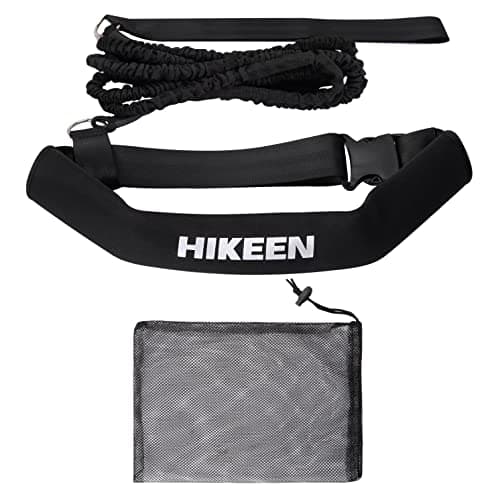
Pick #5 · Swimming in a pool too short to swim in
Swim Tether / Resistance Belt
Various
A waist belt on a bungee anchored to the pool. It is the only honest way to get a continuous swim out of a 15-foot circle, and it costs a fraction of a pool big enough to do it properly.
Key specs
- Cord
- 2 m latex bungee with a PE coating is the common spec
- Belt
- Nylon with neoprene backing; many fit to a 44 in waist
- Anchor
- Strap to a post, ladder or supplied above-ground adapter
- Pool length
- Dedicated systems quote a 12 ft minimum
- Installation
- No tools, no modification to the pool
- Variants
- Some add a drag parachute instead of a fixed cord
How it scoresour reading of published specs, not a test result
- Build
- 7.0
- Value
- 8.5
Overall 8.0 / 10
What works
- Turns any pool over about 12 feet into a continuous-swim pool
- Nothing is fixed to the pool, so it comes out with everything else at close
- Adjustable resistance by shortening the anchor rather than buying a new cord
- A fraction of the cost and the yard of a pool actually long enough to swim lengths in
What doesn't
- The cord is the wear item and latex degrades in sun and chlorine
- Anchoring to an above-ground pool needs a genuinely solid point, which not every pool has
- The pull is not constant — it increases as you swim out, which takes getting used to
- Shallow above-ground depth still limits stroke regardless of the tether
Skip it if: Replacing a lap pool. It gives you continuous effort, not a length — turns, push-offs and real distance are not part of it.
What it costs to run: No running cost. Budget for a replacement cord every couple of seasons, which is the only consumable.
Several seasons: Buy-once. Built and warranted to come back out of the box for a few years, if you store it properly.
Specs from: Swim tethers and resistance belts — current Amazon category listing
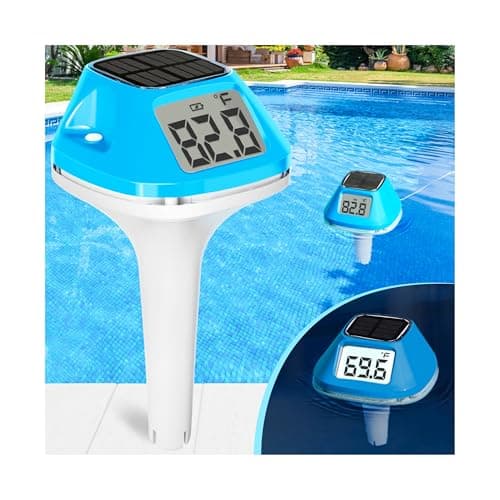
Pick #6 · Knowing when to close, and when to stop heating
Floating Pool Thermometer
Various
The cheapest instrument on this site and the one that answers two expensive questions: is it warm enough to swim, and is it cold enough to close.
#ad how this is funded · price as of October 8, 2026
Key specs
- Types
- Floating analog, digital solar, or wireless with an indoor display
- Typical digital range
- About 15.8°F to 176°F on current models
- Typical stated accuracy
- About ±1.8°F on current digital models
- Water resistance
- IPX8 on current digital models
- Materials
- UV-stabilized and chlorine-resistant on better models
How it scoresour reading of published specs, not a test result
- Value
- 9.2
Overall 8.4 / 10
What works
- Turns the closing decision from a guess into a reading, which is the most expensive judgment call of the pool year
- Tells you whether a solar cover is actually doing anything, rather than assuming
- Digital models are readable from the deck; analog ones need fishing out
- Cheap enough that having one is never the wrong call
What doesn't
- Analog floats get lost, get chewed, and end up under the ladder
- Solar and wireless models add batteries or a panel to a thing that could have had neither
- Tethering it is essential and almost nobody does it
- Accuracy claims are rarely independently verified — treat ±2°F as the working assumption
Skip it if: Telling you anything about water chemistry. It measures one thing, and every other decision needs a test kit.
What it costs to run: A few dollars, once. It pays for itself the first time it stops you closing a pool that was still warm, which is the mistake that produces a green opening in April.
Several seasons: Buy-once. Built and warranted to come back out of the box for a few years, if you store it properly.
Specs from: Digital floating pool thermometer — current Amazon listing and published specifications
Questions people actually ask
Can you do water aerobics in an above-ground pool?
What water depth do you need for water aerobics?
Are aqua dumbbells weights or floats?
Do you need equipment for water exercise at all?
What temperature should the pool be for exercise?
Is a flotation belt the same as a life jacket?
Sources
- Divers Alert Network — water aerobics, published shallow-water and deep-water definitions
- UW Orthopaedic Surgery and Sports Medicine — water exercise, published comfortable exercise temperature and cautions
- WebMD / arthritis aquatics — water provides greater resistance than air; land impact per step
- Xtreme Swim — Speedo Aqua Fitness Barbells, published resistance and material
- SwimOutlet — Sporti Heavy Resistance Buoyancy Aqua Cuffs, published buoyancy description
- CPSC — Pool Safely
Read next
- Floats, loungers and the stuff that makes the pool worth havingFloats for adults, toddlers and dogs - ranked on seam and valve construction, which is what actually decides how long they last.
- You cannot swim lengths. You can swim continuously.What above-ground depth and diameter actually allow for swimming, and the tether that turns a round pool into a continuous-swim pool.
- Fifty-two inches is where the pool becomes chest-deepDeep-wall 52-inch above-ground pools compared on what the extra depth buys, what it costs in water and ground preparation, and who it suits.
- Above-ground pools for adults who want to swim, not sitThe published gallons converted into actual inches of water, so you can see which pools an adult can swim in before you buy one.
- A pool for older swimmers starts at the steps, not the waterChoosing an above-ground pool for older swimmers: wall height, entry systems with handrails and gates, the published weight ratings, and what to fit before the pool is filled.
- The pool thermometer, and the two expensive questions it answersFloating, digital and wireless pool thermometers compared, and why the closing decision alone justifies owning one.
- Pool shade: compare the square feet, then the anchoringShade over and beside a pool compared on published shade area, UV rating and the anchoring each format actually needs.
- The 15-foot class, and the three things that stop being optionalThe 14 and 15-foot pools compared, and what doubling the water from a 12-footer actually commits you to.
- Bather load: the variable that explains your worst weeksWhy gallons per swimmer is the number that matters, what a busy afternoon costs you in chlorine, and the routine that absorbs it.