Pool Equipment
The pool thermometer, and the two expensive questions it answers
Is it warm enough to swim, and is it cold enough to close. The second one is the most costly judgment call of the pool year, and people make it by feel.
Heads up: we earn a commission if you buy through the links on this page, at no extra cost to you. It never decides the ranking — here is how we pick and here is the full disclosure. Prices are checked automatically; last verified October 8, 2026.
Quick picks
Segmented before it is ranked — the right answer depends on which of these you actually are. Tap any row for the full write-up.
What most pools need
A floating thermometer you can read from the deck. Digital and solar-powered models solve the one real weakness of the analog kind, which is that you cannot read them without fishing them out.
| # | Product | Best for | Score | Price |
|---|---|---|---|---|
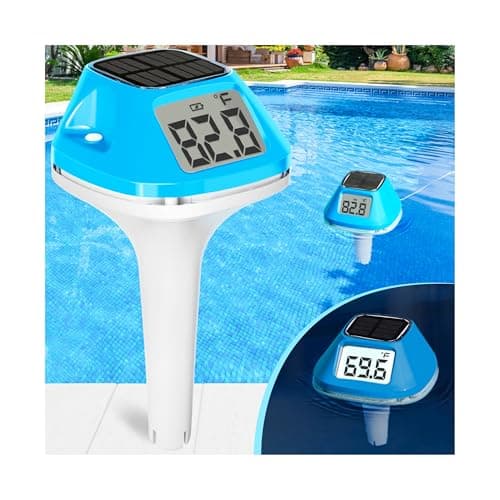
| 1 | Floating Pool Thermometer The cheapest instrument on this site and the one that answers two expensive questions: is it warm enough to swim, and is it cold enough to close. | Knowing when to close, and when to stop heatingSeveral seasons | 8.4out of 10 |
If you also want the chemistry on a screen
Multi-parameter floating units report temperature alongside pH and salinity. Read the caveats before treating one as your main test.
| # | Product | Best for | Score | Price |
|---|---|---|---|---|
| 1 | 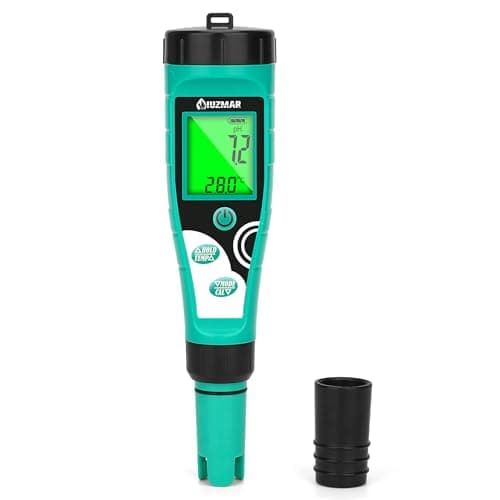 Digital Pool Water Tester A probe-based reader that gives you a figure on a screen. Useful for tracking a trend day to day; not a replacement for a reagent kit when a reading has to be right. | A number instead of a color band, without reagentsSeveral seasons | 7.0out of 10 |
The short version
- The closing date is a temperature decision, not a calendar one. Closing a pool while the water is still warm is the most expensive mistake of the year.
- It is the only way to know a solar cover is working. Otherwise you are assuming.
- Digital beats analog for one practical reason: you can read it from the deck instead of fishing it out.
- Tether it. Untethered thermometers park against the skimmer, go under the ladder, and disappear.
Why a two-dollar instrument earns a page
Because it answers the question that costs the most money to get wrong. A pool closed while the water is still biologically active spends five months fermenting under a cover and produces the green opening our green pool guide is about — and our cost of a bad close guide prices that morning line by line.
The correct trigger for closing is consistently cold water, not a date and not a cold week. That is a reading, and without a thermometer it is a guess made by putting a hand in on a chilly afternoon.
The three formats
| Type | Reading | Practical catch |
|---|---|---|
| Floating analog | Liquid column or dial | Has to be lifted out and read up close |
| Floating digital (solar or battery) | LCD, often dual-sided | Readable from the deck; screens fade in strong sun |
| Wireless with indoor display | Transmits to a base unit or app | Another battery, another thing to pair |
| Multi-parameter floating monitor | Temperature plus chemistry | Sanitizer usually inferred from ORP, not measured |
Current digital models publish a working range of roughly 15.8°F to 176°F with stated accuracy around ±1.8°F, and IPX8 water resistance. Treat the accuracy claim as a working assumption rather than a verified figure — it is manufacturer-stated and rarely independently checked — but ±2°F is entirely adequate for every decision on this site.
What it changes about how you run the pool
It tells you whether the cover is doing anything. A solar cover is the highest-return item in this hub and most people never verify it works. Take a reading before you put it on and again in the morning, on two nights with and without, and you have an answer specific to your yard rather than a claim from a listing. Our season extension guide covers the mechanism.
It tells you whether a heater is worth running. Heating decisions are the largest line on a pool bill, and knowing the starting temperature is how you work out whether ten degrees is a two-day job or a five-day one. Our heater sizing guide does that arithmetic and the heating cost guide prices it.
It explains your chlorine. Warm water consumes chlorine faster and grows algae better. A reading that has climbed several degrees is advance warning that this week’s routine needs to be more responsive — our heatwave guide covers what changes.
Placement, which affects the reading
Water is not one temperature. The surface in full sun reads warmer than the water a foot down, and the water near the return jet reads different from the water at the far end.
For a reading you can compare week to week, keep the thermometer in the same place, away from the return, and read it at the same time of day. That is the same discipline our testing mistakes guide argues for with water samples, and for the same reason: a trend is worth more than an absolute.
Hot tubs, where it matters more
On a spa a thermometer stops being a convenience. It is how you know whether the heater is reaching temperature, whether the cover is holding it overnight, and whether the unit is struggling — all questions with a direct cost attached, because a hot tub is heated continuously rather than seasonally. Our inflatable hot tub roundup treats it as a day-one purchase rather than an accessory.
What we are scoring
We have not tested these and do not claim to. The scores reflect published specifications — stated range and accuracy, water resistance, materials and how the reading is delivered — against a seasonal above-ground pool. Our methodology page explains how our scoring works.
The picks, in full
Scores are our own reading of published specifications. They are not test results — we have not tested these products and we do not claim to.
Pick #1 · Knowing when to close, and when to stop heating
Floating Pool Thermometer
Various
The cheapest instrument on this site and the one that answers two expensive questions: is it warm enough to swim, and is it cold enough to close.
#ad how this is funded · price as of October 8, 2026
Key specs
- Types
- Floating analog, digital solar, or wireless with an indoor display
- Typical digital range
- About 15.8°F to 176°F on current models
- Typical stated accuracy
- About ±1.8°F on current digital models
- Water resistance
- IPX8 on current digital models
- Materials
- UV-stabilized and chlorine-resistant on better models
How it scoresour reading of published specs, not a test result
- Accuracy
- 7.5
- Ease
- 9.0
- Coverage
- 5.0
- Cost per use
- 9.8
- Value
- 9.2
Overall 8.4 / 10
What works
- Turns the closing decision from a guess into a reading, which is the most expensive judgment call of the pool year
- Tells you whether a solar cover is actually doing anything, rather than assuming
- Digital models are readable from the deck; analog ones need fishing out
- Cheap enough that having one is never the wrong call
What doesn't
- Analog floats get lost, get chewed, and end up under the ladder
- Solar and wireless models add batteries or a panel to a thing that could have had neither
- Tethering it is essential and almost nobody does it
- Accuracy claims are rarely independently verified — treat ±2°F as the working assumption
Skip it if: Telling you anything about water chemistry. It measures one thing, and every other decision needs a test kit.
What it costs to run: A few dollars, once. It pays for itself the first time it stops you closing a pool that was still warm, which is the mistake that produces a green opening in April.
Several seasons: Buy-once. Built and warranted to come back out of the box for a few years, if you store it properly.
Specs from: Digital floating pool thermometer — current Amazon listing and published specifications
Pick #2 · A number instead of a color band, without reagents
Digital Pool Water Tester
Various
A probe-based reader that gives you a figure on a screen. Useful for tracking a trend day to day; not a replacement for a reagent kit when a reading has to be right.
#ad how this is funded · price as of October 8, 2026
Key specs
- Typical parameters
- pH, ORP, salinity, EC, TDS and temperature, by model
- Free chlorine
- Inferred from ORP on most units, not measured directly
- Power
- Rechargeable; many float and report to an app
- Calibration
- Required periodically — check what the model needs
How it scoresour reading of published specs, not a test result
- Accuracy
- 7.0
- Ease
- 8.5
- Coverage
- 8.0
- Cost per use
- 5.5
- Value
- 6.5
Overall 7.0 / 10
What works
- Gives a number rather than a color judgment, which removes the reading error
- Trend tracking is genuinely useful — you see drift before it is a problem
- No reagents to expire or store
- Salinity readout is the one genuinely hard thing to test by strip
What doesn't
- Most units infer sanitizer from ORP rather than measuring free chlorine directly
- Probes need calibration and eventually replacement — this is not a buy-once item
- App dependence means a dead phone or a dropped connection is a dead test
- Costs many times a bottle of strips for readings you may not act on
Skip it if: Being the only test you own. Keep strips or a reagent kit for the readings that decide whether people swim.
What it costs to run: The unit is the visible cost; probe calibration solution and eventual probe replacement are the recurring one. On a pool that is up for four months a year, that is a hard payback against a $10 bottle of strips.
Several seasons: Buy-once. Built and warranted to come back out of the box for a few years, if you store it properly.
Specs from: Digital pool water tester — current Amazon listing and published parameters
Questions people actually ask
Do I need a pool thermometer?
Are digital pool thermometers accurate?
Where should I put a pool thermometer?
What water temperature should I close my pool at?
Sources
Read next
- Equipment, sized to your pool and costed by the wattPumps, filters, vacuums, heaters and ladders - matched to your gallons and priced by what they draw.
- Adding weeks to the season, starting with the cheapest thing firstCover, placement and timing before hardware, plus the kilowatt arithmetic that shows what running an electric heater actually costs.
- How to winterize an above-ground poolThe correct closing sequence, the freeze damage that ends pools, and why a cracked pump housing is entirely preventable.
- The pool year on one pageA month-by-month calendar of jobs, purchases and decisions for a seasonal above-ground pool.
- Heating a pool, priced properlyThe physics of heating a pool turned into dollars, why a cover changes the answer more than the heater does, and when heating is worth it.
- Pool test kits, and when you need a number rather than a colorReagent kits and digital testers compared against strips, with the specific situations where each one earns its place.
- Sizing a heater: one calculation, and a warning about the answerThe BTU sum that sizes a heater to your pool, why undersized units cost more overall, and why a cover changes the answer more than capacity does.