Floats & Fun
How long pool floats last, and why yours did not
Most floats are not destroyed in the water. They die on hot concrete between swims, and that is entirely fixable for free.

Heads up: we earn a commission if you buy through the links on this page, at no extra cost to you. It never decides the ranking — here is how we pick and here is the full disclosure. Prices are checked automatically; last verified October 19, 2026.
The short version
- Floats are killed by UV, heat and chlorine residue — not by being swum with.
- Storing inflated in a hot shed is the most common way a float is destroyed while nobody is using it.
- Rinse, dry, deflate, shade. Four steps, roughly triples the life, costs nothing.
- Patch a puncture; replace a split seam. Knowing which you have saves money in both directions.
What actually destroys a float
Not swimming. Three things, in rough order of how much damage they do.
Ultraviolet light. UV breaks down the plasticizers that keep vinyl flexible. An embrittled float cracks along fold lines and at stress points, and once the material has gone stiff there is no recovering it. This happens whether the float is in the water or on the deck — it is exposure time that matters, not use.
Heat with the air trapped inside. Air expands as it warms. A float inflated to a comfortable pressure in the morning and left on hot concrete at midday is under significantly more pressure by afternoon, and the seams take that load. Storing one inflated in a hot shed over winter is the same failure over months instead of hours.
Chlorine residue. Chlorine left drying on vinyl accelerates the UV damage above. It is not dramatic on its own; it is a multiplier on the first problem.
Which materials last longest
| Material | Fails by | Realistic life |
|---|---|---|
| Thin vinyl (novelty floats) | UV embrittlement, seam split | One season |
| Heavy-gauge vinyl | Same, more slowly | Two to three seasons |
| Mesh seat on inflatable frame | Fabric wear at attachment points | Several seasons |
| Closed-cell foam (noodles) | Surface crumbling from UV | Several seasons |
| Weighted rubber (dive toys) | Color fade | Years |
Two things stand out. The most durable products in the category — dive toys and noodles — are also the cheapest, because durability here is a function of not having an air chamber rather than of build quality. And a mesh lounger is the durable option among things you actually sit on, for the same reason.
Patch or replace?
A vinyl repair kit fixes punctures — a pinhole or a small tear in the middle of a panel. Clean the area, make sure it is genuinely dry, apply the patch, and give it the full cure time before re-inflating. Most kits want several hours and people give them ten minutes, which is why patches fail.
A repair kit does not fix a split seam or a leaking valve. A seam is a manufactured join under load and a patch over it will not hold. A valve is a molded component. Both mean the float is finished.
The same kit patches a pinhole in a pool liner, incidentally, which is a far more expensive save and a good reason to keep one in the shed regardless.
The end-of-season routine
Do this once, in autumn, and next summer starts with working floats instead of a shopping trip: rinse everything with fresh water, dry it completely in shade, deflate fully, check for punctures while it is flat, patch anything you find, and store somewhere dark and not too hot. Ten minutes for the whole pool’s worth.
The same trip is a good moment to do the pool itself — winterizing is the job that decides whether you own a pool next summer at all.
One consequence of everything above is worth stating plainly: because storage dominates lifespan, it flattens the argument for spending more. Our cheap against premium float comparison works through what a tenfold price difference actually buys, and how many seasons the expensive one has to survive just to draw level.
What to buy
Scores are our own reading of published specifications. They are not test results — we have not tested these products and we do not claim to.
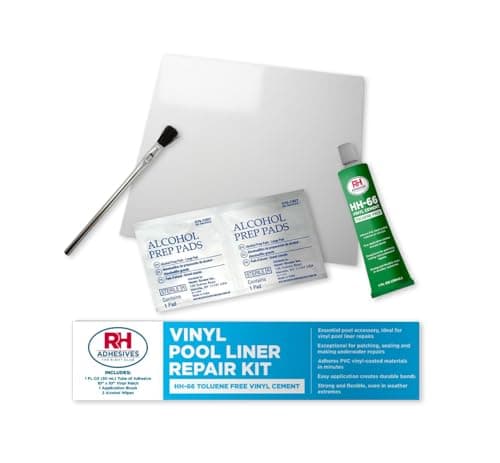
Not throwing away a float over one hole
Vinyl Repair Patch Kit
Various
A few dollars of adhesive patches that turn most float failures into a ten-minute fix. The reason people replace floats annually is usually that they did not own one of these.
#ad how this is funded · price as of October 19, 2026
Key specs
- Use
- Vinyl floats, liners, air beds
- Requirement
- Surface must be clean and fully dry
- Cure
- Follow the kit — most need hours before re-inflating
How it scoresour reading of published specs, not a test result
- Material
- 8.0
- Valve
- 8.0
- Capacity
- 7.0
- Storage
- 9.5
- Value
- 9.5
Overall 8.5 / 10
What works
- Fixes the dominant failure mode of the entire floats category
- Also patches a pinhole in a pool liner, which is a far more expensive save
- Lasts indefinitely in the shed
What doesn't
- Will not fix a split seam, only a puncture
- Needs a genuinely dry surface, which is inconvenient poolside
- Cheap kits use adhesive that fails after a season in the water
Skip it if: Seam failures and valve leaks. Those are the end of the float and no patch changes that.
What it costs to run: The highest-leverage few dollars in this hub: one saved float pays for it several times over, and one saved liner pays for it a hundred times over.
Several seasons: Buy-once. Built and warranted to come back out of the box for a few years, if you store it properly.
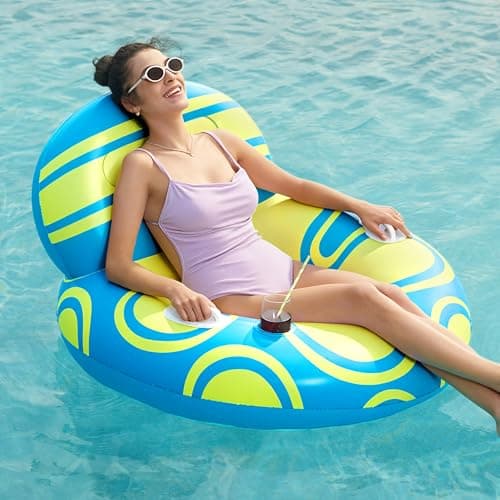
Lasting more than one summer
Mesh-Bottom Pool Lounger Chair
Various
The mesh seat has almost no inflated volume, which removes the thing that fails on every other float. Outlasts vinyl inflatables by years and costs more up front for exactly that reason.
Key specs
- Construction
- Fabric or mesh seat on an inflatable or foam frame
- Failure mode
- Frame or fabric wear rather than puncture
- Weight capacity
- Published per model
- Drying
- Mesh drains and dries quickly
How it scoresour reading of published specs, not a test result
- Material
- 9.0
- Valve
- 8.5
- Capacity
- 8.0
- Storage
- 6.0
- Value
- 8.5
Overall 8.4 / 10
What works
- Very little inflated volume, so the usual puncture failure mode largely goes away
- Mesh drains and dries, so it does not get stored wet and go moldy
- Genuinely a multi-season purchase in a category of consumables
What doesn't
- Considerably more expensive than a vinyl inflatable
- Sits lower in the water, which some people dislike
- Bulkier to store than a deflated inflatable
Skip it if: A shallow pool. A mesh lounger needs enough depth for the seat to hang in, so it is wrong in a 30-inch pool.
What it costs to run: The arithmetic that justifies it: a $25 vinyl float replaced every summer for four years costs more than one mesh lounger that lasts four. Buy this only if your pool is deep enough to use it.
Several seasons: Buy-once. Built and warranted to come back out of the box for a few years, if you store it properly.
The cheapest thing that works
Foam Pool Noodles (multipack)
Various
Closed-cell foam cannot puncture and cannot deflate, which makes a noodle structurally the most durable object in this hub. It is also the cheapest.
Key specs
- Material
- Closed-cell polyethylene foam
- Failure mode
- Surface crumbling from UV, not puncture
- Buoyancy
- Inherent — no air chamber to lose
How it scoresour reading of published specs, not a test result
- Material
- 9.0
- Valve
- 10.0
- Capacity
- 5.0
- Storage
- 5.5
- Value
- 9.5
Overall 8.0 / 10
What works
- No air chamber, so no valve to leak and no seam to split
- Survives being stood on, thrown and bitten
- Cheap enough to buy six and not care
What doesn't
- UV eventually makes the surface crumble and shed foam into the pool
- Not a flotation device and should not be treated as one
- Awkward to store because they do not compress
Skip it if: Supporting an adult for any length of time, and absolutely not a safety device for a child.
Several seasons: Buy-once. Built and warranted to come back out of the box for a few years, if you store it properly.
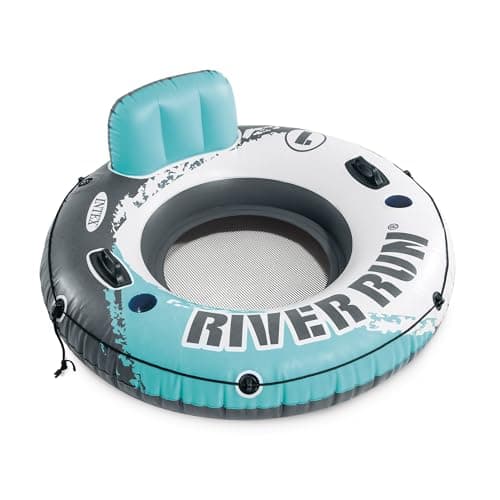
The all-rounder float
Intex River Run Sport Lounge Tube
Intex
A seated tube with a mesh bottom and a backrest — the shape that most people actually want and few buy, because the novelty shapes photograph better.
Key specs
- Construction
- Inflatable ring with mesh seat
- Chambers
- Multiple air chambers
- Weight capacity
- Published per SKU by Intex
- Extras
- Cup holders and mesh base on most SKUs
How it scoresour reading of published specs, not a test result
- Material
- 7.5
- Valve
- 8.0
- Capacity
- 8.0
- Storage
- 8.5
- Value
- 8.5
Overall 8.1 / 10
What works
- Mesh seat means you sit in the water rather than on it, which is cooler and more stable
- Multi-chamber, so one puncture does not end the afternoon
- Compact enough to store deflated in a normal cupboard
What doesn't
- The mesh seat is the wear point and it is not replaceable
- Needs enough depth for the seat to hang free
- Standard vinyl construction with standard UV vulnerability
Skip it if: Shallow pools. In 30 inches of water your feet are on the liner and the mesh seat is pointless.
One honest season: The cheapest setup that genuinely works for a season of real swimming. Nothing spare, nothing missing.
Questions people actually ask
How long do pool floats last?
Why do pool floats crack?
Can you repair a pool float?
Should I store pool floats inflated or deflated?
Read next
- Floats, loungers and the stuff that makes the pool worth havingFloats for adults, toddlers and dogs - ranked on seam and valve construction, which is what actually decides how long they last.
- Cheap floats against premium brands: the budget ones publish moreWhat a 10x price gap in pool floats actually buys, judged only on what each brand publishes - and the one number none of them will give you.
- The best pool floatsFloats ranked on material, valve type and published weight capacity - the three specs that decide whether it survives a season.
- The best pool loungersMesh chairs versus vinyl mats, the depth each needs, and the four-summer arithmetic that favors mesh.
- The best pool floats for adultsAdult loungers and tubes compared on capacity and seat design, plus the pool depth each one actually needs.
- What upkeep costs, separated from everything elseChemicals by published dosing, cartridge replacement intervals, and the honest weekly time commitment.
- The pump decides whether the floats get usedMains, 12V and cordless air pumps compared on published airflow in liters per minute, what each maker rates them for, and which one Intex labels indoor-use only.