Pool Equipment · Best Filter
Pool filters: the consumable nobody budgets for
Filtration is where a cheap pool quietly becomes expensive. Cartridges are a recurring cost and almost nobody counts them.
Heads up: we earn a commission if you buy through the links on this page, at no extra cost to you. It never decides the ranking — here is how we pick and here is the full disclosure. Prices are checked automatically; last verified October 17, 2026.
Quick picks
Segmented before it is ranked — the right answer depends on which of these you actually are. Tap any row for the full write-up.
The consumable you will buy repeatedly
Buy a multipack before you need one. A pool running on a spent cartridge is a cloudy pool.
| # | Product | Best for | Score | Price |
|---|---|---|---|---|
| 1 | No image Type A Replacement Filter Cartridges (multipack) Buy them in a multipack before you need them. A pool running on an exhausted cartridge is a cloudy pool, and the fix is a two-dollar part you did not have. | The consumable you will actually buy repeatedlyOne honest season | 8.2out of 10 | |
| 2 | 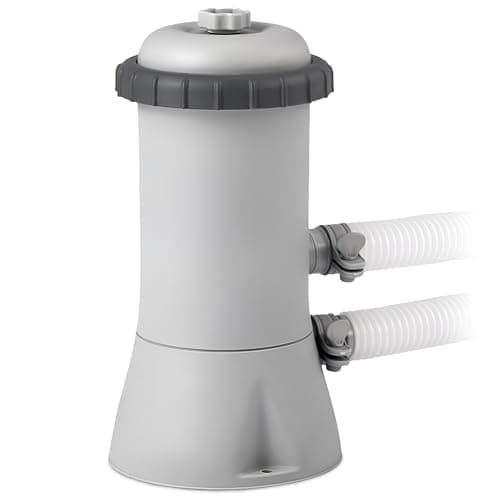 Intex Krystal Clear C1000 Cartridge Filter Pump The workhorse replacement pump for mid-size frame pools. 1,000 GPH pump flow, 750 GPH through the system once the cartridge is in the way — and that second number is the one your turnover math needs. | Pools up to about 6,000 gallonsSeveral seasons | 8.3out of 10 |
Getting off the cartridge treadmill
Sand media lasts years rather than weeks. The payback depends on how long you keep the pool.
| # | Product | Best for | Score | Price |
|---|---|---|---|---|
| 1 | 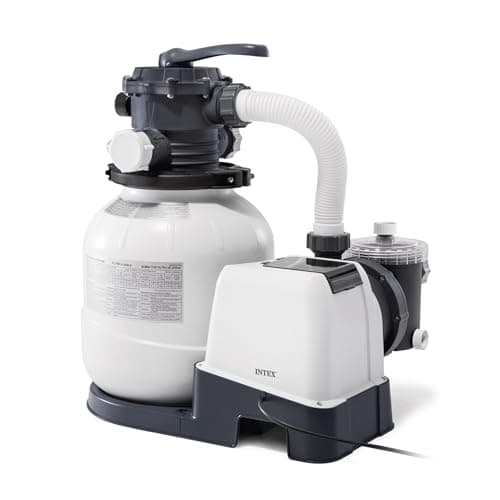 Intex Krystal Clear Sand Filter Pump Sand filtration replaces a recurring cartridge purchase with a backwash valve and a bag of sand that lasts years. On a pool you intend to keep, the arithmetic favors it. | Getting off the cartridge treadmillSeveral seasons | 8.4out of 10 |
The short version
- Intex’s own guidance is cartridge replacement roughly every two weeks in heavy use. Almost nobody budgets for that.
- Rinsing extends life; it does not restore a spent cartridge. Gray, stiff pleats after rinsing means it is done.
- Type A is the most widely stocked format in the US. That matters in July.
- Keep a spare. A cloudy week is often a two-dollar part you did not have.
The recurring cost nobody counts
When people budget for a pool they count the pool, the chemicals and sometimes the electricity. Filter cartridges get missed almost universally, and across a season they are a real line.
Intex’s guidance for Type A cartridges is replacement roughly every two weeks in heavy use, with rinsing between. On a 17-week season that is a meaningful quantity, and it is the single strongest argument for a sand filter on any pool you plan to keep for several years.
| Factor | Effect | What to do |
|---|---|---|
| Heavy bather load | Sunscreen and body oils clog pleats | Rinse after busy weekends |
| Dogs in the pool | Hair loads it fast | Expect to replace sooner |
| After vacuuming | One session can load a cartridge | Clean immediately after |
| After shocking | Fine oxidized particulate | Rinse once the water clears |
| Nearby trees | Constant organic load | Skim more, not filter harder |
Rinsing versus replacing
Rinsing is genuinely worth doing and it does not do what people hope. It removes the surface debris sitting between the pleats, which restores flow. It does not remove the oils and fine particulate that have worked into the fiber, which is what eventually finishes a cartridge.
The test is simple. Rinse it thoroughly, let it dry, and look at it. If the pleats come back to something near their original color and feel flexible, it has more life. If they stay gray and stiff, it is spent, and running the pool on it is why the water is not clearing.
Do not scrub it with a brush and do not use a pressure washer at close range. Both damage the pleat material and destroy the cartridge faster than use does.
Type A, and why format availability matters
Intex’s Type A is the most widely stocked filter cartridge format in the US, available from Intex and from a large aftermarket. That is not a technical advantage — it is a practical one, and in July when the pool is cloudy and the store is twenty minutes away it is the only one that matters.
Aftermarket quality does vary. A cheap cartridge with less pleat area filters less per pass and needs replacing sooner, so the saving is often illusory. Compare pleat count if the listing gives it.
When to switch to sand
The arithmetic is a straight comparison: cartridges consumed per season, against one bag of sand every few years, plus the water each backwash discards at $6.06 per 1,000 gallons.
On a pool you will own for three or more seasons, sand generally wins. On a pool that comes down every autumn and might not go back up, it does not — the payback period never arrives. The full comparison, including the maintenance differences, is at sand versus cartridge.
The picks, in full
Scores are our own reading of published specifications. They are not test results — we have not tested these products and we do not claim to.
Pick #1 · The consumable you will actually buy repeatedly
Type A Replacement Filter Cartridges (multipack)
Various
Buy them in a multipack before you need them. A pool running on an exhausted cartridge is a cloudy pool, and the fix is a two-dollar part you did not have.
Key specs
- Type
- Type A — the most common Intex format
- Replacement interval
- Every 2 weeks in heavy use, per Intex guidance
- Between changes
- Rinse, do not scrub
How it scoresour reading of published specs, not a test result
- Sizing fit
- 9.0
- Running cost
- 7.0
- Maintenance
- 8.5
- Build
- 7.0
- Value
- 8.5
Overall 8.2 / 10
What works
- Type A is the most widely stocked cartridge format in the US
- Multipacks cost a fraction of buying singles
- Having a spare turns a cloudy week into a five-minute fix
What doesn't
- It is a genuine recurring cost that nobody includes in the purchase price
- Aftermarket quality varies noticeably
- Rinsing extends life but does not restore a cartridge that is done
Skip it if: Being restored. Once the pleats are permanently gray and stiff, rinsing is not saving it.
What it costs to run: The line item most people leave out of their pool budget. Count how many you use in your first season and you have your real annual filtration cost — this is exactly the number the cost-to-run guide asks you to record.
One honest season: The cheapest setup that genuinely works for a season of real swimming. Nothing spare, nothing missing.
Pick #2 · Pools up to about 6,000 gallons
Intex Krystal Clear C1000 Cartridge Filter Pump
Intex
The workhorse replacement pump for mid-size frame pools. 1,000 GPH pump flow, 750 GPH through the system once the cartridge is in the way — and that second number is the one your turnover math needs.
#ad how this is funded · price as of October 17, 2026
Key specs
- Pump flow rate
- 1,000 GPH
- System flow rate
- 750 GPH
- Rated pool size
- Up to 6,000 gallons
- Cartridge
- Type A
- Wattage
- Not published by Intex
How it scoresour reading of published specs, not a test result
- Sizing fit
- 9.0
- Running cost
- 7.0
- Maintenance
- 7.5
- Build
- 7.5
- Value
- 8.5
Overall 8.3 / 10
What works
- Intex publishes both pump flow and system flow, which is more honesty than most of this category offers
- Type A cartridges are the most widely stocked filter consumable in the US
- Sized correctly for the 12ft-15ft frame pools most families own
What doesn't
- Wattage is not published anywhere on the Intex site, so you cannot cost it before purchase
- Cartridge-only, so there is a consumable every few weeks in a busy pool
- GFCI cord length dictates where the pool can go more than people expect
Skip it if: Pools over about 6,000 gallons. Above that you are asking it to run all day to achieve one turnover, which is the expensive way to filter.
What it costs to run: Do the turnover math before you buy: 750 GPH system flow moves 4,000 gallons in 5.3 hours. Two turnovers a day is therefore about 11 hours of running. At the EIA's June 2026 US residential average of 18.34 cents per kWh, every 100 watts of pump draw running 11 hours a day for a 120-day season costs about $24. Find your wattage on the pump label and multiply.
Several seasons: Buy-once. Built and warranted to come back out of the box for a few years, if you store it properly.
Specs from: Intex — Krystal Clear cartridge filter pumps, EIA Electric Power Monthly, Table 5.6.A — US residential average price
Pick #3 · Getting off the cartridge treadmill
Intex Krystal Clear Sand Filter Pump
Intex
Sand filtration replaces a recurring cartridge purchase with a backwash valve and a bag of sand that lasts years. On a pool you intend to keep, the arithmetic favors it.
Key specs
- Media
- Filter sand (or glass media)
- Maintenance
- Backwash rather than rinse-and-replace
- Media life
- Several seasons before replacement
- Wattage
- Not published by Intex
How it scoresour reading of published specs, not a test result
- Sizing fit
- 8.5
- Running cost
- 8.0
- Maintenance
- 8.5
- Build
- 8.0
- Value
- 8.5
Overall 8.4 / 10
What works
- No cartridges to buy, which removes the single largest recurring equipment cost
- Backwashing takes about two minutes versus rinsing a cartridge in the yard
- Sand lasts years rather than weeks
What doesn't
- Backwashing sends water down the drain, and that water has chemicals in it you paid for
- Higher purchase price than a cartridge pump of the same flow
- Heavier and needs a stable, level base of its own
Skip it if: A small seasonal pool that comes down every autumn. The payback period is measured in seasons, so it only works if there will be seasons.
What it costs to run: The comparison to run: cartridge replacements per season versus one bag of sand every few years, plus the water each backwash discards at the EPA WaterSense average of $6.06 per 1,000 gallons. On a pool you will own for three or more years, sand usually wins.
Several seasons: Buy-once. Built and warranted to come back out of the box for a few years, if you store it properly.
Specs from: EPA WaterSense — cost per 1,000 gallons
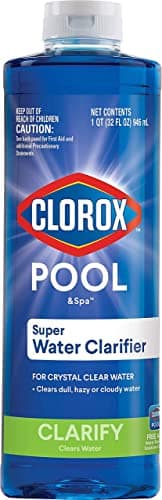
Pick #4 · Cloudy water that is chemically fine
Pool Water Clarifier
Various
Clumps particles too small for your filter into ones it can catch. Genuinely useful for the specific case where your chemistry reads correct and the water is still milky.
Key specs
- Function
- Coagulant — aggregates fine particles for filtration
- Requires
- A running filter; it does nothing on its own
- Typical treatment
- Dose, then run the filter continuously
How it scoresour reading of published specs, not a test result
- Value
- 7.5
Overall 7.8 / 10
What works
- Fixes the exact case where chemistry is balanced and the water still will not clear
- Cheap and quick when it is the right tool
- Works with the filter you already have rather than needing a better one
What doesn't
- Does nothing at all if the actual problem is low chlorine or a blocked filter
- Overdosing makes cloudiness worse, which is a genuinely counterintuitive failure
- Loads the filter, so it needs cleaning right after
Skip it if: Being the first thing you reach for. Test the water before you use this — most cloudy pools are a chemistry problem wearing a clarity costume.
What it costs to run: A few dollars a bottle, and worth it only when the decision tree points here. Reaching for clarifier first is how people spend twenty dollars solving a problem that a longer pump run would have fixed for free.
A few weekends: Fine for a heatwave and a toddler. Treat it as consumable, not as a pool — it will not survive a winter in the yard.
Questions people actually ask
How often should I change my pool filter cartridge?
Can you clean and reuse a pool filter cartridge?
Why is my pool cloudy even though the filter is running?
Sources
Read next
- Equipment, sized to your pool and costed by the wattPumps, filters, vacuums, heaters and ladders - matched to your gallons and priced by what they draw.
- Sand vs cartridge: it is a maintenance choice, not a quality oneThe honest comparison: consumable cost, backwash water, weekly effort, and the season count where sand starts to win.
- Above-ground pool pumps: how many gallons per hour you actually needPumps matched to pool volume by system flow rate, with the season running-cost table manufacturers do not publish.
- Cloudy pool water: work out which of four problems you haveA diagnostic decision tree for cloudy water - four causes, how to tell them apart, and the correct fix for each.
- What upkeep costs, separated from everything elseChemicals by published dosing, cartridge replacement intervals, and the honest weekly time commitment.
- Filter balls: the claims do not agree with each otherFilter balls weighed against sand on the claims sellers publish, the contradictions between them, and what your filter maker says about non-specified media.