Pool Equipment
The pump timer pays for itself in one season
Pump electricity is the largest running cost of owning a pool, and hours are the variable you control. A timer turns that from something you remember into something that happens.
Heads up: we earn a commission if you buy through the links on this page, at no extra cost to you. It never decides the ranking — here is how we pick and here is the full disclosure. Prices are checked automatically; last verified October 8, 2026.
Quick picks
Segmented before it is ranked — the right answer depends on which of these you actually are. Tap any row for the full write-up.
The purchase
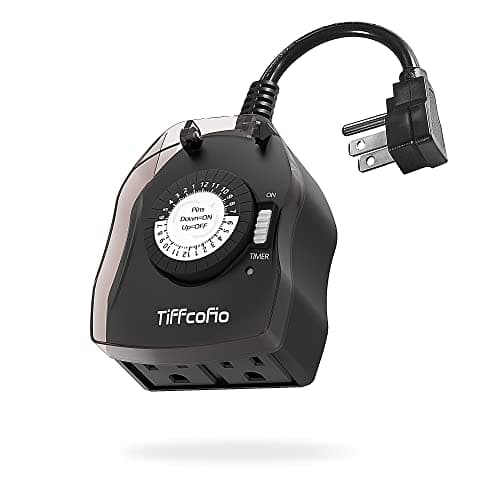
An outdoor-rated timer matched to the pump's amperage. Mechanical or digital both work; what matters is the rating and where it sits in the circuit.
| # | Product | Best for | Score | Price |
|---|---|---|---|---|
| 1 | Outdoor Pool Pump Timer A weatherproof outdoor timer is the highest-return equipment purchase on this site. Most people run the pump too long because remembering to switch it off is a chore. | Cutting the electricity bill without cutting filtrationSeveral seasons | 9.0out of 10 |
What it is controlling
The saving is proportional to the pump's draw, so the bigger the pump the faster the timer pays back.
| # | Product | Best for | Score | Price |
|---|---|---|---|---|
| 1 | 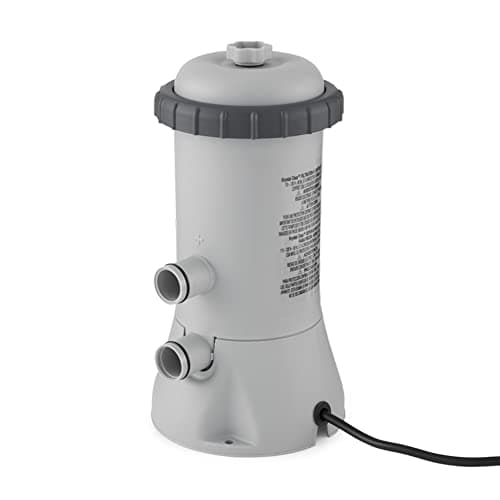 Intex Krystal Clear C530 Cartridge Filter Pump 530 GPH pump flow, 475 GPH through the system. The right pump for a 12-foot pool and badly undersized for anything much bigger. | Small frame and inflatable poolsOne honest season | 8.0out of 10 | |
| 2 | 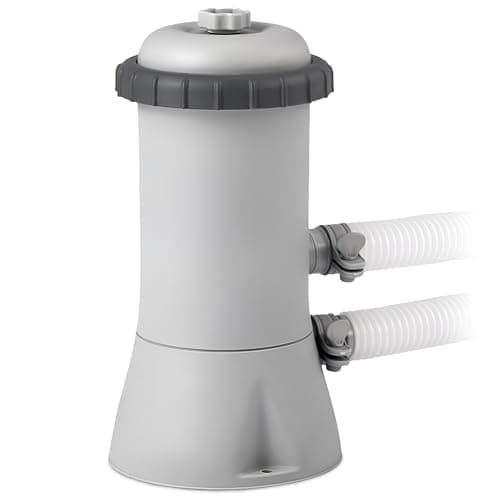 Intex Krystal Clear C1000 Cartridge Filter Pump The workhorse replacement pump for mid-size frame pools. 1,000 GPH pump flow, 750 GPH through the system once the cartridge is in the way — and that second number is the one your turnover math needs. | Pools up to about 6,000 gallonsSeveral seasons | 8.3out of 10 |
The short version
- Three requirements, none optional: outdoor-rated, matched to the pump’s amperage, and fitted downstream of the GFCI so protection still applies.
- The saving is about $6.60 per hour-a-day across a 120-day season on a 300 W pump at the national average rate, and roughly double on a large sand filter pump.
- Two short blocks beat one long one for the same total hours — better circulation across the active part of the day.
- Set the schedule from turnover, not from folklore. The eight-hour rule comes from inground pools ten times this size.
Why this is the best-value purchase in the hub
Pump electricity is the largest running cost of owning a pool, and it has exactly two inputs: how many watts the pump draws, and how many hours it runs. The watts are fixed the moment you buy the pump. The hours are yours, every day, and most above-ground pools run for longer than the arithmetic requires simply because nobody switched it off.
What one hour a day is worth
- Pump draw
- 300 W (example)
- Hours removed per day
- 1
- Days in season
- 120
- US residential average rate, June 2026 [EIA]
- 18.34 ¢/kWh
300 × 1 × 120 ÷ 1,000 = 36 kWh 36 × $0.1834 = $6.60
About $6.60 per hour-a-day, per season, on a 300 W pump
The three requirements, which are safety rather than preference
Outdoor-rated. This is an electrical device living beside a pool in weather. An indoor timer in a plastic box is not the same thing, and neither is an indoor smart plug.
Rated for the pump’s amperage. Check the pump’s nameplate, not the listing — manufacturers in this class publish flow rate far more readily than electrical specification, so the label on the unit is the source. A timer under-rated for the load is a fire risk rather than an inconvenience.
Downstream of the GFCI. Ground-fault protection is the device that exists for exactly this situation — electrical equipment in a wet environment where people walk barefoot. Anything fitted between the outlet and the pump must not bypass or defeat it. Our electrical safety guide covers where the line sits between a homeowner job and an electrician’s.
Mechanical or digital
| Mechanical dial | Digital | |
|---|---|---|
| Setting | Push pins around a dial | Menu or buttons |
| Power loss | Loses time and drifts | Usually keeps schedule with a backup |
| Multiple blocks per day | Yes, with enough pins | Yes, easily |
| Reading it at a glance | Very easy | Depends on the display |
| Failure mode | Mechanism sticks | Display or board fails |
For a seasonal pool either is fine. The mechanical dial has one genuine advantage worth noting: you can see what it is set to from a few feet away without pressing anything, which matters when you are trying to work out why the pump is not running.
Setting it: derive the hours, do not inherit them
The eight-hours-a-day advice you will find everywhere comes from inground pools of tens of thousands of gallons, where one complete turnover genuinely takes most of a day. Applied to a 1,718-gallon pool it means more than two full turnovers, which is filtration you are paying for and not using.
Work it out instead: gallons divided by the pump’s published system flow rate gives one turnover — about 3.6 hours on 1,718 gallons with a 475 GPH system, about 5.3 hours on 3,955 gallons with a 750 GPH system. One to two turnovers a day is the target. Our run-time guide does the full derivation and the sizing guide explains why the system figure is the right one.
When to override it
Four occasions where you want the pump running continuously rather than on schedule: clearing cloudy water with a clarifier, recovering from an algae bloom, the day after heavy use or a storm, and for a few hours after adding any chemical so it distributes. All four are in our run-time guide, and a timer with an easy manual override is worth more than one without.
The fifth is an unexpected freeze while the pool is still open, where moving water resists freezing — and where a timer that switches the pump off at midnight has created exactly the situation you were trying to avoid. Our unexpected freeze guide covers overriding it deliberately.
The picks, in full
Scores are our own reading of published specifications. They are not test results — we have not tested these products and we do not claim to.
Pick #1 · Cutting the electricity bill without cutting filtration
Outdoor Pool Pump Timer
Various
A weatherproof outdoor timer is the highest-return equipment purchase on this site. Most people run the pump too long because remembering to switch it off is a chore.
#ad how this is funded · price as of October 8, 2026
Key specs
- Type
- Outdoor-rated mechanical or digital timer
- Required rating
- Must be rated for the pump's amperage and for outdoor use
- Must not defeat
- The pump's GFCI protection
How it scoresour reading of published specs, not a test result
- Sizing fit
- 8.5
- Running cost
- 9.8
- Maintenance
- 9.0
- Build
- 7.5
- Value
- 9.5
Overall 9.0 / 10
What works
- Turns your filtration from a guess into a schedule
- Pays for itself within a single season on most pools
- Lets you shift running hours to off-peak if your utility has time-of-use rates
What doesn't
- Must be genuinely outdoor-rated and correctly amperage-matched, which cheap indoor timers are not
- Never bypass or defeat the pump's GFCI to fit one
- Mechanical timers drift and need resetting after a power cut
Skip it if: Fixing an undersized pump. Running the wrong pump on a schedule just makes the schedule longer.
What it costs to run: The arithmetic that justifies it: at the EIA's June 2026 US residential average of 18.34 cents per kWh, trimming a 400 W pump from 12 hours to 8 hours a day across a 120-day season saves 192 kWh, or about $35. That is more than the timer costs.
Several seasons: Buy-once. Built and warranted to come back out of the box for a few years, if you store it properly.
Specs from: EIA Electric Power Monthly, Table 5.6.A
Pick #2 · Small frame and inflatable pools
Intex Krystal Clear C530 Cartridge Filter Pump
Intex
530 GPH pump flow, 475 GPH through the system. The right pump for a 12-foot pool and badly undersized for anything much bigger.
#ad how this is funded · price as of October 8, 2026
Key specs
- Pump flow rate
- 530 GPH
- System flow rate
- 475 GPH
- Cartridge
- Type A
- Wattage
- Not published by Intex
How it scoresour reading of published specs, not a test result
- Sizing fit
- 8.0
- Running cost
- 9.0
- Maintenance
- 7.0
- Build
- 7.0
- Value
- 8.5
Overall 8.0 / 10
What works
- Correctly matched to the 12ft Prism Frame and Easy Set pools it ships with
- Smallest pump here that will still genuinely turn over a real pool
- Type A cartridges, which are everywhere
What doesn't
- Undersized the moment you upgrade the pool, and it will not carry over
- No wattage published
- Cartridge needs rinsing frequently in a busy small pool
Skip it if: Anything over about 2,000 gallons. Below that it is right; above it you are running it all day for one turnover.
What it costs to run: 475 GPH system flow turns over 1,718 gallons in about 3.6 hours, so a 7-hour daily run is two full turnovers. That is a genuinely short run time and it is where a small pool's low running cost actually comes from.
One honest season: The cheapest setup that genuinely works for a season of real swimming. Nothing spare, nothing missing.
Specs from: Intex — Krystal Clear cartridge filter pumps
Pick #3 · Pools up to about 6,000 gallons
Intex Krystal Clear C1000 Cartridge Filter Pump
Intex
The workhorse replacement pump for mid-size frame pools. 1,000 GPH pump flow, 750 GPH through the system once the cartridge is in the way — and that second number is the one your turnover math needs.
#ad how this is funded · price as of October 8, 2026
Key specs
- Pump flow rate
- 1,000 GPH
- System flow rate
- 750 GPH
- Rated pool size
- Up to 6,000 gallons
- Cartridge
- Type A
- Wattage
- Not published by Intex
How it scoresour reading of published specs, not a test result
- Sizing fit
- 9.0
- Running cost
- 7.0
- Maintenance
- 7.5
- Build
- 7.5
- Value
- 8.5
Overall 8.3 / 10
What works
- Intex publishes both pump flow and system flow, which is more honesty than most of this category offers
- Type A cartridges are the most widely stocked filter consumable in the US
- Sized correctly for the 12ft-15ft frame pools most families own
What doesn't
- Wattage is not published anywhere on the Intex site, so you cannot cost it before purchase
- Cartridge-only, so there is a consumable every few weeks in a busy pool
- GFCI cord length dictates where the pool can go more than people expect
Skip it if: Pools over about 6,000 gallons. Above that you are asking it to run all day to achieve one turnover, which is the expensive way to filter.
What it costs to run: Do the turnover math before you buy: 750 GPH system flow moves 4,000 gallons in 5.3 hours. Two turnovers a day is therefore about 11 hours of running. At the EIA's June 2026 US residential average of 18.34 cents per kWh, every 100 watts of pump draw running 11 hours a day for a 120-day season costs about $24. Find your wattage on the pump label and multiply.
Several seasons: Buy-once. Built and warranted to come back out of the box for a few years, if you store it properly.
Specs from: Intex — Krystal Clear cartridge filter pumps, EIA Electric Power Monthly, Table 5.6.A — US residential average price
Questions people actually ask
Is a pool pump timer worth it?
What kind of timer do I need for a pool pump?
How many hours a day should the timer run the pump?
Can I use a smart plug instead of a pool timer?
Sources
Read next
- Equipment, sized to your pool and costed by the wattPumps, filters, vacuums, heaters and ladders - matched to your gallons and priced by what they draw.
- How long to run the pump, worked out rather than repeatedRun time derived from your own turnover time, when in the day to run it, and what each hour a day costs across a season.
- Sizing a pump: the number on the box is not the number you useTurnover time computed from published system flow rates for common pool volumes, and why an oversized pump costs you money every day.
- The electrical side, which is the one part of a pool you should not improviseGFCI protection, extension cords, timers and heater circuits - what is a homeowner job around a pool and what is not.
- Variable speed pumps, and the honest answer for an above-ground poolWhat variable speed pumps do, why the savings scale with pump size and season length, and what an above-ground owner should buy instead.
- What your pool pump costs to run, in watts and dollarsPool pump electricity computed from watts, hours and the EIA national average rate, with a table you can read your own pump off.
- Seven ways to cut a pool's running cost, ranked by what they actually saveEvery saving measure priced with the same arithmetic and ranked, so you spend effort where the money actually is.
- The neighbor questions to answer before the pool goes upThe four things that cause pool disputes with neighbors, and how siting decisions made once prevent all of them.
- Leaving the pool for a week without coming home to a swampHow to set a pool up for a week or two away: sanitizer that lasts the distance, keeping the level up, timing the pump, and the short list for whoever checks in.