Pool Care & Chemistry
Floc or clarifier: your filter decides, not your water
One of these makes the dirt catchable by your filter. The other dumps it on the floor and requires a waste line you may not have. That single difference settles most of the argument.

Heads up: we earn a commission if you buy through the links on this page, at no extra cost to you. It never decides the ranking — here is how we pick and here is the full disclosure. Prices are checked automatically; last verified October 8, 2026.
Quick picks
Segmented before it is ranked — the right answer depends on which of these you actually are. Tap any row for the full write-up.
If you have a sand filter with a waste setting
Flocculant is the fast route: it drops everything to the floor overnight and you vacuum it straight out of the pool.
| # | Product | Best for | Score | Price |
|---|---|---|---|---|
| 1 | 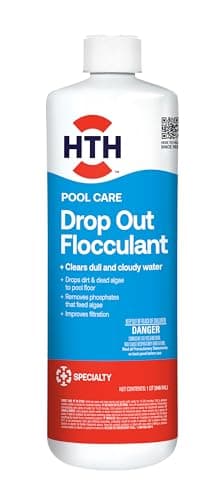 HTH Pool Care Drop Out Flocculant Aluminum chloride that drags suspended particles to the floor overnight. It only works if you can vacuum straight to waste, which most above-ground filter systems cannot do. | Sand filters with a waste settingOne honest season | 7.4out of 10 |
If you have a cartridge filter
Clarifier is the only option that works with your equipment, because it relies on the filter rather than a waste line.
| # | Product | Best for | Score | Price |
|---|---|---|---|---|
| 1 | 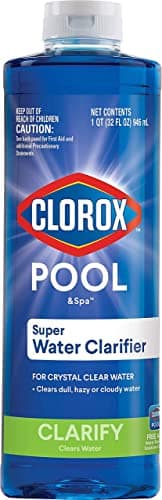 Pool Water Clarifier Clumps particles too small for your filter into ones it can catch. Genuinely useful for the specific case where your chemistry reads correct and the water is still milky. | Cloudy water that is chemically fineA few weekends | 7.8out of 10 |
The short version
- Clarifier works with your filter. Flocculant works around it. One makes particles catchable; the other sinks them for vacuuming.
- Flocculant needs a waste setting. HTH states its product is for pools that can vacuum settled material directly to waste, not through the filter.
- Most above-ground pools cannot do that. Cartridge filters have no backwash valve at all, so there is nothing to divert to.
- Neither fixes algae or scaling chemistry. Clear the cause first, or you are treating a symptom with an expensive additive.
The mechanism, in one paragraph each
Clarifier is a coagulant. HTH describes it as binding fine suspended particles — pollen, dust, dead algae cells, sunscreen residue — into larger clusters that your filter then captures. The particles never leave the water on their own; they are made big enough for equipment you already own to trap them. It is slow, it needs the pump running, and it depends entirely on your filter working properly.
Flocculant does the opposite. HTH describes it as causing particles to form heavy masses that sink to the pool floor within hours, where you vacuum them out. The water clears fast, but nothing has been filtered — the dirt is lying on the floor, and removing it is now a manual job with specific requirements.
| Clarifier | Flocculant | |
|---|---|---|
| What it does | Clumps particles for the filter to catch | Sinks particles to the floor |
| Speed | Days, with continuous filtration | Overnight settling |
| Equipment needed | A working filter | A waste setting or a bypass |
| Pump during treatment | Runs continuously | Runs 2 hours, then off overnight |
| Water lost | None beyond normal backwashing | Whatever you vacuum to waste |
| Suits cartridge filters | Yes | No, without a plumbed bypass |
The requirement that rules most above-ground pools out
HTH publishes the flocculant procedure in full: set a multiport valve to recirculate, add 8 fl oz per 10,000 gallons, distribute evenly, run the pump for two hours, turn the pump off, let the material settle overnight, then vacuum settled debris directly to waste or drain and backwash. The same page states the product is designed for pools that can vacuum settled material directly to waste rather than through the filter.
Vacuuming to waste means diverting the pump’s output straight to the waste line, bypassing the filter medium entirely. In The Swim describes the problem for cartridge systems bluntly: cartridge filters do not have a backwash valve at all, because you clean them by removing and hosing them rather than backwashing. With no valve, there is nowhere to divert to.
There are workarounds — removing the cartridge and running to a hose adapter on the drain plug, or plumbing a three-way diverter valve between pump and filter — but they are modifications, not settings. Leslie’s summarizes the practical rule: cartridge and DE owners should use clarifiers, while sand-filter owners with a multiport waste setting can use either.
Since most above-ground pools ship with cartridge pumps, the honest answer for most readers of this site is: use a clarifier. If you have moved to a sand filter — our sand filter roundup covers that choice — flocculant becomes available to you.
When neither one is the answer
Both products treat suspended particulate. If your water is cloudy for a different reason, they will not work, and you will have spent money confirming it.
Algae. Industry guidance is unambiguous that clarifier does not remove algae, and that an algae problem has to be treated first. Our algae guide covers the brush-shock-filter-rebalance sequence that actually works.
Scaling chemistry. HTH notes that total alkalinity above 120 ppm causes pH to rise and resist correction, and that this precipitates calcium out of solution as fine white particles — which looks exactly like cloudy water and is not filterable particulate at all. That is a chemistry fix, covered in our high alkalinity guide.
A failing filter. Clarifier depends on the filter to catch what it clumps. If the medium is exhausted, the cartridge is collapsed, or the pump is short-cycling, adding clarifier just adds chemistry to a system that cannot act on it. Our cloudy water guide is built around working out which of the four causes you actually have before buying anything.
The practical decision
Cartridge filter, mild haze: clarifier, run the pump continuously, and allow it days rather than hours. Check the filter first.
Sand filter with a waste setting, heavy load after a storm: flocculant. It is the faster tool, and the one that copes with a load too heavy to push through a filter without clogging it repeatedly.
Either filter, party tomorrow: flocculant if you can vacuum to waste, because it works overnight. Clarifier will not be finished in time, which is the most common disappointment in this category.
Green water: neither yet. Fix the algae, then use a clarifier to polish what the filter cannot catch.
The cartridge workarounds, and whether they are worth it
If you have a cartridge filter and genuinely want to use flocculant, there are two published routes, both of which are modifications rather than settings. In The Swim describes removing the cartridge, refitting the lid, and attaching a hose adapter or backwash hose to the drain plug so the pump discharges away from the pool; and installing a three-way diverter valve between the pump and the filter so the flow can bypass the filter entirely.
The diverter is the better answer if you expect to do this more than once, because it turns a plumbing job into a lever. The cartridge-out method works, but it puts the pump’s full flow through an empty housing, which is hard on a system designed to have resistance in it.
For most owners of a seasonal above-ground pool, neither is worth doing for a cloudy week. The clarifier route uses equipment you already own, and the sand-filter upgrade covered in our sand filter roundup solves the problem permanently if you are heading that way anyway.
Doing a floc treatment without wasting it
Balance first, and deal with algae first
Flocculant drops particulate. It does not fix chemistry and it does not kill algae, so anything living in the water should be dealt with before you start.Set the valve to recirculate
HTH's published procedure starts here, so the product circulates without being caught by the filter it is meant to bypass.Dose and circulate for two hours
8 fl oz per 10,000 gallons, distributed evenly over the surface, then the pump runs for two hours to mix it through.Turn the pump off and leave it overnight
The settling happens with the water still. Anything that stirs the pool - swimmers, a robot, wind on an uncovered pool - puts the cloud back into suspension.Vacuum to waste, slowly
Move the head slowly enough that the settled layer goes into the hose rather than back into the water. Overfill the pool beforehand, because this step lowers it.Backwash, then return to normal filtration
HTH's procedure finishes with a backwash. Then refill, retest and rebalance, because you have just removed treated water.
The commonest failure is vacuuming too fast. The settled material is loose, and a vacuum head dragged across the floor lifts most of it back into the water — at which point you have spent the product, lost the water, and still have a cloudy pool.
What to buy
Scores are our own reading of published specifications. They are not test results — we have not tested these products and we do not claim to.
Sand filters with a waste setting
HTH Pool Care Drop Out Flocculant
HTH
Aluminum chloride that drags suspended particles to the floor overnight. It only works if you can vacuum straight to waste, which most above-ground filter systems cannot do.
#ad how this is funded · price as of October 8, 2026
Key specs
- Active
- Contains aluminum chloride; percentage not published
- Dose
- 8 fl oz per 10,000 gallons
- Valve setting
- Set a multiport valve to recirculate before dosing
- Procedure
- Distribute evenly, run the pump 2 hours, then turn it off
- Settling
- Allow the material to settle to the pool floor overnight
- Removal
- Vacuum settled debris directly to waste or drain, then backwash
- Requirement
- For pools that can vacuum to waste — not through the filter
- Swim again
- When the water is clear and free chlorine is 1-4 ppm, pH 7.2-7.6
How it scoresour reading of published specs, not a test result
- Effectiveness
- 9.0
- Ease
- 5.5
- Water impact
- 6.0
- Cost per season
- 8.0
- Value
- 7.5
Overall 7.4 / 10
What works
- Clears heavy particulate overnight, far faster than a clarifier working through the filter
- Published, step-by-step procedure including valve positions and settling time
- A single 8 fl oz dose treats 10,000 gallons, so one bottle covers several pools' worth
- The right tool after a storm or a green-pool recovery, when the load is too heavy to filter
What doesn't
- Useless without a waste setting, and HTH says most above-ground systems do not have one
- The pump is off overnight, so nothing is being filtered or sanitized while it settles
- Vacuuming to waste sends pool water down the drain, and it has to be replaced and rebalanced
- Vacuum too fast and the settled cloud lifts back into the water, wasting the whole exercise
Skip it if: Cartridge-filter pools. Without a multiport waste setting or a plumbed bypass there is no way to remove what it drops, and vacuuming it back through the filter simply puts it all back in the pool.
What it costs to run: The real cost is the water you vacuum out and then re-treat. No manufacturer publishes how many gallons a to-waste vacuum removes, so plan to top up and retest rather than budgeting a figure.
One honest season: The cheapest setup that genuinely works for a season of real swimming. Nothing spare, nothing missing.
Specs from: HTH — Pool Care Drop Out flocculant, published dose and procedure, HTH — cloudy pool water, clarifier versus flocculant mechanism
Cloudy water that is chemically fine
Pool Water Clarifier
Various
Clumps particles too small for your filter into ones it can catch. Genuinely useful for the specific case where your chemistry reads correct and the water is still milky.
Key specs
- Function
- Coagulant — aggregates fine particles for filtration
- Requires
- A running filter; it does nothing on its own
- Typical treatment
- Dose, then run the filter continuously
How it scoresour reading of published specs, not a test result
- Effectiveness
- 7.5
- Ease
- 8.5
- Water impact
- 8.0
- Cost per season
- 8.5
- Value
- 7.5
Overall 7.8 / 10
What works
- Fixes the exact case where chemistry is balanced and the water still will not clear
- Cheap and quick when it is the right tool
- Works with the filter you already have rather than needing a better one
What doesn't
- Does nothing at all if the actual problem is low chlorine or a blocked filter
- Overdosing makes cloudiness worse, which is a genuinely counterintuitive failure
- Loads the filter, so it needs cleaning right after
Skip it if: Being the first thing you reach for. Test the water before you use this — most cloudy pools are a chemistry problem wearing a clarity costume.
What it costs to run: A few dollars a bottle, and worth it only when the decision tree points here. Reaching for clarifier first is how people spend twenty dollars solving a problem that a longer pump run would have fixed for free.
A few weekends: Fine for a heatwave and a toddler. Treat it as consumable, not as a pool — it will not survive a winter in the yard.
Questions people actually ask
Can I use pool flocculant with a cartridge filter?
What is the difference between clarifier and flocculant?
How long does each take to work?
How much flocculant does a pool need?
Will a clarifier clear a green pool?
Sources
Read next
- Pool care, from someone who assumes you have never done thisThe weekly routine, the four numbers that matter, and the fix for the week the water turns.
- Pool clarifiers, and the three cases where one is the wrong answerClarifier, algaecide and shock compared for cloudy water, with the diagnostic that tells you which one your pool actually needs.
- Cloudy pool water: work out which of four problems you haveA diagnostic decision tree for cloudy water - four causes, how to tell them apart, and the correct fix for each.
- Pool algae: brush, shock, filter, then rebalanceThe correct order for clearing green water, how to tell algae from pollen, and why algaecide prevents rather than cures.
- Sand vs cartridge: it is a maintenance choice, not a quality oneThe honest comparison: consumable cost, backwash water, weekly effort, and the season count where sand starts to win.
- Backwashing, and the rinse step everyone skipsThe full backwash and rinse cycle, how to know when it is due, and why every gallon discharged is water you pay for and re-balance.
- High alkalinity, cloudy water, and the pH you cannot hold downWhy high total alkalinity clouds water and drives pH up, the published dosing to bring it down, and the cyanuric acid correction that shows whether yours is genuinely high.