Pool Care & Chemistry
The only product here that prevents the problem
Everything else in this hub treats water that has already gone wrong. A pre-filter is fitted before the pool exists, and on well water it is the difference between a clean liner and an annual chore.
Heads up: we earn a commission if you buy through the links on this page, at no extra cost to you. It never decides the ranking — here is how we pick and here is the full disclosure. Prices are checked automatically; last verified October 8, 2026.
Quick picks
Segmented before it is ranked — the right answer depends on which of these you actually are. Tap any row for the full write-up.
The pre-filter
Standard 3/4-inch hose thread, iron-removal resin, rated by gallons treated. Size the rating against your pool, not against the price.
| # | Product | Best for | Score | Price |
|---|---|---|---|---|
| 1 | No image Garden Hose Pre-Filter (Iron and Metals) A resin cartridge on the hose that takes iron and manganese out before they reach the pool. It is the only product on this site that prevents a problem rather than treating one. | Filling from well waterOne honest season | 8.2out of 10 |
If the staining has already happened
A pre-filter does nothing for a stain that exists. That is a citric-acid job, and a different product.
| # | Product | Best for | Score | Price |
|---|---|---|---|---|
| 1 | No image Pool Stain Remover (Citric Acid) A citric-acid powder that lifts oxidized metal off vinyl without touching the liner. It works on the stain; a sequestrant is what stops the next one. | Rust and metal marks on a vinyl linerOne honest season | 7.8out of 10 |
What you will be rebalancing afterwards
Filtered water is softer water, and softer water sits differently on pH. Test after filling rather than assuming.
| # | Product | Best for | Score | Price |
|---|---|---|---|---|
| 1 | No image pH Increaser (sodium carbonate) One of two bottles every pool owner ends up with. Trichlor tablets push pH down all season, and this is what pushes it back. | Bringing pH back up after a season of trichlorOne honest season | 8.5out of 10 |
The short version
- It is a well-water product. On treated municipal supply with no metal problem it is solving nothing.
- Capacity is rated in gallons, not months — and a 10,000-gallon cartridge is nearly spent after one 7,000-gallon fill.
- It slows the fill noticeably. On several thousand gallons that is real time.
- Prevention only. It does nothing about a stain that is already on the liner.
The problem it exists for
Iron and manganese dissolve readily in groundwater and stay invisible while they are dissolved. Add chlorine and they oxidize, come out of solution, and deposit on the first surface they meet — which in a pool is a pale vinyl liner.
That is why a well-water pool can be filled with water that looks perfectly clear and be brown-streaked within a fortnight of the first shock. Our stain remover roundup covers the recovery, and it is a real job: identify the stain, dose citric acid, drop the pH doing it, then rebalance.
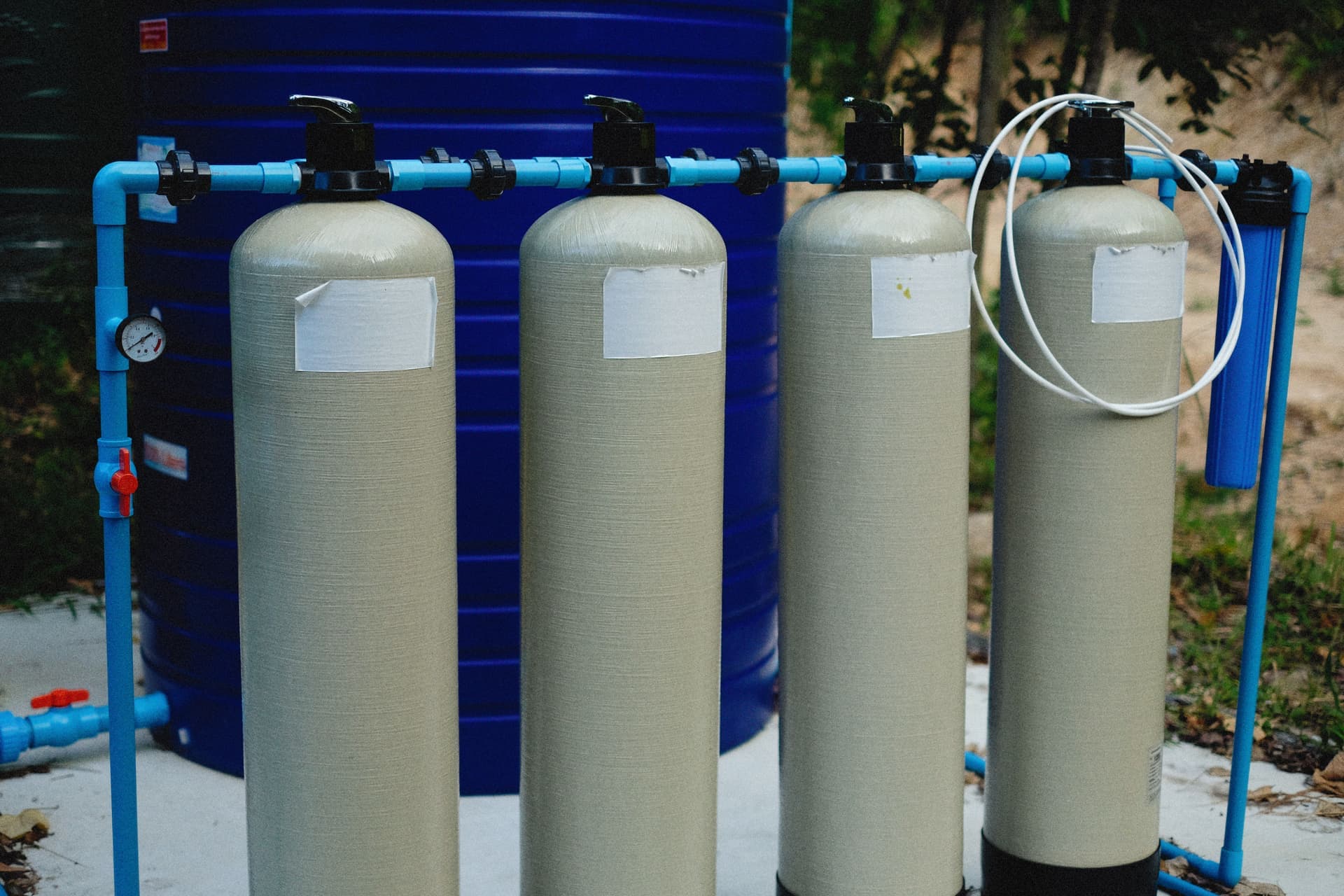
A pre-filter removes the metal before any of that can start. It is fitted to the hose, the water passes through resin on the way in, and the pool never contains the iron in the first place.
How the capacity ratings work
This is the specification people get wrong, because it is quoted in gallons treated rather than in time.
| Rating | Fills a 3,955 gal pool | Fills a 6,981 gal pool |
|---|---|---|
| 10,000 gal | About 2 fills | About 1 fill |
| 20,000 gal | About 5 fills | About 2-3 fills |
| 75,000 gal | Many seasons, plus top-ups | About 10 fills |
| 100,000 gal | Many seasons | Many seasons |
There is an important caveat on all of those numbers: the rating assumes a stated metal concentration, and you almost certainly do not know yours. Heavily loaded water exhausts a cartridge faster than the label suggests. Treat the figures as a guide to relative sizing rather than a promise, and size up rather than down.
For a seasonal above-ground pool filled once a year, a large-capacity unit is the sensible purchase: it covers the fill, the top-ups our water level guide talks about, and several seasons after that.
What it costs you
Time. A filter restricts flow, and filling 6,981 gallons through one takes appreciably longer than filling it through an open hose. Our cost to fill guide already treats filling as an all-day job; this makes it a longer one.
The cartridge. It is a consumable rated in gallons and it is not the cheapest item in this hub.
Nothing else. No power, no plumbing, no maintenance. It screws onto the hose and comes off again.
What else it changes
These cartridges do not only remove iron. The resin also reduces calcium and magnesium, which makes the incoming water softer, and some units reduce chlorine as well.
That is mostly good and worth knowing about. Softer fill water means less scaling risk, which our calcium hardness guide covers — but calcium hardness that is too low is its own problem, and the saturation balance Taylor Technologies describes involves hardness, pH, alkalinity and temperature together rather than any one of them.
Practically: test the pool after filling rather than assuming it starts where last year started, and follow the usual order — alkalinity first, then pH — from our pH and alkalinity guide.
Where it belongs in the year
Opening. It is a fill-time product, and the fill happens once. Our spring shopping list is where to write it down, because the moment you need it is the moment the hose is already running.
Keep it after the fill if the capacity rating has plenty left — top-ups through the season carry the same metal, in smaller doses, and the whole point of this product is that small doses accumulate on the liner.
What we are scoring
We have not tested these and do not claim to. The scores reflect published specifications — media type, stated targets, thread size and gallon capacity — against filling a seasonal above-ground pool from a well. Our methodology page explains how our scoring works.
The picks, in full
Scores are our own reading of published specifications. They are not test results — we have not tested these products and we do not claim to.
Pick #1 · Filling from well water
Garden Hose Pre-Filter (Iron and Metals)
Various
A resin cartridge on the hose that takes iron and manganese out before they reach the pool. It is the only product on this site that prevents a problem rather than treating one.
Key specs
- Fitting
- Standard 3/4 in garden hose thread
- Media
- Iron-removal resin; also reduces calcium and magnesium
- Targets
- Iron, manganese, heavy metals, some chlorine
- Capacity
- Rated in gallons — 10,000 up to 100,000
- Use
- Inline on the fill hose, at fill and at top-up
- Life
- By gallons treated, not by time
How it scoresour reading of published specs, not a test result
- Effectiveness
- 8.5
- Ease
- 8.5
- Water impact
- 9.0
- Cost per season
- 7.5
- Value
- 8.0
Overall 8.2 / 10
What works
- Stops metal staining before it happens, which no stain remover can do
- Also reduces hardness, which matters on well water and hard municipal supplies
- Screws onto any hose in seconds — no plumbing, no tools
- Capacity ratings mean you can size it against your own pool volume
What doesn't
- Slows the fill noticeably, which on 6,000 gallons is a real amount of time
- The cartridge is a consumable rated in gallons, and a big pool eats a small one
- Pointless on a treated municipal supply with no metal problem
- Capacity ratings assume a stated metal concentration you probably do not know
Skip it if: Fixing an existing stain. It prevents the next one; the current one needs the citric-acid route our stain remover roundup covers.
What it costs to run: Size it against your own gallons. A 10,000-gallon cartridge filling a 6,981-gallon pool is nearly spent after one fill, and a 75,000-gallon unit covers years of fills and top-ups.
One honest season: The cheapest setup that genuinely works for a season of real swimming. Nothing spare, nothing missing.
Specs from: Garden hose iron pre-filters for pool filling — Amazon listing
Pick #2 · Rust and metal marks on a vinyl liner
Pool Stain Remover (Citric Acid)
Various
A citric-acid powder that lifts oxidized metal off vinyl without touching the liner. It works on the stain; a sequestrant is what stops the next one.
Key specs
- Active
- Citric acid based on the vinyl-safe products
- Surfaces
- Vinyl liners, fiberglass and metal fittings
- Targets
- Iron, rust, copper and manganese staining
- Form
- Powder, commonly sold in 1-2 lb tubs
- Companion
- A sequestrant, to hold the metal in solution afterwards
- Caution
- Lowers pH while it works — retest after
How it scoresour reading of published specs, not a test result
- Effectiveness
- 8.0
- Ease
- 6.5
- Water impact
- 7.0
- Cost per season
- 8.5
- Value
- 8.0
Overall 7.8 / 10
What works
- Citric acid is gentle enough for vinyl, which is what rules out most acid-based cleaners
- Works on the whole pool rather than the one patch you can reach
- Cheap relative to any other answer to a stained liner
- Also cleans stained ladder feet and metal fittings
What doesn't
- It removes the stain and does nothing about the metal that caused it
- Drops pH noticeably, so it lands in the middle of your chemistry rather than beside it
- Organic stains — leaves, algae shadow — do not respond, and those need shock instead
- Works best with the pump off and circulation stopped, which is inconvenient
Skip it if: Telling you what the stain is. Identify it first, because the treatment for a metal stain and an organic one have nothing in common.
What it costs to run: One or two treatments a season on well water, none at all on most municipal supplies. The recurring cost is the sequestrant that follows it, not the remover.
One honest season: The cheapest setup that genuinely works for a season of real swimming. Nothing spare, nothing missing.
Specs from: Pool stain removers — current Amazon category listing
Pick #3 · Bringing pH back up after a season of trichlor
pH Increaser (sodium carbonate)
Various
One of two bottles every pool owner ends up with. Trichlor tablets push pH down all season, and this is what pushes it back.
Key specs
- Active
- Sodium carbonate (soda ash)
- Raises
- pH, and total alkalinity somewhat
- CDC pH target
- 7.0-7.8
How it scoresour reading of published specs, not a test result
- Effectiveness
- 8.5
- Ease
- 8.5
- Water impact
- 8.0
- Cost per season
- 9.5
- Value
- 8.8
Overall 8.5 / 10
What works
- Cheap, stable and does exactly one thing
- Also nudges total alkalinity up, which is often what actually needed fixing
- A single container lasts most seasonal pools a full year
What doesn't
- Overdosing clouds the water for a day or two
- Raises alkalinity as well as pH, which is not always what you want
- Needs to be added with the pump running or it settles
Skip it if: Raising alkalinity on its own without moving pH. Use sodium bicarbonate for that.
What it costs to run: A few dollars a season. The expensive mistake is not this bottle, it is failing to fix alkalinity first and then using this one repeatedly all summer.
One honest season: The cheapest setup that genuinely works for a season of real swimming. Nothing spare, nothing missing.
Specs from: CDC — recommended pH range for pools
Questions people actually ask
Do I need a filter to fill my pool?
How long does a pool hose filter last?
Will a hose filter remove existing pool stains?
Does a hose filter slow down filling a pool?
Sources
Read next
- Pool care, from someone who assumes you have never done thisThe weekly routine, the four numbers that matter, and the fix for the week the water turns.
- Diagnose the stain, then buy. Not the other way round.How to tell a metal stain from an organic one, which product each needs, and why a sequestrant is what stops the next one.
- Stains on the liner, and the one test that tells you which kindOrganic or metal? The five-minute test that identifies a liner stain, plus what removes each kind and what prevents both.
- Calcium hardness: the reading a vinyl pool can mostly ignoreWhy the fourth reading matters less on a vinyl above-ground pool, the two cases where it genuinely does, and how to test it.
- What the color of your pool is telling youEvery common pool water appearance, what causes it, the first thing to check, and where to go next.
- pH and alkalinity, and why yours will not stay putWhy pH drifts, what total alkalinity actually does, and the order of operations that turns a season of chasing into one adjustment.
- What it costs to fill a pool, and to keep it fullOne fill priced for four common pool volumes at the national average water rate, plus why every gallon you add has to be re-balanced.
- The liner is the most expensive thing you can wreck in an afternoonBeaded, overlap and unibead liners explained, what gauge in mil buys, and the patch kit that turns a leak into a fifteen-minute job.
- What to buy before you open, not halfway throughThe six-item spring shopping list, in the order the opening sequence needs them, plus what to leave until you have a reading.
- Filling from a well: test first, or stain the linerWhy well water stains pool liners, the iron and manganese thresholds that matter, what a fill-hose pre-filter actually removes, and the order of operations that avoids the problem.