Above-Ground Pools
The semi-inground pool solves the yard you actually have
It is the only category here that fixes a slope rather than working around one. What it asks in return is a digger, a permit, and permanence.
Heads up: we earn a commission if you buy through the links on this page, at no extra cost to you. It never decides the ranking — here is how we pick and here is the full disclosure. Prices are checked automatically; last verified October 8, 2026.
Quick picks
Segmented before it is ranked — the right answer depends on which of these you actually are. Tap any row for the full write-up.
The kit
Resin-coated steel wall, 52 inches, rated by the manufacturer for partial or near-full burial. The coating on both faces is the specification that matters.
| # | Product | Best for | Score | Price |
|---|---|---|---|---|
| 1 | No image Semi-Inground Pool Kit (52" Resin-Coated Steel Wall) A steel-wall pool built to be buried partly or almost entirely. It solves a sloped yard properly rather than working around one, and it turns a weekend purchase into an excavation project. | A sloped yard, or the look of an inground poolSeveral seasons | 7.0out of 10 |
What it shares with an above-ground pool
A replaceable vinyl liner, which is both the maintenance story and the long-term cost story.
| # | Product | Best for | Score | Price |
|---|---|---|---|---|
| 1 | No image Replacement Above-Ground Pool Liner The one repair that is genuinely worth doing rather than replacing the whole pool, provided the frame is sound. Measure twice: liner fit is unforgiving. | When the liner has failed, not beforeSeveral seasons | 7.9out of 10 | |
| 2 | No image Vinyl Liner Patch Kit Vinyl patches and an adhesive rated to cure underwater. The difference between a fifteen-minute job and a new liner, which is the largest single bill in above-ground pool ownership. | A pinhole leak without draining the poolSeveral seasons | 8.8out of 10 |
The short version
- It is a steel-wall pool rated for burial, not an above-ground pool you have decided to bury.
- Resin coating on both faces of the wall is the specification — buried bare steel rusts from the outside in.
- Burying the wall removes your barrier. That is a safety obligation, not a detail.
- It is permanent. Removal is demolition, and permits are far more likely than with a free-standing pool.
What the category actually is
A semi-inground pool is a steel-wall kit engineered so the wall can be backfilled against — partly, or in some cases almost entirely. It sits between the two categories our above-ground versus inground comparison covers, and it borrows honestly from both: the vinyl liner and the price ceiling of an above-ground pool, the appearance and the site work of an inground one.
The specification that defines it is the wall. Common kits use 52-inch copper-bearing steel coated in resin on both the inside and the outside face. The outside coating is the point: a bare steel wall backfilled against soil is a wall rusting from the side you cannot see.
The problem it genuinely solves
A sloped yard. Our leveling guide is honest that a free-standing pool needs ground level to within about an inch, and on a real slope that means either cutting a terrace or not having a pool.
A semi-inground kit turns that from a workaround into the design. You cut into the high side, the pool sits down into the cut, and the low side is backfilled or retained. The finished pool is level because the ground was made level as part of the installation rather than in spite of it.
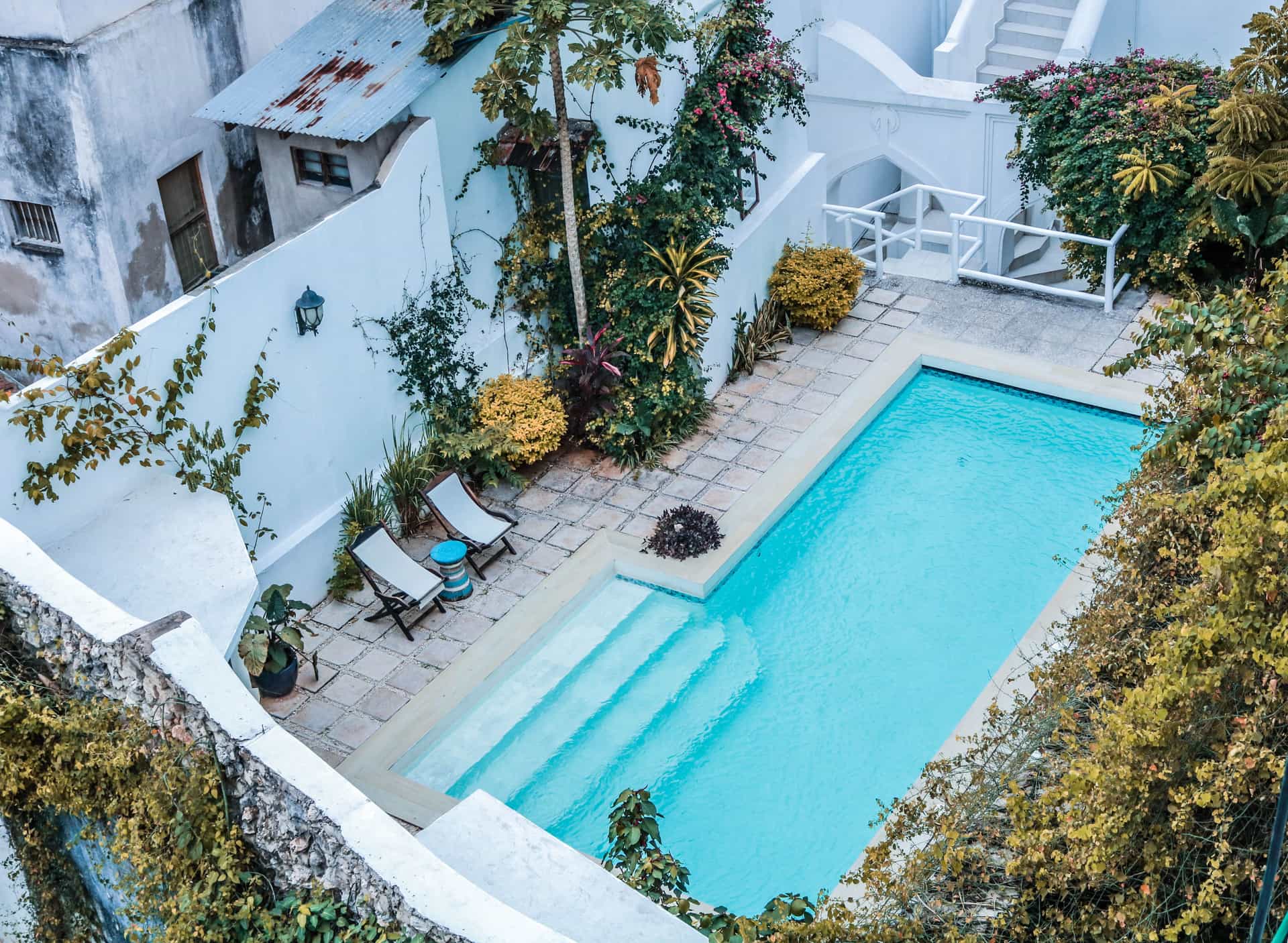
The second thing it solves is appearance. A pool sunk two feet reads as an inground pool from a deck or a patio, and that is a real reason people choose it — it just is not a reason with a payback calculation attached.
What it asks in return
| Step | What it means | Who does it |
|---|---|---|
| Excavation | Digging to depth, to a flat and stable base | Contractor with a machine |
| Drainage | Water must not collect against the buried wall | Part of the excavation spec |
| Backfill | Placed and compacted evenly as the pool fills | Contractor, in stages |
| Permits | Far more likely than for a free-standing pool | You, before anything is dug |
| Barrier | The wall no longer provides one | A fence, and it is now required |
| Removal later | Demolition and backfill, not a take-down | Contractor again |
The row that surprises people is drainage. Water that collects behind a buried wall applies pressure inward and, worse, sits against the steel. Every failure story in this category traces back to it, and it is invisible once the job is finished. It is the single strongest argument for a contractor rather than a weekend.
What stays the same as an above-ground pool
The liner. It is vinyl, commonly 25-gauge overlap, and it is replaceable — which is both the good news and the recurring bill. Our liner guide covers attachment types and gauge, and our liner replacement guide prices the eventual change.
The water chemistry, the pump hours, the covers and the seasonal routine are all identical to any other vinyl pool. Nothing in this hub stops applying because the pool is lower.
Who it is right for
A genuinely sloped yard, and a long horizon. If you are staying in the house and the slope is the obstacle, this is the category that removes it.
Not for renters, and not for the undecided. Our renters guide exists because free-standing pools are reversible. This one is not, and our semi-inground cost guide is where the real number lives — the kit is the smaller half of it.
What we are scoring
We have not tested these and do not claim to. The scores reflect published construction — wall gauge and coating, stated burial depth, liner specification and skimmer type — against a sloped domestic yard. Installation quality dominates outcomes in this category and no specification captures it. Our methodology page explains how our scoring works.
If your ground is level and the aim is simply a pool that stays up, you do not need to dig. Our permanent above-ground pool roundup covers the free-standing steel-wall pools built for exactly that.
The picks, in full
Scores are our own reading of published specifications. They are not test results — we have not tested these products and we do not claim to.
Pick #1 · A sloped yard, or the look of an inground pool
Semi-Inground Pool Kit (52" Resin-Coated Steel Wall)
Various
A steel-wall pool built to be buried partly or almost entirely. It solves a sloped yard properly rather than working around one, and it turns a weekend purchase into an excavation project.
Key specs
- Wall
- 52 in resin-protected steel, coated both sides
- Burial
- Partial to almost fully submerged, per manufacturer
- Liner
- Commonly 25-gauge overlap
- Skimmer
- Widemouth skimmer on most kits
- Shapes
- Round, oval and rectangular kits available
- Install
- Excavation, backfill and leveling — trade work
How it scoresour reading of published specs, not a test result
- Build
- 9.0
- Setup
- 3.0
- Upkeep
- 7.5
- Running cost
- 6.0
- Value
- 6.5
Overall 7.0 / 10
What works
- The only category on this site that genuinely solves a sloping yard
- Resin-coated steel on both faces resists the rust that ends buried steel walls
- Sits lower, so it reads as an inground pool without inground pricing
- Longer expected life than any frame pool, and a replaceable liner
What doesn't
- Excavation, backfill and drainage are all part of the job and none of it is DIY
- Burying part of the wall removes the barrier an above-ground wall provides
- Permits and inspections are more likely than with a free-standing pool
- Removing it later is a demolition rather than a take-down
Skip it if: Being reversible. A frame pool is a purchase; this is a permanent alteration to the yard, and that is the trade you are making.
What it costs to run: The kit is the smaller half of the number. Excavation, backfill, drainage and the barrier you now need are the other half, and all four are local labor prices — get them quoted before comparing kits.
Several seasons: Buy-once. Built and warranted to come back out of the box for a few years, if you store it properly.
Specs from: Wilbar 'Meadows' 12 x 18 oval, 52" resin-protected steel wall — Amazon listing, Royal Swimming Pools — 52" steel wall semi-inground kits
Pick #2 · When the liner has failed, not before
Replacement Above-Ground Pool Liner
Various
The one repair that is genuinely worth doing rather than replacing the whole pool, provided the frame is sound. Measure twice: liner fit is unforgiving.
Key specs
- Types
- Overlap, beaded and unibead — they are not interchangeable
- Measure
- Diameter and wall height, exactly
- Gauge
- Published in mil — thicker lasts longer and is harder to fit
How it scoresour reading of published specs, not a test result
- Retention
- 8.0
- Durability
- 8.0
- Handling
- 5.5
- Running cost
- 9.0
- Value
- 8.0
Overall 7.9 / 10
What works
- Far cheaper than replacing a pool whose frame is still good
- A thicker gauge liner outlasts the original on most budget kits
- Beaded liners can be replaced without dismantling the top rail
What doesn't
- Overlap, beaded and unibead are different fitting systems and buying the wrong one is a total loss
- Fitting is a warm-day job — cold vinyl will not stretch into place
- A liner failure often reveals a frame or base problem that caused it
Skip it if: A pool whose frame is corroded. Replacing the liner in a failing frame just moves the failure a few months out.
What it costs to run: The largest single unplanned expense of above-ground pool ownership, and it is mostly preventable: a ground cloth, a level base and a winter close done properly are what decide whether you ever buy one.
Several seasons: Buy-once. Built and warranted to come back out of the box for a few years, if you store it properly.
Pick #3 · A pinhole leak without draining the pool
Vinyl Liner Patch Kit
Various
Vinyl patches and an adhesive rated to cure underwater. The difference between a fifteen-minute job and a new liner, which is the largest single bill in above-ground pool ownership.
Key specs
- Application
- Wet or dry — the adhesive cures under water
- Adhesive
- Commonly 4 oz of vinyl cement per kit
- Patches
- Pre-cut vinyl; some kits include 20 or more
- Also fits
- Inflatable pools, floats, loungers, covers
- Format
- Glue-down, or peel-and-stick on some kits
- Shelf life
- The adhesive, not the patches, is what expires
How it scoresour reading of published specs, not a test result
- Sizing fit
- 9.0
- Running cost
- 10.0
- Maintenance
- 9.0
- Build
- 7.5
- Value
- 9.5
Overall 8.8 / 10
What works
- No draining, which on a 3,955-gallon pool is both the water bill and the whole weekend
- One kit covers the liner, the floats and the solar cover
- Round the patch corners and it holds for seasons, not weeks
- Cheap enough that having one before you need one is the obvious move
What doesn't
- Only fixes punctures and pinholes — a split seam or a tear at a fitting is a liner job
- Underwater application is fiddly and you get one attempt per patch
- The adhesive goes off in the tube, so a kit bought three seasons ago may be dead
- Peel-and-stick patches are easier and do not last as long as glued ones
Skip it if: Structural damage. If the liner has failed at a seam or pulled out of its track, patching it is deferring the replacement rather than avoiding it.
What it costs to run: Set against a liner replacement, which our liner replacement cost guide prices as the single largest bill an above-ground pool produces. A kit is a rounding error against that.
Several seasons: Buy-once. Built and warranted to come back out of the box for a few years, if you store it properly.
Specs from: Vinyl liner patch kits — current Amazon category listing
Questions people actually ask
What is a semi-inground pool?
Can I bury a normal above-ground pool?
Do semi-inground pools need a fence?
Is a semi-inground pool cheaper than an inground one?
Sources
Read next
- Above-ground pools for ordinary backyardsSoft-side, metal-frame and steel-wall pools compared by what they cost across a whole season, not at the till.
- Above-ground vs inground: which one you are actually shopping forCost, commitment, depth and reversibility compared - plus the budget point where the two categories genuinely start to overlap.
- Leveling the ground, and the weight that makes it matterThe tolerance manufacturers publish, the weight of water that enforces it, and the method for getting a circle genuinely flat with hand tools.
- What an above-ground pool can and cannot sit onEvery common surface assessed, with the load per square foot each pool size actually applies - the number that rules a deck in or out.
- Permits, fences and the calls to make before you buyThe questions that decide whether you need a permit or a barrier, who to ask, and the safety layers that apply regardless of what the rules say.
- Fifty-two inches is where the pool becomes chest-deepDeep-wall 52-inch above-ground pools compared on what the extra depth buys, what it costs in water and ground preparation, and who it suits.
- The fence is the only thing here that prevents anythingRemovable mesh pool fencing compared on height, mesh, fixings and the certification worth paying for — plus the gate specification that matters most.
- The kit price is the smallest number in the projectHow to build a realistic semi-inground pool budget — the six line items beyond the kit, and why three quotes beat any published average.
- The liner is the most expensive thing you can wreck in an afternoonBeaded, overlap and unibead liners explained, what gauge in mil buys, and the patch kit that turns a leak into a fifteen-minute job.
- In-wall steps are a pool decision, not a step decisionWhat in-wall pool steps actually involve - concrete cap blocks, a poured trench, liner face plates - why retrofitting voids warranties, and the drop-in alternatives.