Pool Equipment
Pool heat pumps: cheap to run, and they quit at 50 degrees
A heat pump moves heat rather than making it, which is why it costs a fraction of resistive electric to run. It is also why it stops: Hayward publishes a 45 to 50F floor, below which the unit cuts out and shows LP. That makes this a shoulder-season purchase, not a winter one.
Heads up: we earn a commission if you buy through the links on this page, at no extra cost to you. It never decides the ranking — here is how we pick and here is the full disclosure. Prices are checked automatically; last verified October 11, 2026.
Quick picks
Segmented before it is ranked — the right answer depends on which of these you actually are. Tap any row for the full write-up.
Smallest sensible unit, pool and spa
Published for pools and spas up to about 4,200 gallons. The right order of magnitude for a 12 or 15 foot pool rather than an oversized inground unit.
| # | Product | Best for | Score | Price |
|---|---|---|---|---|
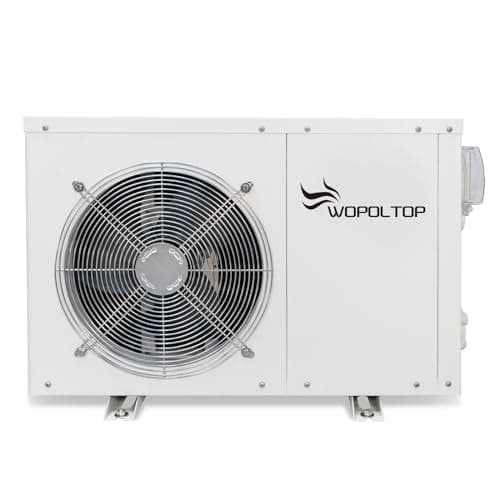
| 1 | WOPOLTOP Swimming Pool Heat Pump for Pools and Spas Published for pools and spas up to around 4,200 gallons, which is the smallest sensible target here. If you have a 12 or 15 foot pool and an inflatable tub, one unit covering both is the argument. | A small pool and a hot tub off one unitMore than you need yet | 7.1out of 10 |
If you want to avoid an electrician
Published as plug-in and rated to around 7,000 gallons. Plug-in is the spec worth paying for, because a wired circuit often costs more than the heater.
| # | Product | Best for | Score | Price |
|---|---|---|---|---|
| 1 | 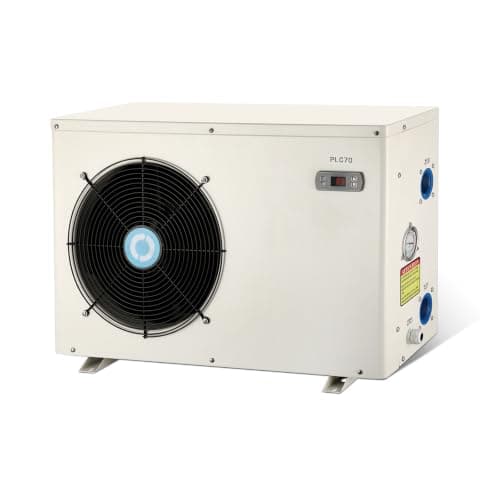 ECOPOOLTECH 20,000 BTU Pool Heat Pump, Plug-In The same 20,000 BTU class, published as plug-in and rated to about 7,000 gallons. Plug-in is the specification worth paying for on an above-ground pool, because the alternative is a wired circuit. | Avoiding an electricianMore than you need yet | 7.5out of 10 |
Cheapest 20,000 BTU
Twenty thousand BTU at a published 5.56 kW. Lowest price here, and the same missing COP figure as the rest of the class.
| # | Product | Best for | Score | Price |
|---|---|---|---|---|
| 1 | 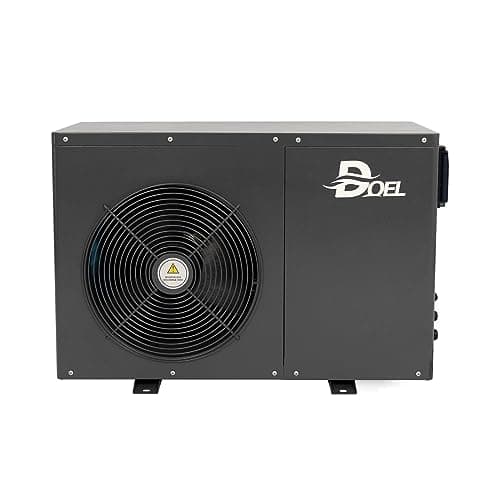 DOEL 20,000 BTU Swimming Pool Heat Pump, 5.56 kW Twenty thousand BTU and a published 5.56 kW rating, sized for a few thousand gallons. A heat pump moves heat rather than making it, which is why it is cheap to run and why it stops working in the cold. | A plug-in shoulder-season heater on a small poolMore than you need yet | 7.4out of 10 |
The short version
- Hayward publishes the floor: 45 to 50F. Below 50 the unit cuts out and displays LP. A heat pump is a shoulder-season tool.
- None of the three publishes a COP. That is the number the entire efficiency argument rests on, and it is missing from all of them.
- Plug-in versus hardwired is a real cost. A dedicated pool circuit often costs more than the heater.
- Pointless without a cover. A small unit cannot outrun overnight losses on an open pool.
Why this is on the site in October
Because the honest answer to “can I keep swimming” depends on a number manufacturers publish and listings do not, and it is worth knowing before you spend six hundred dollars trying to stretch a season that has already closed.
Some makers address this directly. Hayward's own HeatPro sell sheet distinguishes models without low-ambient operation, published at 50F, from models with it, published at 40F — a real ten-degree difference that is worth asking about on any unit you are considering. None of the three listings on this page publishes an ambient floor at all, which is a gap rather than a reassurance.
What these three publish
| Unit | Published output | Published pool size | COP | Min ambient |
|---|---|---|---|---|
| WOPOLTOP, pool and spa | Not published consistently | Up to about 4,200 gal | Not published | Not published |
| ECOPOOLTECH, plug-in | 20,000 BTU | Up to about 7,000 gal | Not published | Not published |
| DOEL, 5.56 kW | 20,000 BTU | About 3,500 gal on the smaller variant | Not published | Not published |
That table is the finding. Three units in the same class, and the coefficient of performance — the single number that makes a heat pump worth more than a resistive element — appears on none of them. For context on what it should look like, published AHRI figures for full-size pool heat pumps run around 4.0 to 4.4 at 50F air. Whether these small units reach that is unknowable from the listings.
We are not going to estimate it. What we can say is that buying in this class means buying the category's physics on trust, and that the honest way to narrow it is on the two things they do publish: gallons and how it connects.
Plug-in is the spec that saves real money
A 20,000 BTU heat pump drawing 5.56 kW is a serious electrical load, and on most above-ground installations the question is not the heater's price but what feeding it costs.
A dedicated, bonded, GFCI-protected pool circuit is an electrician's job everywhere, and our electrical safety guide explains why that is not negotiable near a pool. A unit published as plug-in sidesteps a chunk of that — though at this output you should still expect to need a dedicated circuit rather than sharing one with the filter pump.
| Unit | Buy it if | Skip it if |
|---|---|---|
| WOPOLTOP | You have a 12-15 ft pool and a hot tub to cover from one unit | You need to size it properly - BTU is not consistently published |
| ECOPOOLTECH | You have a 15-18 ft pool and no appetite for an electrician | Your pool is over about 7,000 gallons |
| DOEL | Price is the deciding factor at 20,000 BTU | You want any published efficiency figure at all |
The cover is not optional
This is where most heat pump disappointment comes from. A small heat pump adds heat slowly and steadily. An uncovered pool loses heat all night by evaporation, and evaporation is the dominant loss on an open pool by a wide margin.
Run a 20,000 BTU unit on an uncovered 15 ft pool in October and you are heating the sky. Our solar cover roundup and payback page cover the cheaper half of the job, and the order of purchase should be cover first, heater second — never the reverse.
If what you want is a few more weeks rather than a heated pool, our extend the season guide works through the options that do not involve a compressor, and our solar collector roundup covers the no-running-cost alternative.
The picks, in full
Scores are our own reading of published specifications. They are not test results — we have not tested these products and we do not claim to.
Pick #1 · A small pool and a hot tub off one unit
WOPOLTOP Swimming Pool Heat Pump for Pools and Spas
WOPOLTOP
Published for pools and spas up to around 4,200 gallons, which is the smallest sensible target here. If you have a 12 or 15 foot pool and an inflatable tub, one unit covering both is the argument.
#ad how this is funded · price as of October 11, 2026
Key specs
- Pool size
- Published as up to about 4,200 gallons
- Use
- Published for pools and spas
- Type
- Air-source heat pump
- BTU output
- Not published consistently on the listing
- COP
- Not published
- Minimum ambient
- Not published
How it scoresour reading of published specs, not a test result
- Sizing fit
- 6.5
- Running cost
- 8.5
- Maintenance
- 7.0
- Build
- 6.0
- Value
- 7.0
Overall 7.1 / 10
What works
- Published for spa use as well as pool, which none of the other heat pumps here states
- Smallest published capacity on this page, which suits a 12 or 15 ft pool rather than oversizing
- Mid-priced
- Air-source, so no fuel line and no combustion clearance to plan around
What doesn't
- BTU output is not published consistently, which makes sizing against your own gallons guesswork
- No COP and no minimum ambient temperature published — the two specs that decide a heat pump purchase
- Smallest capacity here also means the longest heat-up time on a given pool
- Thinnest published specification sheet of the three
Skip it if: Being specified properly. With neither BTU nor COP consistently published you cannot do the sizing arithmetic our heater sizing guide asks for, which is a real reason to prefer a unit that publishes both.
What it costs to run: Covering a pool and a tub from one unit is a genuine saving if the plumbing allows it. Our hot tub running cost page prices what the tub costs to heat on its own, which is the comparison to make first.
More than you need yet: Real capability a first-pool family cannot use yet. Buy cheaper and put the difference toward chemicals and a cover.
Pick #2 · Avoiding an electrician
ECOPOOLTECH 20,000 BTU Pool Heat Pump, Plug-In
ECOPOOLTECH
The same 20,000 BTU class, published as plug-in and rated to about 7,000 gallons. Plug-in is the specification worth paying for on an above-ground pool, because the alternative is a wired circuit.
#ad how this is funded · price as of October 11, 2026
Key specs
- Heating output
- 20,000 BTU, published
- Pool size
- Published as up to about 7,000 gallons
- Connection
- Published as plug-in
- Type
- Air-source heat pump for above-ground pools, published
- COP
- Not published on the listing
- Minimum ambient
- Not published on the listing
How it scoresour reading of published specs, not a test result
- Sizing fit
- 8.0
- Running cost
- 8.5
- Maintenance
- 7.0
- Build
- 6.5
- Value
- 7.0
Overall 7.5 / 10
What works
- Plug-in is published, which removes the installation cost that usually doubles a pool heater project
- Rated to roughly 7,000 gallons, which covers a 15 ft and most 18 ft above-ground pools
- Explicitly an above-ground product rather than an inground unit sold loosely
- Mid-priced between the two other heat pumps here
What doesn't
- No COP published — the same gap as every unit in this class at this price
- No minimum operating temperature published
- Plug-in at this output still demands a dedicated circuit in practice; check your supply before ordering
- Brand has no established service network, so warranty support is an unknown
Skip it if: Heating fast. A heat pump raises water temperature over days, not hours. If you want the pool warm for the weekend after a cold snap, that is a gas heater's job, and our electric-versus-gas comparison covers the trade.
What it costs to run: Plug-in is a real saving. Our electrical safety guide explains why a hardwired pool circuit is not a DIY job, and the cost of that circuit is often the difference between these units in practice.
More than you need yet: Real capability a first-pool family cannot use yet. Buy cheaper and put the difference toward chemicals and a cover.
Pick #3 · A plug-in shoulder-season heater on a small pool
DOEL 20,000 BTU Swimming Pool Heat Pump, 5.56 kW
DOEL
Twenty thousand BTU and a published 5.56 kW rating, sized for a few thousand gallons. A heat pump moves heat rather than making it, which is why it is cheap to run and why it stops working in the cold.
Key specs
- Heating output
- 20,000 BTU, published
- Electrical
- 5.56 kW, published
- Pool size
- Published for around 3,500 gallons on the smaller listing variant
- Type
- Air-source heat pump for above-ground and inground pools, published
- COP
- Not published on the listing
- Minimum ambient
- Not published on the listing — see the category figures on this page
How it scoresour reading of published specs, not a test result
- Sizing fit
- 7.5
- Running cost
- 8.5
- Maintenance
- 7.0
- Build
- 6.0
- Value
- 7.5
Overall 7.4 / 10
What works
- A heat pump's running cost is a fraction of resistive electric heating, because it moves heat instead of generating it
- Published for above-ground pools specifically, which most pool heat pumps are not
- Twenty thousand BTU is the right order of magnitude for a few thousand gallons rather than a 40,000-gallon inground pool
- Cheapest of the heat pumps here
What doesn't
- No COP published, so the efficiency claim that justifies the whole category cannot be checked on this unit
- No minimum operating temperature published, and that figure decides whether it is useful in your shoulder season
- 5.56 kW is a serious electrical load — this is not a thing you plug into any outlet
- No warranty terms published on the listing
Skip it if: Extending a northern season into November. Pool heat pumps generally stop around 50F ambient; below that they cut out, and no amount of BTU on the box changes that.
What it costs to run: Running cost is the reason to buy a heat pump and the reason to check the COP. Our heating cost page prices resistive electric against the alternatives using published EIA rates, and the heat pump case stands or falls on a COP this listing does not publish.
More than you need yet: Real capability a first-pool family cannot use yet. Buy cheaper and put the difference toward chemicals and a cover.
Specs from: Hayward — published minimum operating temperature for pool heat pumps and the LP cutoff
Pick #4 · The single highest-return accessory here
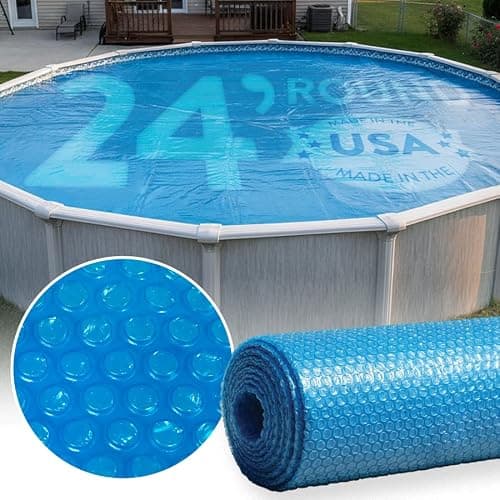
Bubble Solar Cover for Above-Ground Pools
Various
It cuts evaporation, and evaporation is simultaneously your water bill, your chemical bill and your heat loss. Nothing else on this site reduces three costs at once.
#ad how this is funded · price as of October 11, 2026
Key specs
- Construction
- Bubble sheet, thickness published in mil
- Thickness
- Higher mil lasts longer — 12 mil and 16 mil are common
- Fit
- Cut to size; buy oversize and trim
- Orientation
- Bubbles face down, toward the water
How it scoresour reading of published specs, not a test result
- Running cost
- 9.8
- Value
- 9.5
Overall 9.0 / 10
What works
- Reduces evaporation, which is the mechanism behind the water, chemical and heat savings all at once
- Cheap relative to everything it saves
- Can be cut to fit any pool shape, so sizing is forgiving
What doesn't
- Awkward to get on and off without a reel, and awkward is how covers end up unused
- Degrades in UV like every vinyl product
- Not a safety cover and will not support weight — this is important
Skip it if: Being a safety barrier. A solar cover looks solid and is not; a child or pet on it goes through and under.
What it costs to run: The one accessory with a clear payback. Every gallon that does not evaporate is a gallon you do not replace at the EPA WaterSense national average of $6.06 per 1,000 gallons, and it is chlorine you do not re-dose. If you buy one thing from this hub, buy this.
Several seasons: Buy-once. Built and warranted to come back out of the box for a few years, if you store it properly.
Specs from: EPA WaterSense — cost per 1,000 gallons
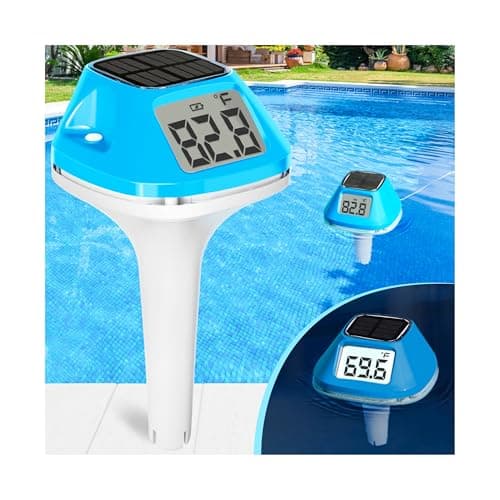
Pick #5 · Knowing when to close, and when to stop heating
Floating Pool Thermometer
Various
The cheapest instrument on this site and the one that answers two expensive questions: is it warm enough to swim, and is it cold enough to close.
#ad how this is funded · price as of October 11, 2026
Key specs
- Types
- Floating analog, digital solar, or wireless with an indoor display
- Typical digital range
- About 15.8°F to 176°F on current models
- Typical stated accuracy
- About ±1.8°F on current digital models
- Water resistance
- IPX8 on current digital models
- Materials
- UV-stabilized and chlorine-resistant on better models
How it scoresour reading of published specs, not a test result
- Value
- 9.2
Overall 8.4 / 10
What works
- Turns the closing decision from a guess into a reading, which is the most expensive judgment call of the pool year
- Tells you whether a solar cover is actually doing anything, rather than assuming
- Digital models are readable from the deck; analog ones need fishing out
- Cheap enough that having one is never the wrong call
What doesn't
- Analog floats get lost, get chewed, and end up under the ladder
- Solar and wireless models add batteries or a panel to a thing that could have had neither
- Tethering it is essential and almost nobody does it
- Accuracy claims are rarely independently verified — treat ±2°F as the working assumption
Skip it if: Telling you anything about water chemistry. It measures one thing, and every other decision needs a test kit.
What it costs to run: A few dollars, once. It pays for itself the first time it stops you closing a pool that was still warm, which is the mistake that produces a green opening in April.
Several seasons: Buy-once. Built and warranted to come back out of the box for a few years, if you store it properly.
Specs from: Digital floating pool thermometer — current Amazon listing and published specifications
Questions people actually ask
How cold can a pool heat pump work in?
Is a heat pump cheaper to run than an electric pool heater?
What size heat pump does an above-ground pool need?
How fast does a heat pump warm a pool?
Do you still need a solar cover with a heat pump?
Sources
Read next
- Equipment, sized to your pool and costed by the wattPumps, filters, vacuums, heaters and ladders - matched to your gallons and priced by what they draw.
- Pool heaters, priced by the wattHeater running costs computed at national average rates, and why a cover has to come first for a heater to make any sense.
- Electric or gas, and the third answer that usually winsGas against electric pool heaters on speed, installation and running cost — and why a cover beats both on a seasonal above-ground pool.
- Sizing a heater: one calculation, and a warning about the answerThe BTU sum that sizes a heater to your pool, why undersized units cost more overall, and why a cover changes the answer more than capacity does.
- Solar pool heating: collector area is the whole storySolar panels, mats and rings compared on published collector area, pump compatibility and what each maker will actually claim in writing.
- Heating a pool, priced properlyThe physics of heating a pool turned into dollars, why a cover changes the answer more than the heater does, and when heating is worth it.
- Adding weeks to the season, starting with the cheapest thing firstCover, placement and timing before hardware, plus the kilowatt arithmetic that shows what running an electric heater actually costs.
- The electrical side, which is the one part of a pool you should not improviseGFCI protection, extension cords, timers and heater circuits - what is a homeowner job around a pool and what is not.
- The best solar covers, and why this is the one thing to buyBubble covers compared on thickness and sizing, plus the arithmetic that makes this the highest-return purchase in the hub.