Pool Equipment · Best Heater
Pool heaters, priced by the watt
Extending the swim season by a month is a genuine pleasure and it is the largest line you can add to a pool electricity bill. Know the number first.
Heads up: we earn a commission if you buy through the links on this page, at no extra cost to you. It never decides the ranking — here is how we pick and here is the full disclosure. Prices are checked automatically; last verified October 19, 2026.
Quick picks
Segmented before it is ranked — the right answer depends on which of these you actually are. Tap any row for the full write-up.
Buy this first
Heating an uncovered pool is the most expensive thing you can do with one. The cover is not optional if you are heating.
| # | Product | Best for | Score | Price |
|---|---|---|---|---|
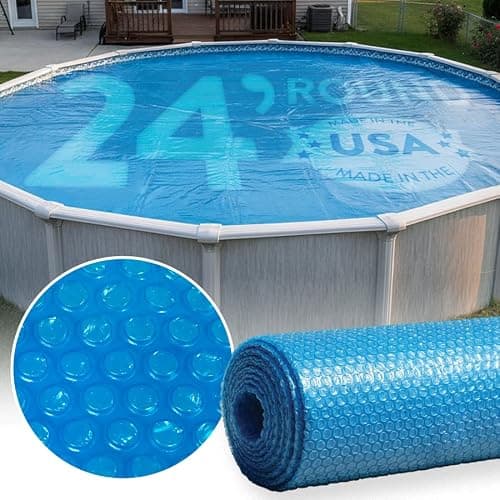
| 1 | Bubble Solar Cover for Above-Ground Pools It cuts evaporation, and evaporation is simultaneously your water bill, your chemical bill and your heat loss. Nothing else on this site reduces three costs at once. | The single highest-return accessory hereSeveral seasons | 9.0out of 10 | |
| 2 | No image Solar Cover Reel for Above-Ground Pools A cover that takes two people and ten minutes to move gets left off. A reel makes it a one-person, one-minute job, which is the difference between owning a cover and using one. | Making sure the cover actually gets usedSeveral seasons | 7.7out of 10 |
Then, if you still want one
Electric units publish their kW draw, which at least makes the running cost computable before you buy.
| # | Product | Best for | Score | Price |
|---|---|---|---|---|
| 1 | No image Electric Above-Ground Pool Heater It works, and it will be the largest line on your pool electricity bill by a distance. Buy it knowing the running cost, not the purchase price. | Extending the season, at a priceMore than you need yet | 6.0out of 10 |
The short version
- Buy the cover first. Heating an uncovered pool means paying to warm water that evaporates overnight.
- Unlike pump makers, heater manufacturers do publish kW draw — so the running cost is computable before you buy.
- A 3 kW unit run 6 hours a day for a month is about $99 at national average rates.
- Check the circuit requirement. Many units need dedicated wiring, which is a cost nobody quotes up front.
Do the arithmetic before you shop
This is the one category where the manufacturers make it easy: electric pool heaters publish their power draw in kilowatts, because they have to. So unlike pumps, you can know the running cost before you own it.
What a month of heating costs
- Heater draw
- 3 kW (published)
- Run time
- 6 hours/day
- Period
- 30 days
- US residential average, June 2026 [EIA]
- 18.34 ¢/kWh
3 kW × 6 h × 30 days = 540 kWh × $0.1834
About $99 for one month
For scale: ENERGY STAR describes a pool pump as potentially a home’s second-largest energy user, and our cost-to-run guide puts a typical seasonal pump somewhere between $35 and $105 for an entire season. One month of heating exceeds the whole season of filtration.
Why the cover comes first
Evaporation is the dominant heat loss mechanism in an open outdoor pool. Warm water evaporating carries the heat you paid for straight into the air, mostly overnight when the air is coldest.
A bubble solar cover addresses that directly, and it does it as a one-time purchase with no running cost at all. It also captures some solar gain during the day. For a large number of households, a cover alone extends the comfortable swimming window by enough that a heater stops being necessary.
If you do heat, the cover is not optional — heating an uncovered pool is genuinely the most expensive thing you can do with one, and it is close to pouring the money out overnight.
Where a heater does make sense
Three situations, honestly.
A genuinely short season. If your climate gives you eight usable weeks, extending to twelve changes the value of the whole pool rather than adding a luxury.
A pool that is already covered and still cold. If you have done the cheap thing and it is not enough, the heater is now solving a real remaining problem.
A smaller pool. Heating cost scales with volume like everything else. A 1,700-gallon pool is far cheaper to heat than a 7,000-gallon one, which inverts the usual advice: if heating matters to you, that is an argument for a smaller pool rather than a bigger one.
Where it does not
An uncovered pool. A very large pool on a tight budget. And a household that has not yet worked out what the pump costs to run — adding the largest line to a bill you have not measured is how a pool becomes a source of resentment. Read the cost-to-run guide first, and are backyard pools worth it if the answer is uncomfortable.
If you have narrowed it to a heater and want the two fuel types set against each other, our electric versus gas comparison covers speed, installation and the reason a cover comes before either of them on a seasonal pool.
The picks, in full
Scores are our own reading of published specifications. They are not test results — we have not tested these products and we do not claim to.
Pick #1 · The single highest-return accessory here
Bubble Solar Cover for Above-Ground Pools
Various
It cuts evaporation, and evaporation is simultaneously your water bill, your chemical bill and your heat loss. Nothing else on this site reduces three costs at once.
#ad how this is funded · price as of October 19, 2026
Key specs
- Construction
- Bubble sheet, thickness published in mil
- Thickness
- Higher mil lasts longer — 12 mil and 16 mil are common
- Fit
- Cut to size; buy oversize and trim
- Orientation
- Bubbles face down, toward the water
How it scoresour reading of published specs, not a test result
- Running cost
- 9.8
- Value
- 9.5
Overall 9.0 / 10
What works
- Reduces evaporation, which is the mechanism behind the water, chemical and heat savings all at once
- Cheap relative to everything it saves
- Can be cut to fit any pool shape, so sizing is forgiving
What doesn't
- Awkward to get on and off without a reel, and awkward is how covers end up unused
- Degrades in UV like every vinyl product
- Not a safety cover and will not support weight — this is important
Skip it if: Being a safety barrier. A solar cover looks solid and is not; a child or pet on it goes through and under.
What it costs to run: The one accessory with a clear payback. Every gallon that does not evaporate is a gallon you do not replace at the EPA WaterSense national average of $6.06 per 1,000 gallons, and it is chlorine you do not re-dose. If you buy one thing from this hub, buy this.
Several seasons: Buy-once. Built and warranted to come back out of the box for a few years, if you store it properly.
Specs from: EPA WaterSense — cost per 1,000 gallons
Pick #2 · Making sure the cover actually gets used
Solar Cover Reel for Above-Ground Pools
Various
A cover that takes two people and ten minutes to move gets left off. A reel makes it a one-person, one-minute job, which is the difference between owning a cover and using one.
Key specs
- Function
- Rolls the solar cover on and off
- Fit
- Must match pool diameter and wall type
- Mounting
- Freestanding or wall-mounted depending on model
How it scoresour reading of published specs, not a test result
- Running cost
- 8.5
- Value
- 7.0
Overall 7.7 / 10
What works
- Turns cover use from a chore into a habit, which is where all the savings actually are
- Keeps the cover off the ground, which is what shortens its life
- One-person operation
What doesn't
- Frequently costs more than the cover it handles
- Takes up permanent space beside the pool
- Sizing must match the pool exactly, and returns are awkward
Skip it if: A small pool. Under about 12 feet the cover is light enough to handle by hand and the reel is a solution to a problem you do not have.
What it costs to run: Only justified on larger pools. The value is not the reel, it is the cover getting used every night instead of most nights — quantify it by how often you would actually bother otherwise.
Several seasons: Buy-once. Built and warranted to come back out of the box for a few years, if you store it properly.
Pick #3 · Extending the season, at a price
Electric Above-Ground Pool Heater
Various
It works, and it will be the largest line on your pool electricity bill by a distance. Buy it knowing the running cost, not the purchase price.
Key specs
- Power draw
- Published in kW — this is the number that matters, not the price
- Circuit requirement
- Frequently needs a dedicated circuit — check before buying
- Rated pool size
- Published per model
How it scoresour reading of published specs, not a test result
- Sizing fit
- 7.0
- Running cost
- 2.5
- Maintenance
- 7.0
- Build
- 7.0
- Value
- 5.0
Overall 6.0 / 10
What works
- Genuinely extends a swim season by weeks at each end
- Electric units are simpler to install than gas and need no fuel supply
- Manufacturers do publish kW draw, unlike pump makers
What doesn't
- The running cost dwarfs every other item on this site
- Often needs electrical work, which is a cost nobody quotes you up front
- Almost pointless without a solar cover to hold the heat you paid for
Skip it if: An uncovered pool. Heating water and then letting it evaporate overnight is the most expensive thing you can do with a pool.
What it costs to run: Do this arithmetic first. A 3 kW heater running 6 hours a day for 30 days is 540 kWh; at the EIA's June 2026 US residential average of 18.34 cents per kWh that is about $99 for one month. Compare that to the cost of a solar cover, which is a one-time purchase, before you decide.
More than you need yet: Real capability a first-pool family cannot use yet. Buy cheaper and put the difference toward chemicals and a cover.
Specs from: EIA Electric Power Monthly, Table 5.6.A
Pick #4 · Cutting the electricity bill without cutting filtration
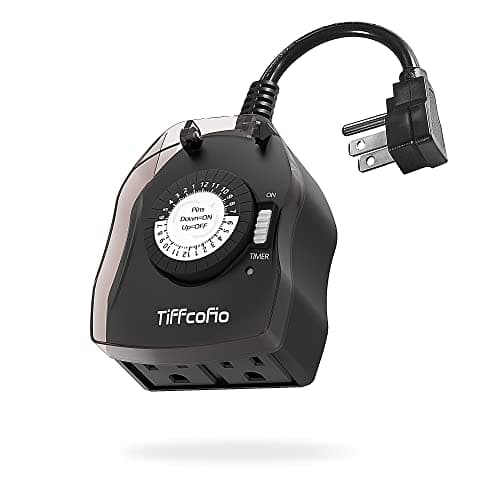
Outdoor Pool Pump Timer
Various
A weatherproof outdoor timer is the highest-return equipment purchase on this site. Most people run the pump too long because remembering to switch it off is a chore.
Key specs
- Type
- Outdoor-rated mechanical or digital timer
- Required rating
- Must be rated for the pump's amperage and for outdoor use
- Must not defeat
- The pump's GFCI protection
How it scoresour reading of published specs, not a test result
- Sizing fit
- 8.5
- Running cost
- 9.8
- Maintenance
- 9.0
- Build
- 7.5
- Value
- 9.5
Overall 9.0 / 10
What works
- Turns your filtration from a guess into a schedule
- Pays for itself within a single season on most pools
- Lets you shift running hours to off-peak if your utility has time-of-use rates
What doesn't
- Must be genuinely outdoor-rated and correctly amperage-matched, which cheap indoor timers are not
- Never bypass or defeat the pump's GFCI to fit one
- Mechanical timers drift and need resetting after a power cut
Skip it if: Fixing an undersized pump. Running the wrong pump on a schedule just makes the schedule longer.
What it costs to run: The arithmetic that justifies it: at the EIA's June 2026 US residential average of 18.34 cents per kWh, trimming a 400 W pump from 12 hours to 8 hours a day across a 120-day season saves 192 kWh, or about $35. That is more than the timer costs.
Several seasons: Buy-once. Built and warranted to come back out of the box for a few years, if you store it properly.
Specs from: EIA Electric Power Monthly, Table 5.6.A
Questions people actually ask
How much does it cost to heat an above-ground pool?
Do I need a solar cover if I have a pool heater?
Is a pool heater worth it for an above-ground pool?
Sources
Read next
- Equipment, sized to your pool and costed by the wattPumps, filters, vacuums, heaters and ladders - matched to your gallons and priced by what they draw.
- The best solar covers, and why this is the one thing to buyBubble covers compared on thickness and sizing, plus the arithmetic that makes this the highest-return purchase in the hub.
- What an above-ground pool actually costs to run for a yearElectricity, chemicals, water and consumables for a full season - every input sourced, every calculation shown, and every assumption named.
- Above-ground pool pumps: how many gallons per hour you actually needPumps matched to pool volume by system flow rate, with the season running-cost table manufacturers do not publish.
- Are backyard pools worth it?The four questions that decide whether a pool is a good buy for your household - argued honestly in both directions.
- Solar pool heating: collector area is the whole storySolar panels, mats and rings compared on published collector area, pump compatibility and what each maker will actually claim in writing.