Pool Care & Chemistry
Pool shock: use enough, once, and use the right kind
The most commonly under-dosed chemical in pool ownership. Half a dose twice does not equal a full dose once - it just wastes the bag.
Heads up: we earn a commission if you buy through the links on this page, at no extra cost to you. It never decides the ranking — here is how we pick and here is the full disclosure. Prices are checked automatically; last verified October 19, 2026.
The short version
- Cal-hypo for algae (no stabilizer added). Dichlor for routine oxidation (gentler, but adds cyanuric acid).
- Dose for your full volume, once. Under-dosing is the single most common and most expensive mistake here.
- Shock at dusk. Sunlight destroys unstabilized chlorine before it can finish working.
- A strong chlorine smell means too little free chlorine, not too much.
What shocking actually does
Adding a large dose of chlorine at once to do a job that a maintenance level cannot do: break down combined chlorine, kill an algae bloom, or oxidize the organic load left after a busy weekend. It is a tool for a specific problem, not part of a weekly routine.
Cal-hypo or dichlor
| Calcium hypochlorite | Sodium dichlor | |
|---|---|---|
| Stabilized? | No | Yes |
| Adds cyanuric acid? | No | Yes, every time |
| Also adds | Calcium hardness | Nothing else significant |
| Dissolving | Pre-dissolve — settles and bleaches liners | Fast, generally direct |
| Best for | Algae blooms, high-CYA pools | Routine oxidation, gentler on liners |
| Cost per lb of available chlorine | Lower | Higher |
For an algae bloom, use cal-hypo. The reason is not strength, it is stabilizer: a pool with algae frequently has algae because cyanuric acid climbed too high and the chlorine stopped responding. Shocking that pool with a stabilized dichlor product adds more of the thing that caused the problem.
For routine oxidation on a vinyl-lined pool, dichlor is kinder. It dissolves fast and completely, so there is much less risk of granules settling on the liner and bleaching it. Just watch your cyanuric acid over a season.
Dosing: the mistake almost everyone makes
Shock has to overwhelm the demand in the water. A partial dose gets consumed fighting that demand without ever breaking through it — so it does essentially nothing, and you have spent the chemical.
Half a dose twice is not a full dose once. It is two wasted half doses. Dose for your full, actual pool volume from the bag’s instructions. If you do not know your volume, measure it — a round pool is approximately diameter squared × average water depth × 5.9 gallons — because every dose for the rest of the pool’s life depends on that number.
Test first
Free chlorine, combined chlorine if you can read it, pH and cyanuric acid. Shock at high pH works poorly, so correct pH into the CDC's 7.0–7.8 range first if it is out.Brush, if you are treating algae
Algae on a wall is shielded by its own film and chlorine cannot reach it. Brushing first is what makes the shock work — the full sequence is in the algae guide.Pre-dissolve cal-hypo in a bucket
Add the granules to water, not water to granules, and stir until dissolved. Undissolved cal-hypo settling on a vinyl liner bleaches it permanently.Add at dusk, with the pump running
Sunlight destroys unstabilized chlorine fast. Adding at dusk gives it the whole night to work. Pour around the perimeter with the pump on so it distributes.Run the filter continuously and wait
24 hours minimum. Expect the water to look worse before it looks better — shock oxidizes material into fine particles the filter then has to catch.Test before anyone swims
Free chlorine must come back down into the normal range before the pool is used. Do not guess this; read it.
When not to shock
On a weekly schedule. Shock is for a problem. Routine shocking wastes chemical and, with dichlor, raises cyanuric acid until your normal chlorine stops working — creating the exact problem shock is used to solve.
In bright sunlight. Unstabilized chlorine added at midday is substantially gone before it has finished the job.
Before testing. If the water is cloudy but chlorine is fine, shock is the wrong tool — work the decision tree first — and if the haze is white rather than green with chemistry that reads fine, check high alkalinity before shocking again.
Without pre-dissolving cal-hypo on a vinyl-lined pool. This one is permanent damage for a two-minute shortcut.
What to buy
Scores are our own reading of published specifications. They are not test results — we have not tested these products and we do not claim to.
Actually clearing a green pool
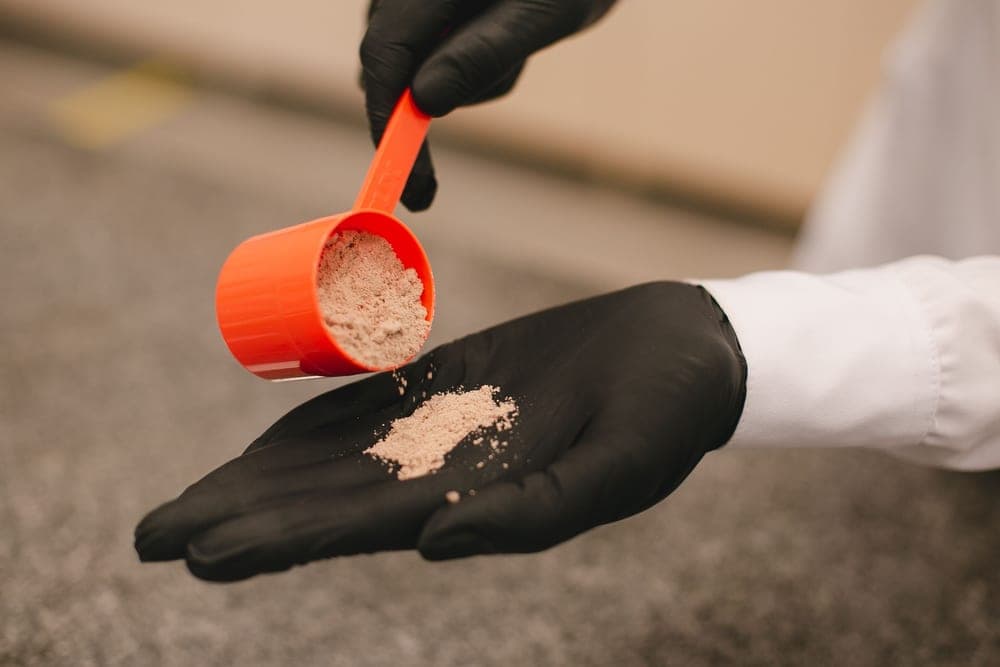
Calcium Hypochlorite Pool Shock
Various (compare available chlorine %)
Unstabilized, fast-acting and strong. This is the tool for an algae bloom precisely because it does not add more cyanuric acid to a pool that probably already has too much.
Key specs
- Type
- Calcium hypochlorite, unstabilized
- Adds stabilizer
- No
- Adds
- Calcium hardness
- Dosing
- By pool volume, per the bag
How it scoresour reading of published specs, not a test result
- Effectiveness
- 9.5
- Ease
- 6.5
- Water impact
- 7.0
- Cost per season
- 9.0
- Value
- 8.8
Overall 8.6 / 10
What works
- No cyanuric acid added, so it does not worsen the problem it is usually solving
- Fast and strong enough to actually break an algae bloom in one treatment when dosed properly
- Cheap per pound of available chlorine
What doesn't
- Adds calcium hardness, which matters in hard-water areas
- Must be dissolved properly or it will bleach a vinyl liner where it settles
- Needs careful storage — it is a genuine oxidizer, not a household product
Skip it if: Routine daily chlorination. This is the emergency tool; tablets are the routine.
What it costs to run: The single most cost-effective way to fix a green pool, and the most commonly under-dosed. Half a dose twice does not equal a full dose once — it just wastes the bag.
One honest season: The cheapest setup that genuinely works for a season of real swimming. Nothing spare, nothing missing.
A gentler shock on a vinyl liner
Dichlor Granular Shock (stabilized)
Various (compare available chlorine %)
Dissolves fast and completely, which makes it kinder to a vinyl liner than cal-hypo. The catch is that it is stabilized, so every shock treatment also adds cyanuric acid.
Key specs
- Type
- Sodium dichlor, stabilized
- Adds stabilizer
- Yes
- Dissolving
- Fast, generally without pre-dissolving
How it scoresour reading of published specs, not a test result
- Effectiveness
- 8.5
- Ease
- 9.0
- Water impact
- 5.5
- Cost per season
- 7.0
- Value
- 7.5
Overall 7.8 / 10
What works
- Dissolves quickly and evenly, so there is much less liner-bleaching risk
- Close to pH neutral, so it does not swing your water while you are fixing it
- Convenient for routine oxidation rather than emergencies
What doesn't
- Adds cyanuric acid every single time, which is a problem in a pool that is never drained
- Generally more expensive per pound of available chlorine than cal-hypo
- Wrong tool for a heavy algae bloom in an already over-stabilized pool
Skip it if: A pool whose cyanuric acid is already high. Check the strip before you reach for this one.
What it costs to run: Costs more per treatment than cal-hypo and carries a hidden cost: the stabilizer it adds eventually forces a partial drain and refill, which is water you pay for.
One honest season: The cheapest setup that genuinely works for a season of real swimming. Nothing spare, nothing missing.
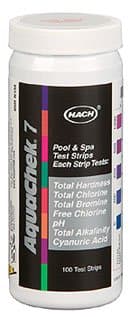
The default first test kit
AquaChek Silver 7-Way Test Strips (100 count)
AquaChek
Seven readings in fifteen seconds, including the two that beginners never measure and then fight all summer: total alkalinity and cyanuric acid.
#ad how this is funded · price as of October 19, 2026
Key specs
- Tests
- Free chlorine, total chlorine, bromine, pH, total alkalinity, total hardness, cyanuric acid
- Free chlorine range
- 0-20 ppm
- pH range
- 6.2-8.4
- Total alkalinity range
- 0-240 ppm
- Cyanuric acid range
- 0-300 ppm
- Read time
- 15 seconds
- Count
- 100 strips
How it scoresour reading of published specs, not a test result
- Ease
- 9.5
- Value
- 9.2
Overall 8.9 / 10
What works
- Covers cyanuric acid, which most cheap strips omit and which is the reason chlorine stops working in a stabilized pool
- pH range spans 6.2-8.4, comfortably bracketing the CDC's recommended 7.0-7.8
- 15 seconds and a color chart printed on the bottle — no separate booklet to lose
- 100 strips is a full season of twice-weekly testing with room to spare
What doesn't
- Strips are a comparison against a printed color chart, so they are directional rather than precise
- Reading them in bright sun is harder than it should be
- The bottle must be kept sealed and dry or the strips degrade quietly
Skip it if: Fine adjustment. If you are chasing a stubborn problem and need a number rather than a color band, a liquid reagent kit is the tool.
What it costs to run: 100 strips at twice-weekly testing covers roughly two seasons for one pool. The real saving is upstream: knowing your alkalinity stops you buying pH adjuster you did not need.
One honest season: The cheapest setup that genuinely works for a season of real swimming. Nothing spare, nothing missing.
Specs from: CDC — home pool and hot tub water treatment and testing
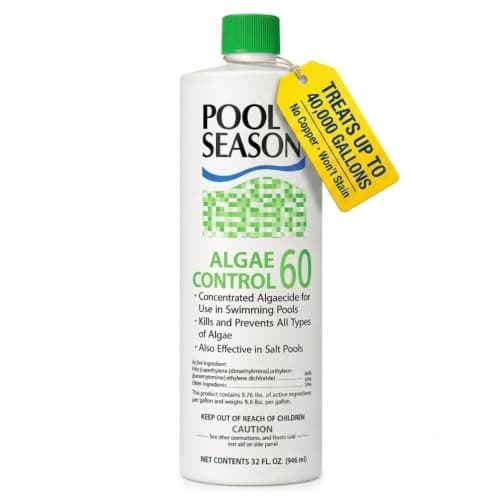
Preventing algae, not curing it
Pool Algaecide (polyquat 60)
Various
Polyquat is the non-foaming, non-staining choice and it is far better at stopping algae than at killing an established bloom. Use it as insurance and as part of closing.
#ad how this is funded · price as of October 19, 2026
Key specs
- Type
- Polyquaternium (polyquat 60)
- Foaming
- Non-foaming, unlike quat algaecides
- Metal content
- None, unlike copper-based algaecides
How it scoresour reading of published specs, not a test result
- Effectiveness
- 7.5
- Ease
- 9.0
- Water impact
- 9.0
- Cost per season
- 7.5
- Value
- 8.0
Overall 8.0 / 10
What works
- Does not foam, which the cheaper quat products do
- No copper, so no risk of the metal staining a vinyl liner
- The standard product in a winterizing routine, for good reason
What doesn't
- Poor at killing an established bloom — shock does that job
- More expensive than copper-based alternatives
- Easy to over-rely on instead of maintaining chlorine
Skip it if: Rescuing a green pool. Brush and shock first; algaecide is what stops it coming back.
What it costs to run: One of the few chemicals where buying the better version is clearly right — a copper algaecide that stains a liner costs vastly more than the few dollars it saved.
One honest season: The cheapest setup that genuinely works for a season of real swimming. Nothing spare, nothing missing.
Questions people actually ask
How much shock does my pool need?
Should I use cal-hypo or dichlor shock?
Why does my pool smell strongly of chlorine?
When is the best time to shock a pool?
Sources
Read next
- Pool care, from someone who assumes you have never done thisThe weekly routine, the four numbers that matter, and the fix for the week the water turns.
- Pool algae: brush, shock, filter, then rebalanceThe correct order for clearing green water, how to tell algae from pollen, and why algaecide prevents rather than cures.
- Cloudy pool water: work out which of four problems you haveA diagnostic decision tree for cloudy water - four causes, how to tell them apart, and the correct fix for each.
- The best chlorine tablets for an above-ground poolTrichlor tablets compared on available chlorine and stabilizer load, with the season-quantity arithmetic for your pool size.
- The best pool test stripsTest strips compared on parameter coverage - specifically whether they read cyanuric acid, which most cheap strips omit.
- Pool shock: what else you are adding decides which one to buyCal-hypo and dichlor shock compared on available chlorine, what each adds to the water for good, published doses and how long before you can swim.