Floats & Fun
The cheapest thing that changes how the pool gets used
A child who can see underwater stays under. An adult who can see stops squinting. Two specifications separate a pair that lasts a season from a pair that lasts a fortnight.
Heads up: we earn a commission if you buy through the links on this page, at no extra cost to you. It never decides the ranking — here is how we pick and here is the full disclosure. Prices are checked automatically; last verified October 8, 2026.
Quick picks
Segmented before it is ranked — the right answer depends on which of these you actually are. Tap any row for the full write-up.
The goggles
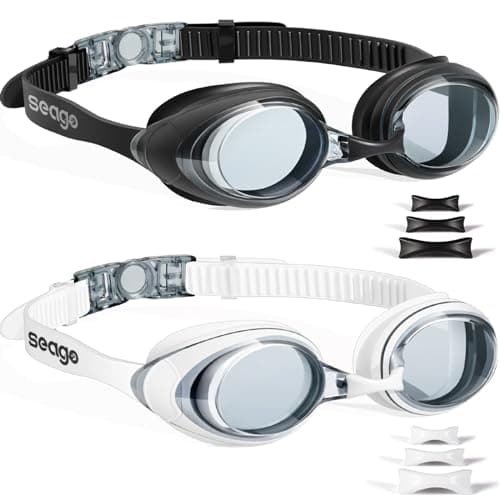
Anti-fog coated, UV protected, and sized to the face that will wear them. Adult, junior and 3-to-6 are three different molds, not three sizes of one.
| # | Product | Best for | Score | Price |
|---|---|---|---|---|
| 1 | Swim Goggles (Anti-Fog) The cheapest thing that changes how a pool is used. Children stay under longer, adults stop squinting, and the anti-fog coating is the one spec that separates a season from a fortnight. | Anyone who opens their eyes underwaterOne honest season | 8.0out of 10 |
What they get used for
Weighted dive toys are the reason children want goggles in the first place, and they work at any depth.
| # | Product | Best for | Score | Price |
|---|---|---|---|---|
| 1 | No image Weighted Dive Toy Set Negatively buoyant rings and sticks that sink and stay put. Cheap, indestructible, and the single best return on money in a pool with children in it. | Keeping kids in the pool for an extra hourSeveral seasons | 8.5out of 10 |
The short version
- Anti-fog is a coating, not a property. It wears off, and rubbing the inside of the lens removes it instantly.
- The nose bridge decides the fit. Interchangeable bridges solve the problem that ends most goggles.
- Kids’ goggles are a different mold, not a shrunken adult one — 3-to-6 is its own size.
- Heat kills them, not water. A pair left on a hot deck warps.
Why this belongs on a pool site at all
Because it changes the denominator. Our cost per swim guide is built on how often the pool actually gets used, and a child who can open their eyes underwater uses it differently — longer sessions, more of them, and games that need looking rather than splashing.
It also solves a complaint people misdiagnose. Stinging eyes get blamed on “too much chlorine” when the actual cause is usually chloramines and pH drift, which our chlorine smell guide explains. Goggles remove the symptom while you fix the cause, and they are considerably cheaper than the chemicals people buy instead.
The four specifications that matter
| Spec | What to look for | Why |
|---|---|---|
| Anti-fog | Stated coating, inside the lens | The single biggest difference in use |
| Nose bridge | Interchangeable on better models | Fit failure is why goggles get abandoned |
| Gasket | Silicone; softer seals better, wears faster | This is the part chlorine degrades |
| Strap | Split strap over single | Stops the slow slide down the back of the head |
| Lens tint | Clear or light for evening swims | Mirrored is darker than people expect |
| UV | Standard on current models | Worth having, rarely a differentiator |
| Size | Adult / junior / 3-6 are separate molds | Not interchangeable by strap adjustment |
The nose bridge is the one worth expanding. Most goggles that end up in a drawer did not break — they leaked, because the distance between the eye cups did not match the face wearing them. Models with two or three interchangeable bridges let you fix that in thirty seconds, and it is the difference between one pair that works and three pairs that disappoint.
Fitting a pair properly
Press the cups on without the strap
Dry face, no strap over the head. Push them gently into the eye sockets and let go. A pair that fits will hold for a second or two on suction alone.If they fall off immediately, change the bridge
That is a bridge width problem, not a strap tension problem. Tightening the strap to compensate is how people end up with rings around their eyes and a headache.Set the strap so it sits above the ears
Around the widest part of the back of the head, not on the neck. A split strap does this on its own; a single strap needs positioning.Tighten until they stop leaking, then stop
Goggles seal by shape, not by pressure. If they only stop leaking when uncomfortably tight, they are the wrong shape for that face.
The three things that actually destroy goggles
Heat. Left on a hot deck or a dashboard, the frame warps and the gasket hardens. This is the most common death and it has nothing to do with the pool.
Chlorine, slowly. Silicone gaskets stiffen over a season of exposure. It is gradual, and rinsing in fresh water after each use genuinely slows it.
Wiping the lens. See above. It is the single most common self-inflicted failure.
Treat goggles as a consumable — roughly one pair per swimmer per season is realistic, and two-packs cost less than buying twice.
What we are scoring
We have not tested these and do not claim to. The scores reflect published construction — stated anti-fog and UV treatment, gasket material, bridge and strap design and sizing — against recreational use in a domestic pool rather than competitive swimming. Our methodology page explains how our scoring works.
The picks, in full
Scores are our own reading of published specifications. They are not test results — we have not tested these products and we do not claim to.
Pick #1 · Anyone who opens their eyes underwater
Swim Goggles (Anti-Fog)
Various
The cheapest thing that changes how a pool is used. Children stay under longer, adults stop squinting, and the anti-fog coating is the one spec that separates a season from a fortnight.
Key specs
- Lens
- Anti-fog coated; the coating is consumable
- UV
- UV protection standard on most current models
- Sizing
- Adult, junior, and 3-6 year sizes are different molds
- Nose bridge
- Fixed or interchangeable, by model
- Gasket
- Silicone; softer is more comfortable, less durable
- Strap
- Split strap holds position better than single
How it scoresour reading of published specs, not a test result
- Fit
- 8.0
- Anti-fog
- 7.5
- Durability
- 6.5
- Comfort
- 8.0
- Value
- 8.5
Overall 8.0 / 10
What works
- Anti-fog and UV coatings are standard now, even at the cheap end
- Junior molds are genuinely different shapes rather than shrunken adult ones
- Interchangeable nose bridges solve the fit problem that ends most goggles
- A split strap stops the slow slide down the back of the head
What doesn't
- Anti-fog coating wears off, and rubbing the inside of the lens destroys it instantly
- Chlorine degrades the silicone gasket over a season
- Cheap goggles leak, and a leaking goggle is worse than no goggle
- Mirrored lenses are darker than people expect for an evening swim
Skip it if: Surviving being left in the sun on a hot deck. Heat is what kills the gasket and warps the frame, not the water.
What it costs to run: Effectively a consumable. One pair per swimmer per season is realistic, and buying a two-pack costs less than buying twice.
One honest season: The cheapest setup that genuinely works for a season of real swimming. Nothing spare, nothing missing.
Specs from: Swimming goggles — current Amazon category listing
Pick #2 · Keeping kids in the pool for an extra hour
Weighted Dive Toy Set
Various
Negatively buoyant rings and sticks that sink and stay put. Cheap, indestructible, and the single best return on money in a pool with children in it.
Key specs
- Type
- Weighted rings, sticks or discs
- Buoyancy
- Sinks and stays upright on the floor
- Material
- Rubber or weighted plastic
How it scoresour reading of published specs, not a test result
- Material
- 9.0
- Valve
- 10.0
- Capacity
- 6.0
- Storage
- 9.0
- Value
- 9.5
Overall 8.5 / 10
What works
- Nothing to inflate, nothing to puncture, nothing to store carefully
- Works in a 30-inch pool where most float toys do not
- Genuinely encourages swimming rather than sitting
What doesn't
- Bright colors fade and then they are harder to find on a blue liner
- Hard edges on cheap sets can mark a vinyl liner
- Small parts, so check the age rating for younger children
Skip it if: Very shallow water, where there is not enough depth to make retrieving them interesting.
Several seasons: Buy-once. Built and warranted to come back out of the box for a few years, if you store it properly.
Questions people actually ask
Why do my swim goggles fog up?
How should swim goggles fit?
Do kids need different goggles?
How long do swim goggles last?
Sources
Read next
- Floats, loungers and the stuff that makes the pool worth havingFloats for adults, toddlers and dogs - ranked on seam and valve construction, which is what actually decides how long they last.
- The best pool toys for a backyard poolWeighted dive toys, foam noodles and games that work in 24 inches of water - and cannot puncture.
- Pool games that work in a backyard pool, not a leisure centerGames that actually work in a shallow above-ground pool, the gear each one needs, and why weighted toys beat everything else per dollar.
- Swim vests and floaties: the label that separates them from toysHow to tell an approved flotation device from a pool toy, what the weight range on the label means, and why neither replaces supervision.
- Toddler pool floats: know which of two products you are buyingThe critical distinction between comfort seats and rated flotation, what to check on the label, and why shade is the underrated feature.
- You cannot swim lengths. You can swim continuously.What above-ground depth and diameter actually allow for swimming, and the tether that turns a round pool into a continuous-swim pool.
- Small children and pool water, without the scare storiesThe hygiene practices that actually change the risk with toddlers in a backyard pool, and the ones that do not.
- The chlorine smell means you need more chlorine, not lessWhat the chlorine smell actually is, why it means the opposite of what people assume, and the test that distinguishes free from combined chlorine.