Pool Equipment
Pool cove: the cheapest part, fitted at the only moment you can
A cove is a strip of foam at the base of the wall that stops the liner ballooning out underneath it. It costs less than a cover and you get exactly one chance to install it.
Heads up: we earn a commission if you buy through the links on this page, at no extra cost to you. It never decides the ranking — here is how we pick and here is the full disclosure. Prices are checked automatically; last verified October 8, 2026.
Quick picks
Segmented before it is ranked — the right answer depends on which of these you actually are. Tap any row for the full write-up.
If you want the published numbers to check
Twenty-one HDPE sections at 48 in each, published as 85 ft of coverage for up to a 27 ft round. The piece size matches every published size chart.
| # | Product | Best for | Score | Price |
|---|---|---|---|---|
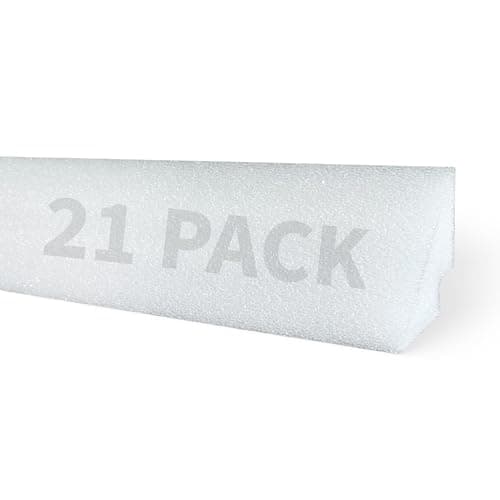
| 1 | Blue Wave Peel and Stick Pool Cove, 21-Pack Twenty-one 48-inch HDPE foam sections, published as 85 ft of coverage. The cove is not a finishing touch — it is what stops the liner being pulled out from under the wall. | A 27 ft round or 18 x 33 ft oval, in one boxSeveral seasons | 8.6out of 10 |
If you would rather buy by pool size than by piece count
Listed against a named pool size instead of a coverage figure. Friendlier - until you notice the pieces are 46 in, not 48.
| # | Product | Best for | Score | Price |
|---|---|---|---|---|
| 1 | 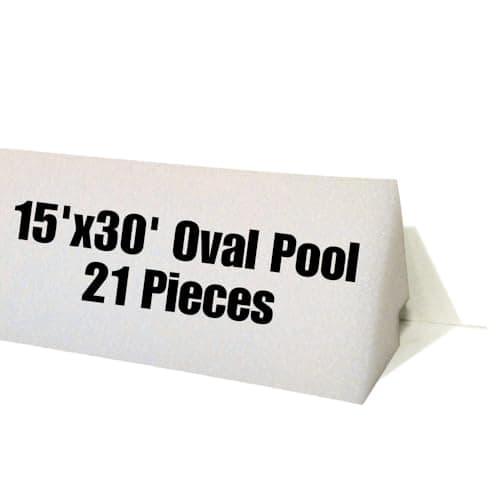 Freetime Fun Peel and Stick Pool Cove, 46 in, 21 Pieces Sold against a named pool size instead of a coverage figure, which is friendlier — until you notice the pieces are 46 inches, not the 48 every published size chart is written in. | Buying by stated pool size rather than by piece countSeveral seasons | 8.0out of 10 |
For the wall, which the cove does not cover
A hundred feet of 1/8 in closed-cell polyethylene for the vertical wall. Complementary to cove, not an alternative to it.
| # | Product | Best for | Score | Price |
|---|---|---|---|---|
| 1 | 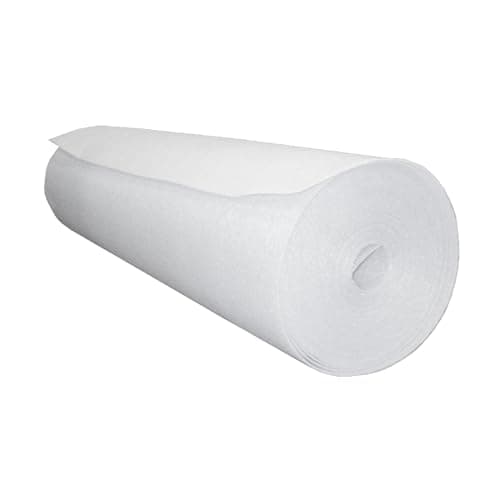 Blue Wave Pool Wall Foam, 48 in x 100 ft x 1/8 in A hundred feet of 1/8 in closed-cell polyethylene for the vertical wall. Different product, different job: the cove protects the liner at the base, this protects it from the wall itself. | The wall, which the cove does not coverSeveral seasons | 8.1out of 10 |
The short version
- The cove is structural. It stops the liner being pushed out under the wall, which is a known failure point rather than a theoretical one.
- One install window, ever. It goes in before the sand and before the liner. Retrofitting means pulling the liner.
- Every published size chart is in 48-inch units. One product here is 46 in, which changes the piece count.
- Cove and wall foam are different parts. The cove handles the base; the foam handles the vertical wall. Only the first is close to mandatory.
What a cove is and what happens without one
Where the steel wall of an above-ground pool meets the floor there is a right angle. A vinyl liner pressed into a right angle by several tons of water does not stay in the corner — it gets forced into the gap under the bottom of the wall track, and it stretches there. Over a season or two that stretch becomes a thin spot, and a thin spot at the lowest, most loaded point of the liner is where a liner fails.
A cove is a triangular strip of foam that fills that angle so the liner curves instead of folding. The published description of its purpose is unambiguous: a cove “is needed to keep the swimming pool liner from coming out under the bottom of the pool wall”, creating a smooth transition between floor and wall.
The size chart, which is the whole purchase
Cove is sold by the piece and every published chart works in 48-inch units, because that is the standard section length. Here is the full chart from the source above, so you can count rather than guess.
| Round pool | Pieces | Oval pool | Pieces |
|---|---|---|---|
| 15 ft | 12 | 12 x 20 ft | 15 |
| 18 ft | 15 | 15 x 25 ft | 17 |
| 21 ft | 17 | 15 x 30 ft | 20 |
| 24 ft | 19 | 16 x 32 ft | 21 |
| 27 ft | 22 | 18 x 33 ft | 22 |
| 30 ft | 24 | 18 x 40 ft | 26 |
| 33 ft | 26 | 21 x 41 ft | 27 |
Two things that chart tells you. First, most frame-pool owners need far fewer pieces than the packs on sale contain — a 15 ft round needs 12 and the common packs are 19 and 21. Second, the counts are not proportional to diameter in a way you can eyeball, so counting matters.
Published specifications, side by side
| Product | Pieces | Piece size | Published coverage | Material |
|---|---|---|---|---|
| Blue Wave cove, 21-pack | 21 | 48 x 4 x 3 in | 85 ft, up to 27 ft round or 18 x 33 oval | HDPE |
| Freetime Fun cove, 21 pcs | 21 | 46 in long; cross-section not published | Not published - computes to 80.5 ft | Dense closed-cell foam |
| Blue Wave wall foam | 1 roll | 48 in x 100 ft x 1/8 in | 100 ft of wall | Closed-cell polyethylene |
The Blue Wave product also publishes its cross-section, 4 in wide by 3 in high, which the other does not. Cove height is what decides whether the liner actually curves rather than folding, and the common installer rule of thumb is a 6 in cove shaped from sand — so a 3 in foam cove is doing the job with less material by being the right shape rather than a bigger pile.
Why the material claim matters here
Cove sits in wet sand for the whole life of the pool, under constant compression. The published materials across the category are HDPE, Ethafoam and “dense closed-cell foam”, and the one spec worth having is closed-cell — an open-cell foam in wet sand becomes a sponge, and a compressed sponge is not a cove.
The source above describes its Ethafoam version as “chemically neutral”, safe for use with all swimming pool liners, and it “will not change shape or indent”. Chemically neutral is not a small claim: anything in permanent contact with a vinyl liner that plasticiser can migrate into will eventually make the liner brittle at that line, and a brittle line at the wall base is the failure the cove exists to prevent.
Wall foam is a different purchase
It is on this page because it is fitted in the same hour and almost nobody knows it exists, not because it is an alternative. Wall foam is a thin closed-cell sheet that goes between the steel wall and the liner, published as an insulating barrier that cuts heat loss and guards the liner from rips, dents and punctures.
The honest limitation is the width. The roll is 48 in and the walls this site mostly covers are 52 in, so the top four inches are unprotected. That is not a disaster — the top of the wall is not where a liner gets damaged — but it does mean the product is not sized for the most common modern wall height, which is worth knowing before you order.
| Part | Where it goes | What it prevents | Skippable? |
|---|---|---|---|
| Cove | Base of the wall, inside | Liner pulled out under the wall track | Not really |
| Liner pad | Under the whole floor | Stones and roots coming up through the floor | Risky to skip |
| Wall foam | Vertical wall, behind the liner | Dents and ridges telegraphing through | Yes, with a small penalty |
Our liner pad roundup covers the middle row, which is the one most people have heard of. The cove is the one that is cheapest, least known and hardest to add later, which is an unfortunate combination and the reason it is worth a page.
What this saves you
A liner is the single largest consumable on an above-ground pool, and our liner replacement page prices it. Cove for a 15 ft pool is a fraction of that, fitted once, protecting the liner at the exact point where published failure modes concentrate.
That is the whole argument, and it is unusually one-sided for a pool accessory. There is no running cost, nothing to maintain, nothing to replace, and no scenario where fitting it makes anything worse. The only reason not to is that your pool is already up — in which case our patch kit roundup is the page for the wall-base leak when it arrives, and this page is the one to re-read when you next pull the liner.
The picks, in full
Scores are our own reading of published specifications. They are not test results — we have not tested these products and we do not claim to.
Pick #1 · A 27 ft round or 18 x 33 ft oval, in one box
Blue Wave Peel and Stick Pool Cove, 21-Pack
Blue Wave
Twenty-one 48-inch HDPE foam sections, published as 85 ft of coverage. The cove is not a finishing touch — it is what stops the liner being pulled out from under the wall.
#ad how this is funded · price as of October 8, 2026
Key specs
- Pack
- 21 pieces, published
- Piece size
- 48 in long x 4 in wide x 3 in high, published
- Total coverage
- 85 ft of liner coverage, published
- Fits
- Up to 27 ft round or 18 x 33 ft oval, published
- Material
- HDPE, published
- Fixing
- Peel-and-stick adhesive backing, published
- When to install
- Before spreading sand and before the liner goes in, published
How it scoresour reading of published specs, not a test result
- Sizing fit
- 8.5
- Running cost
- 10.0
- Maintenance
- 9.5
- Build
- 8.0
- Value
- 8.0
Overall 8.6 / 10
What works
- Publishes piece dimensions, total linear coverage and the pool sizes it fits, so you can check the count yourself
- 48 in pieces match the industry size charts, which are all written in 48 in units
- Peel-and-stick means no sand-and-trowel cove and no hand-shaping at the wall
- One box covers the largest common round pool, so most buyers need exactly one
What doesn't
- Sized for pools much larger than most frame pools, so a 12 or 15 ft owner is paying for pieces they will not use
- Adhesive needs a clean, dry wall base — a damp or sandy wall and the pieces move during liner install
- Nothing published about the adhesive's temperature range, and this is a cold-morning job
- No warranty published
Skip it if: Retrofitting. The cove goes in before the liner, so adding one to an existing pool means draining it and pulling the liner, which is a liner-replacement job rather than an afternoon.
What it costs to run: This is the cheapest insurance on a liner on the whole site. Our liner-replacement page prices the thing it prevents, and the ratio is not close.
Several seasons: Buy-once. Built and warranted to come back out of the box for a few years, if you store it properly.
Specs from: Royal Swimming Pools — foam pool cove, published dimensions and pool-size-to-piece chart
Pick #2 · Buying by stated pool size rather than by piece count
Freetime Fun Peel and Stick Pool Cove, 46 in, 21 Pieces
Freetime Fun
Sold against a named pool size instead of a coverage figure, which is friendlier — until you notice the pieces are 46 inches, not the 48 every published size chart is written in.
#ad how this is funded · price as of October 8, 2026
Key specs
- Pack
- 21 pieces, published
- Piece length
- 46 in, published
- Fits
- Published for a 15 x 30 ft oval above-ground pool
- Material
- Dense closed-cell foam, published
- Fixing
- Adhesive back, published
- Cross-section
- Not published
- Total coverage
- Not published — 21 x 46 in computes to 80.5 ft
How it scoresour reading of published specs, not a test result
- Sizing fit
- 7.5
- Running cost
- 10.0
- Maintenance
- 9.0
- Build
- 7.0
- Value
- 7.5
Overall 8.0 / 10
What works
- Listed against a specific pool size, so there is no chart to read
- Closed-cell foam, which is the right material family for something sitting in wet sand
- Sold in a round-pool version too, at a stated 23 pieces for 27 ft
- Cheaper per box than the HDPE alternative here
What doesn't
- 46 in pieces do not match the 48 in units every published size chart uses, so cross-checking the count takes arithmetic
- No cross-section published, and cove height is what decides whether it does its job
- No total coverage figure published — you have to compute it
- No warranty and no material spec beyond "dense closed cell foam"
Skip it if: Mixing with other brands. Two inches of difference per piece compounds around a circumference, so a top-up box from another maker leaves you trimming.
What it costs to run: Check the published size chart against your own pool before you buy by name. The chart on this page lists 20 pieces for a 15 x 30 oval in 48 in units, which is 80 ft — the same coverage this 21-piece box gives at 46 in.
Several seasons: Buy-once. Built and warranted to come back out of the box for a few years, if you store it properly.
Pick #3 · The wall, which the cove does not cover
Blue Wave Pool Wall Foam, 48 in x 100 ft x 1/8 in
Blue Wave
A hundred feet of 1/8 in closed-cell polyethylene for the vertical wall. Different product, different job: the cove protects the liner at the base, this protects it from the wall itself.
#ad how this is funded · price as of October 8, 2026
Key specs
- Roll size
- 48 in wide x 100 ft long x 1/8 in thick, published
- Material
- Closed-cell polyethylene, published
- Published purpose
- Insulating barrier that cuts heat loss and guards the liner from rips, dents and punctures
- Fitting
- Published as trimming to fit
- Adhesive
- Not published — this is a roll, not a peel-and-stick product
- Height match
- 48 in roll against a 52 in wall leaves 4 in uncovered
How it scoresour reading of published specs, not a test result
- Sizing fit
- 7.0
- Running cost
- 10.0
- Maintenance
- 9.0
- Build
- 7.5
- Value
- 8.0
Overall 8.1 / 10
What works
- The only product here that addresses the wall rather than the base
- A hundred feet goes right round a 30 ft round pool with overlap to spare
- Closed-cell, so it does not wick water behind the liner
- Published to help with heat loss as well as protection, which is a second reason on a cold-climate pool
What doesn't
- 48 in wide against the 52 in walls this site mostly covers — the top four inches are not protected
- No adhesive and no fixing method published, so you are taping or relying on the liner to hold it
- 1/8 in is thin; it stops a dent telegraphing, not a sharp edge
- No heat-loss figure published, so the insulation claim cannot be checked
Skip it if: Being a substitute for cove. These are complementary, not alternatives, and the cove is the one that is structurally doing something.
What it costs to run: Cheap per foot and the right thing to add while the pool is apart, because the only time you can fit it is the same time you can fit the cove.
Several seasons: Buy-once. Built and warranted to come back out of the box for a few years, if you store it properly.
Pick #4 · The pad sold pre-cut to your exact pool
Blue Wave Gorilla Floor Padding
Blue Wave
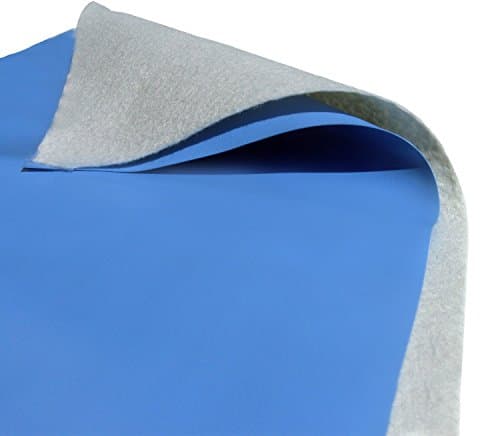
A geotextile developed for landfill liners, sold pre-cut to your pool size and shape. It is the one here with a published size chart covering round, oval and rectangular pools.
Key specs
- Material
- Geotextile, described by Blue Wave as developed to protect landfill liners
- Sizes
- Round 12 ft to 33 ft; oval 10 x 19 ft to 21 x 43 ft; rectangular 12 x 20 ft to 16 x 32 ft
- Supplied
- Pre-cut to the pool size ordered
- Protects against
- Cuts from grass, roots, rocks and glass under the liner
- Warranty
- 90 days per Blue Wave; one retailer listing claims one year — confirm before buying
- Thickness / weight
- Not published by the manufacturer
How it scoresour reading of published specs, not a test result
- Sizing fit
- 9.0
- Running cost
- 8.5
- Maintenance
- 8.0
- Build
- 8.0
- Value
- 8.0
Overall 8.3 / 10
What works
- Pre-cut to the pool size and shape, so there is no trimming and no seam in the middle of the floor
- The widest published size chart here, including ovals and rectangles
- Geotextile rather than foam, which grass and roots cut through
- Blue Wave publishes the size chart and the warranty terms, which several competitors do not
What doesn't
- Neither thickness nor fabric weight is published, so it cannot be compared on the numbers
- The published warranty is 90 days, the shortest here, and nut grass damage is excluded
- Manufacturer and retailer listings disagree on the warranty length
- Pre-cut means ordering the right size first time; there is no trimming a large one down
Skip it if: Being compared on paper. Blue Wave publishes what it is made of and what it resists, but not the thickness or fabric weight, so a spec-by-spec comparison against the Rhino Pad is not possible.
What it costs to run: A pad is bought once and stays under the pool for the life of the liner. Priced against a liner replacement, it is the cheapest insurance on the pool — our liner replacement guide has the number it is protecting.
Several seasons: Buy-once. Built and warranted to come back out of the box for a few years, if you store it properly.
Specs from: Blue Wave — liner pad for above-ground pools, published sizes and warranty, Pool Warehouse — Blue Wave Gorilla floor padding, published description
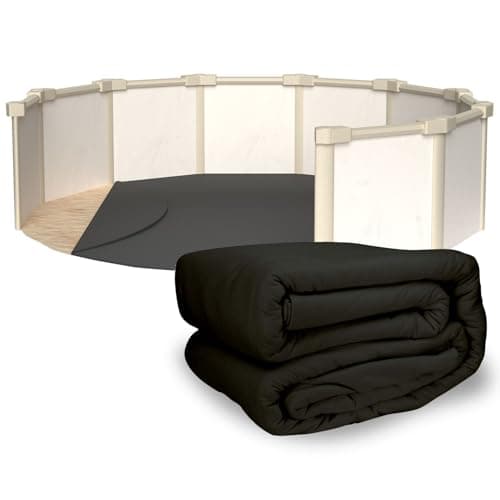
Pick #5 · The longest warranty of the pads here
Rhino Pad Above-Ground Pool Liner Pad
Rhino
A woven geotextile with a two-year warranty, made largely from recycled material and sold pre-cut for round, oval and rectangular pools. Published thickness figures disagree between retailers.
#ad how this is funded · price as of October 8, 2026
Key specs
- Material
- Woven geotextile fabric, high-density cloth fiber
- Recycled content
- 45% post-consumer and 45% industrial recycled material
- Thickness
- Retailer listings conflict: 1/8 in on one, 1/16 in and 350 g/m² on another
- Sizes
- Round, oval and rectangle, pre-cut and trimmable; smallest listed 12 ft round
- Suitable over
- Concrete, decks, dirt, wood and grass
- Warranty
- Two-year limited; nut grass and other weeds excluded
How it scoresour reading of published specs, not a test result
- Sizing fit
- 8.5
- Running cost
- 8.5
- Maintenance
- 8.0
- Build
- 8.5
- Value
- 8.0
Overall 8.3 / 10
What works
- A two-year limited warranty, the longest published among the pads here
- Pre-cut to the pool shape and still trimmable on site
- Rated by the seller for use over concrete and decking as well as soil
- Largely recycled content, which is unusual in this category
What doesn't
- Published thickness conflicts between retailers, so treat any single figure with suspicion
- Retailer copy claims it both passes moisture through and acts as a vapor barrier, which cannot both be true
- Nut grass, the weed most likely to pierce a liner, is excluded from the warranty
- No manufacturer page publishes the fabric weight for the round sizes
Skip it if: Stopping nut grass. The warranty excludes exactly the weed that most often comes through a pool floor, which tells you what the fabric cannot do.
What it costs to run: Sold per pool size, bought once. The running cost is zero; the saving is the liner it keeps whole, and a liner is the single largest occasional cost on an above-ground pool.
Several seasons: Buy-once. Built and warranted to come back out of the box for a few years, if you store it properly.
Specs from: PoolSupplies.com — Rhino Pad published material, sizes and suitable surfaces, SwimmingPoolLiners.com — Rhino Pad 33 ft round, published warranty terms
Pick #6 · When the liner has failed, not before
Replacement Above-Ground Pool Liner
Various
The one repair that is genuinely worth doing rather than replacing the whole pool, provided the frame is sound. Measure twice: liner fit is unforgiving.
Key specs
- Types
- Overlap, beaded and unibead — they are not interchangeable
- Measure
- Diameter and wall height, exactly
- Gauge
- Published in mil — thicker lasts longer and is harder to fit
How it scoresour reading of published specs, not a test result
- Running cost
- 9.0
- Value
- 8.0
Overall 7.9 / 10
What works
- Far cheaper than replacing a pool whose frame is still good
- A thicker gauge liner outlasts the original on most budget kits
- Beaded liners can be replaced without dismantling the top rail
What doesn't
- Overlap, beaded and unibead are different fitting systems and buying the wrong one is a total loss
- Fitting is a warm-day job — cold vinyl will not stretch into place
- A liner failure often reveals a frame or base problem that caused it
Skip it if: A pool whose frame is corroded. Replacing the liner in a failing frame just moves the failure a few months out.
What it costs to run: The largest single unplanned expense of above-ground pool ownership, and it is mostly preventable: a ground cloth, a level base and a winter close done properly are what decide whether you ever buy one.
Several seasons: Buy-once. Built and warranted to come back out of the box for a few years, if you store it properly.
Questions people actually ask
Does an above-ground pool need a cove?
How many pieces of pool cove do I need?
Can I add a cove to a pool that is already up?
Is pool cove the same as a liner pad?
Do I need pool wall foam as well?
Sources
Read next
- Equipment, sized to your pool and costed by the wattPumps, filters, vacuums, heaters and ladders - matched to your gallons and priced by what they draw.
- The pad under the liner is the cheapest part of the buildGeotextile floor pads compared on the numbers makers actually publish: fabric weight, woven or non-woven, pre-cut sizes and what the warranty quietly excludes.
- The liner is the most expensive thing you can wreck in an afternoonBeaded, overlap and unibead liners explained, what gauge in mil buys, and the patch kit that turns a leak into a fifteen-minute job.
- How to set up an above-ground pool properlyLeveling, ground protection, filling and priming - the afternoon that decides how the rest of the season goes.
- Leveling the ground, and the weight that makes it matterThe tolerance manufacturers publish, the weight of water that enforces it, and the method for getting a circle genuinely flat with hand tools.
- What an above-ground pool can and cannot sit onEvery common surface assessed, with the load per square foot each pool size actually applies - the number that rules a deck in or out.
- Liner replacement: the big occasional cost, and how to avoid itOverlap, beaded and unibead are not interchangeable - plus the three habits that decide whether you ever need a replacement.
- The patch kit is the difference between a hole and a new linerUnderwater vinyl repair kits compared on cure time, patch material supplied and what each maker actually publishes — plus the one that sets in thirty minutes.
- The best permanent above-ground pools, and what makes one permanentSteel- and resin-wall above-ground pools built to stay up all year, compared on wall coating, liner gauge, what ships in the box and the warranty behind it.