Pool Equipment
The patch kit is the difference between a hole and a new liner
A pinhole in a vinyl liner is a twenty-dollar problem or a thousand-dollar one, and the thing that decides which is whether you own eight dollars of adhesive before it happens.
Heads up: we earn a commission if you buy through the links on this page, at no extra cost to you. It never decides the ranking — here is how we pick and here is the full disclosure. Prices are checked automatically; last verified October 8, 2026.
Quick picks
Segmented before it is ranked — the right answer depends on which of these you actually are. Tap any row for the full write-up.
The deep repair
The only kit here with a published technique for a patch applied below the waterline: glue it, fold it, carry it down, unfold it on the tear.
| # | Product | Best for | Score | Price |
|---|---|---|---|---|
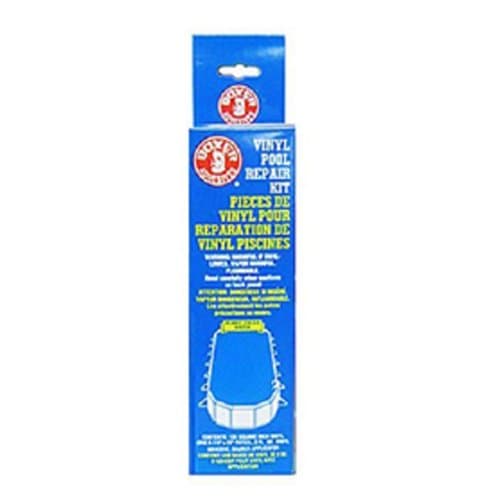
| 1 | Boxer 859 Underwater Vinyl Pool Repair Kit, 2 oz The kit with published underwater technique: fold the glued patch on itself, carry it down, unfold it on the tear. It is slower to cure than anything else here, and that is the point. | A hole you cannot drain down toOne honest season | 8.3out of 10 |
Most patch material
Four large clear patches and a 4 oz tube. The kit to own if the liner is old enough that you expect a second and third repair.
| # | Product | Best for | Score | Price |
|---|---|---|---|---|
| 1 | 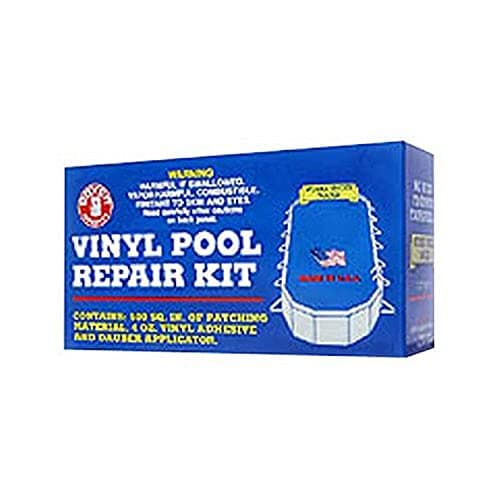 Boxer Adhesives Vinyl Pool Repair Kit, 4 oz The same adhesive family in a 4 oz tube with 500 square inches of clear patch. If you have a liner with a history, this is the size to own. | The most patch material per dollarOne honest season | 8.2out of 10 |
Fixed in thirty minutes
No adhesive, no cure. Cut it, round the corners, press it on, leave it half an hour. The right answer for a pinhole on a Saturday.
| # | Product | Best for | Score | Price |
|---|---|---|---|---|
| 1 | 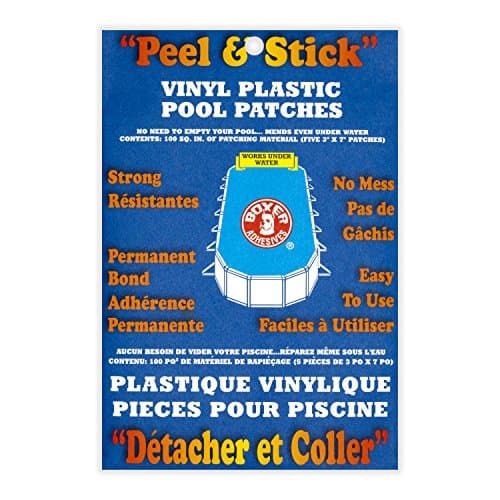 Boxer Adhesives Peel-and-Stick Vinyl Pool Patch No tube, no brush, no cure time worth the name: cut it, round the corners, press it on. Thirty minutes undisturbed and the pool is usable. | A fix that holds in half an hourOne honest season | 8.3out of 10 |
The one on the shelf locally
Stocked by most pool shops, with a single long patch that suits a straight split. It publishes less about itself than the others.
| # | Product | Best for | Score | Price |
|---|---|---|---|---|
| 1 | 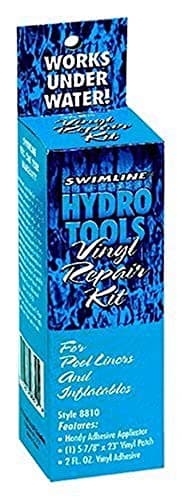 Swimline HydroTools Vinyl Liner Wet Patch Repair Kit Two ounces of adhesive and a single 6 by 24 inch clear patch, sold everywhere. It does the job; it simply publishes less about itself than the Boxer kits do. | The one most pool shops stockOne honest season | 7.8out of 10 |
The short version
- Buy it before you need it. A leak is discovered on a Friday evening in July. The kit that is already in the shed is the one that gets used.
- Every kit here works underwater. You do not drain a vinyl pool to patch it, and draining is the single most dangerous thing you can do to an old liner.
- Cure time is the spec that differs. Thirty minutes for peel-and-stick, 24 hours for liquid adhesive, and up to a week for a full underwater cure.
- Round the corners of the patch. Every manufacturer says it. Square corners lift, and a lifted corner is a new leak.
Why patching beats the alternative
A vinyl liner is a bag of water held in shape by the water it contains. Latham, which makes liners, is blunt about what happens when you take that water away: a vinyl liner pool “should never be completely drained”, because the water is what holds the liner in place, and an exposed liner dries out, shrinks and wrinkles. Latham adds that if you must drain, never remove more than half the volume.
So the repair has to happen with the pool full. That is why every kit in this roundup is sold as an underwater product, and why the interesting specification is not strength but cure time in water.
The economics are not close. A patch kit costs less than a bag of chlorine tablets. Our liner replacement guide prices the alternative, and a replacement liner is the largest occasional cost most above-ground pools ever incur. Between those two numbers sits a tube of adhesive.
Finding the hole before you can fix it
Most owners discover a leak as an unexplained drop in level, which is not the same as proof. Evaporation, splash-out and a week of hot wind all lower a pool. Before buying a kit, establish that you have a hole at all, and then find it.
Rule out evaporation
Float a bucket of pool water on the top step or a lounger tied to the ladder, with the inside level matched to the pool. After 24 hours, compare. If both dropped the same, you do not have a leak.Decide whether it is the pool or the plumbing
Mark the level, turn the pump off for 24 hours, then compare against a pump-on day. Faster loss with the pump running points at hoses and fittings rather than the liner.Look where the liner is worked hardest
Creases at the wall, the area under the ladder, and anywhere a toy with a hard edge lives. Our liners guide covers what actually wears vinyl out.Use dye, not guesswork
With the pump off and the water still, release a little food dye near the suspected spot. A hole draws the dye into it in a visible thread.Mark it before you surface
You will not find it twice. Mark the spot with a weighted marker or a strip of tape above the waterline directly over it.
The specifications that actually differ
1. Cure time underwater. This is the number that decides your weekend. The Boxer peel-and-stick patch asks for a minimum of 30 minutes undisturbed. The Boxer 859 liquid kit asks for 24 hours dry, 48 hours undisturbed underwater, and four to seven days for a full cure — although one retailer for the same product states 24 hours, a conflict worth knowing about. Swimline publishes no cure time at all.
2. How much patch material is in the box. This varies by a factor of five. The Boxer 110 kit contains four 23 x 6 inch patches, 500 square inches in total. The 859 kit has 130 square inches. Peel-and-stick gives you five 3 x 7 inch rectangles, 100 square inches. Swimline supplies one 6 x 24 inch patch.
3. Clear or colored vinyl. Clear patches disappear against most liner prints. Three of the four kits here are clear; it is worth checking, because a visible patch in the middle of a pool floor is a permanent reminder.
4. What else it bonds. All four bond inflatables as well as liners, which means one kit covers the pool, the loungers and the rings. Our float repair guide deals with the inflatable side, where the technique differs slightly.
| Kit | Patch supplied | Adhesive | Published cure | Underwater |
|---|---|---|---|---|
| Boxer 859 | 130 sq in (6 x 22 in) | 2 oz #100 | 24 h dry; 48 h undisturbed, 4-7 days full | Yes, with published method |
| Boxer 110 | 500 sq in (4 x 23 x 6 in) | 4 oz | 24 hours | Yes |
| Boxer peel-and-stick | 100 sq in (5 x 3 x 7 in) | Pre-applied | 30 minutes minimum | Yes |
| Swimline 8810 | 1 patch, 6 x 24 in | 2 oz | Not published | Yes |
How to make the repair hold
The failure mode for a vinyl patch is almost never the adhesive. It is the preparation and the shape of the patch. Boxer’s own instructions specify clean surfaces and rounded corners, and the peel-and-stick sheet adds that the patch should be cut about three quarters of an inch larger than the hole all round.
Cut the patch first, on dry land
Size it about 3/4 in larger than the damage on every side, then round every corner. A square corner is a lever; water and feet will eventually lift it.Clean the area
Wipe algae and film off the liner around the hole. Adhesive bonds to vinyl, not to the biofilm growing on it.Apply adhesive and fold the patch on itself
For a deep repair, Boxer's published method is to coat the patch, fold it glue-to-glue, take it down, then unfold it at the tear so the adhesive never meets open water on the way.Press from the middle outward
Squeeze the water out from the center to the edges so no bubble is trapped under the patch. A trapped bubble becomes a lifted edge.Leave it alone
Thirty minutes for peel-and-stick, 48 hours for a liquid-adhesive patch under water. Keep swimmers and the vacuum away from it for the full time.
When a patch is the wrong answer
A patch fixes a hole. It does not fix a liner that has reached the end of its life, and knowing the difference saves you doing the work twice.
Three signs that you are patching a liner that needs replacing. First, the vinyl has gone stiff and chalky at the waterline — that is UV damage through the whole material, and the next tear will be somewhere else. Second, the liner has shrunk enough that it is pulling out of the track or stretching at the corners. Third, you are on your fourth patch of the season. Our lifespan guide sets out what a liner reasonably lasts and what shortens it.
The other case is a tear along a seam. Seams carry load, and a patch over a seam is being asked to be stronger than the original weld. It can hold for a season, and it is worth doing to get you there, but plan for the replacement rather than hoping.
What a leak actually costs while you wait
A slow leak is not free. It is water, and it is every chemical dissolved in that water, leaving continuously. Our cost-to-fill guide prices the water; the chemistry on top of it is the part people forget, because a pool that is constantly being topped up is also constantly being re-dosed and re-balanced.
That is why the patch kit is worth owning before the leak. The repair itself takes twenty minutes. The delay between discovering the hole and having the kit in your hand is where the money goes, and a pool shop that is closed on Sunday does not care about your liner.
It is also the reason the peel-and-stick kit rates as highly as it does despite holding the least material. Half an hour to a usable pool, with no tube to open, is worth a great deal on the day — and the liquid kits are still there for the repairs that deserve a proper cure.
How we picked
We have not tested these kits. The scores are our reading of what each manufacturer and retailer publishes, with credit given for publishing a cure time at all. Where two pages for the same product disagree — and for the Boxer 859 kit they disagree about both the adhesive volume and the undisturbed time — we have said so rather than picking the number that reads better.
Storing the kit so it works when you need it
A patch kit is bought in advance and used in a hurry, which means storage decides whether it is any use. None of the four manufacturers here publishes a shelf life, so the sensible assumptions are the ones that apply to any solvent adhesive: cool, dry, sealed, and indoors rather than in a shed that reaches 120°F in August.
Two practical habits. Keep the tube upright in a sealed bag, because a half-used tube that has been on its side in a toolbox is usually a solid tube by the following summer. And keep the kit with the pool gear rather than in a general toolbox, so it is where you look when the level starts dropping.
The peel-and-stick patches have the same issue in a different form: pre-applied adhesive has a finite life in the packet, and nothing published says how long. If a kit has been in the shed for several seasons, test a patch on a scrap before trusting it with the repair.
The repairs that are not worth attempting
A patch is a local fix for a local hole. Three situations are not that, and knowing them in advance saves an afternoon.
A tear along a seam. Factory seams carry load. A patch bridging one is being asked to be stronger than the weld that failed, and it will usually let go again. It is worth doing to finish a season; it is not a repair.
Brittle, chalky vinyl. If the liner has gone stiff and pale at the waterline, the material itself has degraded from UV, and the next hole will appear somewhere else. Our lifespan guide covers what that means for the pool.
A liner that has shrunk. Once a liner is pulling out of the track or stretching at the corners, patching the symptom does not address a liner that no longer fits the pool. In The Swim notes that older liners can shrink and, when stiff and brittle, tear when disturbed — which is also why draining to patch is the wrong instinct.
In all three cases the honest answer is a liner replacement, priced in our replacement guide, with the patch kit used to get to a convenient point in the season rather than to avoid the bill indefinitely.
The picks, in full
Scores are our own reading of published specifications. They are not test results — we have not tested these products and we do not claim to.
Pick #1 · A hole you cannot drain down to
Boxer 859 Underwater Vinyl Pool Repair Kit, 2 oz
Boxer Adhesives
The kit with published underwater technique: fold the glued patch on itself, carry it down, unfold it on the tear. It is slower to cure than anything else here, and that is the point.
#ad how this is funded · price as of October 8, 2026
Key specs
- Underwater
- Yes — published method for applying below the waterline
- Adhesive
- 2 oz tube of #100 vinyl adhesive with dauber applicator (one retailer lists 4 fl oz)
- Patch supplied
- 130 sq in of patching vinyl (6 x 22 in)
- Cure, dry
- Allow 24 hours
- Cure, underwater
- Do not disturb 48 hours; 4 to 7 days for full cure (one retailer states 24 hours)
- Prep
- Clean surfaces; round the corners of the patch
- Shelf life
- Not published
How it scoresour reading of published specs, not a test result
- Sizing fit
- 8.5
- Running cost
- 9.0
- Maintenance
- 7.5
- Build
- 8.0
- Value
- 8.5
Overall 8.3 / 10
What works
- Published, specific instructions for a repair made below the waterline rather than vague 'wet or dry' copy
- 130 square inches of patch vinyl, enough for several repairs
- Bonds inflatables as well as liners, so one kit covers the pool and the floats
- Cheap enough to keep in the shed before you need it
What doesn't
- Full cure is measured in days, not minutes, so a leaking pool stays leaking for a while
- Sources disagree on both the adhesive volume and the undisturbed time
- Solvent adhesive needs care around children and a mask or goggles for the dive
- Shelf life is not published, and an opened tube does not keep indefinitely
Skip it if: Speed. If you want the hole closed in half an hour, this is the wrong product in the range — the peel-and-stick patch is the one for that.
What it costs to run: A patch kit competes with a replacement liner, not with another patch kit. Our liner replacement guide prices the alternative; the kit is a rounding error against it.
One honest season: The cheapest setup that genuinely works for a season of real swimming. Nothing spare, nothing missing.
Specs from: INYOPools — Boxer 859 underwater vinyl repair kit, published contents and instructions, Pool Geek — Boxer 859 vinyl pool repair kit listing
Pick #2 · The most patch material per dollar
Boxer Adhesives Vinyl Pool Repair Kit, 4 oz
Boxer Adhesives
The same adhesive family in a 4 oz tube with 500 square inches of clear patch. If you have a liner with a history, this is the size to own.
#ad how this is funded · price as of October 8, 2026
Key specs
- Underwater
- Can be applied underwater or on dry surfaces
- Adhesive
- 4 oz of Boxer vinyl adhesive with applicator brush
- Patch supplied
- Four clear vinyl patches, 23 x 6 in — 500 sq in total
- Cure
- Allow 24 hours to dry; do not disturb a deep-water patch for 24 hours
- Bonds
- Vinyl liners and vinyl plastics, above and below the waterline
- Shelf life
- Not published
How it scoresour reading of published specs, not a test result
- Sizing fit
- 8.0
- Running cost
- 9.0
- Maintenance
- 7.5
- Build
- 8.0
- Value
- 8.5
Overall 8.2 / 10
What works
- Nearly four times the patch material of the 2 oz kit for a small step up in price
- Clear patches, which disappear against most liner patterns better than colored vinyl
- Published as usable underwater or dry, so one kit covers both cases
- 24-hour published cure rather than the multi-day figure quoted for the 859 kit
What doesn't
- No published full-cure figure for underwater repairs, only the undisturbed time
- More adhesive than a single repair needs, and shelf life is not published
- Still a solvent adhesive — ventilation and care around children
- Large patches have to be cut down, which means rounding corners yourself
Skip it if: One-off use. Buying 500 square inches of patch for a single pinhole is over-buying; the peel-and-stick kit exists for that.
What it costs to run: Priced per square inch of patch, this is the cheapest vinyl in the category. It only makes sense if the liner is old enough that you expect a second and third repair.
One honest season: The cheapest setup that genuinely works for a season of real swimming. Nothing spare, nothing missing.
Specs from: EZ Test Pools — Boxer Adhesives 110 vinyl liner repair kit, published contents, Pool Geek — Boxer Adhesives 110 vinyl pool repair kit
Pick #3 · A fix that holds in half an hour
Boxer Adhesives Peel-and-Stick Vinyl Pool Patch
Boxer Adhesives
No tube, no brush, no cure time worth the name: cut it, round the corners, press it on. Thirty minutes undisturbed and the pool is usable.
Key specs
- Underwater
- Rated for use underwater or on dry surfaces
- Adhesive
- None separate — pre-applied to the patch
- Patch supplied
- Five rectangles, 3 x 7 in — 100 sq in total
- Set time
- Do not disturb for a minimum of 30 minutes; longer bonds better
- Sizing
- Cut about 3/4 in larger than the hole, with rounded corners
- Shelf life
- Not published
How it scoresour reading of published specs, not a test result
- Sizing fit
- 7.5
- Running cost
- 9.0
- Maintenance
- 9.0
- Build
- 7.5
- Value
- 8.5
Overall 8.3 / 10
What works
- The fastest repair here by a wide margin — 30 minutes rather than days
- No solvent adhesive to open, spill, or store half-used
- Small patches suit the pinholes that make up most liner leaks
- Works on inflatables, so it covers the floats as well as the pool
What doesn't
- Only 100 square inches of material, the least here
- Pre-glued patches have a finite life in the packet, and shelf life is not published
- A peel-and-stick patch on a moving wall seam is a temporary answer, not a permanent one
- Fixed 3 x 7 in rectangles mean waste when the tear is long and thin
Skip it if: Big tears. Five small rectangles cover pinholes and short splits; a foot-long tear in a liner wall wants a liquid-adhesive kit, or a new liner.
What it costs to run: The cheapest way to stop losing water tonight. Water loss is a running cost — our cost-to-fill guide prices a top-up, and a slow leak quietly repeats it all season.
One honest season: The cheapest setup that genuinely works for a season of real swimming. Nothing spare, nothing missing.
Specs from: Sunplay — Boxer peel-and-stick vinyl repair patches, published contents, Waterworks Pools — Boxer peel and stick vinyl pool patches, published instructions
Pick #4 · The one most pool shops stock
Swimline HydroTools Vinyl Liner Wet Patch Repair Kit
Swimline HydroTools
Two ounces of adhesive and a single 6 by 24 inch clear patch, sold everywhere. It does the job; it simply publishes less about itself than the Boxer kits do.
#ad how this is funded · price as of October 8, 2026
Key specs
- Underwater
- Published for underwater and dry use
- Adhesive
- 2 oz vinyl adhesive with applicator
- Patch supplied
- One clear vinyl patch, 6 x 24 in
- Bonds
- Pool liners and pool inflatables
- Cure time
- Not published on any manufacturer or retailer page we checked
- Shelf life
- Not published
How it scoresour reading of published specs, not a test result
- Sizing fit
- 7.5
- Running cost
- 8.5
- Maintenance
- 7.5
- Build
- 7.5
- Value
- 8.0
Overall 7.8 / 10
What works
- Stocked by most pool retailers, so it is the kit you can buy locally today
- A single long patch suits a straight split better than small rectangles
- Clear vinyl, so the repair is close to invisible on a plain liner
- Covers inflatables as well as the liner
What doesn't
- No published cure time at all, which is the number that decides when you can swim
- One patch, so a second mistake means a second kit
- Listings for neighboring Swimline kits describe different contents, so check the model
- Nothing published on shelf life or storage
Skip it if: Telling you when it is ready. Every competitor here publishes a set or cure time; this one does not, so you are guessing at the point you most want a number.
What it costs to run: Cheap, and worth having before the leak. The real cost of a liner leak is the water and the chemistry that goes out with it, both of which our running-cost guide prices by the season.
One honest season: The cheapest setup that genuinely works for a season of real swimming. Nothing spare, nothing missing.
Specs from: Leslie's — Swimline HydroTools vinyl liner wet patch repair kit 8810, published contents, The Pool Factory — vinyl liner patch kit, published contents
Questions people actually ask
Can I patch a pool liner without draining the pool?
How long before we can swim again?
Will a patch kit fix an inflatable float too?
Why round the corners of the patch?
How do I know the leak is the liner and not the plumbing?
Sources
- INYOPools — Boxer 859 underwater vinyl repair kit, published contents and instructions
- EZ Test Pools — Boxer Adhesives 110 vinyl liner repair kit, published contents
- Waterworks Pools — Boxer peel and stick vinyl pool patches, published instructions
- Leslie's — Swimline HydroTools vinyl liner wet patch repair kit 8810
Read next
- Equipment, sized to your pool and costed by the wattPumps, filters, vacuums, heaters and ladders - matched to your gallons and priced by what they draw.
- The liner is the most expensive thing you can wreck in an afternoonBeaded, overlap and unibead liners explained, what gauge in mil buys, and the patch kit that turns a leak into a fifteen-minute job.
- The pad under the liner is the cheapest part of the buildGeotextile floor pads compared on the numbers makers actually publish: fabric weight, woven or non-woven, pre-cut sizes and what the warranty quietly excludes.
- Liner replacement: the big occasional cost, and how to avoid itOverlap, beaded and unibead are not interchangeable - plus the three habits that decide whether you ever need a replacement.
- Finding the hole, and making the patch actually holdHow to locate a slow leak, tell a puncture from a failing valve, and patch vinyl so the repair survives the season.
- What it costs to fill a pool, and to keep it fullOne fill priced for four common pool volumes at the national average water rate, plus why every gallon you add has to be re-balanced.
- How long an above-ground pool actually lastsRealistic lifespans by pool type, the four failure modes that account for nearly all of them, and the cheap items that add seasons.