Pool Care & Chemistry
The floating dispenser, and why it prevents more than it costs
A steady chlorine level is worth more than a high one. The mid-week trough between Saturday doses is where cloudy water and algae actually start.
Heads up: we earn a commission if you buy through the links on this page, at no extra cost to you. It never decides the ranking — here is how we pick and here is the full disclosure. Prices are checked automatically; last verified October 8, 2026.
Quick picks
Segmented before it is ranked — the right answer depends on which of these you actually are. Tap any row for the full write-up.
The item itself
A vented, adjustable float that holds three-inch tablets and meters them. There is not much to it, which is why the choice comes down to two details.
| # | Product | Best for | Score | Price |
|---|---|---|---|---|
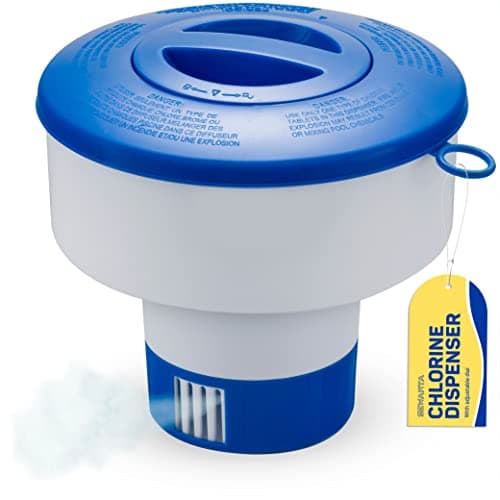
| 1 | Floating Chlorine Tablet Dispenser Two dollars of plastic that decides whether your chlorine dissolves evenly over days or sits in a corner bleaching your liner. Buy it with the tablets, not after. | Making tablets work properlyOne honest season | 9.0out of 10 |
What goes in it
Standard three-inch trichlor tablets. Compare on the available chlorine percentage printed on the label rather than on the brand.
| # | Product | Best for | Score | Price |
|---|---|---|---|---|
| 1 | 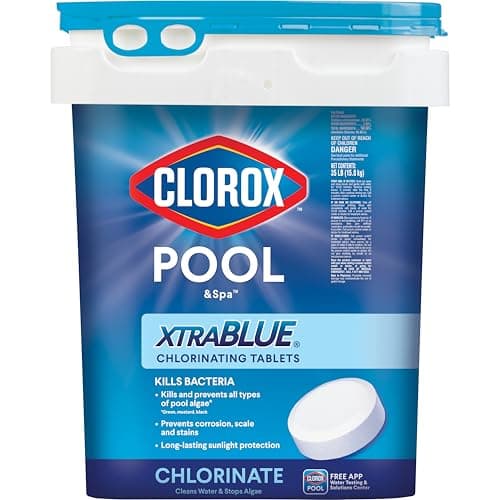 Clorox Pool&Spa 3-Inch Chlorinating Tablets Stabilized trichlor tablets in a floating dispenser is the standard answer for a seasonal above-ground pool, and this is the standard version of it. | The default chlorine sourceOne honest season | 8.5out of 10 | |
| 2 | 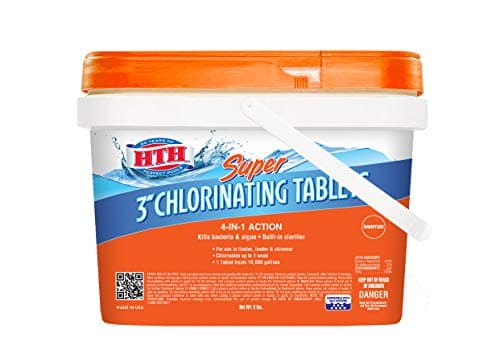 HTH 3-Inch Chlorinating Tablets Functionally the same product as any other stabilized trichlor tablet. Buy on price per pound of available chlorine, not on the label. | The direct alternativeOne honest season | 8.4out of 10 |
The short version
- Steady beats strong. A pool that holds a level all week is doing more than one that spikes on Saturday and troughs by Wednesday.
- Never put tablets loose on the liner. A dissolving tablet resting on vinyl bleaches and weakens the material underneath it.
- Never put them in the skimmer of a pump you switch off. Concentrated dissolved trichlor sitting in the pump housing with no flow is aggressive to both.
- Two details decide which floater to buy: an adjustable vented base, and a lid that stays shut.
Why the cheapest item on this site matters this much
Published trichlor dosing is two three-inch tablets a week per 10,000 gallons. On the pools this site covers that is a small number — roughly six tablets a season on a 1,718-gallon pool and about fourteen on a 3,955-gallon one — and the temptation is to drop the week’s worth in on Saturday and forget it.
What that produces is a sawtooth. Chlorine spikes after dosing, gets consumed and burned off by sun through the week, and by Wednesday the pool is under-sanitized. The CDC publishes a minimum of at least 1 ppm free chlorine, and at least 2 ppm where a stabilizer such as trichlor is in use, and it is the trough rather than the average that decides whether algae gets a foothold.
A dispenser removes the trough by releasing tablets continuously. That is the entire product, and it costs less than almost anything else in this hub.
What to actually look for
| Feature | Why | What to check |
|---|---|---|
| Adjustable vented base | Controls how fast tablets dissolve | A twist collar with marked positions, not a fixed opening |
| Lid that latches | A lid that pops open tips tablets onto the liner | A positive catch rather than a friction fit |
| Standard 3-inch tablet fit | Everything on the shelf is 3-inch | Stated capacity in tablets |
| Tether point | Keeps it away from the skimmer and the ladder | A molded eye or loop |
| Thick-walled plastic | It lives in chlorinated water holding chlorine | Weight and wall thickness; thin ones go brittle |
The adjustable base is the one that matters most, because it is how you match the release rate to your gallons. On a small pool a fully open dispenser will over-chlorinate; on a large one a nearly closed one will not keep up. Start at the low end, test after a couple of days, and adjust.
Tether it, and keep it away from two places
A free-floating dispenser goes wherever the return jet pushes it, which on most pools means it parks against the skimmer — where it delivers concentrated chlorine straight into the pump. It also collects against the ladder, where it can sit under someone’s foot.
A short tether tied to the ladder or a wall fitting, long enough to let it drift but not to reach the skimmer, solves both. It also stops it disappearing entirely, which is the other common fate.
Tablets: compare the label, not the brand
Three-inch trichlor tablets are stabilized chlorine, and the two things worth comparing are the available chlorine percentage printed on the label and the tablet count in the bucket. Brand differences beyond that are largely packaging — our chlorine tablet roundup covers the options.
The consequence worth knowing is that every tablet adds cyanuric acid as well as chlorine, because the stabilizer is part of the trichlor chemistry. It never leaves except in water you remove, so it climbs across a season and eventually makes your chlorine sluggish. That is not an argument against tablets; it is an argument for testing cyanuric acid monthly and diluting when it climbs, which our cyanuric acid guide covers.
If it has already climbed, the mid-season answer is to switch routine dosing to liquid chlorine for a while — our tablets versus liquid guide covers when to make that switch, and it is one of the few situations where the dispenser goes in the shed for a few weeks.
How many tablets, by pool
| Pool volume | Tablets per week | Per season |
|---|---|---|
| 1,485 gal | 0.30 | ≈ 5 |
| 1,718 gal | 0.34 | ≈ 6 |
| 3,955 gal | 0.79 | ≈ 14 |
| 6,981 gal | 1.40 | ≈ 24 |
Note how few tablets a small pool needs. A dispenser loaded with three tablets on a 1,718-gallon pool is holding five weeks of chlorine, which is why the vent setting matters more than the capacity does. Our weekly schedule puts refilling it on a weekly rhythm and testing on a twice-weekly one, which is the cadence that keeps the level flat.
The picks, in full
Scores are our own reading of published specifications. They are not test results — we have not tested these products and we do not claim to.
Pick #1 · Making tablets work properly
Floating Chlorine Tablet Dispenser
Various
Two dollars of plastic that decides whether your chlorine dissolves evenly over days or sits in a corner bleaching your liner. Buy it with the tablets, not after.
#ad how this is funded · price as of October 8, 2026
Key specs
- Function
- Holds 3-inch tablets, meters dissolution rate
- Adjustment
- Vented base, adjustable on most models
- Compatibility
- Standard 3-inch tablets
How it scoresour reading of published specs, not a test result
- Effectiveness
- 8.0
- Ease
- 9.5
- Water impact
- 9.0
- Cost per season
- 9.8
- Value
- 9.5
Overall 9.0 / 10
What works
- Adjustable venting lets you slow or speed dissolution to match the weather
- Keeps tablets off the liner, which is what causes bleach spots
- Trivially cheap and lasts years
What doesn't
- Drifts to one end of the pool in wind, so distribution is uneven without circulation
- Must be removed before swimming with small children
- Cheap ones crack after a season in UV
Skip it if: Being left in an empty or unfiltered pool. Without circulation it creates a concentrated pocket rather than an even dose.
What it costs to run: The cheapest item on this site and one of the highest-return: even dissolution means you use fewer tablets to hold the same free chlorine level.
One honest season: The cheapest setup that genuinely works for a season of real swimming. Nothing spare, nothing missing.
Pick #2 · The default chlorine source
Clorox Pool&Spa 3-Inch Chlorinating Tablets
Clorox Pool&Spa
Stabilized trichlor tablets in a floating dispenser is the standard answer for a seasonal above-ground pool, and this is the standard version of it.
#ad how this is funded · price as of October 8, 2026
Key specs
- Type
- Stabilized trichlor, 3-inch tablets
- Contains stabilizer
- Yes — cyanuric acid is part of trichlor
- Dosing
- Per manufacturer instructions, by pool volume
- CDC target
- At least 2 ppm free chlorine when using a stabilizer
How it scoresour reading of published specs, not a test result
- Effectiveness
- 9.0
- Ease
- 9.0
- Water impact
- 6.0
- Cost per season
- 8.5
- Value
- 8.5
Overall 8.5 / 10
What works
- Dissolves slowly, so a floating dispenser meters chlorine out over days rather than hours
- Stabilized, so sunlight does not destroy your chlorine within an afternoon
- Widely stocked, so you are never hunting for it in July
What doesn't
- Every tablet adds cyanuric acid, and in a pool you never fully drain that accumulates until chlorine stops responding
- Trichlor is acidic and will pull your pH down over a season
- Tablets must be kept dry and sealed or they degrade and gas off
Skip it if: A small pool that is topped up rather than drained. Cyanuric acid only leaves with the water, so in a 1,500-gallon pool it climbs fast.
What it costs to run: The standing chemical cost of the season, and it scales directly with gallons. Watch the cyanuric acid reading on your test strip: once it is high, you are buying chlorine that cannot work, which is the most common invisible waste in a first pool year.
One honest season: The cheapest setup that genuinely works for a season of real swimming. Nothing spare, nothing missing.
Specs from: CDC — free chlorine target with cyanuric acid
Pick #3 · The direct alternative
HTH 3-Inch Chlorinating Tablets
HTH
Functionally the same product as any other stabilized trichlor tablet. Buy on price per pound of available chlorine, not on the label.
#ad how this is funded · price as of October 8, 2026
Key specs
- Type
- Stabilized trichlor, 3-inch tablets
- Contains stabilizer
- Yes
- Compare on
- Available chlorine percentage stated on the label
How it scoresour reading of published specs, not a test result
- Effectiveness
- 9.0
- Ease
- 9.0
- Water impact
- 6.0
- Cost per season
- 8.8
- Value
- 8.5
Overall 8.4 / 10
What works
- Chemically equivalent to competing trichlor tablets — this is a commodity
- Widely available in large buckets, which is the cheaper format
- Long shelf life if the bucket stays sealed and dry
What doesn't
- Same cyanuric acid accumulation as every other trichlor product
- Same downward pH pressure over a season
- Bucket sizes are often larger than a small seasonal pool will use in a year
Skip it if: Being different. If you are comparing trichlor brands you are comparing price, and you should be.
What it costs to run: Cost per season is decided by the available-chlorine percentage on the label and the bucket size, not the brand. Compare those two numbers and buy the cheaper one.
One honest season: The cheapest setup that genuinely works for a season of real swimming. Nothing spare, nothing missing.
Questions people actually ask
Do I need a floating chlorine dispenser?
Can I put chlorine tablets in the skimmer instead?
How do I stop the chlorine floater going into the skimmer?
How many chlorine tablets go in the floater?
Sources
Read next
- Pool care, from someone who assumes you have never done thisThe weekly routine, the four numbers that matter, and the fix for the week the water turns.
- The best chlorine tablets for an above-ground poolTrichlor tablets compared on available chlorine and stabilizer load, with the season-quantity arithmetic for your pool size.
- Tablets or liquid: the difference is what else goes inTrichlor tablets against liquid chlorine on stabilizer, convenience, storage and cost, for a seasonal above-ground pool.
- Cyanuric acid: the reading that explains your chlorineWhy an outdoor pool needs stabilizer, why tablets add it whether you want them to or not, and the only way to bring it back down.
- The weekly pool routine, and how little time it really takesThe daily, weekly and monthly jobs written as a schedule, with the kit each one needs and roughly how long it takes.
- Algaecide is insurance, not a rescueThe three algaecide chemistries compared for a vinyl above-ground pool, and the sequence that actually clears a bloom.
- The skimmer is the cheapest part of the system and the one that stops itHow a skimmer actually works, the water level it needs, and the three silent faults that get blamed on the pump.
- What a season of pool chemicals actually adds up toSeason chemical quantities computed from published dosing for four pool volumes, plus the shopping list that is genuinely necessary.
- Floater or feeder: the same tablets, metered two different waysFloating dispensers against off-line tablet feeders: capacity, dose control, what each does to a vinyl liner, and why neither belongs in the skimmer basket.