Floats & Fun
The most common way to break a float is to inflate it
Firm feels right and is wrong. Vinyl expands in the sun, and a float pumped hard on a cool morning is under real pressure by two o'clock.

Heads up: we earn a commission if you buy through the links on this page, at no extra cost to you. It never decides the ranking — here is how we pick and here is the full disclosure. Prices are checked automatically; last verified October 8, 2026.
The short version
- Firm-but-yielding, never drum-tight. The surface should still give under thumb pressure once inflated.
- Air expands as it warms. A float inflated hard in the morning is under considerably more pressure by mid-afternoon in the sun.
- Largest chamber first, then the smaller ones, or the shape distorts and the seams take uneven load.
- The valve is the part you can destroy in one go. Forcing the wrong nozzle into it is a permanent injury; a puncture is not.
Why over-inflation is the main event
Inflatables fail at the seams and at the valve. Both of those failure modes are caused or accelerated by pressure, and pressure is the one variable entirely under your control at inflation time.
The trap is that a hard float feels like a good float. It looks right, it sits high, and it feels well made. What it actually is, is a structure with its seams under continuous tension before anyone has even sat on it — and then the sun warms the air inside and adds more.
Getting the feel right
Manufacturers do not publish a pressure for these products, because they are not pressure vessels and there is no valve to measure at. So the test is tactile, and it is consistent across every inflatable in this category.
| Feel | State | What happens |
|---|---|---|
| Wrinkled, folds visible | Under-inflated | Seams flex and abrade; it sits low and swamps |
| Firm, gives under thumb pressure | Correct | Seams carry load only when used |
| Taut, no give at all | Over-inflated | Seams under constant tension; splits in sun |
| Drum-tight and creaking | Well over | Failure is a matter of time, usually a seam |
Valves, and the one that breaks
Pinch valves are the cheap molded type: you pinch the base to open, and they leak slowly from the first week if the seat is damaged. They are also the type that cannot really be repaired, which is why we treat valve type as a better tiebreaker between two similar floats than the print on them.
Screw-cap valves seal properly and can often be reseated or replaced.
Boston valves are the ones worth having: a two-part valve with a one-way flap that lets you inflate without air escaping and open fully for deflation. They take a standard tapered nozzle and they survive.
Match the nozzle to the valve rather than forcing whatever came with the pump. A damaged valve seat produces a slow overnight leak that people spend an afternoon hunting for as a puncture — our repair guide puts checking the valve first for exactly that reason.
Which pump
There are three practical options and the differences are real.
Lungs. Fine for a small ring and genuinely poor for anything larger, and moist breath inside a float that then gets stored is a mildew starter. Avoid for anything you intend to keep.
A hand or foot pump. Slow, cheap, and it gives you fine control over the last few strokes — which is exactly where over-inflation happens. For one or two floats it is the sensible choice.
An electric pump. Fast, and the reason most over-inflated floats are over-inflated, because the last ten percent arrives in a second. If you use one, stop early and finish by hand or in short bursts.
Any electric pump used outdoors near a pool falls under the same rules as everything else electrical: a protected outdoor outlet, no extension cords across walkways, and nothing left plugged in beside the water. Our electrical safety guide covers it.
Multi-chamber floats and the order that matters
Anything with more than one chamber has a designed sequence, and it is usually largest first. Inflating a headrest or an armrest before the main body pulls the shape out of true and leaves the main seams loaded unevenly once the body is filled.
Multiple chambers are worth seeking out on anything an adult will use, because a single puncture makes a multi-chamber float soft rather than useless. That matters most for the games and party use our party guide covers, where floats get tipped and climbed on.
The things you never inflate
Foam noodles have their buoyancy in the material, so there is nothing to fill, nothing to leak and nothing to over-pressurize — which is a large part of why they outlast everything around them. Mesh and fabric loungers have little or no inflated volume for the same reason, and they fail by wear rather than by puncture.
If the inflation routine is the part of pool ownership you dislike, that is a genuine argument for buying construction rather than shape. Our lounger roundup and float buying mistakes both come back to the same point.
What to buy
Scores are our own reading of published specifications. They are not test results — we have not tested these products and we do not claim to.
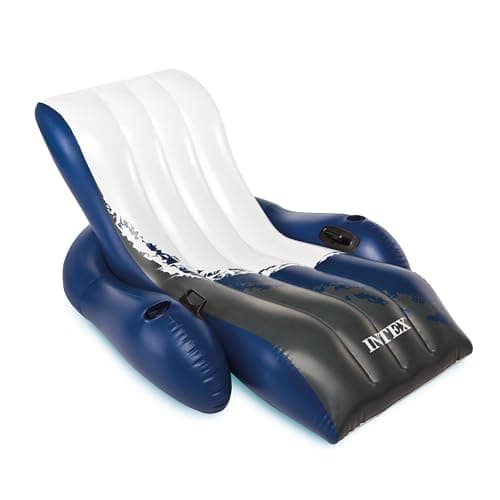
One adult, sitting up
Intex Inflatable Pool Lounge with Backrest
Intex
A backrest changes an inflatable from something you lie on to something you can actually sit in and hold a drink. That is the whole feature and it is worth the small premium.
#ad how this is funded · price as of October 8, 2026
Key specs
- Material
- Vinyl — gauge published per SKU
- Chambers
- Multiple, so a single puncture does not sink it
- Weight capacity
- Published per SKU by Intex
- Valve
- Check the SKU — Boston valves are the ones worth having
How it scoresour reading of published specs, not a test result
- Material
- 7.0
- Valve
- 7.5
- Capacity
- 8.0
- Storage
- 6.5
- Value
- 8.0
Overall 7.6 / 10
What works
- Backrest makes it usable for more than ten minutes at a time
- Multi-chamber construction means one leak is an inconvenience rather than the end
- Intex publishes weight capacity, which many float brands do not
What doesn't
- Vinyl in direct sun is on a clock no matter what you pay
- Bulky to inflate without a pump
- Larger surface area means more to store and more to dry
Skip it if: Being left inflated on a hot deck between swims, which is exactly what everyone does and exactly what kills it.
One honest season: The cheapest setup that genuinely works for a season of real swimming. Nothing spare, nothing missing.
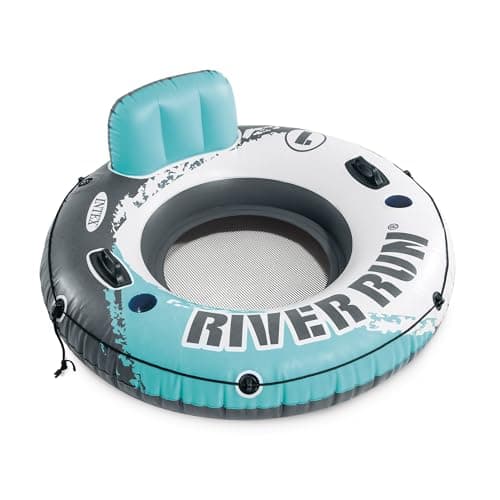
The all-rounder float
Intex River Run Sport Lounge Tube
Intex
A seated tube with a mesh bottom and a backrest — the shape that most people actually want and few buy, because the novelty shapes photograph better.
Key specs
- Construction
- Inflatable ring with mesh seat
- Chambers
- Multiple air chambers
- Weight capacity
- Published per SKU by Intex
- Extras
- Cup holders and mesh base on most SKUs
How it scoresour reading of published specs, not a test result
- Material
- 7.5
- Valve
- 8.0
- Capacity
- 8.0
- Storage
- 8.5
- Value
- 8.5
Overall 8.1 / 10
What works
- Mesh seat means you sit in the water rather than on it, which is cooler and more stable
- Multi-chamber, so one puncture does not end the afternoon
- Compact enough to store deflated in a normal cupboard
What doesn't
- The mesh seat is the wear point and it is not replaceable
- Needs enough depth for the seat to hang free
- Standard vinyl construction with standard UV vulnerability
Skip it if: Shallow pools. In 30 inches of water your feet are on the liner and the mesh seat is pointless.
One honest season: The cheapest setup that genuinely works for a season of real swimming. Nothing spare, nothing missing.
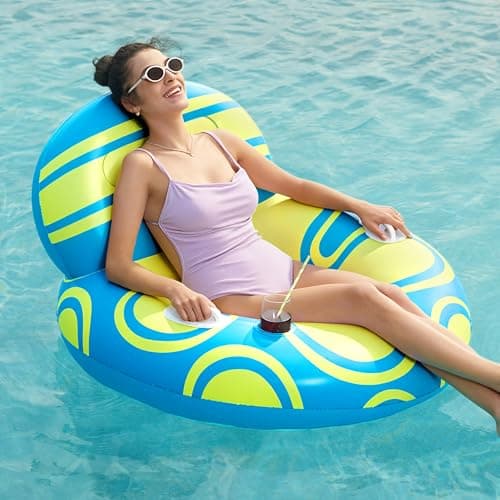
Lasting more than one summer
Mesh-Bottom Pool Lounger Chair
Various
The mesh seat has almost no inflated volume, which removes the thing that fails on every other float. Outlasts vinyl inflatables by years and costs more up front for exactly that reason.
Key specs
- Construction
- Fabric or mesh seat on an inflatable or foam frame
- Failure mode
- Frame or fabric wear rather than puncture
- Weight capacity
- Published per model
- Drying
- Mesh drains and dries quickly
How it scoresour reading of published specs, not a test result
- Material
- 9.0
- Valve
- 8.5
- Capacity
- 8.0
- Storage
- 6.0
- Value
- 8.5
Overall 8.4 / 10
What works
- Very little inflated volume, so the usual puncture failure mode largely goes away
- Mesh drains and dries, so it does not get stored wet and go moldy
- Genuinely a multi-season purchase in a category of consumables
What doesn't
- Considerably more expensive than a vinyl inflatable
- Sits lower in the water, which some people dislike
- Bulkier to store than a deflated inflatable
Skip it if: A shallow pool. A mesh lounger needs enough depth for the seat to hang in, so it is wrong in a 30-inch pool.
What it costs to run: The arithmetic that justifies it: a $25 vinyl float replaced every summer for four years costs more than one mesh lounger that lasts four. Buy this only if your pool is deep enough to use it.
Several seasons: Buy-once. Built and warranted to come back out of the box for a few years, if you store it properly.
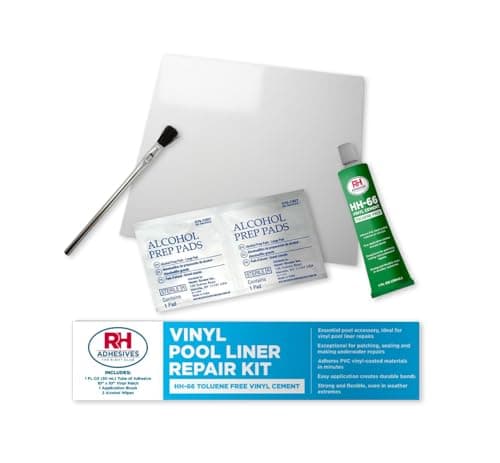
Not throwing away a float over one hole
Vinyl Repair Patch Kit
Various
A few dollars of adhesive patches that turn most float failures into a ten-minute fix. The reason people replace floats annually is usually that they did not own one of these.
#ad how this is funded · price as of October 8, 2026
Key specs
- Use
- Vinyl floats, liners, air beds
- Requirement
- Surface must be clean and fully dry
- Cure
- Follow the kit — most need hours before re-inflating
How it scoresour reading of published specs, not a test result
- Material
- 8.0
- Valve
- 8.0
- Capacity
- 7.0
- Storage
- 9.5
- Value
- 9.5
Overall 8.5 / 10
What works
- Fixes the dominant failure mode of the entire floats category
- Also patches a pinhole in a pool liner, which is a far more expensive save
- Lasts indefinitely in the shed
What doesn't
- Will not fix a split seam, only a puncture
- Needs a genuinely dry surface, which is inconvenient poolside
- Cheap kits use adhesive that fails after a season in the water
Skip it if: Seam failures and valve leaks. Those are the end of the float and no patch changes that.
What it costs to run: The highest-leverage few dollars in this hub: one saved float pays for it several times over, and one saved liner pays for it a hundred times over.
Several seasons: Buy-once. Built and warranted to come back out of the box for a few years, if you store it properly.
The cheapest thing that works
Foam Pool Noodles (multipack)
Various
Closed-cell foam cannot puncture and cannot deflate, which makes a noodle structurally the most durable object in this hub. It is also the cheapest.
Key specs
- Material
- Closed-cell polyethylene foam
- Failure mode
- Surface crumbling from UV, not puncture
- Buoyancy
- Inherent — no air chamber to lose
How it scoresour reading of published specs, not a test result
- Material
- 9.0
- Valve
- 10.0
- Capacity
- 5.0
- Storage
- 5.5
- Value
- 9.5
Overall 8.0 / 10
What works
- No air chamber, so no valve to leak and no seam to split
- Survives being stood on, thrown and bitten
- Cheap enough to buy six and not care
What doesn't
- UV eventually makes the surface crumble and shed foam into the pool
- Not a flotation device and should not be treated as one
- Awkward to store because they do not compress
Skip it if: Supporting an adult for any length of time, and absolutely not a safety device for a child.
Several seasons: Buy-once. Built and warranted to come back out of the box for a few years, if you store it properly.
Questions people actually ask
How firm should a pool float be?
Can you over-inflate a pool float?
What kind of pump should I use for pool floats?
Which chamber do you inflate first on a multi-chamber float?
Sources
Read next
- Floats, loungers and the stuff that makes the pool worth havingFloats for adults, toddlers and dogs - ranked on seam and valve construction, which is what actually decides how long they last.
- Finding the hole, and making the patch actually holdHow to locate a slow leak, tell a puncture from a failing valve, and patch vinyl so the repair survives the season.
- How to store pool floats so you are not rebuying them in MayThe end-of-season routine for inflatables and foam: drying properly, folding without creasing, and where to keep them so they survive winter.
- How long pool floats last, and why yours did notWhat actually destroys a pool float, the four-step routine that roughly triples its life, and when to patch versus replace.
- Six ways to buy a float you will not use twiceThe six recurring buying errors in this category, what to check instead, and the specification that predicts lifespan best.
- The best pool loungersMesh chairs versus vinyl mats, the depth each needs, and the four-summer arithmetic that favors mesh.
- Floats that work in a small pool, where the big ones ground outWhat actually floats in 23 to 24 inches of water, what grounds out, and the small-pool kit that gets used instead.
- The pump decides whether the floats get usedMains, 12V and cordless air pumps compared on published airflow in liters per minute, what each maker rates them for, and which one Intex labels indoor-use only.