Floats & Fun
The answer for the child the pool is too deep for
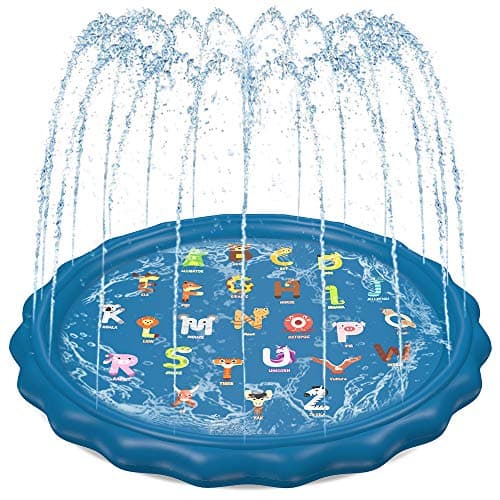
A splash pad is a few inches of moving water on a mat. It solves a real problem in a household that owns a pool, and it costs you in mains water rather than chemicals.
Heads up: we earn a commission if you buy through the links on this page, at no extra cost to you. It never decides the ranking — here is how we pick and here is the full disclosure. Prices are checked automatically; last verified October 8, 2026.
Quick picks
Segmented before it is ranked — the right answer depends on which of these you actually are. Tap any row for the full write-up.
The splash pad
Hose-fed, inflates from the water supply, a few inches deep. Look for a non-slip textured surface rather than smooth PVC.
| # | Product | Best for | Score | Price |
|---|---|---|---|---|
| 1 | Inflatable Splash Pad Sprinkler A hose-fed inflatable mat that sprays upward. It solves the problem of a toddler who wants to be in the water while the pool is genuinely too deep for them. | The age group too small for the poolOne honest season | 7.8out of 10 |
The other small-water option
A hard-sided kiddie pool holds still water rather than moving water, and needs no hose running to work.
| # | Product | Best for | Score | Price |
|---|---|---|---|---|
| 1 | 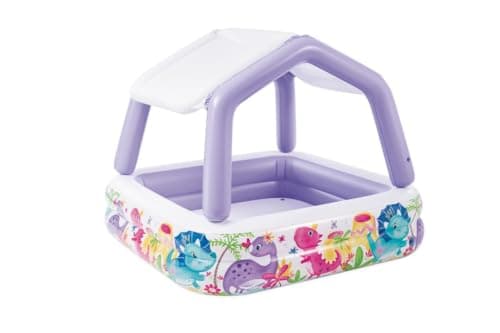 Intex Sun Shade Inflatable Kiddie Pool A small inflatable pool with an integrated canopy. For toddlers the shade matters more than the water does, and most kiddie pools do not have any. | Under-fives, with shade built inA few weekends | 7.6out of 10 |
For the age group above
Once they can aim, the game changes and the splash pad gets abandoned for this.
| # | Product | Best for | Score | Price |
|---|---|---|---|---|
| 1 | No image Pump-Action Water Blaster A large-reservoir pump blaster with a dunk-fill opening. Range and refill speed are the two specs that decide whether it gets used twice or all summer. | The cheapest hour of entertainment in the yardOne honest season | 8.2out of 10 |
The short version
- A few inches instead of four feet changes the supervision picture entirely — but not the need for it.
- It runs on mains water continuously. Unlike a pool, none of it is recirculated.
- Non-slip surface texture is the spec to check. Smooth wet PVC on grass is exactly what it sounds like.
- It kills the grass underneath. Move it every couple of days.
The problem it solves in a pool household
A family with a pool and a two-year-old has a specific difficulty: the pool is the center of every hot afternoon, and the youngest person cannot use it. Our toddler float guide covers the in-pool answer, and it comes with the same caveat every time — a float is not a safety device and a toddler in four feet of water needs an adult within arm’s reach, continuously.
A splash pad sidesteps it. Three inches of water on a mat next to the pool means the youngest child has their own water, the older children have the pool, and the adult watching has a much easier job. That is the entire product and it is a genuinely good one.
What to check on the listing
| Spec | What to look for | Why |
|---|---|---|
| Surface | Stated non-slip texture | Smooth wet PVC on grass is a slip hazard |
| Size | Commonly 60 to 68 in | Bigger is not better — it is more grass killed |
| Material | Thick PVC, no sharp edges | Thin material punctures on anything in the lawn |
| Inflation | Self-inflating from the water supply | No pump, no valve, nothing to lose |
| Spray height | Adjustable via hose tap | Full pressure is too much for a toddler |
| Drainage | A plug or a simple tip-out | It has to empty before it is put away |
Self-inflation is the feature that makes these work. Most current designs fill and inflate from the hose pressure itself, so there is no separate pump, no valve to lose and no deflation routine — you turn the tap off and it flattens. That is a meaningfully lower friction than anything else in this hub.
The cost nobody states
This is the one place a splash pad is genuinely more expensive than a pool, and it is worth being clear about.
A pool is filled once and recirculated. Our cost to fill guide prices that at the EPA WaterSense average of $6.06 per 1,000 gallons, once a season. A splash pad is not recirculated at all — every gallon that comes out of the hose soaks into the lawn, and it runs the whole time the toy is in use.
That does not make it a bad purchase; it makes it a metered one. Turn the tap down rather than fully open, and turn it off between sessions rather than leaving it running while nobody is on it.
The age window, which is short
Realistically eighteen months to about five years. Below that a child does not need a sprinkler; above it, they want the pool, or they want a water gun and a target.
That short window is the strongest argument for treating a splash pad as an inexpensive one-or-two-season item rather than buying the largest, most elaborate one available. Buy cheap, buy non-slip, and expect to hand it on.
What we are scoring
We have not tested these and do not claim to. The scores reflect published construction — material, stated surface texture, size and how it inflates — against a household that already has a pool. Nothing on this page is a safety device. Our methodology page explains how our scoring works.
The picks, in full
Scores are our own reading of published specifications. They are not test results — we have not tested these products and we do not claim to.
Pick #1 · The age group too small for the pool
Inflatable Splash Pad Sprinkler
Various
A hose-fed inflatable mat that sprays upward. It solves the problem of a toddler who wants to be in the water while the pool is genuinely too deep for them.
Key specs
- Size
- Commonly 60 to 68 in across
- Water
- Standard garden hose connection
- Material
- Thick PVC, non-toxic, no sharp edges
- Surface
- Non-slip texture on the better mats
- Depth
- A few inches — that is the whole safety argument
- Setup
- Inflates from the water supply itself on most
How it scoresour reading of published specs, not a test result
- Material
- 6.5
- Valve
- 8.0
- Capacity
- 7.0
- Storage
- 9.0
- Value
- 8.5
Overall 7.8 / 10
What works
- A few inches of water instead of four feet, which changes the supervision picture entirely
- Inflates and drains in minutes, so it does not live in the yard all summer
- Non-slip surface texture is standard on current models
- Cheap enough to treat as a one- or two-season item
What doesn't
- Runs continuously off the hose, so it is using mains water the whole time it is on
- Thin PVC punctures on anything sharp in the lawn underneath
- Only works while the hose is running — no water, no toy
- Kills the grass underneath it if left in one place
Skip it if: Replacing supervision. A few inches of water is still water, and CPSC guidance on young children applies to a splash pad as much as to a pool.
What it costs to run: The running cost is the hose. Unlike a pool, the water is not recirculated — it soaks away, so this is genuinely metered water for as long as it is on.
One honest season: The cheapest setup that genuinely works for a season of real swimming. Nothing spare, nothing missing.
Specs from: Inflatable splash pads and sprinklers — current Amazon category listing
Pick #2 · Under-fives, with shade built in
Intex Sun Shade Inflatable Kiddie Pool
Intex
A small inflatable pool with an integrated canopy. For toddlers the shade matters more than the water does, and most kiddie pools do not have any.
#ad how this is funded · price as of October 8, 2026
Key specs
- Type
- Inflatable kiddie pool with canopy
- Capacity
- Published per SKU by Intex
- Filtration
- None — drain and refill
- Age guidance
- Check the SKU; these are toddler-rated products
How it scoresour reading of published specs, not a test result
- Build
- 5.0
- Setup
- 9.8
- Upkeep
- 8.0
- Running cost
- 8.0
- Value
- 8.0
Overall 7.6 / 10
What works
- Built-in shade is genuinely the right feature for the age group this is for
- No filtration means no chemistry to learn — you empty it and refill it
- Small enough to tip out and dry every evening, which is the correct way to run one
What doesn't
- No filtration means the water is only clean because you keep replacing it
- Canopies are the first thing to tear
- Refilling every day or two is a real water cost people do not budget for
Skip it if: Anything beyond toddlers. There is no filtration, so this is a bath you empty, not a pool you maintain.
What it costs to run: The cost here is water, not electricity. Emptying and refilling 60 gallons every other day for a 90-day summer is roughly 2,700 gallons, or about $16 at the EPA WaterSense average of $6.06 per 1,000 gallons — more than most people assume for something this small.
A few weekends: Fine for a heatwave and a toddler. Treat it as consumable, not as a pool — it will not survive a winter in the yard.
Specs from: EPA WaterSense — cost per 1,000 gallons
Pick #3 · The cheapest hour of entertainment in the yard
Pump-Action Water Blaster
Various
A large-reservoir pump blaster with a dunk-fill opening. Range and refill speed are the two specs that decide whether it gets used twice or all summer.
Key specs
- Reservoir
- Around 1,200 cc on the larger blasters
- Range
- Up to about 34 ft on pump-action models
- Refill
- Dunk-fill wide opening — seconds, not minutes
- Material
- ABS, non-toxic, US toy quality standard
- Action
- Pump-action rather than trigger-pressurized
- Sealing
- Look for rapid-seal or equivalent anti-leak
How it scoresour reading of published specs, not a test result
- Range
- 8.0
- Capacity
- 8.5
- Refill
- 9.0
- Build
- 6.5
- Value
- 9.0
Overall 8.2 / 10
What works
- Dunk-fill is the feature that matters — refilling at a tap is what ends water fights
- Pump action gives real range without a pressurized tank to fail
- Large reservoirs mean fewer refills and longer games
- Works from the pool, which is the whole point of buying one for a pool
What doesn't
- Leaks are the standard failure and they start at the seals within a season
- Bigger reservoirs are heavy when full, which rules out the smallest children
- Pump action needs two hands, unlike a trigger pistol
- Left full in the sun, the water inside goes stagnant fast
Skip it if: Being aimed at faces, which is the one rule worth stating before handing them out. Range and pressure are the selling points and the reason for the rule.
What it costs to run: No running cost at all beyond the water, which comes from the pool you already filled. Empty and dry them at the end of a session and they last more than one summer.
One honest season: The cheapest setup that genuinely works for a season of real swimming. Nothing spare, nothing missing.
Specs from: Water guns and soakers — current Amazon category listing
Questions people actually ask
Are splash pads safe for toddlers?
Do splash pads use a lot of water?
Do you need a pump for a splash pad?
Will a splash pad damage my lawn?
Sources
Read next
- Floats, loungers and the stuff that makes the pool worth havingFloats for adults, toddlers and dogs - ranked on seam and valve construction, which is what actually decides how long they last.
- Toddler pool floats: know which of two products you are buyingThe critical distinction between comfort seats and rated flotation, what to check on the label, and why shade is the underrated feature.
- Refill speed matters more than rangePump-action water blasters compared on reservoir size, range and refill mechanism, plus the one rule worth stating before handing them out.
- The best pool toys for a backyard poolWeighted dive toys, foam noodles and games that work in 24 inches of water - and cannot puncture.
- The best backyard pools for kidsPools chosen for young children - depth, shade and securability rank above capacity and construction here.
- The circle of dead grass, and how long it really takes to fixWhy grass under a pool dies, how long recovery actually takes, and the timing decision that halves it.
- What it costs to fill a pool, and to keep it fullOne fill priced for four common pool volumes at the national average water rate, plus why every gallon you add has to be re-balanced.
- Small children and pool water, without the scare storiesThe hygiene practices that actually change the risk with toddlers in a backyard pool, and the ones that do not.