Floats & Fun · Best for Dogs
Pool floats and ramps for dogs
Ordinary float vinyl loses to a dog on the first attempt. The spec that matters is what the deck is made of, and most listings will not tell you.
Heads up: we earn a commission if you buy through the links on this page, at no extra cost to you. It never decides the ranking — here is how we pick and here is the full disclosure. Prices are checked automatically; last verified October 19, 2026.
Quick picks
Segmented before it is ranked — the right answer depends on which of these you actually are. Tap any row for the full write-up.
For dogs in the water
Reinforced or coated decks only. If the listing does not say what the deck is made of, assume ordinary vinyl.
| # | Product | Best for | Score | Price |
|---|---|---|---|---|
| 1 | No image Reinforced Dog Pool Float / Ramp Ordinary vinyl loses to a dog on the first attempt. Anything sold for dogs needs a reinforced or coated deck, and if the listing does not say what the deck is made of, assume it is ordinary vinyl. | Dogs, and the claws that come with themOne honest season | 7.5out of 10 | |
| 2 | No image Foam Pool Noodles (multipack) Closed-cell foam cannot puncture and cannot deflate, which makes a noodle structurally the most durable object in this hub. It is also the cheapest. | The cheapest thing that worksSeveral seasons | 8.0out of 10 |
The short version
- Deck material is the whole spec. Reinforced or coated, or it lasts one afternoon.
- A ramp solves the real problem, which is a dog that can get in and not out.
- Flat platforms beat ring shapes for an animal that will not sit still.
- A dog in the pool means more hair in the filter and higher chlorine demand. Both are manageable and both are real.
Why most floats fail immediately
Standard float vinyl is designed to resist abrasion from skin and swimwear. It is not designed to resist a concentrated point load from a claw, which is exactly what a dog applies when it climbs on. A regular float is usually punctured on the first attempt.
Products sold for dogs address this with a reinforced or coated deck — a heavier, often textured surface across the standing area. The problem is that many listings market to dog owners without specifying any material at all. If the listing does not say what the deck is made of, assume it is ordinary vinyl, because a manufacturer who had reinforced it would say so.
Ramps are the more useful product
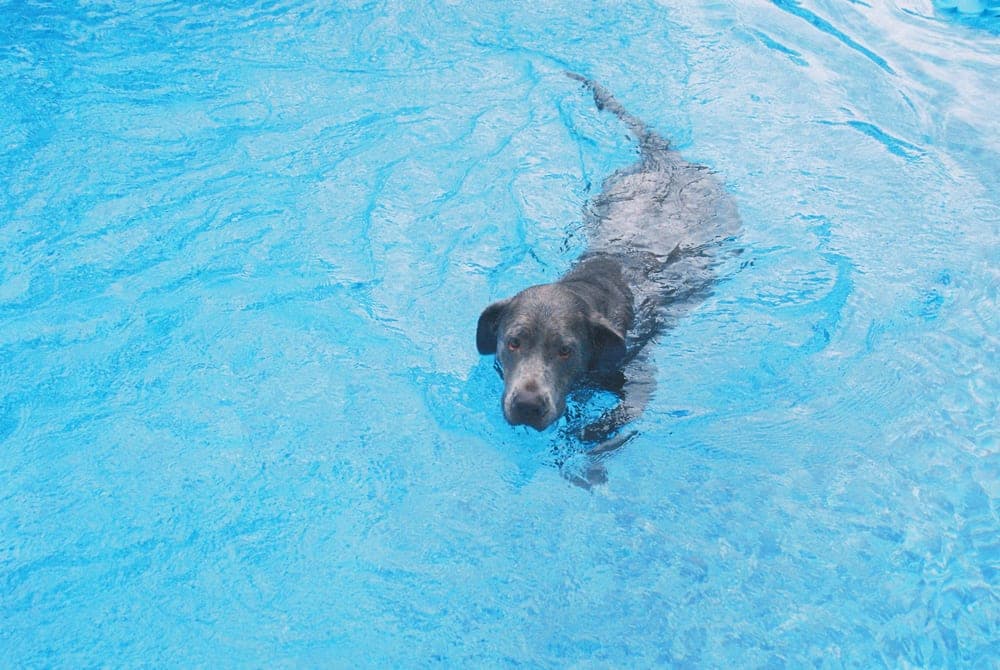
The genuine safety issue with dogs and above-ground pools is not floating. It is exit. An above-ground pool has a vertical wall and a human ladder, and a dog that gets in cannot necessarily get out.
A poolside ramp gives the dog a route out that does not depend on anyone being there. That is worth considerably more than a float, and it is the thing we would buy first for any household where a dog has access to the pool area.
What a dog does to your water
Two effects, both manageable and both worth knowing about before you are surprised.
Hair goes into the filter. A lot of it. Expect to rinse the cartridge more often and to replace it sooner, which is a real cost — see filters.
Chlorine demand goes up. A dog carries more organic material into the water than a person does, so free chlorine burns off faster. Test after a swimming session rather than assuming the level held, and use the routine in the beginner’s guide.
A skimmer net gets used more in a dog household than in any other, and it is the cheapest thing on this site.
What to look for
| Check | What you want | What it means |
|---|---|---|
| Deck material | Named, reinforced or coated | Unnamed means ordinary vinyl |
| Weight capacity | Published and matched to your dog | Unpublished is a warning |
| Shape | Flat platform | Rings are unstable for an animal |
| Exit route | Ramp, or a plan | The real safety issue |
| Repairability | Patchable material | It will get punctured eventually |
And be realistic: a determined dog beats any inflatable in the end. Keep a repair kit in the shed and treat this as a category with a shorter life than the rest of the hub.
The picks, in full
Scores are our own reading of published specifications. They are not test results — we have not tested these products and we do not claim to.
Pick #1 · Dogs, and the claws that come with them
Reinforced Dog Pool Float / Ramp
Various
Ordinary vinyl loses to a dog on the first attempt. Anything sold for dogs needs a reinforced or coated deck, and if the listing does not say what the deck is made of, assume it is ordinary vinyl.
Key specs
- What matters
- Puncture-resistant or coated deck material
- Weight capacity
- Published per model — match it to the dog
- Common form
- Flat platform or poolside ramp
How it scoresour reading of published specs, not a test result
- Material
- 8.0
- Valve
- 7.0
- Capacity
- 8.0
- Storage
- 7.0
- Value
- 7.0
Overall 7.5 / 10
What works
- Reinforced decks survive claws in a way that standard float vinyl simply does not
- Ramp versions solve the real problem, which is a dog that can get in and not out
- Flat platforms are more stable than ring shapes for an animal that will not sit still
What doesn't
- Materials are frequently unspecified in listings, so verification is hard
- Considerably more expensive than a human float of the same size
- A determined dog will eventually beat any inflatable
Skip it if: Being left unattended with a dog on it. And no float is a substitute for knowing your dog can get out of the pool.
One honest season: The cheapest setup that genuinely works for a season of real swimming. Nothing spare, nothing missing.
Pick #2 · The cheapest thing that works
Foam Pool Noodles (multipack)
Various
Closed-cell foam cannot puncture and cannot deflate, which makes a noodle structurally the most durable object in this hub. It is also the cheapest.
Key specs
- Material
- Closed-cell polyethylene foam
- Failure mode
- Surface crumbling from UV, not puncture
- Buoyancy
- Inherent — no air chamber to lose
How it scoresour reading of published specs, not a test result
- Material
- 9.0
- Valve
- 10.0
- Capacity
- 5.0
- Storage
- 5.5
- Value
- 9.5
Overall 8.0 / 10
What works
- No air chamber, so no valve to leak and no seam to split
- Survives being stood on, thrown and bitten
- Cheap enough to buy six and not care
What doesn't
- UV eventually makes the surface crumble and shed foam into the pool
- Not a flotation device and should not be treated as one
- Awkward to store because they do not compress
Skip it if: Supporting an adult for any length of time, and absolutely not a safety device for a child.
Several seasons: Buy-once. Built and warranted to come back out of the box for a few years, if you store it properly.
Pick #3 · Not throwing away a float over one hole
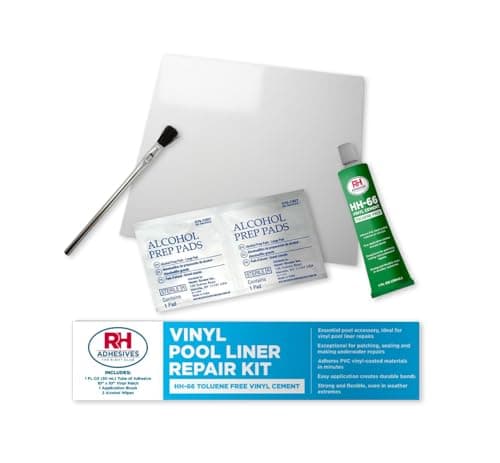
Vinyl Repair Patch Kit
Various
A few dollars of adhesive patches that turn most float failures into a ten-minute fix. The reason people replace floats annually is usually that they did not own one of these.
#ad how this is funded · price as of October 19, 2026
Key specs
- Use
- Vinyl floats, liners, air beds
- Requirement
- Surface must be clean and fully dry
- Cure
- Follow the kit — most need hours before re-inflating
How it scoresour reading of published specs, not a test result
- Material
- 8.0
- Valve
- 8.0
- Capacity
- 7.0
- Storage
- 9.5
- Value
- 9.5
Overall 8.5 / 10
What works
- Fixes the dominant failure mode of the entire floats category
- Also patches a pinhole in a pool liner, which is a far more expensive save
- Lasts indefinitely in the shed
What doesn't
- Will not fix a split seam, only a puncture
- Needs a genuinely dry surface, which is inconvenient poolside
- Cheap kits use adhesive that fails after a season in the water
Skip it if: Seam failures and valve leaks. Those are the end of the float and no patch changes that.
What it costs to run: The highest-leverage few dollars in this hub: one saved float pays for it several times over, and one saved liner pays for it a hundred times over.
Several seasons: Buy-once. Built and warranted to come back out of the box for a few years, if you store it properly.
Pick #4 · The five-dollar tool you use most
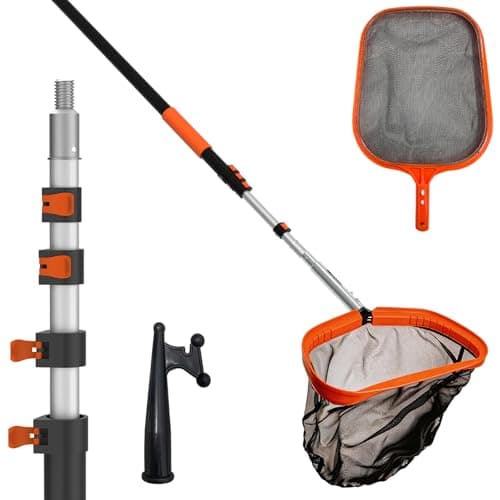
Skimmer Net with Telescopic Pole
Various
Catching leaves while they float is a two-minute job. Catching them after they sink is a vacuum session and a filter clean. Buy this first.
Key specs
- Type
- Flat skimmer or deep leaf rake
- Pole
- Telescopic, sized to reach the middle of your pool
- Frame
- Plastic or aluminum
How it scoresour reading of published specs, not a test result
- Value
- 9.5
Overall 8.8 / 10
What works
- The single most-used tool in pool ownership and among the cheapest
- Removing debris before it sinks prevents most of the work that follows
- A deep leaf rake handles far more per pass than a flat skimmer
What doesn't
- Cheap plastic frames snap where the pole attaches, which is the standard failure
- Telescopic poles seize with hard water unless rinsed
- A too-short pole means you cannot reach the middle, which makes it useless
Skip it if: Anything on the floor. This is a surface tool and pretending otherwise is how debris ends up in the filter.
What it costs to run: Free to use and it directly reduces your chemical bill: organic debris consumes chlorine as it breaks down, so removing leaves is the cheapest sanitizer saving there is.
Several seasons: Buy-once. Built and warranted to come back out of the box for a few years, if you store it properly.
Questions people actually ask
Do dogs puncture pool floats?
How does a dog get out of an above-ground pool?
Do dogs affect pool water chemistry?
Sources
Read next
- Floats, loungers and the stuff that makes the pool worth havingFloats for adults, toddlers and dogs - ranked on seam and valve construction, which is what actually decides how long they last.
- The best pool floatsFloats ranked on material, valve type and published weight capacity - the three specs that decide whether it survives a season.
- How long pool floats last, and why yours did notWhat actually destroys a pool float, the four-step routine that roughly triples its life, and when to patch versus replace.
- Pool maintenance for beginners, in twenty minutes a weekThe complete weekly routine in order, what each step is actually for, and the things you can safely ignore.
- Pool filters: the consumable nobody budgets forCartridge replacement intervals, what rinsing does and does not achieve, and when sand becomes the cheaper answer.