Floats & Fun
Pool noodles: the float that cannot fail
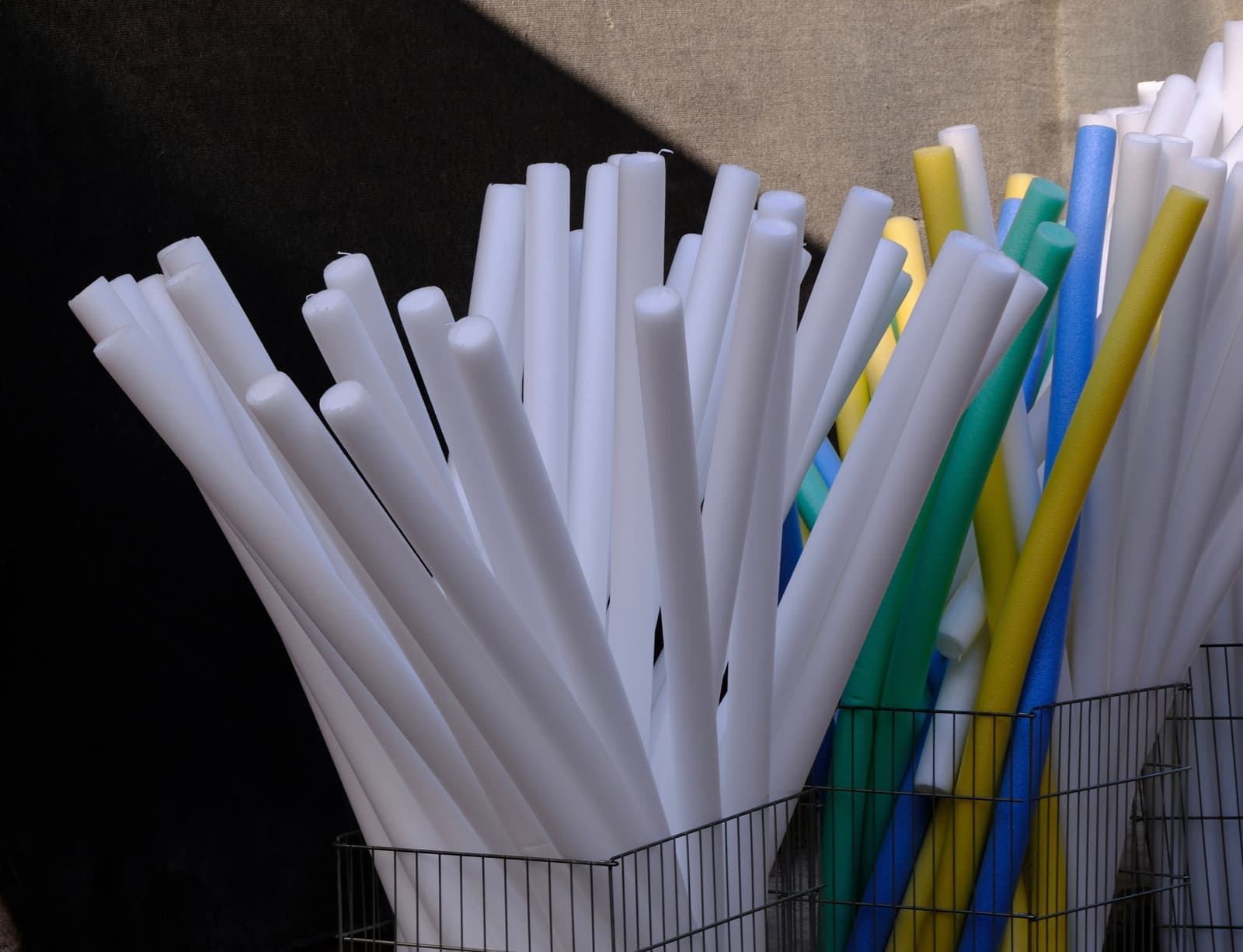
Every other float in the pool has an air chamber and a valve, which are the two things that end floats. A noodle has neither.
Heads up: we earn a commission if you buy through the links on this page, at no extra cost to you. It never decides the ranking — here is how we pick and here is the full disclosure. Prices are checked automatically; last verified October 8, 2026.
Quick picks
Segmented before it is ranked — the right answer depends on which of these you actually are. Tap any row for the full write-up.
The thing itself
Buy a multipack. Noodles are cheap enough that the per-unit price barely matters and useful enough that you will always want another one.
| # | Product | Best for | Score | Price |
|---|---|---|---|---|
| 1 | No image Foam Pool Noodles (multipack) Closed-cell foam cannot puncture and cannot deflate, which makes a noodle structurally the most durable object in this hub. It is also the cheapest. | The cheapest thing that worksSeveral seasons | 8.0out of 10 |
The other float with no air in it
Weighted dive toys share the noodle's great advantage: nothing to inflate, nothing to puncture, nothing to store carefully.
| # | Product | Best for | Score | Price |
|---|---|---|---|---|
| 1 | No image Weighted Dive Toy Set Negatively buoyant rings and sticks that sink and stay put. Cheap, indestructible, and the single best return on money in a pool with children in it. | Keeping kids in the pool for an extra hourSeveral seasons | 8.5out of 10 |
If you want something to sit in
A noodle is not a lounger. When the job is genuinely floating an adult for an hour, an inflatable is the right tool and the trade-offs come back.
| # | Product | Best for | Score | Price |
|---|---|---|---|---|
| 1 | 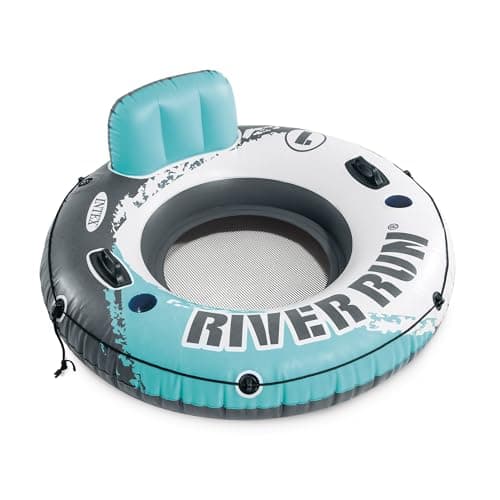 Intex River Run Sport Lounge Tube A seated tube with a mesh bottom and a backrest — the shape that most people actually want and few buy, because the novelty shapes photograph better. | The all-rounder floatOne honest season | 8.1out of 10 |
The short version
- Closed-cell foam has no air chamber, so there is no valve to leak and no seam to split — the two failure modes that end almost every other float.
- A puncture does not matter. Cut a noodle in half and you own two shorter noodles.
- Density and diameter, not color, decide how it performs. Thicker foam floats more and survives more.
- It is not a life jacket and never becomes one. The CPSC is explicit that flotation toys are not safety devices.
Why the cheapest thing in the pool is also the longest-lived
Our float lifespan guide makes the case at length, but the short version is this: inflatable floats fail at the valve or the seam, and the sun does the rest. UV embrittles vinyl, chlorine attacks the plasticizers that keep it flexible, and a float left out for a season becomes stiff, then cracked.
A noodle is closed-cell polyethylene foam — millions of sealed bubbles, none of them connected. There is no single chamber to lose, which means there is nothing a pin can do to it. It absorbs almost no water because each cell is sealed, and it fades long before it stops working.
What actually varies between noodles
| Spec | Typical | What it changes |
|---|---|---|
| Length | 52 to 60 inches | Longer supports an adult across the back; shorter suits kids and small pools |
| Diameter | 2.5 to 3.5 inches | Thicker floats more weight and resists snapping |
| Foam density | Rarely published | Dense foam feels heavier dry and lasts longer; the cheap ones feel airy |
| Hollow core | Common | Lighter and cheaper; slightly less buoyant, and useful for threading rope |
| Surface finish | Smooth or ridged | Ridged grips better wet; smooth is easier on skin |
Density is the one that matters and the one nobody publishes. The proxy is weight: pick up two noodles of the same size and the heavier one is denser foam, which floats more and survives more. In a store you can do that. Online you are reading reviews for the words “flimsy” and “thin”, which is imperfect but is the best signal available.
What people actually use them for
Sitting. Bent into a U and tucked under the arms with the ends floating forward, a noodle becomes a chair. This is the single most common use and the reason a household with four people wants four noodles rather than one.
Learning to swim. Under the arms or under the chest, a noodle gives a child enough support to practice kicking without the full dependence of a vest. That is a supervised activity, not a substitute for supervision — see below.
Games. Half the games in our pool games guide need a noodle and nothing else, which is why the noodle is the highest-value entry in the pool toys roundup.
Small pools. A twelve-foot pool cannot hold a lounger and two people. It can hold four noodles and four people, which is the argument our small pool floats guide makes in full.
Storage, which is where they beat everything else
Inflatables have a storage protocol: dry completely, deflate fully, fold along existing creases, keep out of direct sun and away from anything that can press into them. Our storage guide covers it because getting it wrong costs you the float.
Noodles need none of that. Rinse the chlorine off, stand them in a corner of the shed, and that is the whole procedure. They do not crease, they do not stick to themselves, and they do not care about being squashed. The only thing worth doing is keeping them out of direct sun between uses, which slows the chalking.
Cutting them, which is the point of buying cheap ones
A serrated knife cuts foam cleanly. That is why noodles end up as pipe insulation, edge padding on a ladder, spacers, and the core of half the improvised pool games in existence. Nothing else in the pool can be modified without destroying it.
If a section gets chewed or snapped, cut the damaged part out and keep the rest. Compare that with a split seam on an inflatable, where the honest answer in our repair guide is that seams are usually not worth fixing.
What we are scoring
We have not tested these and do not claim to. The scores reflect published construction — material, dimensions and how it is put together — against the failure modes we describe on this site. Our methodology page explains how our scoring works.
The picks, in full
Scores are our own reading of published specifications. They are not test results — we have not tested these products and we do not claim to.
Pick #1 · The cheapest thing that works
Foam Pool Noodles (multipack)
Various
Closed-cell foam cannot puncture and cannot deflate, which makes a noodle structurally the most durable object in this hub. It is also the cheapest.
Key specs
- Material
- Closed-cell polyethylene foam
- Failure mode
- Surface crumbling from UV, not puncture
- Buoyancy
- Inherent — no air chamber to lose
How it scoresour reading of published specs, not a test result
- Material
- 9.0
- Valve
- 10.0
- Capacity
- 5.0
- Storage
- 5.5
- Value
- 9.5
Overall 8.0 / 10
What works
- No air chamber, so no valve to leak and no seam to split
- Survives being stood on, thrown and bitten
- Cheap enough to buy six and not care
What doesn't
- UV eventually makes the surface crumble and shed foam into the pool
- Not a flotation device and should not be treated as one
- Awkward to store because they do not compress
Skip it if: Supporting an adult for any length of time, and absolutely not a safety device for a child.
Several seasons: Buy-once. Built and warranted to come back out of the box for a few years, if you store it properly.
Pick #2 · Keeping kids in the pool for an extra hour
Weighted Dive Toy Set
Various
Negatively buoyant rings and sticks that sink and stay put. Cheap, indestructible, and the single best return on money in a pool with children in it.
Key specs
- Type
- Weighted rings, sticks or discs
- Buoyancy
- Sinks and stays upright on the floor
- Material
- Rubber or weighted plastic
How it scoresour reading of published specs, not a test result
- Material
- 9.0
- Valve
- 10.0
- Capacity
- 6.0
- Storage
- 9.0
- Value
- 9.5
Overall 8.5 / 10
What works
- Nothing to inflate, nothing to puncture, nothing to store carefully
- Works in a 30-inch pool where most float toys do not
- Genuinely encourages swimming rather than sitting
What doesn't
- Bright colors fade and then they are harder to find on a blue liner
- Hard edges on cheap sets can mark a vinyl liner
- Small parts, so check the age rating for younger children
Skip it if: Very shallow water, where there is not enough depth to make retrieving them interesting.
Several seasons: Buy-once. Built and warranted to come back out of the box for a few years, if you store it properly.
Pick #3 · The all-rounder float
Intex River Run Sport Lounge Tube
Intex
A seated tube with a mesh bottom and a backrest — the shape that most people actually want and few buy, because the novelty shapes photograph better.
Key specs
- Construction
- Inflatable ring with mesh seat
- Chambers
- Multiple air chambers
- Weight capacity
- Published per SKU by Intex
- Extras
- Cup holders and mesh base on most SKUs
How it scoresour reading of published specs, not a test result
- Material
- 7.5
- Valve
- 8.0
- Capacity
- 8.0
- Storage
- 8.5
- Value
- 8.5
Overall 8.1 / 10
What works
- Mesh seat means you sit in the water rather than on it, which is cooler and more stable
- Multi-chamber, so one puncture does not end the afternoon
- Compact enough to store deflated in a normal cupboard
What doesn't
- The mesh seat is the wear point and it is not replaceable
- Needs enough depth for the seat to hang free
- Standard vinyl construction with standard UV vulnerability
Skip it if: Shallow pools. In 30 inches of water your feet are on the liner and the mesh seat is pointless.
One honest season: The cheapest setup that genuinely works for a season of real swimming. Nothing spare, nothing missing.
Questions people actually ask
Are pool noodles worth buying?
How long do pool noodles last?
Can a pool noodle be used as a flotation device for a child?
What size pool noodle should I buy?
Sources
Read next
- Floats, loungers and the stuff that makes the pool worth havingFloats for adults, toddlers and dogs - ranked on seam and valve construction, which is what actually decides how long they last.
- The best pool floatsFloats ranked on material, valve type and published weight capacity - the three specs that decide whether it survives a season.
- How long pool floats last, and why yours did notWhat actually destroys a pool float, the four-step routine that roughly triples its life, and when to patch versus replace.
- Pool games that work in a backyard pool, not a leisure centerGames that actually work in a shallow above-ground pool, the gear each one needs, and why weighted toys beat everything else per dollar.
- Floats that work in a small pool, where the big ones ground outWhat actually floats in 23 to 24 inches of water, what grounds out, and the small-pool kit that gets used instead.
- How to store pool floats so you are not rebuying them in MayThe end-of-season routine for inflatables and foam: drying properly, folding without creasing, and where to keep them so they survive winter.
- Swim vests and floaties: the label that separates them from toysHow to tell an approved flotation device from a pool toy, what the weight range on the label means, and why neither replaces supervision.
- Six ways to buy a float you will not use twiceThe six recurring buying errors in this category, what to check instead, and the specification that predicts lifespan best.
- Noodles or a swim vest: only one of them has a label that means anythingFoam noodles against labeled swim vests for young children: what each is actually designed to do, what to check on the label, and why supervision is the real answer.